





 Portuguese
  English
  Spanish
  4 min of reading
  0 comments


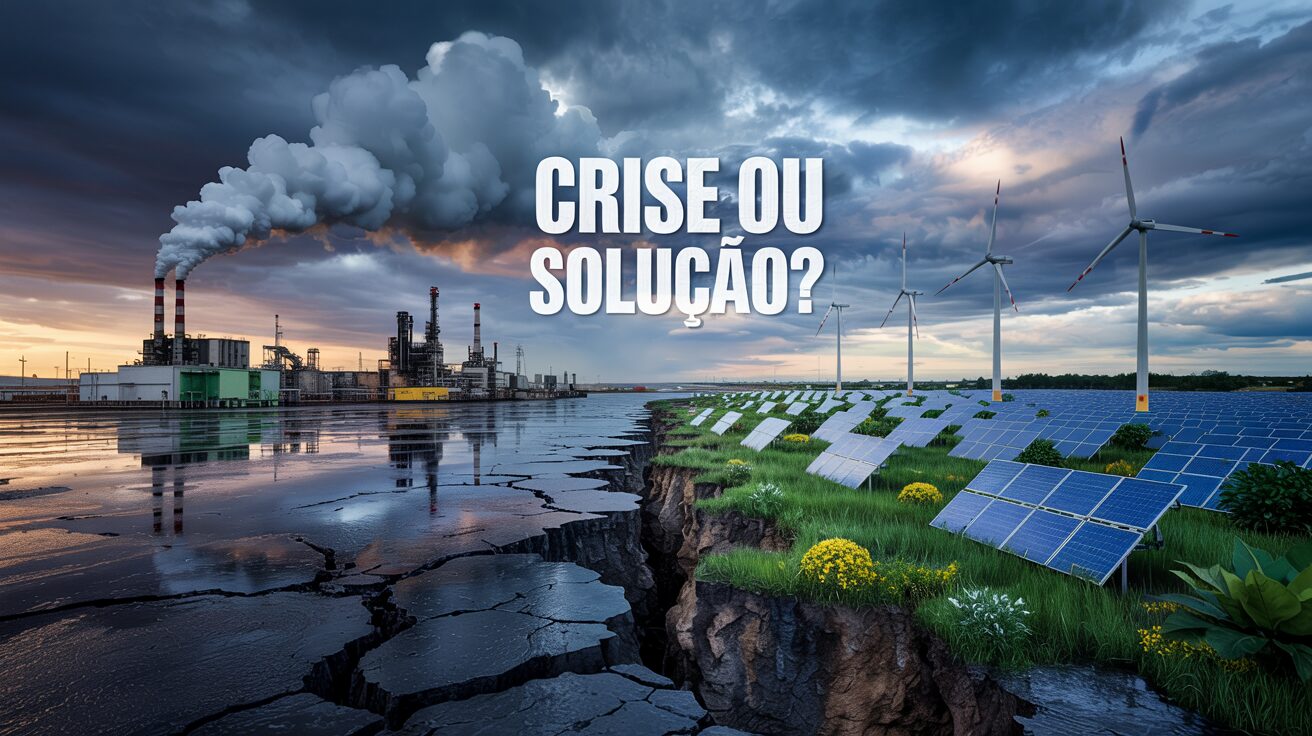
Report Reveals Billion-Dollar Imbalance in Brazil’s Energy Incentives. Even with Progress in Renewables, the Government Continues to Prioritize the Fossil Sector, Jeopardizing the Climate Transition and Pressuring Consumers with Silent Increases in Energy Tariffs.
Billion-Dollar Disparity Exposes Imbalance in Brazilian Energy Policies
For every real invested in renewable energy in Brazil, the federal government allocates R$ 4.52 to subsidies for fossil fuels.
This alarming figure is part of the 7th edition of the energy subsidy monitoring report, prepared by Inesc (Institute for Socioeconomic Studies) and updated until March 2025.
In total, public incentives for oil, gas, and coal remain massive, while clean sources such as solar, wind, and biomass continue with reduced resources.
-
Renewable energy advances over protected areas in Brazil, and a survey by the Energy Transition Observatory reveals silent impacts that challenge environmental conservation and pressure sensitive traditional territories.

-
Rio Grande do Sul accelerates energy transition: State invests in renewable technologies and consolidates decarbonization strategies and pathways to attract billions in new industrial investments.

-
With 160,000 m² of collectors, an area larger than 20 football fields, Silkeborg, in Denmark, hosts a solar thermal plant that heats 19,500 homes and could become the largest solar heating plant in the world.

-
A study reveals the expansion of renewable energy procurement in Brazil and shows how companies are taking advantage of opportunities to reduce expenses, ensure energy efficiency, and strengthen strategic environmental commitments.


The survey shows that, although investments in renewables have grown, fossil fuels still dominate the national energy budget.
Subsidies Totaled Almost R$ 100 Billion in 2023
In 2023, the total energy subsidies granted by the Federal Government reached R$ 99.81 billion.
This amount represents a growth of 3.57% compared to 2022.
Although there was a significant increase in funding for renewable sources — from R$ 14.24 billion to R$ 18.06 billion — fossil fuels still account for R$ 81.74 billion, or 81.9% of the total.
This figure includes both what the government missed out on in tax revenues and what was effectively paid to support this production chain.
The discrepancy reinforces Brazil’s dependence on unsustainable sources, even in a climate urgency context.
Clean Energy Advances, But Doesn’t Overtake Oil
According to Inesc, the increase in support for renewables was driven by programs like Proinfa (Program for the Incentive of Alternative Sources), Reidi (Special Regime of Incentives for Infrastructure Development), and distributed generation.
These programs are crucial for enabling the expansion of the clean energy matrix in the country.
Even with the growth of nearly 27% in incentives for renewable sources, the total amount still represents only a fraction of what is directed to the fossil industry.
Cássio Cardoso Carvalho, political advisor at Inesc, highlights that this disparity jeopardizes the Brazilian energy transition.
“As long as the Federal Government does not reassess the values of this kind of ‘Oil Subsidy’ for the sector, the energy transition remains compromised,” he warns.
Additionally, the study shows that the costs of clean energy are mainly borne by consumers through tariff charges on electricity bills.
“Meanwhile, the oil and gas sector continues to receive generous exemptions, without clear counterparts,” Carvalho adds.
Contradictions in Energy Fiscal Policy
Despite a slight decrease of 0.45% in subsidies for the consumption of fossil fuels in 2023, the total value remained high due to the maintenance of production incentives.
The reduction was a result of the partial resumption of tax collection such as Cide and PIS/Cofins on gasoline.
However, the tax exemption on diesel was maintained, preventing a more significant economy for public finances.
According to Inesc, the most relevant subsidy scheme for the fossil industry is Repetro, a special tax regime that allows extensive tax exemptions for companies that explore oil and natural gas.
Only in 2023, production incentives increased by R$ 5.55 billion, precisely because of the growth in exemptions under Repetro.
This trend reveals a contradictory policy: while support to consumers is reduced, incentives for the extraction of fuels that most contribute to global warming are expanded.
The Cost of Energy Transition Still Falls on Consumers
Another worrying data revealed by the report is that incentives for renewable sources are mainly financed by the consumers themselves.
These resources are passed through the Energy Development Account (CDE), a sector fund that directly impacts the electricity tariff.
In other words, the Brazilian population is paying for the expansion of clean energy while large companies continue to be exempt in oil exploration.
This unequal structure challenges the very concept of climate and distributive justice.
International Commitments and Domestic Contradictions
Political advisor Alessandra Cardoso, also an author of the report, claims that ending inefficient subsidies for fossil fuels is a commitment made internationally, especially at COP 28.
“The government needs to recognize that incentives for fossil fuel production are a domestic problem that requires urgent confrontation,” she states.
She reminds that Brazil will have a central role in the next global climate conference, COP 30, scheduled for 2025 in Belém do Pará, in the Amazon.
The holding of the event in Brazilian territory requires that the country commits to coherent and transparent actions.
“The greater the tax exemption for fossil fuels, the lower the budget available to address the impacts of climate change,” Alessandra states.
She emphasizes that the progressive replacement of fossil fuels with renewable sources is not only an environmental goal but a matter of economic and social responsibility.
The Path to a More Balanced Energy Policy
Currently, Brazil has one of the cleanest electric matrices in the world, with around 83% of energy generated from renewable sources.
However, this is not reflected in the subsidy policy, which still broadly favors the fossil sector.
Experts point out that revising this structure is essential to attract sustainable investments, reduce inequalities, and meet global environmental goals.
The pressure for change should increase as public opinion becomes more aware of the environmental and social impacts of the energy they consume.
The reformulation of energy subsidies in Brazil is, therefore, a strategic issue — not just for the environment, but for the economy and the well-being of the population.









Seja o primeiro a reagir!