





 Português
  Inglês
  Espanhol
  3 min de leitura
  0 comentários


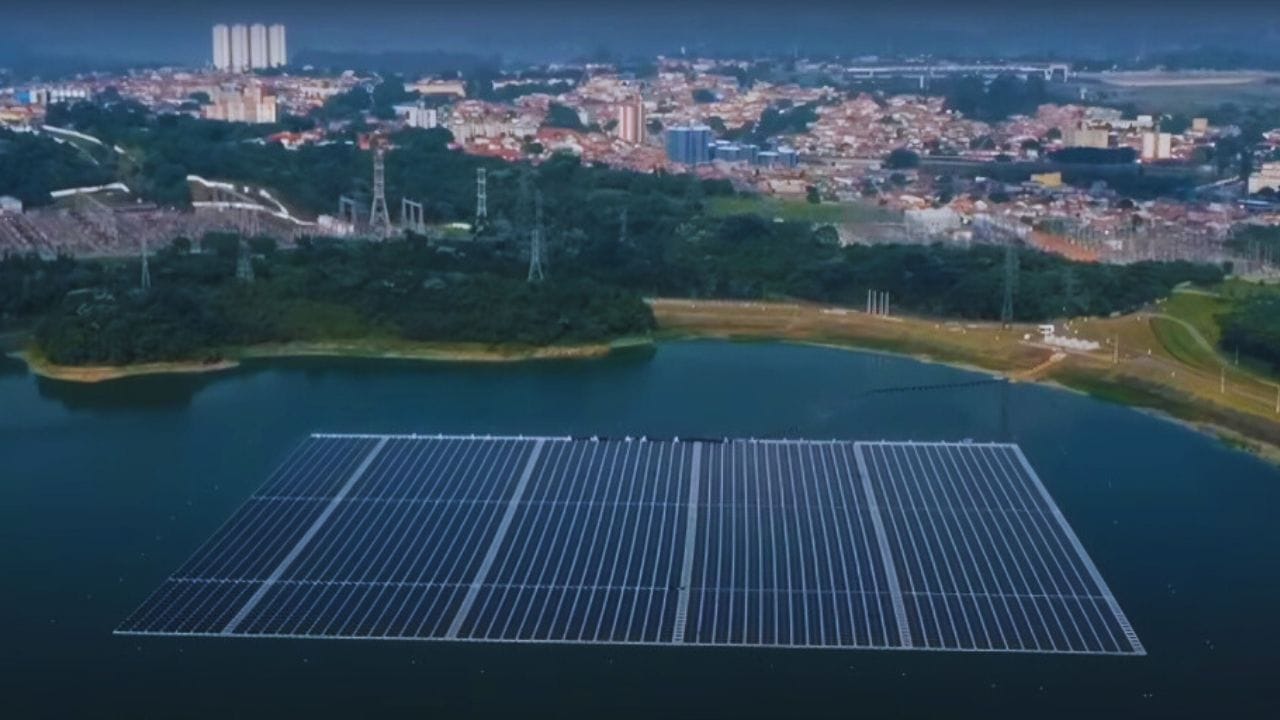
On January 17th, an energy revolution took shape at the Billings Reservoir, São Paulo, with the inauguration of the first phase of the Araucária Floating Solar Plant by Governor Tarciso de Freitas and Mayor Ricardo Nunes.
The Government of the State of São Paulo, led by Governor Tarciso de Freitas, and Mayor Ricardo Nunes made history on January 17th with the inauguration of the first phase of the Araucária Floating Solar Plant. Located at the Billings Reservoir, this water-based photovoltaic plant is the largest in the country, symbolizing a notable advancement in production of clean energy.
Efficiency of the Floating Solar Plant in São Paulo


With an initial investment of 30 million reais, the plant features 10,500 floating solar panels and has the capacity to generate up to 10 GW per year. This production volume is sufficient to supply about 4,000 households, highlighting the potential of the solar matrix as a sustainable energy source. The initiative not only puts São Paulo at the forefront of photovoltaic energy in Brazil but also represents a leap for clean energy, which already accounts for 6% of the state’s energy production.
Since the first tests carried out in 2020, with a small 100 kW plant, São Paulo has witnessed exponential growth in the photovoltaic sector. The state government has implemented incentive measures that have propelled this advancement, allowing for a significant jump in the adoption of this technology in 2023. The Araucária Plant, besides being the first in Brazil to sell floating solar energy, has ambitious expansion plans. The forecast is for the number of panels to increase to 168,000, raising the generation capacity to 80 MW and the number of households supplied to 64,000.
-
Renewable energy advances over protected areas in Brazil, and a survey by the Energy Transition Observatory reveals silent impacts that challenge environmental conservation and pressure sensitive traditional territories.

-
Rio Grande do Sul accelerates energy transition: State invests in renewable technologies and consolidates decarbonization strategies and pathways to attract billions in new industrial investments.

-
With 160,000 m² of collectors, an area larger than 20 football fields, Silkeborg, in Denmark, hosts a solar thermal plant that heats 19,500 homes and could become the largest solar heating plant in the world.

-
A study reveals the expansion of renewable energy procurement in Brazil and shows how companies are taking advantage of opportunities to reduce expenses, ensure energy efficiency, and strengthen strategic environmental commitments.


Sustainability and Minimal Occupation
One of the most innovative aspects of this plant is its location: floating on the Billings Reservoir, it occupies less than 1% of the total area of the reservoir. This model not only optimizes space use but also minimizes environmental impact, reinforcing the project’s commitment to sustainable practices.
Inauguration and Future
The inauguration ceremony, marked by a symbolic countdown, officially launched the operation of the Araucária Floating Solar Plant. This moment represents not only a milestone for São Paulo but also an example for Brazil in the transition to cleaner and renewable energy sources.
With expansion plans already in sight, the plant promises to be a model of efficiency and sustainability, contributing significantly to the supply of clean energy and to reducing dependence on fossil sources.
The inauguration of the largest floating solar plant in the country at the Billings Reservoir is a testament to the progress of São Paulo and Brazil in the adoption of renewable energies. This project not only demonstrates the potential of floating solar energy as a viable and sustainable solution but also reinforces the crucial role of innovation and investment in clean technologies for a sustainable energy future.










Seja o primeiro a reagir!