





 Portuguese
  English
  Spanish
  4 min of reading
  29 comments





Bill Submitted to Congress Provides for a Linear Cut of 10% in Tax Benefits and Includes the Simplified Presumed Profit Regime Created in the 1990s to Ease the Burden on Medium-Sized Brazilian Companies.
The federal government presented to the National Congress last week a bill that alters the rules of presumed profit, a taxation regime used by medium-sized companies. The measure proposes to raise the calculation base of the IRPJ and CSLL by 10%, which could result in a higher tax burden for companies with an annual revenue of up to R$ 78 million.
The plan is part of a broader strategy to linearly cut the existing tax benefits in the country. The proposal, according to the economic team, preserves the constitutional regimes like the Simples Nacional, which supports 22.4 million micro and small enterprises. Medium-sized companies, which represent a smaller share of the total 23.9 million active firms, will, however, face stricter rules.
According to the Ministry of Entrepreneurship, only 1.5 million companies do not fit into the Simples Nacional, meaning the change will primarily affect medium-sized service, commerce, and industry companies.
-
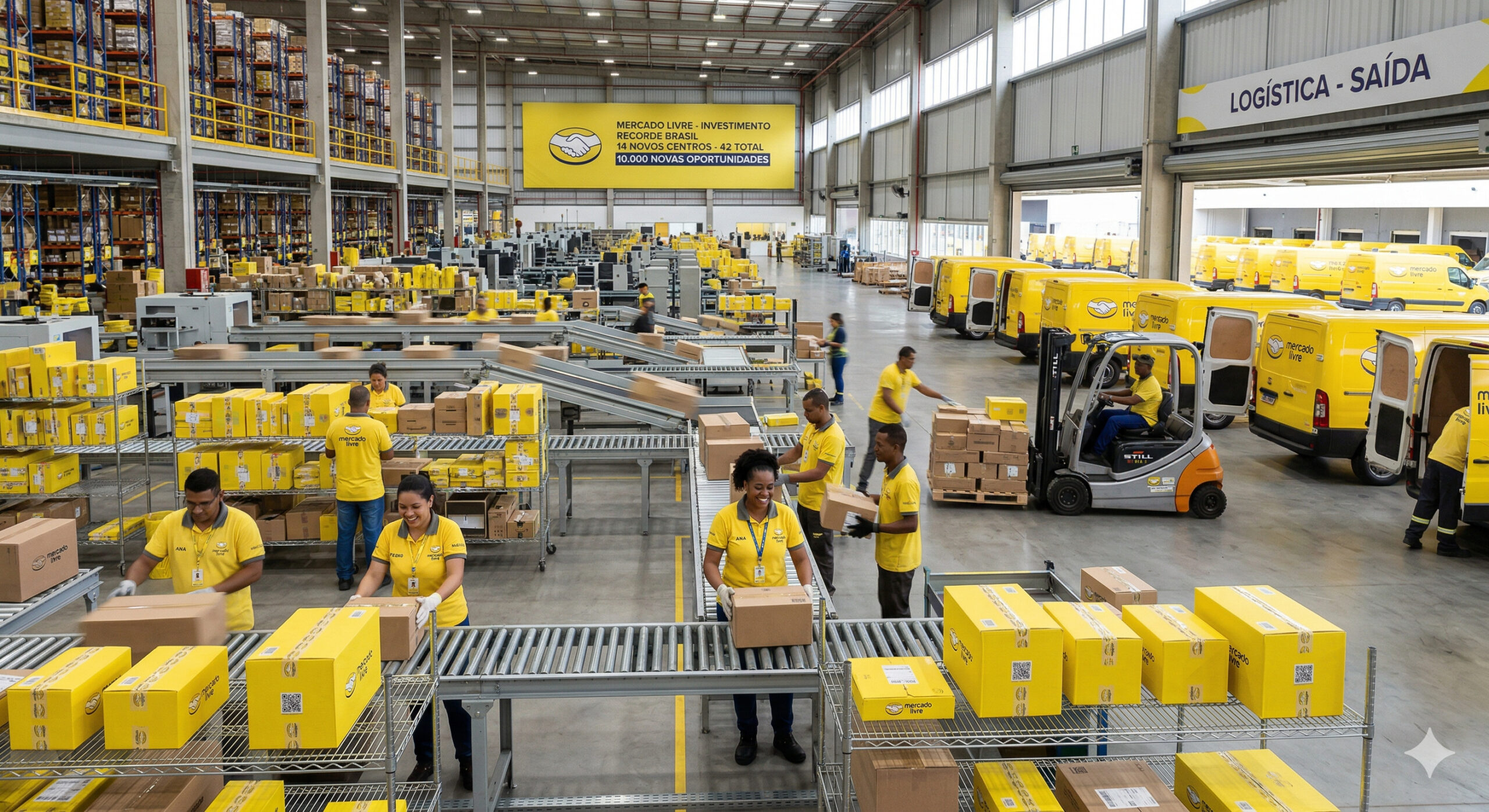
Mercado Livre “opens the vault” and announces a record investment of R$ 57 billion in Brazil in 2026, a value 50% higher than the previous year, with an expansion plan that includes 14 new logistics centers, totaling 42 units in the country and hiring an additional 10,000 employees.
-
How investment in technology can revolutionize the national economy and enhance industrial gains, according to a study that highlights the direct impact on productivity, innovation, and wealth retention within Brazil.

-
The largest food company on the planet, JBS, has just opened a 4,000 square meter laboratory in Florianópolis to develop customized proteins that modulate muscle mass gain, immune response, and metabolic performance.

-
After nearly 30 bids and competition among industry giants, a Spanish company purchases one of the largest airports in Brazil for almost R$ 3 billion and takes over the management of Galeão in a concession that will last until 2039.

Origin and Functioning of Presumed Profit
The presumed profit regime was created in the 1990s during the economic reforms of the Fernando Henrique Cardoso government. The proposal aimed to simplify tax collection, reducing accounting costs and encouraging the formalization of companies. At the time, the model proved effective and contributed to increased federal revenue.
In practice, presumed profit allows companies to estimate profit based on a fixed percentage of gross revenue. Thus, instead of calculating the actual profit through detailed accounting records, the entrepreneur applies the presumed margin set for their activity. For services, for example, the current calculation base is 32% of gross revenue.
This percentage, known as profit presumption, varies according to the economic sector. The advantage of the system lies in its simplicity: less bureaucracy and lower accounting costs compared to the actual profit regime, which requires complete and detailed bookkeeping.
Difference in Relation to Actual Profit
In the actual profit regime, taxes are levied on the company’s effective results, computed after deducting costs and expenses. This format is considered fairer but also more complex and burdensome for companies, which must hire robust accounting teams to avoid errors and penalties.
In presumed profit, however, taxation is based on fixed margins, which can be financially advantageous for businesses with above-average profits. If a service provider has an actual profit equivalent to 45% of revenue but pays taxes on 32%, there is a difference the government considers tax renunciation.
This is why the simplified regime has come under the radar of the current economic team, which believes it is necessary to reduce this benefit to increase revenue and make the system more balanced.
What Changes with the Proposal
According to the project, the presumption percentage will be adjusted by 10%. In the case of services, the base will increase from 32% to 35.2% of revenue. This seemingly small increase could significantly raise the tax burden on medium-sized companies.
The information was disclosed by the newspaper O GLOBO, which further highlighted that the revenue limit for the regime, set at R$ 78 million, has not been adjusted for inflation since 2013. This tends to reduce the number of companies eligible to opt for the model, increasing the pressure on companies that remain within the rules.
Tax experts consulted by the report noted that, in many cases, simplicity weighs more in the choice of the regime than the actual tax savings.
Criticisms and Expected Impacts
Experts point out that the measure could increase the operating costs of companies that already face high expenses with labor, inputs, and bureaucracy. For Carlos Eduardo Navarro, partner at the law firm Galvão Villani, Navarro, Zangiácomo e Bardella Advogados, presumed profit is not merely a matter of tax burden but also of administrative practicality.
Hermano Barbosa, from the law firm BMA, emphasized that simplification was the main reason for creating the regime in the 1990s. According to him, at that time, revenue grew precisely because more companies managed to formalize and pay their taxes correctly.
With the new proposal, however, critics argue that there is a risk of reducing this incentive, which may lead some companies to reconsider their tax strategy or even shift to actual profit.
Future Perspectives
The debate is now ongoing in the National Congress, where the project must undergo analysis in thematic committees before going to the plenary. The government argues that the linear cut is a way to make the system fairer, but legislators have already signaled resistance to the measure.
Meanwhile, entrepreneurs and consultants are awaiting definitions to plan for the future. If approved, the change will represent one of the largest adjustments to the presumed profit regime in over two decades, altering the way thousands of medium-sized companies handle their tax obligations.
What do you think about the government’s proposal to change the taxation for companies that declare under presumed profit, raising the calculation base of the IRPJ and CSLL?










Novamente esse **** apontando sua metralhadora para arrecadar do jeito mais fácil. Corte os gastos dos grandes como por exemplo os PIX para deputados.
Bando de FDPs defendendo esse desgoverno **** ****, não esqueçam ELEITROUXAS que vocês estão morando no mesmo país chamado Brasil o qual vocês apelidam de PATRIOTÁRIOS que vocês também **** doutrinados se auto proclamam bando de otários marionetes de **** bando de **** FDPs.
Como o Congresso não aprova a taxação de grandes fortunas, a isenção de quem ganha até $5.000,00, com contrapartida sobre os cerca de 140.000 afortunados, ele precisa aumentar a arrecadação, a fim de exercer as funções típicas de Estado (alocativa, distributiva e estabilizadora) diminuindo o grande entrave de nosso país, a desigualdade.
Companheiros e companheiras, essa é.minha opinião para que tenhamos uma sociedade mais fraterna.