





 Portuguese
  English
  Spanish
  5 min of reading
  17 comments


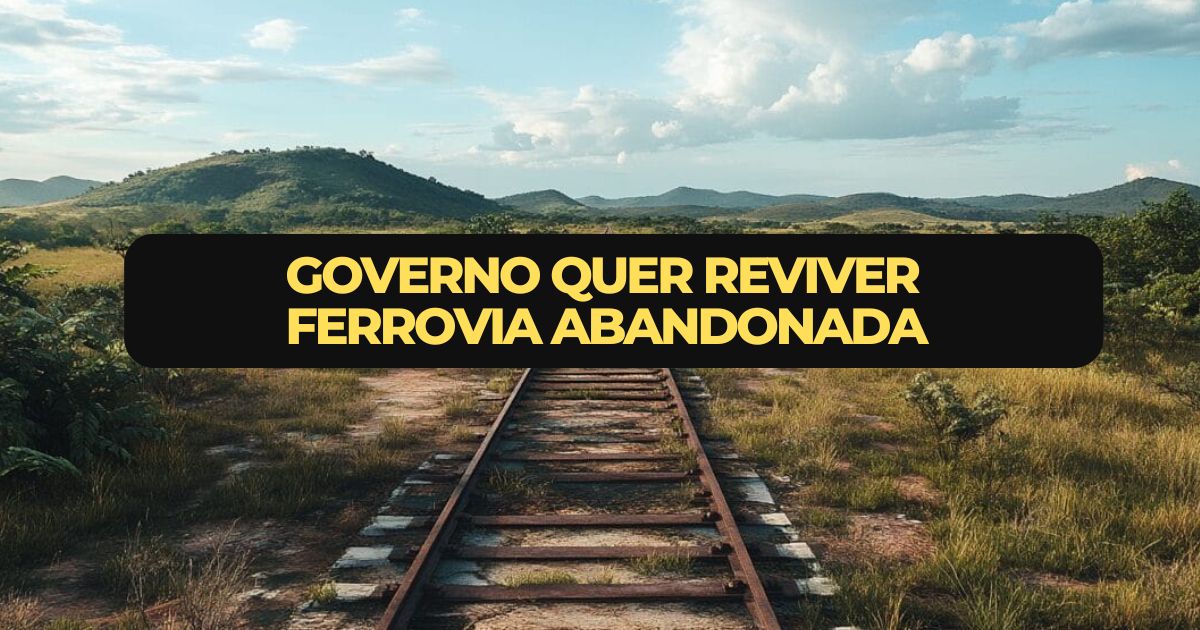


Brazil Can Recover Its Abandoned Railway Network, and Ceará Is Highlighted. Billion-Dollar Compensations in Dispute Promise to Move the Sector, with Possibilities for New Passenger Trains.
Brazil may be on the brink of witnessing a revival of its rail lines: an abandoned 600 km line in Ceará may resume operations with a differentiator that promises to heat up the debates and recover memories: passenger transportation.
However, the project is not limited to the return of old lines; it involves a strategic restructuring that will directly impact the railway infrastructure in the Northeast.
As a result, the Federal Government and regulatory agencies are exploring possibilities that even involve billion in compensations to boost the national railway network, while discussions are ongoing about who will control these resources.
-
Larger than entire cities in Brazil: BYD is building a 4.6 km² complex in Bahia with a capacity for 600,000 vehicles per year, but the discovery of 163 workers in conditions analogous to slavery has shaken the entire project.

-
With an investment of R$ 612 million, a capacity to process 1.2 million liters of milk per day, Piracanjuba inaugurates a mega cheese factory that increases national production, reduces dependence on imports, and repositions Brazil on the global dairy map.

-
Brazilian city gains industrial hub for 85 companies that is equivalent to 55 football fields.

-
Peugeot and Citroën factory in Argentina cuts production by half and opens a layoff program for more than 2,000 employees after Brazil drastically reduced purchases of Argentine vehicles.


Railway Revival: Strategic Project and New Possibilities
The movement surrounding the revitalization of abandoned railways began with the National Land Transport Agency (ANTT) and the National Department of Transport Infrastructure (DNIT), which conducted studies on the national railway network and the return of abandoned concessions.
According to ANTT, the return request made by the concessionaire Ferrovia Transnordestina Logística (FTL) could pave the way for the use of the infrastructure in passenger transport, an alternative that is gaining support in the sector.
For Ceará, these discussions not only represent a reactivation of the railway but could also influence the integration of the new Transnordestina, currently under construction by TLSA.
This revival would have a significant impact on local infrastructure, strengthening connections and creating logistical development opportunities in the State.
Studies and Compensations: Billions at Stake
According to the Ministry of Transport, a working group is assessing options to optimize the returned infrastructure by FTL, including its reintegration into the Union.
Meanwhile, the public company Infra S.A. is conducting studies to analyze the potential use of this network, aiming for future concessions and new railway operations.
The reactivation of the Brazilian railway network, abandoned or underutilized, represents not only an opportunity for expansion in the transport sector but also a financial gain.
The value of compensations for abandoned stretches can reach up to R$ 20 billion throughout the country. These resources, however, are at the center of a dispute between ministries.
The Ministry of Transport advocates that the amount be reinvested in railway infrastructure, while the Treasury considers allocating it to government fiscal adjustments.
600 km Line in Ceará: Potential for Passenger Transport?
One of the lines under study for revival is the segment of 600 km connecting Fortaleza to Crato in Ceará.
This line was identified by ANTT as part of a set of railways with potential for reuse, enabling passenger transport between strategic regions of the State.
The use for passengers, however, still depends on the completion of studies conducted by Infra S.A. and the definition of guidelines by the Ministry of Transport.
The final destination of the returned lines to the Union, according to ANTT, will be a public policy decision defined by the Ministry of Transport, which is studying concession proposals for interested companies.
The Strategic Role of Fiec and the Green Hydrogen Hub
Heitor Studart, coordinator of the Federation of Industries of the State of Ceará (Fiec), considers the reactivation of the railway network an essential step for integrating the Ceará economy with other hubs in the country.
Studart argues that the recovery of the old Transnordestina is crucial for connecting Ceará to other railways, such as the North-South Railway and the Central-Atlantic Railway, which interlink with the West-East Integration Railway and the Center-West Integration Railway.
According to Studart, the plan for the railway in Ceará aligns with the development of the green hydrogen hub in the State, and railway sector works are a fundamental part of this vision.
Fiec believes that the future of the Ceará industrial sector depends on a robust and modern integration with the national network, as railway transport is a low-cost, high-capacity mode essential for the green hydrogen project.
Additionally, Studart suggests that the returned concessions could give rise to short lines, short passenger transport lines that would directly benefit urban and regional transport.
“The revival of the railway sector is a priority for the industrial and logistical development of Ceará”, says Studart.
Dispute Over Compensations and Impact for the Future Railway
Today, approximately 36% of Brazil’s railways are unused or scrapped, representing a significant volume of infrastructure with potential reimbursement value.
According to Folha de São Paulo, the average compensation for each deactivated kilometer ranges between R$ 1.5 million and R$ 2 million, but the amounts may undergo adjustments based on the complexity of each stretch.
Fiec and other entities are advocating for the compensation amounts to be reinvested exclusively in the railway sector.
This allocation, according to experts, is strategic for the development of national infrastructure and alignment with the green hydrogen project.
However, the dispute between the Ministries of Transport and the Treasury to decide the destination of these resources is intensifying, and the outcome is still uncertain.
Studart emphasizes that if applied correctly, the R$ 20 billion in compensations could be crucial for restructuring national logistics and boosting innovative sectors.
“It is essential that these resources are redirected to the railway sector, as only then will we be able to modernize our network and sustain projects like green hydrogen”, he states.
Future of Railways and Passenger Transport
The final decision on the use of returned railways for passenger transport represents a potential milestone for urban mobility in the country.
Although the Ministry of Transport still needs to define the guidelines, the reactivation of railway stretches for passengers can be a response to the demand for alternatives to road transport, especially in urban and metropolitan regions.
For Ceará, the resumption of tracks between Fortaleza and Crato offers a unique opportunity to revive passenger railway transport and connect cities efficiently and sustainably.
However, for this vision to come to fruition, society, governments, and companies will need to align interests and decisions, prioritizing sustainable growth and innovation in infrastructure.






Vcs acreditam???
Sim, é importante considerar todas as informações e pontos de vista para fazer julgamentos informados.
Eu sou de Magé RJ acho engraçado Magé onde circulou a primeira estrada de ferro na América do sul ninguém liga para está cidade só tem um trem a diesel que atende porcamente ninguém fala nada de melhora no transporte ferroviário e atende a tress município e triste faz um ele
Com os gastos que este governo está tendo duvido que isto sai do papel, se isto começar vai ser uma fonte de corrupção principalmente neste governo do PT.