





 Portuguese
  English
  Spanish
  4 min of reading
  0 comments


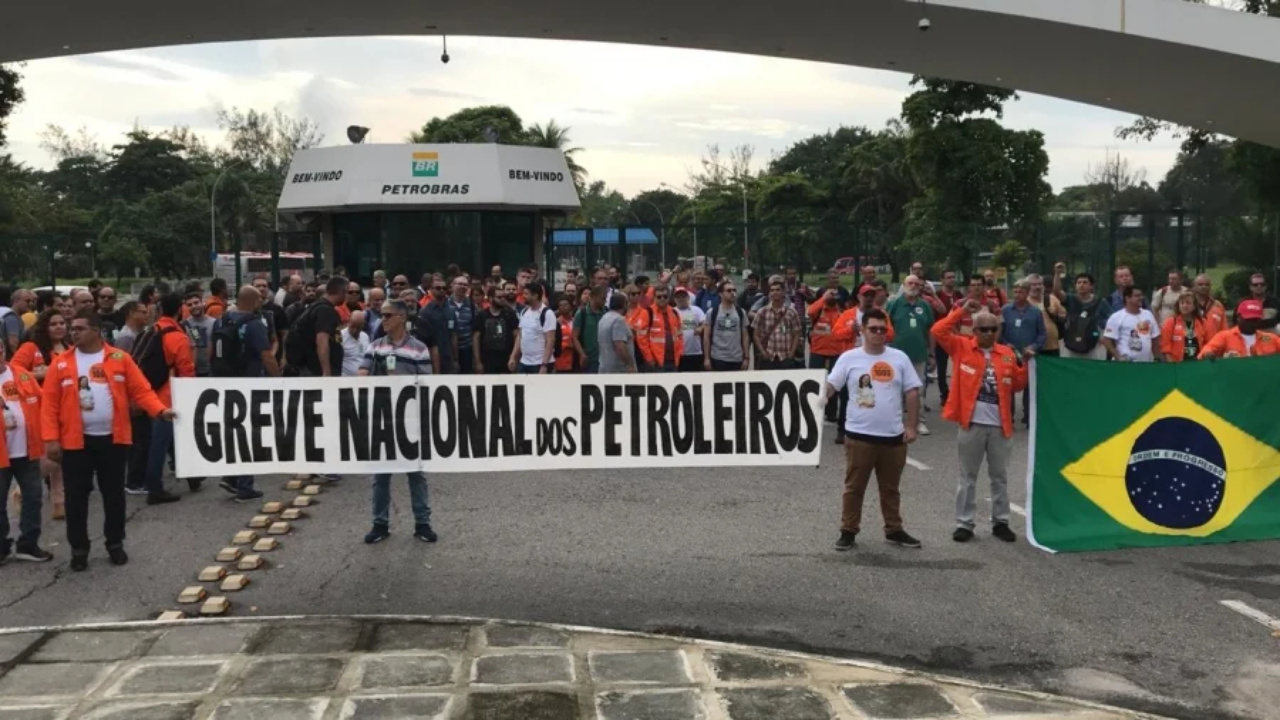
Even With Indefinite National Strike, Petrobras Claims That Oil and Derivatives Production Continues Normally. Company Activated Contingency Teams and States That Supply to the Market Is Guaranteed.
Since the early morning of this Monday (15), workers from Petrobras have initiated an indefinite national strike. The movement occurs amid negotiations for the Collective Labor Agreement and mobilizes different units of the state company in various regions of the country.
Nevertheless, according to the company, there has been no impact on oil production or the manufacturing of derivatives so far.
The strike rekindles the debate over operational safety, union negotiation, and supply continuity. However, Petrobras claims that it has adopted protocols already foreseen for this type of situation.
-
The next exploration auction in the pre-salt will offer 23 blocks in the Campos and Santos basins and may change the interest of oil companies in Brazil.

-
The next exploration auction in the pre-salt will offer 23 blocks in the Campos and Santos basins and could change the interest of oil companies in Brazil.

-
Red Sea, from biblical site to oil hope: South Korea reveals ambitious plan to create new oil routes through the Red Sea with the dispatch of 5 ships, agreements with 3 countries, and a focus on the strategic port of Yanbu.

-
SISTAC expands contract with Petrobras for maintenance of platforms in the Santos, Campos, and Espírito Santo basins using ROV and specialized underwater operations.
Historically, when strikes last a few days, the reflections on oil production tend to be limited.
Petrobras Activates Contingency and Reinforces Supply Guarantee
According to the state company, operations remain under control thanks to the actions of contingency teams. These teams temporarily take over activities in platforms, refineries, and terminals, avoiding interruptions.
In an official statement, the company highlighted its institutional position in the face of the strike movement.
“The company has implemented contingency measures to ensure the continuity of operations and emphasizes that supply to the market is guaranteed,” said Petrobras, while reaffirming its respect for the employees’ right to protest.
This operational model is common in the oil sector, especially in large companies. Therefore, the state company claims that it maintains production and refining within normality, even in the face of national mobilization.
However, while Petrobras downplays impacts, the Unified Federation of Oil Workers (FUP) highlights the strong adherence to the movement. According to the entity, the strike began with the handover of operations at the platforms in Espírito Santo and North Fluminense to the contingency teams.
In addition, there was full participation from the workers at the Coari Maritime Terminal in Amazonas.
Even in the early hours of the day, the FUP reported that six refineries did not perform the shift change at 7 AM. This procedure prevents the regular rotation of teams and requires, for safety protocol, the immediate activation of contingency.
The situation involves the Regap refinery in Betim (MG), Reduc in Duque de Caxias (RJ), Replan in Paulínia (SP), Recap in Mauá (SP), Revap in São José dos Campos (SP), and Repar in Araucária (PR). According to the federation, the scenario reinforces the national and unified character of the strike in the oil sector.
Collective Agreement Negotiation Continues as Background of the Conflict
Petrobras claims that it has been negotiating the Collective Labor Agreement since the end of August. Last Tuesday, the company presented a new proposal. According to the state company, the text includes advances regarding the main union demands presented so far.
“Petrobras is committed to concluding the negotiation of the agreement at the negotiation table with the union entities.”
On the other hand, the FUP argues that the workers’ agenda was submitted over three months ago and that central points remain unanswered. Among them are the fair distribution of the wealth generated by Petrobras, the end of the Deficit Equilibrium Plans of Petros, and the recognition of the so-called Sovereign Brazil agenda.
This last axis includes a suspension of divestments and layoffs in the oil exploration and production sector, considered strategic by the category.
Mobilization Extends Beyond Oil Production
According to the FUP, the strike is not limited to platforms and refineries. There are reports of mobilization at gas processing terminals and administrative bases. For the director-general of the entity, the adherence demonstrates the strength of the movement right on the first day.
“The first day of the national strike of the oil category already shows a very strong movement in all states of the country,” said Deyvid Bacelar in an official statement.
Alongside the strike, retirees and pensioners are holding a vigil in front of the Edisen, the Petrobras headquarters building, in Rio de Janeiro.
The demonstration has already reached its fifth consecutive day, according to the federation, and increases pressure on the state company at a sensitive time for the oil sector in the country.









Seja o primeiro a reagir!