





 Portuguese
  English
  Spanish
  4 min of reading
  0 comments


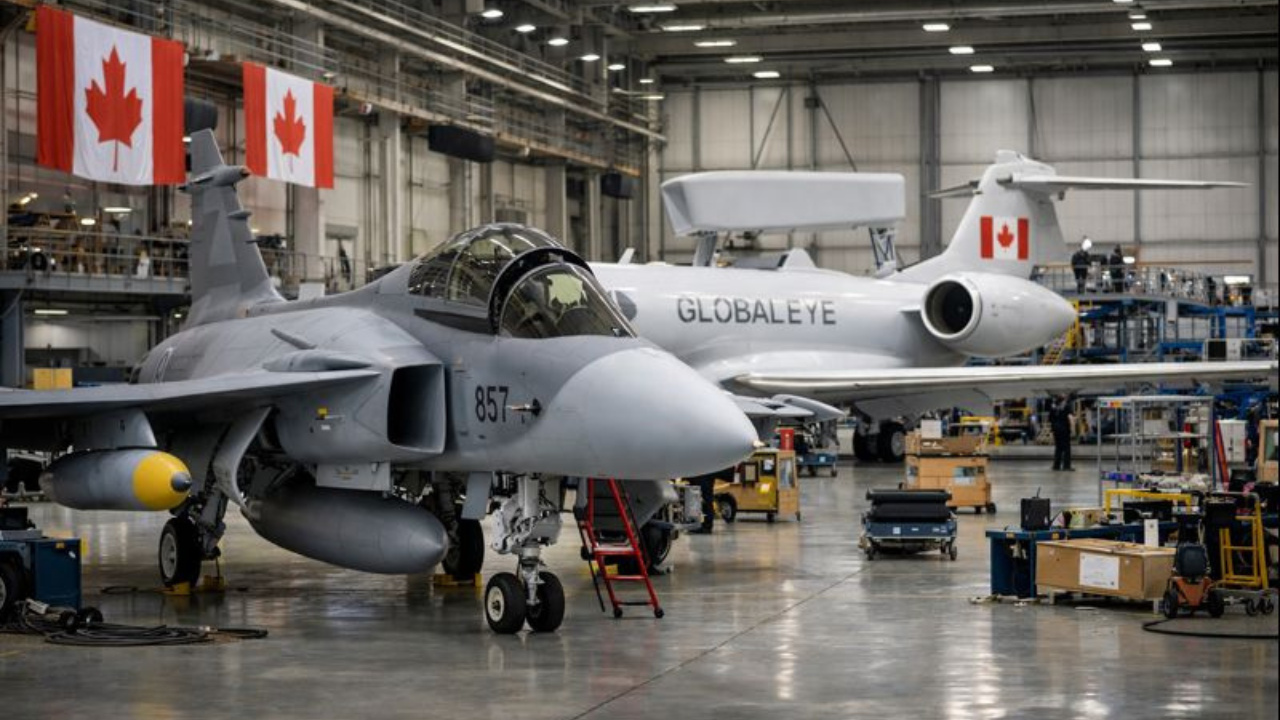
Debate On The F-35A Gains New Weight With Gripen E, GlobalEye, And Focus On The Canadian Aerospace Industry.
Saab intensified pressure on the Government of Canada by presenting an industrial plan that provides for the local production of Gripen E and the early warning aircraft GlobalEye, with the potential to sustain more than 12,600 jobs in the country.
The proposal comes amid a review of the acquisition program for the F-35A, conducted in Ottawa, and reopens discussions on issues such as industrial sovereignty, supply chain resilience, and strengthening the Canadian aerospace industry.
Gripen E And GlobalEye As A Strategic Alternative To The F-35A
The offer presented by Saab goes beyond simply replacing a military platform.
-
The German “steel monster” weighing 55 tons fires up to 10 projectiles per minute at over 40 km and avoids counterattacks on the battlefield by moving quickly to escape enemy attacks; meet the Panzerhaubitze 2000.

-
USS Gerald R. Ford, the largest aircraft carrier in the world, returns to sea after a fire in the laundry in the Red Sea; repaired in Crete, it resumes missions of Operation Epic Fury against Iran.

-
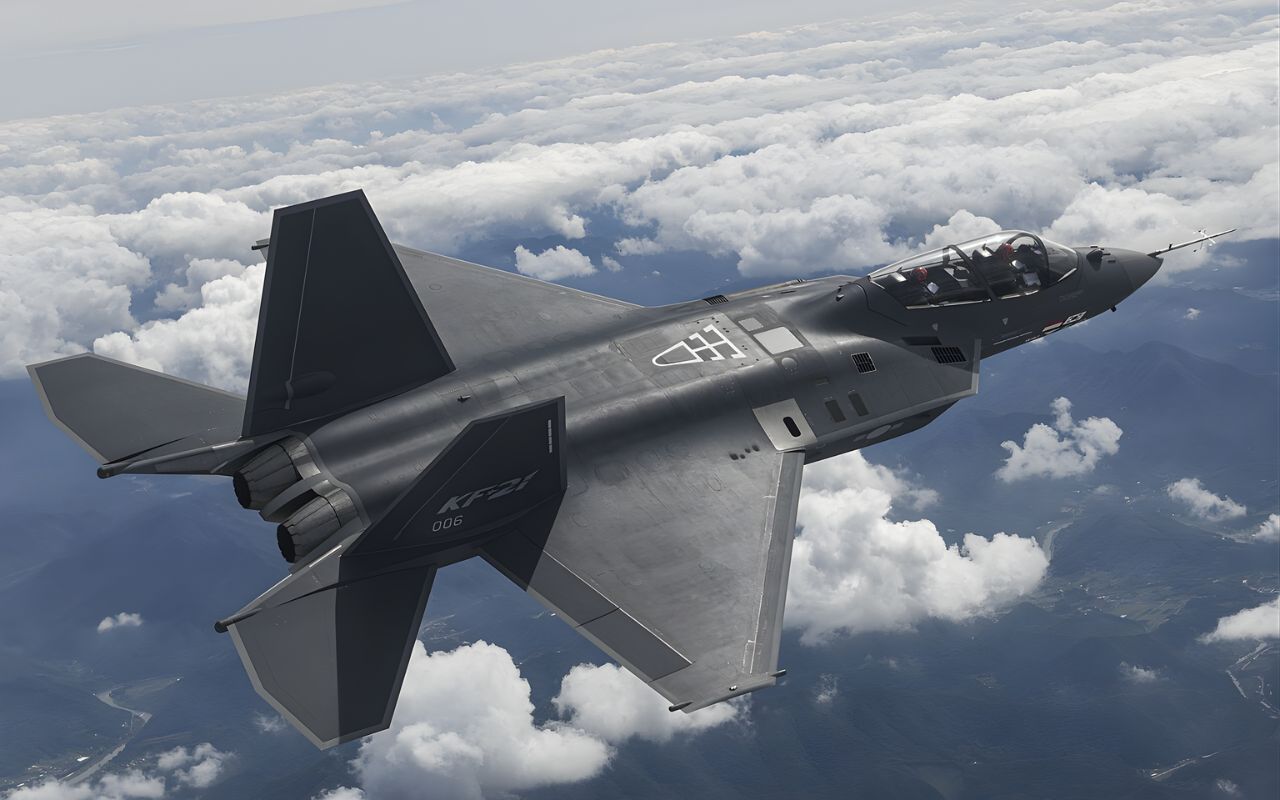
Military power: South Korea’s new KF-21 fighter jet will be a key component in replacing the aging aircraft of the air force, placing the country on the map of air military powers.
-
With 310 meters, 80 thousand tons, and capable of operating for 45 years, the new nuclear aircraft carrier France Libre will be the largest in France and will enter service in 2038.

By positioning the Gripen E and GlobalEye as an integrated package, the Swedish company aims to transform the choice of Canada’s future fighter into a long-term decision that combines defense, economy, and strategic autonomy.
According to information published by the newspaper The Globe and Mail, the industrial plan provides for the final assembly and integration of systems for these aircraft on Canadian soil.
The model would be based on an expanded partnership with Bombardier, which already supplies the base aircraft used in the GlobalEye.
Canadian Aerospace Industry At The Center Of The Proposal
According to Saab, local production would allow Canada to develop advanced competencies in engineering, sensor integration, maintenance, training, and life cycle support for the aircraft.
This set of activities, according to the company, would strengthen the Canadian aerospace industry and reduce dependence on foreign suppliers.
Furthermore, the manufacturer argues that the technology transfer associated with the Gripen E would give operators greater autonomy over software updates, logistics, and future modernization, a point considered sensitive in highly centralized programs like the F-35A.
Canadian Government Confirms Review Of Swedish Proposal
The Canadian Minister of Industry, Mélanie Joly, publicly confirmed that the government is evaluating the proposal.
According to her, the initiative fits into strengthening industrial and defense relations between Canada and Sweden, formalized at the beginning of 2025.
In statements to the press, Joly emphasized that the existing cooperation with Bombardier in the GlobalEye program demonstrates the feasibility of expanding this model to other strategic areas, aligning national defense and economic development.
GlobalEye And Air Surveillance Take Center Stage
GlobalEye plays a central role in Saab’s strategy.
Currently, Bombardier provides the base aircraft, while Saab integrates the Erieye radar with extended range and mission systems in Sweden.
In the package presented to Ottawa, the company argues that a significant portion of this work could be transferred to Canada.
This way, the country could become a reference hub for aircraft focused on air surveillance and command and control.
F-35A Remains Strong, But Costs Elevate The Debate
Data released by Radio-Canada indicates that the F-35A scored higher than the Gripen E in the Future Fighter Capability Project evaluation.
Still, the debate gained momentum after Prime Minister Mark Carney ordered a review of the program shortly after taking office.
While Canada maintains a contract for the purchase of 88 F-35A and has reaffirmed an initial acquisition of 16 aircraft.
Official reports indicate that the total cost of the program has significantly increased, pressured by inflation, exchange rate fluctuations, and additional investments in infrastructure.
International Experience Reinforces Caution
This movement is not exclusive to Canada.
Switzerland decided to reduce the number of F-35s to be acquired after revisions indicated a risk of exceeding the approved national referendum budget cap.
Analysts cite the Swiss case as a warning about the financial risks associated with large fifth-generation defense programs.
Strategic Decision Goes Beyond The Military Field
For Ottawa, the final choice involves a delicate balance. On one hand, the F-35A offers interoperability and advanced capabilities.
On the other hand, proposals like Saab’s promise greater economic return, job creation, and strengthening of industrial sovereignty.
Thus, by insisting on the Gripen E and GlobalEye as an integrated solution, Saab attempts to reposition the debate and broaden the criteria for the Canadian decision.
The outcome could redefine not only the country’s combat fleet but also Canada’s role in the global aerospace industry in the coming decades.









Seja o primeiro a reagir!