





 Portuguese
  English
  Spanish
  3 min of reading
  21 comments


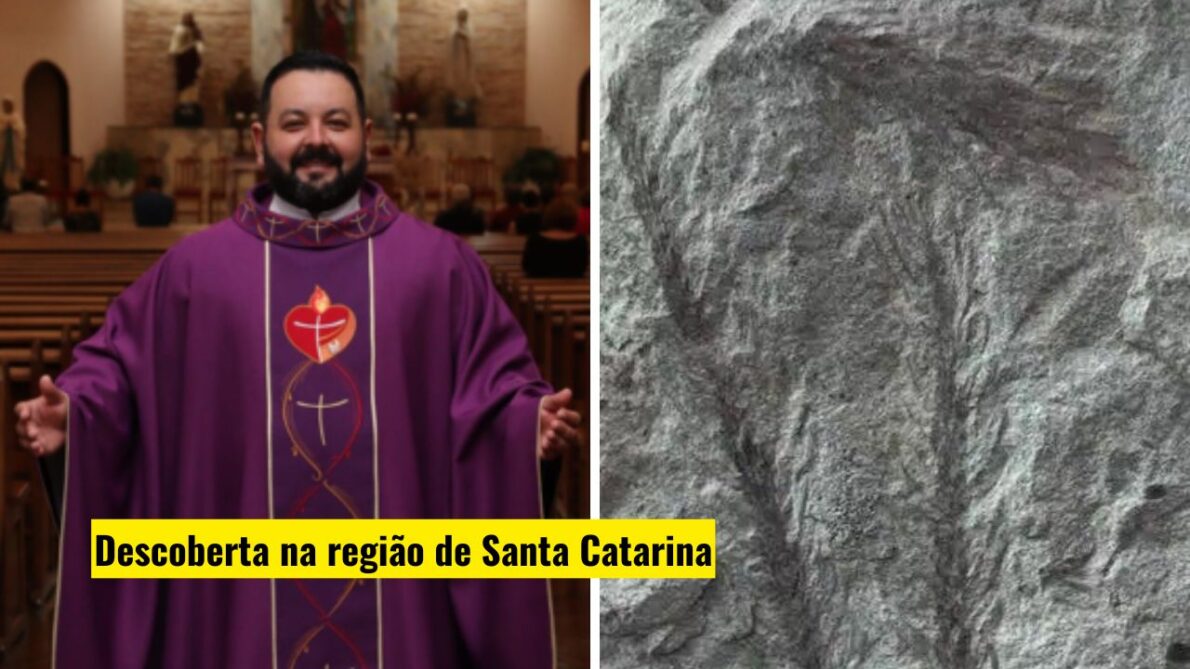

A Fossil of a Conifer Plant With 270 Million Years Was Discovered in Brazil, More Precisely in the Santa Catarina Region
A fossil of 270 million years was found in Brazil during a religious walk in Santa Catarina, revealing a prehistoric conifer plant of the species Krauselcladus canoinhensis. The discovery, made on May 1st, sheds light on the flora of the Permian period and the evolution of plants in Brazilian territory.
Group Finds Fossil During Religious Walk
On May 1st, a group of 12 people, led by Father Marlon Malacoski, found a fossil while participating in a religious walk in Santa Catarina. The group’s attention was drawn to a stone with a peculiar shape, which ultimately revealed the valuable fossil of a conifer plant related to current araucarias. The walk, held from April 28 to May 3, culminated in this surprising discovery.
The Scientific Importance of the Finding
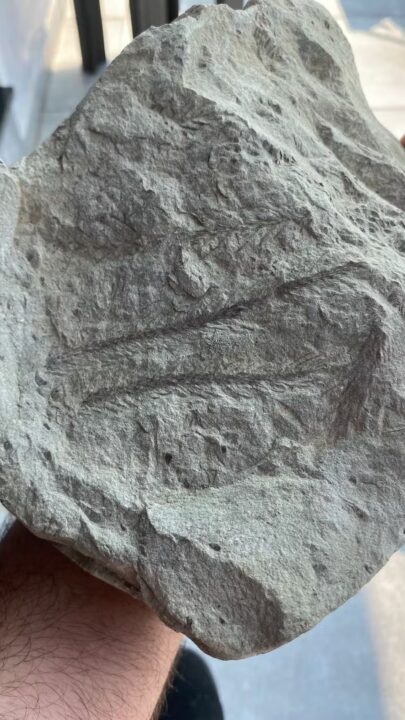
According to Luiz Carlos Weinschütz, a paleontologist at the Paleontological Research Center at the University of Contestado, the discovery of this fossil is fundamental to understanding the geological and biological past of the region. Similar fossils have already been found in other parts of Northern Santa Catarina, such as Canoinhas and Três Barras, and were first described in the 1970s. Although they do not have the fossil in hand for a complete laboratory analysis, researchers managed to identify it based on photos and videos sent by the group.
-
NASA issues a warning for the feared Godzilla El Niño that could change the planet’s climate in 2026 with extreme warming of the Pacific capable of causing devastating droughts in some regions and historic floods in others simultaneously.

-
Archaeologists discover a 100-meter ship graveyard in a submerged Greek city, and what has appeared on the seabed of Libya could change what was known about this ancient port.

-
You buy the refrigerator and still have to see ads: Samsung starts displaying advertising on appliances and generates negative reactions among consumers.

-
What can really trigger large volcanic eruptions? Research suggests that gas returning to the magma may be more dangerous than gas escaping from it.

What Was the Prehistoric Plant Krauselcladus Canoinhensis Like?
The Krauselcladus canoinhensis was a conifer plant that lived 270 million years ago, long before the emergence of flowering and fruiting trees. The landscape at that time was dominated by ferns, pteridophytes, and conifers. In life, the plant had an appearance reminiscent of pine thatch, with branches and twigs similar to those of current araucarias, but without the characteristic cup shape of older trees. For a more precise comparison, its appearance was closer to that of a cedar, whose leaves resembled those of modern araucarias.
Why Is the Discovery of This Fossil Relevant to Brazil?
Identifying more occurrences of the Krauselcladus canoinhensis fossil is crucial for mapping the distribution of this species in the region. Each new discovery provides additional information about the organisms that coexisted in the same time and place, expanding scientists’ understanding of the paleogeography of Santa Catarina and Brazil during the Permian period. This discovery helps to paint a clearer picture of the flora that existed in the region millions of years ago, contributing to the reconstruction of the geological past of Brazil.
Visit the Museum of Earth and Life
Fossils similar to the one discovered by the group can be seen at the Museum of Earth and Life, located in Mafra, Santa Catarina. This institution houses various paleontological relics that help tell the story of the evolution of life on Earth. The museum is an essential stop for those who wish to better understand the distant past of Brazil and the natural history of Santa Catarina.
The Importance of Paleontology in Brazil
Each new finding, like this 270 million-year-old fossil, is an additional piece in the great puzzle of Brazil’s natural history. For Luiz Carlos Weinschütz, the discovery is yet another opportunity to broaden knowledge about Northern Santa Catarina during the Permian period. With each new piece of information, researchers can assemble a more detailed “photograph” of the past, enriching the science and natural history of the state.
Paleontology, in addition to being crucial for science, also has the power to engage the community in fascinating discoveries. Continuing to explore and preserve these natural riches is essential for reconstructing the Earth’s history and the geological eras that shaped the world as we know it today.
Leave your comments about this fascinating discovery! What do you think about the importance of this fossil for understanding the past of Brazil? Have you visited the Museum of Earth and Life in Santa Catarina?








Belo achado.
A história de nisso planeta é uma sucessão de fases evolutivas que começou com a explosão de nossa estrela mãe, o Sol. Conhecemos quase nada dessa história apenas conjeturamos e teorizamos sobre desta evolução, baseadas em pequenos fragmentos que encontramos e com o avanço e ajuda da tecnologia, conseguimos identificar mais uma peça deste imenso quebra cabeça. Uma pedra? Não, mais uma peça do quebra cabeças. Isso tudo é simplesmente fascinante!!
Isso é mentira… não existe nada com 270 milhões de anos… se observarmos a História da criação da Terra… veremos que não procede esses esses anos.