





 Portuguese
  English
  Spanish
  6 min of reading
  0 comments


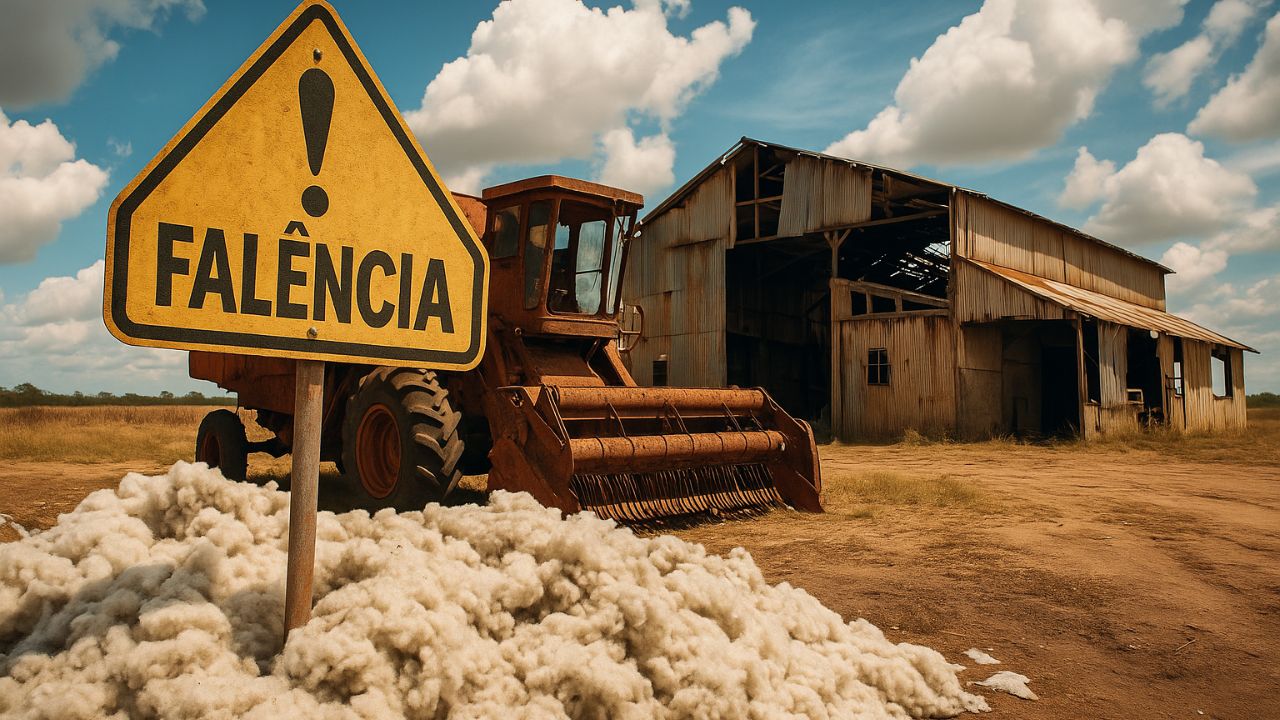
Creditors Approve Judicial Recovery Converted into Bankruptcy After Years of Inactivity, Insufficient Assets, and a Billion-Dollar Liability Threatening Over 300 Agricultural Creditors
The Pupim Group, once one of the largest cotton producers in Brazil, comes to an end with the judicial recovery converted into bankruptcy after nearly a decade in crisis, failing to resume operations or honor the plan approved in assembly. The decision by creditors ends the trajectory of the conglomerate that was once a symbol of agricultural expansion in Mato Grosso and is now remembered for the deficit that could reach R$ 6 billion.
At the center of the process is the judicial recovery converted into bankruptcy due to lack of economic viability, operational incapacity, and a clear mismatch between assets and debts.
The company has not operated since 2019, lacks the minimum structure of machinery and personnel to return to the field, and accumulates tax and private debts that, even with discounts and renegotiations, do not fit in the reality of available assets.
-
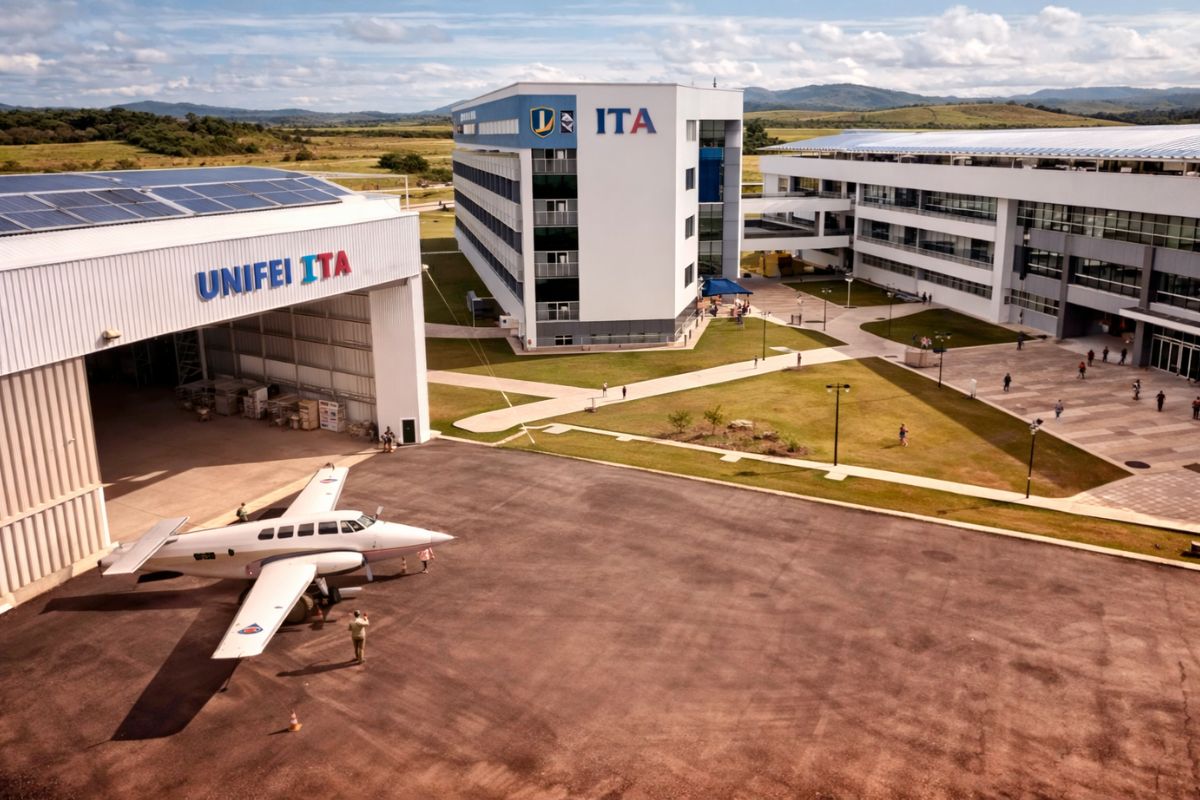
The institute that trained the greatest aerospace engineers in Brazil has just opened its first campus outside São Paulo after 75 years: ITA Ceará will have R$ 445 million, new courses in energy and systems, and classes are expected to start in 2027.
-
Luciano Hang, owner of Havan, goes to Juiz de Fora after the tragedy in February, brings R$ 1 million, hands out R$ 2,000 cards, and donates up to R$ 15,000 to victims in the region.

-
The Brazilian passport allows legal residence in dozens of countries without the need for a prior visa, and most Brazilians are unaware that they can apply for residency directly upon arriving in nations in South America, Africa, and even Europe.

-
Petrobras sends a message to Brazilian truck drivers after fuel collapse and reveals plan to have 100% domestic diesel.

The result is an emblematic case for the entire cotton sector and for agriculture that resorts to judicial recovery as a last-ditch effort for survival.
From the Peak as “King of Cotton” to Financial Collapse
For many years, the Pupim Group was synonymous with scale. Businessman José Pupim was even called the “king of cotton”, with over 100,000 hectares planted in Mato Grosso and a structure that placed him among the giants of the sector.
The strategy was aggressive: expansion of area, taking on high volumes of credit, and strong exposure to market fluctuations.
As early as 2014, even before the formal request for recovery, the warning sign became evident.
A farm of about 45,000 hectares in Paratinga, Mato Grosso, was seized in the enforcement of guarantees tied to a loan of approximately 100 million dollars.
From there, the machinery began to jam. In 2015, the request for judicial recovery was made, only approved in 2017, already with liabilities exceeding R$ 1 billion.
From this point on, the story became that of many companies in crisis: high debt, constant renegotiation, and weakened operations. Instead of recovering, the group continued accumulating commitments and distancing itself from its actual payment capacity.
How the Debt Grew to the Breaking Point


The original judicial recovery plan of the Pupim Group tried to organize liabilities that had already surpassed R$ 1 billion. Over the years, however, the company took on new loans to try to maintain some activity, adding approximately another R$ 1 billion in additional debts.
A recent study accessed by creditors estimated the liability around R$ 4.5 billion, with over 300 creditors involved. The same report points out that if previous decisions granting discounts on debts are reviewed, the total amount could approach R$ 6 billion.
On the other side of the equation is the insufficiency of assets. Even considering the sale of all assets at market value, the estimate is around R$ 2 billion to R$ 3 billion.
These amounts would be enough to settle unsecured creditors, labor claims, and about 80% of secured creditors, leaving a significant portion uncovered.
In parallel, the company has ceased actual operations. Since 2019, there has been no consistent productive activity nor agricultural structure that allows for a robust recovery. Without production, there is no cash generation, and without cash, there is no way to sustain a judicial recovery plan that depends on operational flow.
The Role of the Government of Mato Grosso and the Turn to Bankruptcy
The recent turning point came when the government of Mato Grosso, also a creditor, asked for the judicial recovery to be converted into bankruptcy.
The central argument was the accumulation of unpaid tax debts and the fact that the group itself had not complied with the refinancing plan it proposed.
In light of this scenario, creditors gathered and approved the judicial recovery converted into bankruptcy, acknowledging that there were no longer objective conditions for recovery.
The company no longer had the capacity for operational recovery, nor the ability to honor the plan adjusted in 2023, which had incorporated new debts and extended deadlines.
Among the creditors are banks such as Banco do Brasil, Banco Votorantim, and Banco ABC, input companies such as Syngenta, Bayer, FMC, and Mosaic, as well as seed companies and large trading firms such as Cargill.
It is a complete chain of agriculture impacted by a single collapse, from financing to production, passing through the input industry and international marketing.
Judicial Recovery Converted into Bankruptcy: What Happens to the Creditors
With the judicial recovery converted into bankruptcy, the process changes nature. It ceases to be a restructuring effort to become an organized liquidation of assets. A judicial administrator will be responsible for raising assets, organizing sale lots, prioritizing payments according to the legal order, and attempting to maximize returns for each class of creditor.
In practice, this means that:
Labor creditors will have priority within the limits established by law.
Creditors with secured claims, such as banks that hold farms and machinery in mortgage or pledge, should recover a significant portion of the amounts owed, although not fully.
Other unsecured creditors, who do not have specific guarantees, tend to receive only a fraction or nothing at all, depending on the amount effectively collected from the sale of assets.
The study that underpinned the decision warns that, even with the sale of everything at market value, not all creditors will be paid, which reinforces the severity of the case.
An Emblematic Case for Agriculture and Future Recoveries
The Pupim case is not just a story of a group that went bankrupt. It becomes a relevant precedent in judicial recoveries of rural producers and agribusiness groups. Throughout the process, there were discussions about debts incurred before the formal establishment of the company, about the inclusion of liabilities in the general creditors’ list, and about the legal structure used to request recovery.
These debates helped shape how the Justice System and the market began to view judicial recoveries in agriculture, especially when they involve individuals and corporate structures created shortly before the request. It is a reminder that legal engineering does not replace economic viability.
At the same time, the case highlights the risks of a model based on intense leverage, accelerated expansion, and high credit exposure. When the price cycle helps, everything seems sustainable. When the market turns, the structure collapses forcefully.
For the sector, there’s an additional alert. The current wave of judicial recoveries in agriculture occurs in a different context, with margin crises, high financial costs, and global volatility.
Nothing guarantees that groups that today enter recovery will not, in a few years, face the same outcome of judicial recovery converted into bankruptcy if there is not a deep adjustment of management, governance, and financial prudence.
In the end, the Pupim Group ceases to exist as a cotton powerhouse and becomes a case study. From ex-giant of the field to symbol of credit risk, the trajectory shows that scale without financial sustainability can quickly turn into a problem of billions for the entire chain.
And you, do you believe that judicial recovery still works as an effective instrument to save agribusiness companies, or are many cases just postponing an inevitable bankruptcy?









Seja o primeiro a reagir!