Portuguese
 Spanish


Unveiled in Thailand, the ORA 5 Plus pairs an advertised range of up to 520 km in its electric version with a hybrid option that does not rely on external charging.
GWM unveiled the ORA 5 Plus, a new SUV measuring 4.76 meters (15.6 feet) long and available with either a 204-hp electric powertrain or a 223-hp hybrid one, at an event in Bangkok, Thailand, on Nov. 10, 2026. The model is 28.7 centimeters (11.3 inches) longer than the standard ORA 5 and has a 495-liter cargo area, up from 272 liters in the original version.
A Nov. 18 report by Mecânica Online said the new model will come in two powertrain configurations and be built at the automaker’s plant in Rayong, Thailand. Prices will be announced on Dec. 1, and GWM has not confirmed whether the ORA 5 Plus will launch in Brazil.
GWM ORA 5 Plus grows 28.7 centimeters and gains a 495-liter cargo area

The biggest change to the ORA 5 Plus is its size. The new model measures 4,758 mm long, 1,833 mm wide and 1,630 mm tall, while retaining the 2,720-mm wheelbase of the standard ORA 5.
-
Fat Fender Garage founder Jason Noel says his team spent more than 15,000 hours turning a 1956 Ford F-100 into the GT/FX, an 800-horsepower supercharged pickup built to bring the attitude of a Ford GT to a classic truck

-
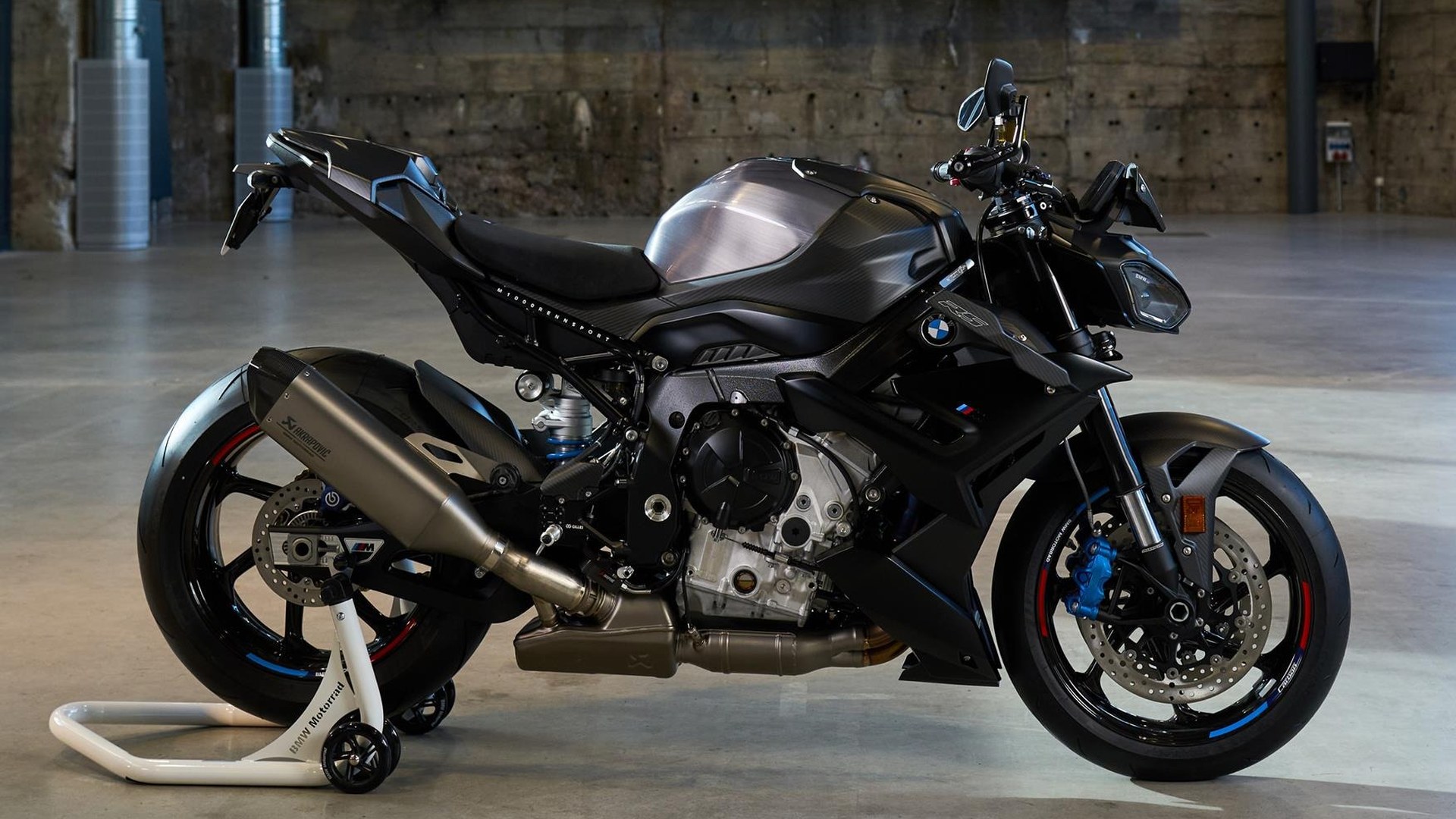
BMW Motorrad CEO Markus Flasch says the M 1000 RS, a 218-horsepower naked bike with the engine of the M 1000 RR superbike, is the world’s most powerful hyper naked, and only 1,000 will be built
-
Ringbrothers founders Mike and Jim Ring spent more than 5,500 hours turning a 1965 Pontiac Tempest into Billie, a 650-horsepower GTO convertible built for a client whose mother once had one, and fitted it with an espresso-handle shifter
-
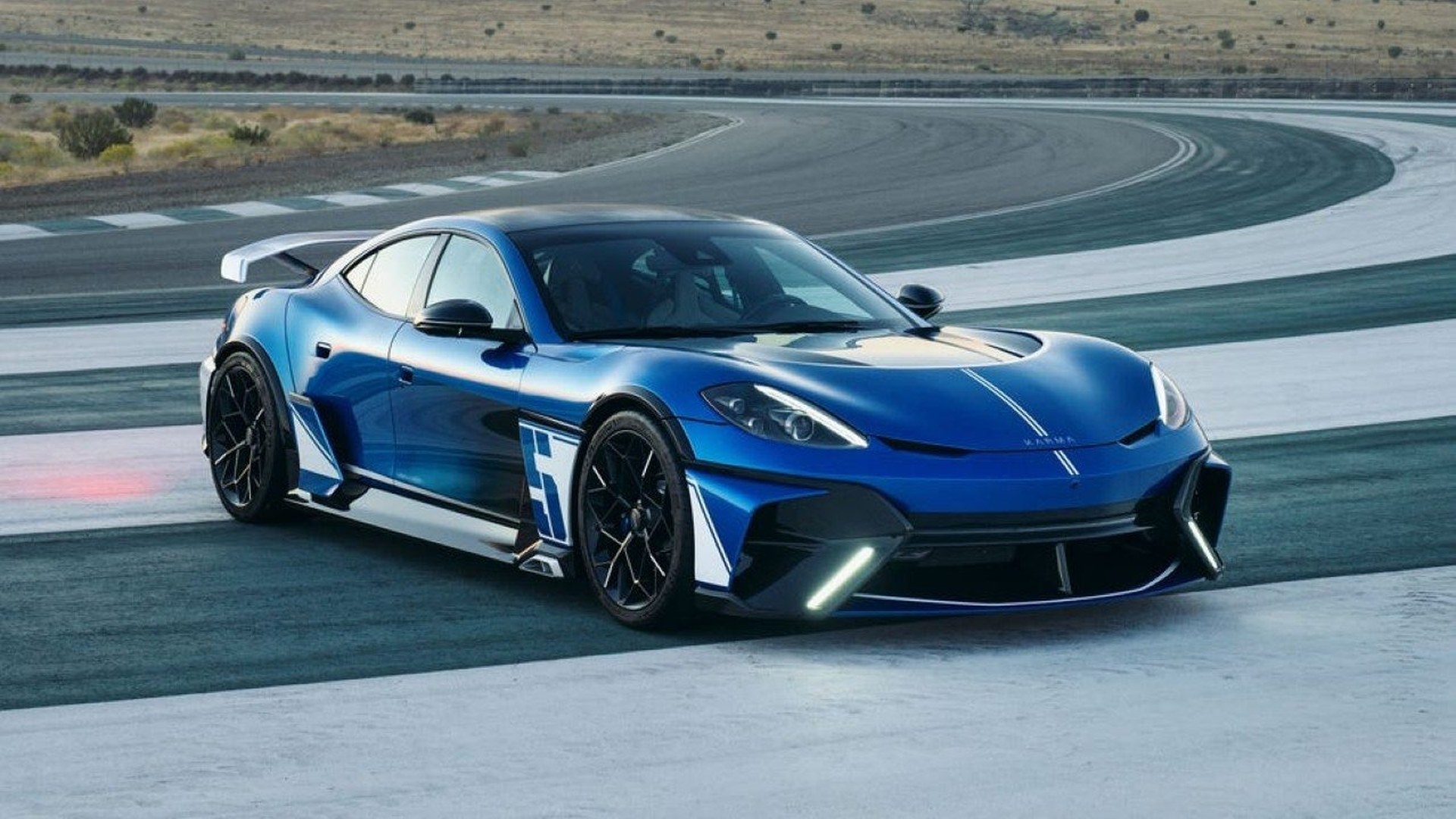
Karma CEO Marques McCammon says the one-off Eximius 1, built for a single unnamed client, pairs a 6.2-liter V8 with a plug-in series-hybrid system for about 1,200 horsepower and a 2.7-second run to 60 mph


That means the body is 287 mm longer, with no increase in the distance between the front and rear wheels. Most of the added length is at the rear, which has an elongated design and features reminiscent of a station wagon.
The result is more cargo capacity. The automaker’s figures, also reported by automotive site Paultan, show the cargo area expanding from 272 to 495 liters, a gain of 223 liters, or about 82%.
For families using the vehicle for road trips, the added room means more space for suitcases and other belongings. However, a larger cargo area does not necessarily translate into a comparable increase in passenger legroom, since the wheelbase remains unchanged.
GWM has retained the ORA family’s styling, with rounded headlights and smooth lines at the front. At the rear, the body is longer, with the lighting elements arranged horizontally.
204-hp electric version promises 520 kilometers of range and fast charging

The ORA 5 Plus EV Ultra uses a front-mounted electric motor that produces 204 metric horsepower and 260 Nm of torque. It is front-wheel drive, and its energy is stored in a 58.3-kWh battery.
GWM says the vehicle has a claimed range of 520 kilometers under the NEDC cycle, a test standard used to publicize vehicle specifications in Thailand.
Brazilian consumers should treat that figure with caution. The NEDC uses procedures that differ from those adopted by Inmetro, Brazil’s vehicle certification agency, which certifies the range of electric vehicles sold in the country.
It would therefore be inaccurate to assume that the ORA 5 Plus would necessarily travel 520 kilometers on a single charge under Brazilian conditions. Real-world range depends on factors such as speed, temperature, route and air-conditioning use.
For fast charging, the model supports up to 120 kW of DC power. The manufacturer says the battery can be charged from 30% to 80% in about 20 minutes, provided the charger and operating conditions allow the vehicle to reach its claimed performance.
The SUV also supports 6.6-kW AC charging and has vehicle-to-load (V2L) technology, which lets the battery power compatible external equipment, with output of up to 6 kW.
The claimed 0-to-100-km/h acceleration time is 7.5 seconds. These figures apply to the configuration presented in Thailand and are not specifications certified for the Brazilian market.
ORA 5 Plus hybrid version delivers 223 metric horsepower and claimed fuel economy of up to 23.3 km/l

The other configuration uses the Hi2 hybrid system, which combines a 1.5-liter turbocharged gasoline engine with an electric motor. The announced combined output is 223 hp, with maximum torque of 476 Nm.
The combustion engine produces 150 hp and 240 Nm, while the electric motor delivers up to 190 hp and 236 Nm. The system’s maximum output is not the direct sum of the two motors, because each component reaches its peak under different operating conditions.
According to GWM Thailand, the system uses a dedicated two-speed hybrid transmission known as a DHT and a 1.09-kWh battery.
The battery is recharged through the vehicle’s operation and energy recovery during deceleration. The driver does not need to plug in the hybrid ORA 5 Plus, unlike the fully electric version.
The automaker advertises fuel economy of up to 23.3 km/l under the NEDC test cycle. As with the electric version’s range, this figure cannot be directly compared with data from Brazil’s Vehicle Labeling Program.
The fuel tank holds 55 liters, and acceleration from 0 to 100 km/h is listed at 7.7 seconds. For consumers, the main difference between the two configurations lies in how they are refueled and their reliance on charging infrastructure.
The distinction also appears in other vehicles from the automaker. CPG has already covered updates to the GWM Haval H6 2026, which uses hybrid systems with its own distinct characteristics.
GWM’s new SUV has a 15.6-inch screen and 18 driver-assistance features
Both ORA 5 Plus versions unveiled in Thailand have a 15.6-inch infotainment system, paired with a 10.25-inch digital instrument cluster. The system offers wireless Apple CarPlay and Android Auto, as well as over-the-air software updates.
Equipment includes front seats with ventilation and power adjustment, a panoramic roof, a power tailgate and a 50-W wireless phone charger. The audio system has nine speakers, while the camera system provides a 360-degree view around the vehicle.
For safety, GWM lists six airbags and a package with 18 driver-assistance features. They include automatic emergency braking, adaptive cruise control, blind-spot monitoring and lane-keeping assistance.
These systems can assist the driver in certain situations, but they do not make the vehicle autonomous. The driver remains responsible for monitoring traffic and maintaining control of the steering.
The front suspension uses a MacPherson strut design, while the rear has an independent multilink setup. The automaker says the system was developed to provide stability and control, but real-world testing will be needed to assess its performance under different driving conditions.
Will the ORA 5 Plus come to Brazil? GWM already sells the smaller version for R$165,990
Although the ORA 5 Plus has been unveiled internationally, GWM has not yet announced plans to bring this longer version to the Brazilian market. Its first confirmed commercial launch is in Thailand, where the company has opened a reservation campaign.
Reservations are open from November 10 to 30, initially covering 1,000 units. Official prices will be announced on December 1, 2026, at the Thailand International Motor Expo, according to information published by local media and the automaker.
In Brazil, GWM already sells the standard ORA 5, launched in June 2026 with a 204-hp electric motor. According to a report published by Auto+ on November 10, the SUV’s price has risen to R$165,990, up from an initial launch offer in the R$159,000 range.
The Brazilian version has a range certified at 349 kilometers by Inmetro, Brazil’s national standards and metrology agency, and a 58.3-kWh battery, according to information released by the manufacturer. The figures show that the ORA 5 Plus retains part of the electric configuration but uses a body with more cargo capacity.
GWM is also expanding its presence in the country’s hybrid SUV segment. In a recent report, CPG covered the Haval H6’s competition with the Jeep Compass, showing the growing market share of Chinese electrified models in Brazil.
The ORA 5 Plus unveiling opens the possibility of expanding the lineup, but any forecast of a price in Brazil, imports or local assembly remains speculative. So far, there has been no official announcement confirming that the model will be sold in Brazil.
GWM has announced that its next step will be to release prices in Thailand on December 1, 2026, followed by the start of deliveries in that market. For Brazil, the manufacturer still needs to say whether it plans to expand the lineup with the new configuration.