





 Portuguese
  English
  Spanish
  5 min of reading
  0 comments


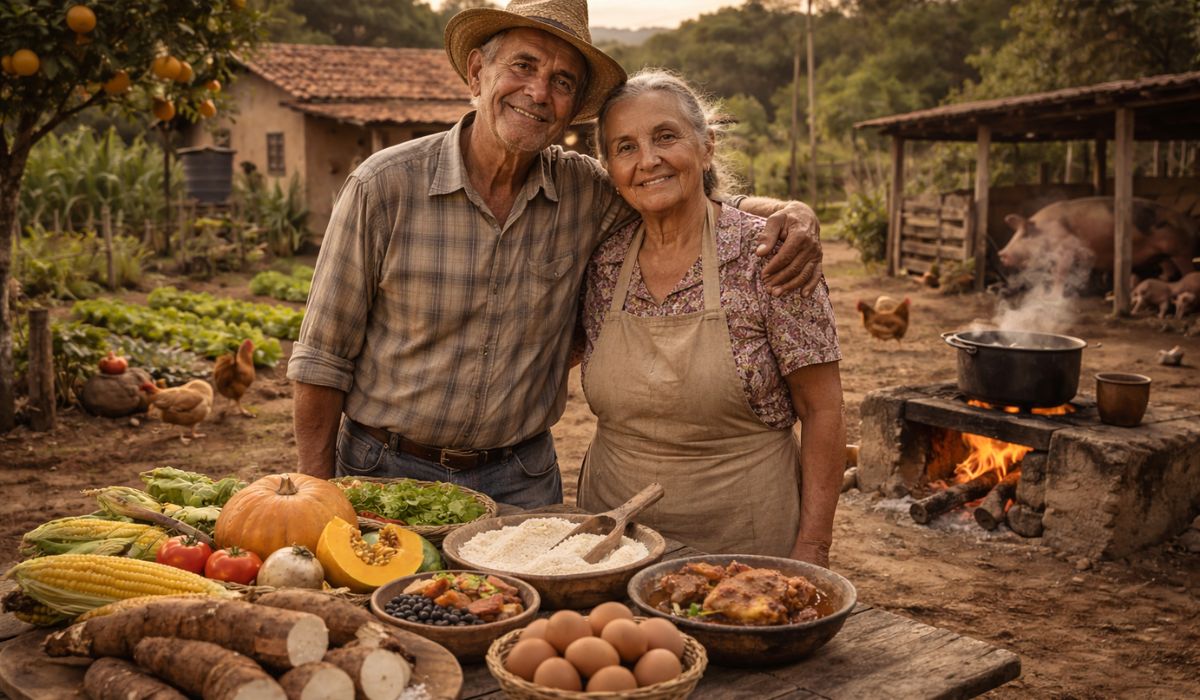
The Routine of a Couple in the Countryside Shows How Producing on Their Own Land, Raising Animals, and Exchanging with Neighbors Reduce Purchases in the City and Sustain Household Food in Different Seasons of the Year.
In a rural community in the countryside, a couple of farmers maintains a routine where their household food relies largely on what is planted and raised on their own land, with low dependence on purchases in the city.
Joaquim and Benedita, fictional names used to preserve their identity, organize their daily life based on what the land offers throughout the year and complement what is lacking through exchanges with neighbors.
The dynamic involves diversified production, raising animals for personal consumption, and community relationships that, according to the residents, help to expand the variety of available foods.
-
Storms on Jupiter are up to 100 times more powerful than on Earth and reveal extreme phenomena that challenge everything we know about weather.

-
With five floors, the building made of red sandstone, marble, and limestone surprises with its strength, appears to float, and remains stable even when submerged in water, thanks to its hydraulic engineering.

-
Brazilians are no longer welcome in these countries, even with valid passports.

-
Nothing from Switzerland or the USA: the first city in the world to reach the highest standard of quality of life is in Brazil.

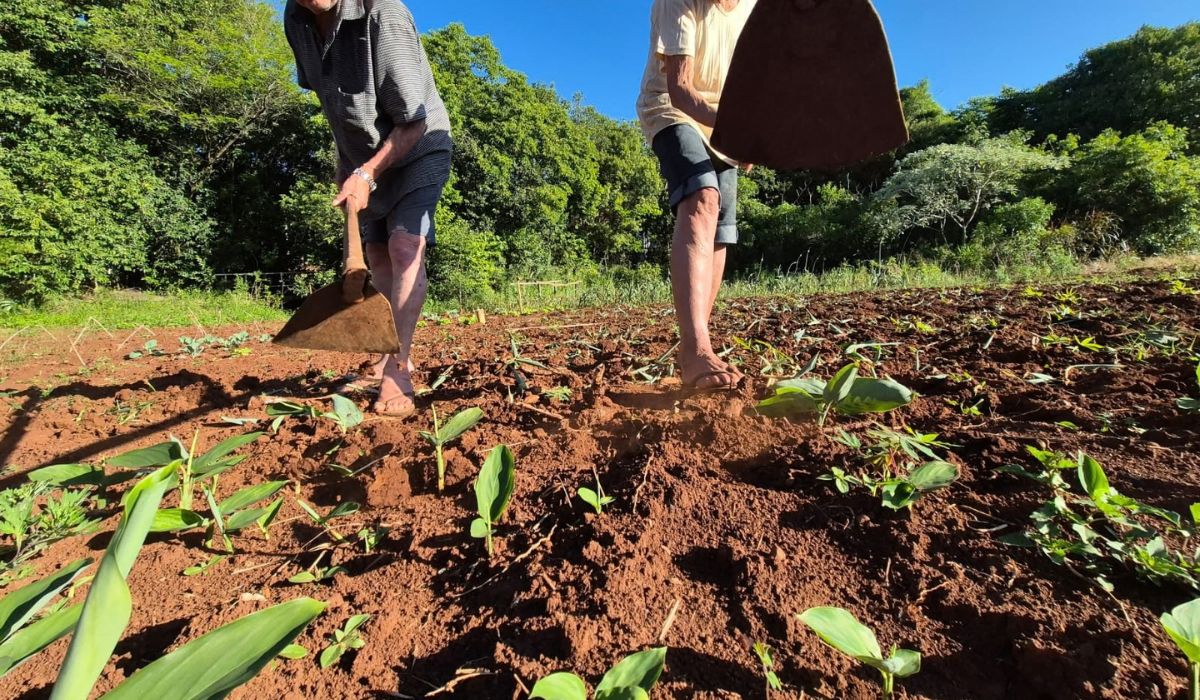
Additionally, the couple faces limitations associated with age and health issues, yet they continue to perform tasks considered essential for maintaining the property.
Self-Sufficiency in the Field: From Backyard to Plate
The foundation of Joaquim and Benedita’s way of life is in a backyard with different crops and harvests spread throughout the agricultural calendar.
On the land, they maintain cassava, bananas, sugarcane, corn, pumpkins, citrus fruits, and pineapples, which allows them to stock the kitchen at different times of the year and reduce the need to seek basic items in commerce.
This production is not limited to planting.
Free-range chickens roam the yard, and pigs are raised in a rustic manner, with management that the couple describes as what they learned throughout their lives.
The guideline is to always have some animals for domestic consumption, avoiding frequent trips to butcher shops or supermarkets.
As a result, the menu tends to reflect what comes from their own land, impacting their food autonomy and household expenses.
When their production does not cover an item, exchanges with neighbors come into play, a practice reported as common in the region.
In this circuit, one neighbor offers cassava, another shows up with eggs, while a third arrives with seasonal fruits, forming a network based on reciprocity, as reported by the residents themselves.
Routine in the Fields: The Day Starts Before Sunrise
The couple’s daily life reflects what it means to be “of the land” and depend on their own farm to sustain the household.
Before sunrise, around 5 a.m., Joaquim and Benedita are already up.
The beginning of the day is usually dedicated to the animals: letting the chickens out, checking on the pigs, and watching the weather, which influences their choice of tasks.
After this first round, they have breakfast and organize tasks in the fields.
The schedule changes according to needs and the time of year, with activities such as weeding, planting, harvesting, and maintaining fences and garden beds.
On some days, the work focuses on the crops; on others, the focus shifts to food preparation and domestic care related to production.
Even at an advanced age and dealing with diabetes, Benedita remains active.
She states that “stopping is worse than keeping moving.”
In practice, the idea of rest appears more as a change of tasks than as a prolonged interruption of work, with breaks that fit between one activity and another.
When someone stops by for a visit, the couple usually makes time for conversation before resuming what was left pending.
Wood Stove and Food Preparation on the Farm
Inside the house, the kitchen plays a central role in the routine.
The wood stove is used to prepare some of the meals and serves as an alternative to reduce gas consumption, according to the couple.
It is there that beans are cooked for longer and where a free-range chicken is commonly placed in the pot, often accompanied by cassava, pork, and flour.
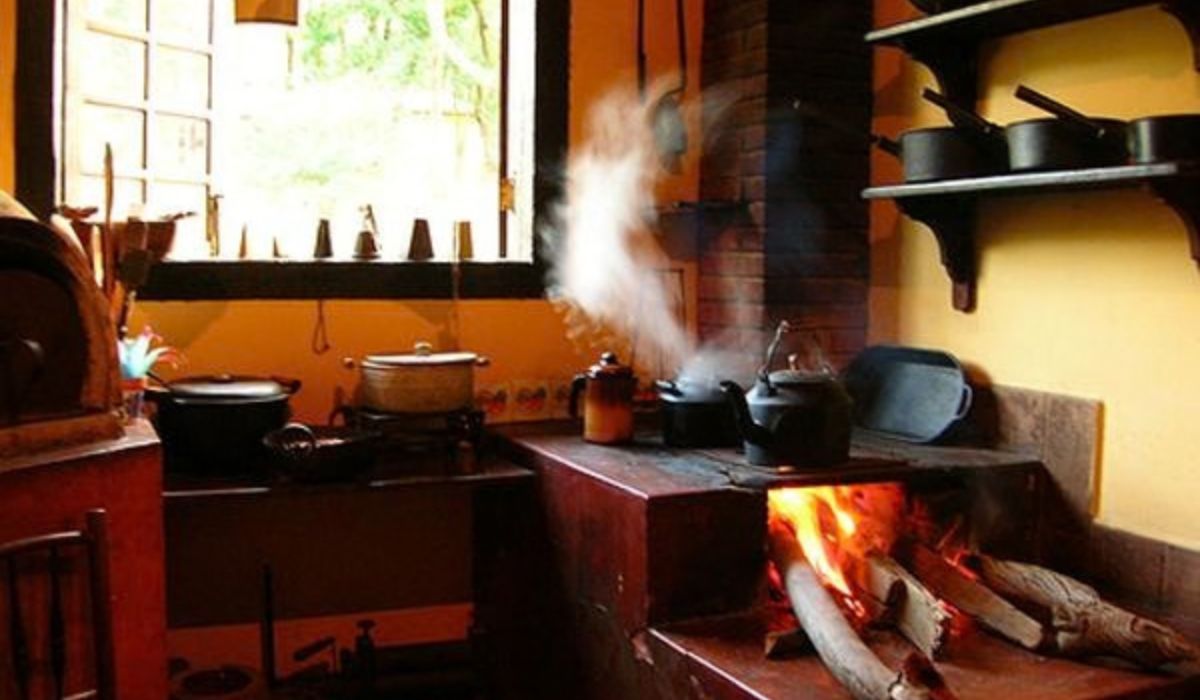
For Joaquim and Benedita, a meal with these items meets what they consider necessary in their daily life and maintains habits cultivated by the family over time.
What ends up on the plate largely goes through stages of cultivation, raising, and transformation carried out on their own farm, with little dependence on industrial products.
Among the preparations, cassava flour stands out for involving several phases.
The process, as they describe, begins with selecting the “good” cassava, which can take about two years to reach what they consider ideal.
Next comes peeling, pressing to remove excess liquid, straining, and finally toasting in an appropriate oven until reaching the desired point.
The couple reports that they also wait for the flour to cool before bagging, to reduce moisture during storage.
Food Exchange and Rural Association in the Community
Maintaining this routine does not occur in isolation.
Exchanges with neighbors are a recurring part of local life and serve as a supplement for what is not produced at home.
Furthermore, residents report that the community has an association that organizes collective purchases of agricultural equipment, an initiative used to reduce costs and facilitate access to machines that would be more difficult to acquire individually.
According to members of the group, this type of organization helps sustain rural living, especially when production is primarily aimed at household consumption.
By sharing expenses and negotiating collectively, the group of residents seeks to maintain minimal conditions to continue planting and raising animals, according to the possibilities of each family.
At the same time, the couple states that they have incorporated modern resources into their routine.
Joaquim and Benedita have begun using cell phones and the internet to gather information and talk to relatives, without altering what they consider essential in farm work.
Thus, digital tools serve as occasional support, while manual tasks remain at the center of daily life.
The channel JJ88 has several videos about what it’s like to live in the countryside as a couple, sustainably, leading an entire life on the farm:
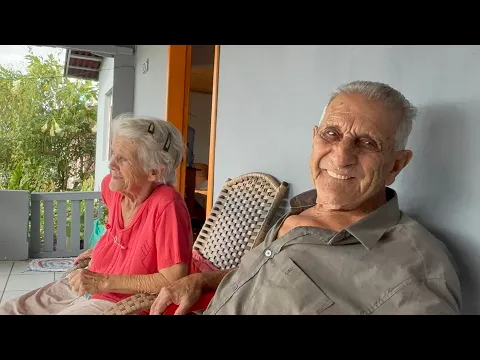

Living with Little Dependence on the Market
The journey of Joaquim and Benedita helps to explain, in daily life, the meaning of saying that they “do not depend on the city”.
The expression, mentioned by people close to them, refers to a way of life sustained by continuous work, diversification of production, and exchange relationships, with food coming from the farm and informal agreements between neighbors.
What is observed is a routine guided by practical decisions, made according to what the property offers at each period.
Instead of distancing from the present, the couple describes a combination of old habits and current tools, adopted when necessary, without completely replacing traditional methods of producing and cooking.
The experience also highlights that maintaining the household “through the land” involves limitations and daily adjustments, without eliminating unexpected events.






Seja o primeiro a reagir!