






 Portuguese


Halliburton Enters Agreement with Brazilian Eneva to Pursue Oil and Gas Projects in Venezuela Amid Investment Resurgence
According to Halliburton, in a statement released on September 21, 2026, the American oil services giant signed a memorandum of understanding with Brazilian Eneva to identify and pursue oil and gas development opportunities in Venezuela. The partnership pairs a company with nearly nine decades of experience in the Venezuelan market with Brazil’s largest private onshore natural gas operator, which claims a production capacity of 9 million cubic meters of gas per day.
The agreement does not specify fields, investments, or production targets but comes at a time when international companies are once again exploring Venezuelan assets and the country’s oil exports reached 1.17 million barrels per day in August.
Halliburton and Eneva Begin by Seeking Opportunities
The document signed by the companies is a memorandum of understanding, commonly referred to as an MOU. It establishes a framework for Halliburton and Eneva to work together in identifying potential business deals in Venezuela.
-
How Long Will Current Oil Supplies Last? Petrobras and Other Giants Prepare for the Next Big Challenge

-
BP Prepares New Well After Finding 500 Meters of Hydrocarbons in 300 km² Structure, Aiming to Transform Bumerangue into New Oil and Gas Hub in Brazil

-
Engineering Company Secures New Contract with Petrobras for Strategic Operations at São Paulo’s RECAP Refinery
-
Despite Record Oil Production, Why Are Fuel Prices Still High in Brazil?




No oilfield has yet been assigned to the duo, nor is there a defined facility or announced budget.
Halliburton’s phrasing is more cautious: the companies will collaborate to “identify and pursue development opportunities” in the Venezuelan oil and gas sector. The agreement builds on a business relationship they already maintain in Brazil.
The next step will be to determine which assets truly fit into this partnership.
Eneva Brings Experience in Gas Production and Monetization in Brazil
The Brazilian company does not enter this conversation as a traditional oil company focused solely on extracting oil from the ground.
Its model combines the exploration and production of hydrocarbons with electricity generation, gas marketing, LNG, and energy infrastructure. The company operates mainly onshore fields and has structured much of its strategy by directly linking gas reserves to thermoelectric plants.
Today, Eneva reports a capability to produce 9 million cubic meters of natural gas per day.
It also operates 7.2 GW of installed thermoelectric capacity and presents itself as Brazil’s largest private onshore natural gas operator.
This expertise may find its place in Venezuelan projects if the two companies take steps beyond the memorandum.
Halliburton Has Familiarity with Venezuelan Fields for Nearly Nine Decades
On the other side of the table is one of the largest service companies for oilfields in the world.
Halliburton claims to have nearly 90 years of experience in Venezuela. The company maintains strategically located bases in the country, along with operational knowledge and teams familiar with local conditions.
It does not operate exactly like ExxonMobil or Chevron.
In many projects, the business involves providing technology and services used to find, drill, complete, and maintain wells. This includes subsurface interpretation, well construction, cementing, completion equipment, and solutions to enhance productivity in existing fields.
For a country with mature fields and infrastructure that has received insufficient investment for years, this type of service enters the supply chain early.
Partnerships can span from reservoir to production
Halliburton has not disclosed which services it plans to offer in collaboration with Eneva.
Its portfolio helps understand the magnitude of the possibilities.
The company works from reservoir characterization, a stage used to understand where oil and gas are located, to well construction, completion, and production optimization. It also operates in integrated projects where different services are combined within the same operation.
Eneva has knowledge of another part of this chain.
In Brazil, it explores gas, drills wells, processes the fuel, and, in certain projects, uses this same gas to generate electricity.
A Venezuelan opportunity may leverage only a portion of these competencies. So far, no configuration has been announced.
Venezuela exported 1.17 million barrels per day in August
The agreement comes at a time when the flow of Venezuelan oil has started to rise again.
Data cited by Reuters indicates that exports were approximately 1.17 million barrels per day in August 2026. Vitol and Trafigura accounted together for about 597,000 barrels daily of that total.
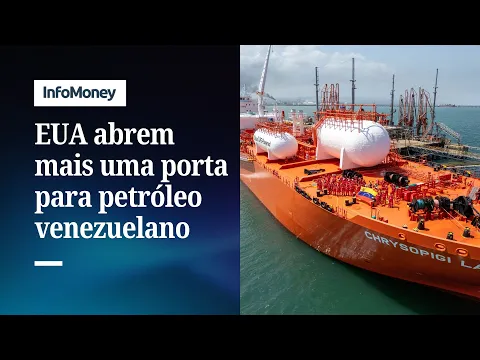
The quantity shipped now faces another issue: logistics.
The cost of hiring an Aframax vessel between the Venezuelan port of José and the U.S. Gulf Coast has risen from approximately US$ 1.35 million at the beginning of the year to US$ 3.5 million. An Aframax typically carries about 700,000 barrels.
Oil is leaving. Transporting it has become much more expensive.
Eneva may test a land-based model outside Brazil
Most of Eneva’s exploration and production experience has been built in the Brazilian basins of Parnaíba and Amazonas.
By the end of 2024, the company reported 46 billion cubic meters of certified 2P natural gas reserves. 2P reserves combine proven and probable volumes, a classification used by the industry to represent resources with a reasonable prospect of commercial recovery.
The portfolio also included 11.7 million barrels of 2P reserves of oil and condensate.
Its operational scope extended well beyond the well. The company processed gas, transported LNG by road, operated thermoelectric plants, and marketed energy.
A Venezuelan venture would represent a significant geographical shift for a company whose operational structure has primarily been built within Brazil.
The agreement comes amid a larger race
Halliburton and Eneva are not moving alone. Reuters reported this week that international companies are negotiating new energy agreements with Venezuela.
French company TotalEnergies signed a memorandum with state-owned PDVSA on September 19, although commercial details were not disclosed.
ExxonMobil also progressed in discussions about a possible return to the country and expressed interest in the Petromonagas heavy oil project and areas in the Carabobo block, according to sources interviewed by Reuters.
Continental Resources signed another preliminary agreement related to the sector.
These are different negotiations, with distinct companies, assets, and stages. The common point is the return of international capital to the table.
Halliburton also signed a second agreement in Venezuela
In the same announcement revealing the partnership with Eneva, Halliburton confirmed another memorandum, this time with WESCA.
In this case, the scope is more defined.
Halliburton is expected to support field assessments and development planning. The two companies are already collaborating using digital technologies and subsurface interpretation to enhance reservoir knowledge.
These are two separate memoranda.
The agreement with WESCA does not mean that Eneva automatically participates in the same fields or activities.
Infrastructure will still be one of the major barriers
Finding companies willing to invest resolves just part of the Venezuelan equation.
Wells need to be connected to gathering systems. Oil requires processing, storage, and terminals. Gas needs treatment, pipelines or another solution to reach the consumer.
Recent logistics highlight how any bottleneck quickly impacts costs.
While exports stood at 1.17 million barrels per day in August, queues of ships and average waiting times at terminals remained elevated, according to Reuters.
For newcomers, there will be production opportunities. There will also be infrastructure to recover.
Political and financial moment still weighs on business
The opening of new business negotiations comes at a time when Venezuelan authorities are discussing energy, financing, and debt restructuring with international institutions and representatives from the United States.
Reuters reported that Venezuela’s sovereign debt and that of PDVSA is estimated by analysts between US$ 150 billion and US$ 200 billion. The Inter-American Development Bank has begun preparing a two-year relationship plan focusing, among other areas, on the electric system.
These discussions are still ongoing.
For oil and gas companies, contractual rules, financing, operational security, and payment capabilities will be as decisive as the amount of available hydrocarbons.
Memorandum still far from meaning production
Halliburton’s announcement does not provide investment value, number of wells, exploration area, expected production, or timeframe for Eneva’s operations in Venezuela.
This establishes a clear line between what has already occurred and what still depends on negotiation.
The concrete fact is the agreement to seek opportunities together.
If an asset is chosen, further steps must follow: technical assessment, commercial negotiation, contracts, regulatory approval, capital definition, and operation planning.
Only then will equipment start to arrive at the field.
A Brazilian company now has a seat at a larger international table
Eneva built its scale by drilling and producing gas onshore in Brazil, linking some of these reserves to plants and creating pathways to supply fuel to markets without pipelines.
Now, a company that produces up to 9 million cubic meters of gas per day in the Brazilian market seeks opportunities in Venezuela alongside a company with nearly 90 years of experience in that country.
There is still no Venezuelan well named after Eneva nearby. However, there is something that did not exist before September 21: a formal agreement to search for that well.


