





 Portuguese
  English
  Spanish
  6 min of reading
  0 comments


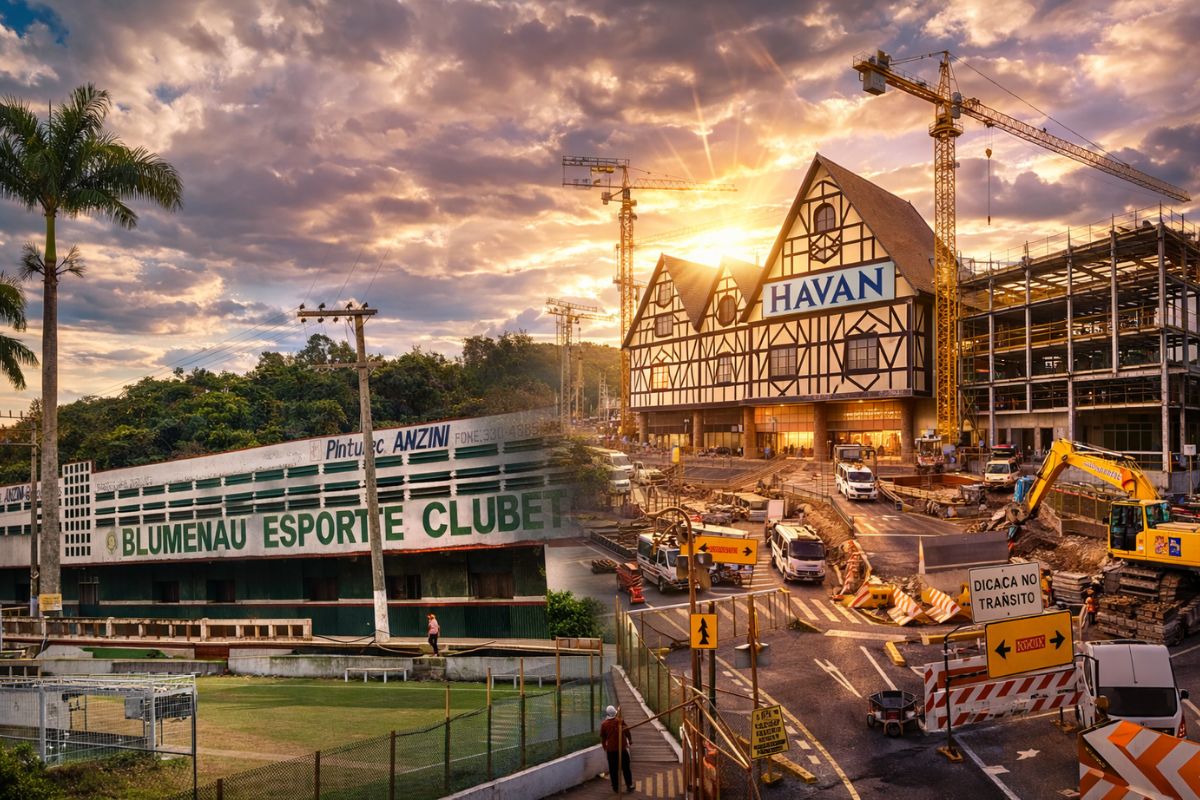
The land where the Aderbal Ramos da Silva Stadium used to operate was acquired by Havan to expand the parking lot of the megastore under construction in the Historic Center of Blumenau, the first unit of the chain in half-timbered style, with an estimated investment of R$ 80 million and inauguration scheduled for May 2026.
The land where the old Aderbal Ramos da Silva Stadium, located on Alameda Duque de Caxias, the famous Palm Tree Street of Blumenau, was sold for a million-dollar amount that cannot be disclosed. A confidentiality clause prevents the revelation of the price. According to the portal ndmais, the buyer is Havan, which intends to use the space to expand the parking lot of the megastore under construction in the Historic Center of the city, a project estimated at R$ 80 million. The land belonged to the Blumenau Sports Club (BEC) and was the stage for matches of the Santa Catarina Championship for decades before the stadium was demolished in 2007.
But the purchase of the old stadium’s land is not the most surprising detail of this story. With the acquisition completed, Havan submitted a formal request to the Municipal Planning Department to alter the layout of Oscar Jenichen Street, which cut through the newly purchased space. The proposal envisions moving the road a few meters ahead, allowing for the complete integration of the land into the megastore complex. The request is currently under technical analysis at the city hall, and there is still no definitive decision. Meanwhile, the construction of the megastore is progressing at a rapid pace.
The stadium that became Havan’s parking lot

The Aderbal Ramos da Silva Stadium had a capacity for about 4,000 people and was the venue for matches of the Santa Catarina Championship between the 1970s and 2000s. For those who followed Blumenau’s football during that period, the location was a symbol of the city.
-
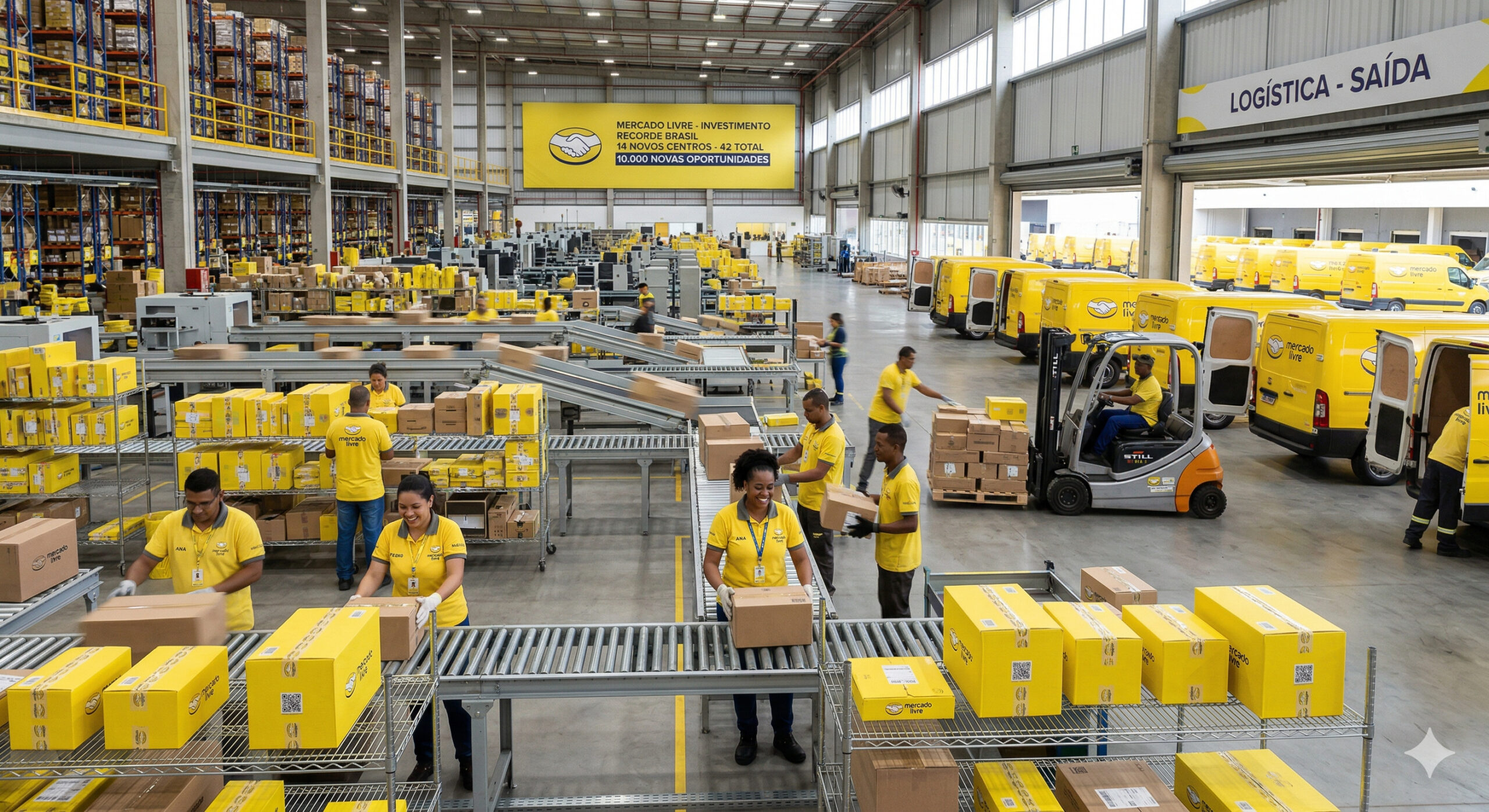
Mercado Livre “opens the vault” and announces a record investment of R$ 57 billion in Brazil in 2026, a value 50% higher than the previous year, with an expansion plan that includes 14 new logistics centers, totaling 42 units in the country and hiring an additional 10,000 employees.
-
How investment in technology can revolutionize the national economy and enhance industrial gains, according to a study that highlights the direct impact on productivity, innovation, and wealth retention within Brazil.

-
The largest food company on the planet, JBS, has just opened a 4,000 square meter laboratory in Florianópolis to develop customized proteins that modulate muscle mass gain, immune response, and metabolic performance.

-
After nearly 30 bids and competition among industry giants, a Spanish company purchases one of the largest airports in Brazil for almost R$ 3 billion and takes over the management of Galeão in a concession that will last until 2039.


In 2007, the stadium was demolished and the land remained vacant for nearly two decades until Havan completed the negotiation.
With the sale, the space that for decades carried the memory of Blumenau’s football gains a completely different function: serving as parking for a megastore.
The negotiation took place amid the advancement of the project for the new Havan unit in the city. The land of the old stadium is located in front of the site where the megastore is being built, at the corner of Alameda Duque de Caxias and Oscar Jenichen Street, one of the busiest areas in Blumenau.
The exact value of the transaction cannot be disclosed due to a confidentiality clause, but sources linked to the deal confirm that it is a million-dollar figure.
Havan wants to change the layout of a street for the megastore
With the purchase of the old stadium’s land completed, Havan took a step that caught the attention of the city hall and the residents of Blumenau. The company submitted a formal request to modify the layout of Oscar Jenichen Street, which currently cuts through the acquired space.
The proposal envisions moving the road a few meters ahead, in order to fully integrate the land into the megastore’s parking structure.
According to the Blumenau city hall, the request is under technical analysis and there is still no definitive decision. The case generates discussion because the project is located within the Historic Center perimeter, an area subject to strict rules of urban and cultural preservation.
Altering the layout of a street in a protected zone to accommodate a private venture by Havan is not trivial, and the city hall’s decision will be closely monitored by residents and merchants in the area.
For the first time, Havan abandons the White House
Those who know Havan know that all the chain’s megastores follow the same visual standard: facades inspired by the White House of the United States, with neoclassical columns and, in many cases, a replica of the Statue of Liberty at the entrance.
This visual has become the company’s trademark since Luciano Hang was enchanted by the White House during a trip and decided to replicate the style at the headquarters in Brusque in 1994.
In Blumenau, for the first time, Havan is giving up this standard and betting on a completely different project: the megastore will be built in half-timbered style, the German architecture that defines the landscape of the city’s Historic Center.
The change was not voluntary. Havan’s original project for Blumenau envisioned the traditional facade but faced resistance from the population and was the target of an action by the Federal Public Ministry, which questioned the impact of the structure on the historical heritage.
A judicial agreement reached at the end of 2024 resolved the impasse: Havan agreed to reformulate the project and adopt the half-timbered style. The project needed to receive favorable opinions from Iphan, the Santa Catarina Cultural Foundation, and the Municipal Council of Cultural Heritage before being approved. Luciano Hang, during a visit to the construction site, stated: “We adapted our aesthetics to German culture. I think this makes Blumenau an increasingly tourist city.”
R$ 80 million, 14,000 square meters, and 200 jobs
The numbers for Havan’s megastore in Blumenau are impressive. The total investment is estimated at R$ 80 million. The structure will have 14,000 square meters and will feature free parking, a food court, air-conditioned environment, and over 350,000 products.
The unit is expected to generate 200 direct jobs and will be the fifth Havan store in Blumenau. The inauguration, initially scheduled for the end of April 2026, has been postponed to May of the same year, as announced by Luciano Hang during a visit to the construction site.
Another relevant detail: with the opening of the megastore in the Historic Center, Havan will close its store in the Neumarkt shopping mall, also in downtown Blumenau.
The shopping mall’s management, Almeida Júnior, is already planning to fill the vacated space with new stores of national brands and qualified restaurants. For the city’s retail sector, May 2026 will be a month of transition: Blumenau loses a Havan unit inside the shopping mall and gains an unprecedented megastore in the Historic Center, altering the commercial map of the region.
What changes in Blumenau with Havan’s megastore in the Historic Center
The arrival of Havan’s megastore to the Historic Center of Blumenau raises questions that go beyond retail. The establishment of a large-scale enterprise in an area protected by historical heritage generates debate about traffic impact, pressure on parking in the region, and harmony with the urban surroundings.
The possibility of altering the layout of a public street to meet Havan’s needs adds an extra layer to this discussion.
On the other hand, the presence of Havan in half-timbered style may attract consumers and tourists, benefiting neighboring businesses and reinforcing Blumenau’s cultural identity.
The company’s choice to adapt its project to local architecture, even if forced by a judicial agreement, opens an interesting precedent. If the megastore performs well in Blumenau, Havan may start to customize projects in other cities with strong architectural identities, something the chain has never done before.
What do you think: will Havan enhance or decharacterize the Historic Center?
The land that for decades was a symbol of Blumenau’s football now belongs to Havan and will become a parking lot. The street that cuts through the space may change location. And the megastore that is rising on Palm Tree Street will be the first of the chain without the facade of the White House. Blumenau is facing an urban and commercial transformation that divides opinions.
And you, what do you think? Will Havan’s half-timbered megastore enhance the Historic Center or decharacterize it? Should the city hall authorize the change in the street layout? Let us know in the comments. We want to hear how you see this transformation.







Seja o primeiro a reagir!