





 Portuguese
  English
  Spanish
  4 min of reading
  0 comments


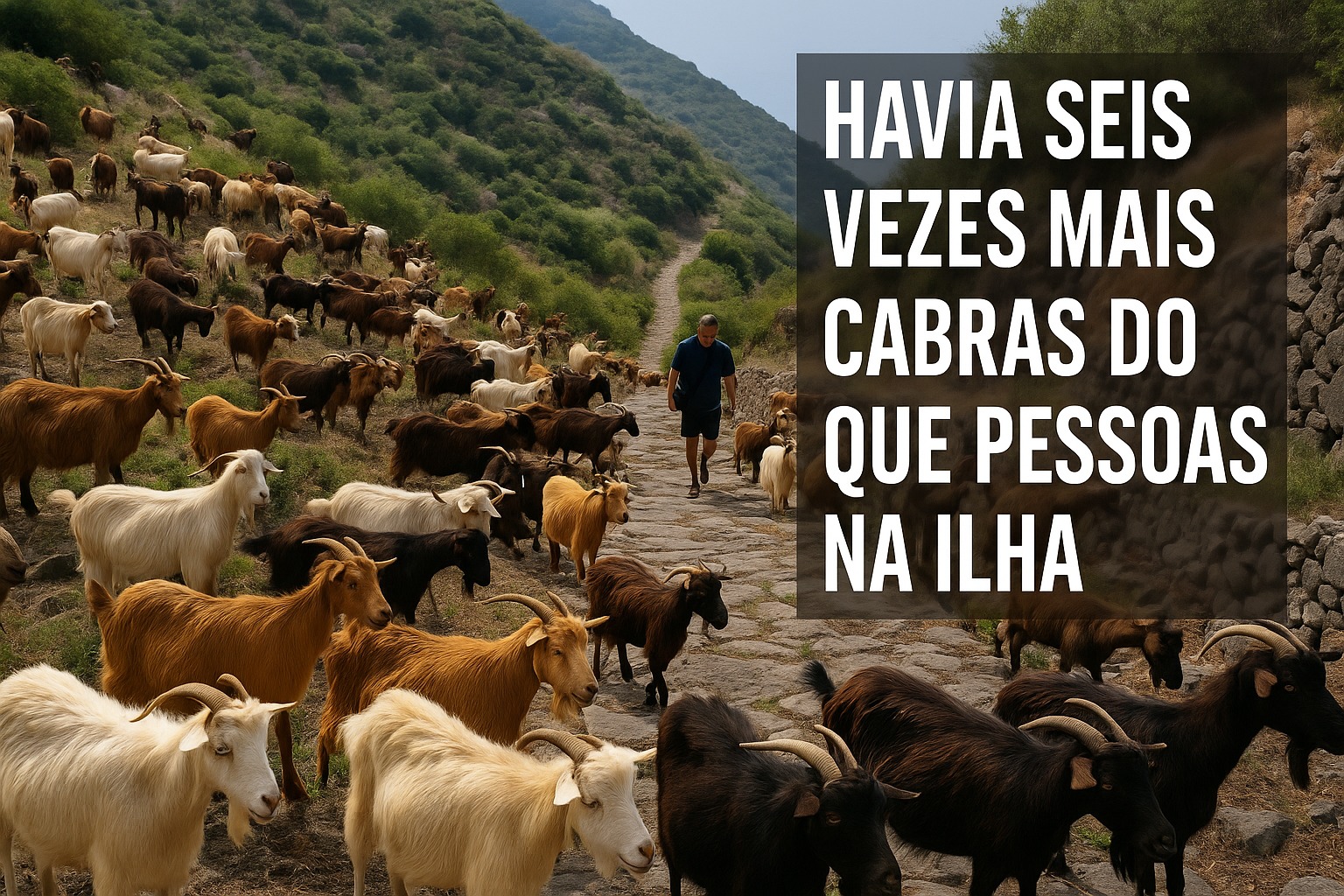
Italian Island Faces Overpopulation of Wild Goats, Receives Adoption Requests from Multiple Countries and Begins Complex Operation to Capture, Transport and Relocate Animals Safely Before Tourist Season
Last year, when the mayor of Alicudi decided to offer wild goats for adoption, he imagined a modest interest. He believed that only a few farmers from nearby islands might seek the animals because they wanted to expand ricotta production. The projection was wrong. The news reached beyond the Aeolian archipelago and sparked unexpected interest.
Offers began to arrive from various countries. Requests were sent from Europe, the United States, and even from an animal lover in Nigeria. Thus, the small island in Sicily found itself at the center of a curious phenomenon.
International Demand Exceeds the Number of Goats
Riccardo Gullo decided to take action after a census indicated that Alicudi had six times more wild goats than residents.
-
With over 14 million baskets of earth moved, an ancient North American metropolis built a monumental pyramid of 30 meters and established a city with 20,000 inhabitants nearly a thousand years ago.
-
A 1,900-year-old treasure emerges from a Roman house destroyed by fire and sealed since antiquity in Romania, with coins and metals fused among the ashes.
-
The Brazilian colonial city that stopped in time and shares territory with a rocket launch base.
-
79-year-old woman challenges limits, visits 193 countries in the world after 56 years of planning and reveals the behind-the-scenes of a global journey that few have managed to accomplish.


With a fixed population of 100 people, it was estimated that around 600 animals were roaming free across the territory. Moreover, the mayor noted that the situation was worsening.
The excess interest made selection more complicated. At the time, Gullo explained that he had received requests to adopt 1,900 goats, a number much higher than what was available. Therefore, he had to decline the majority.
He also faced a basic obstacle: capturing the animals. Alicudi is 5 km² and is marked by a dormant volcano, making the terrain rugged. The location is two to three hours by boat from Sicily, further complicating transport.
The Mission to Capture the Animals
The responsibility for solving the problem fell to Giovanni Dell’Acqua, director of rural development in Messina.
He acknowledged that the process was complicated because it involved steep areas and animals accustomed to total freedom.
The dilemma began about two decades ago. Some farmers brought goats to the island. With the growth of tourism, these breeders abandoned them.
Dell’Acqua compared the situation to abandoning a dog on the road because the animals ended up reproducing rapidly.
For a long time, the goats were confined to the rocky side of the island, where they were seen as a picturesque part of the landscape. But reality has changed.
Goats Invade the Inhabited Area
As they multiplied, the animals began circulating through areas with residents. They destroyed gardens, knocked down stone walls, and even entered homes. Therefore, cohabitation began to generate tension.
Lorcan O’Neill, an art gallery owner in Rome and owner of a house in Alicudi, stated that residents tolerated the animals when there was balance.
In his view, the lack of predators and absence of control turned the situation into an infestation that puts the ecosystem at risk.
O’Neill claimed that the goats eat all available vegetation, making any attempts at home gardening impossible.
He also mentioned constant rock falls caused by animals traversing the cliffs. For those living on the island, this has made walking hazardous.
Risk to Residents’ Safety
Another concerning point is the size of the bucks. According to Dell’Acqua, some weigh up to 120 kg and have horns up to 50 cm.
Aggressive behavior increases residents’ fear. Thus, the urgency for removal intensified.
A team of wildlife specialists visited the island. The group is already preparing a capture plan that will use nets or enclosures with food to attract the animals.
The task promises resistance because the animals have been roaming free for 20 years.
Steps After Capture
After being captured, the goats underwent blood tests. The objective was to check for diseases before transport.
Next, the biggest challenge was to take them from the top of the island to the port, as the route is steep and not easily accessible.
From Alicudi, they were taken to Milazzo. There, they remained in quarantine for two months. Experts believe that the process will require careful planning due to the rocky terrain.
Capturing All Before the Summer Season
The strategy was to complete the capture before the start of the high season in mid-June. Dell’Acqua was clear: no goat should remain loose.
The Sicilian authorities will evaluate who can adopt the animals. People who wish to have goats as pets will be declined as the destination will be restricted to experienced breeders.
The intention is to ensure that the animals have appropriate conditions and minimize stress during the journey.
The plan also aims to keep the goats in Sicily or in other regions of southern Italy. This will reduce long relocations and protect the animals in this complex process.
With information from The Guardian.






-

-

-

5 pessoas reagiram a isso.