





 Portuguese
  English
  Spanish
  6 min of reading
  0 comments


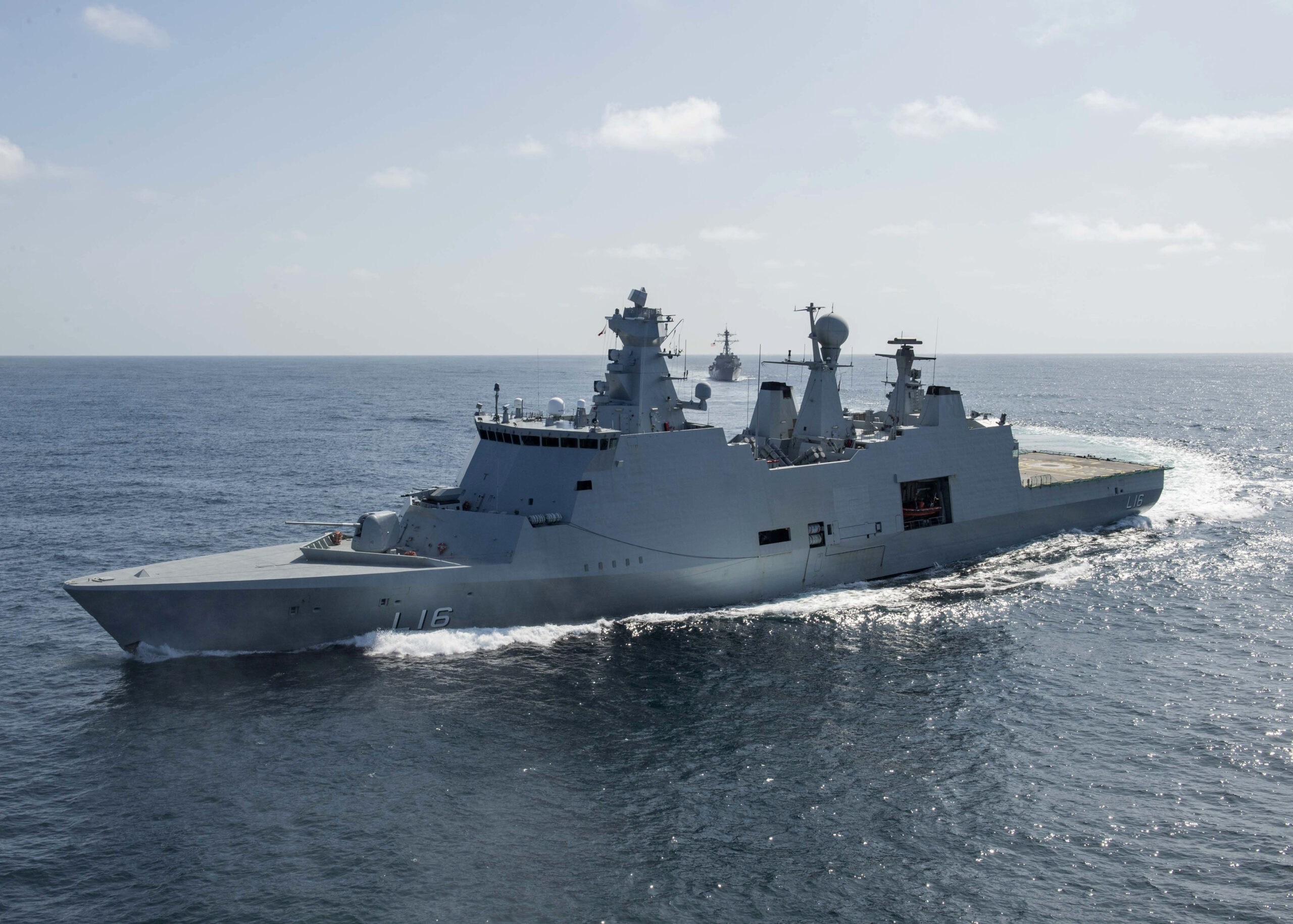
The Ship That Captured A Third Of All Somali Pirates Detained By A Coalition Of 20 Countries Started As A Budget Problem.
It was the early 1980s, and the Royal Danish Navy needed to replace 22 ships from three different classes. The problem: the budget allowed for a maximum of 16. Denmark, a country of 5 million people with coastlines on the North Sea and the Baltic Sea, could not simply choose which missions to abandon. It needed ships that could patrol, mine-hunt, combat submarines, and attack surface targets — all at the same time, in the same hull.
The solution was the StanFlex. Instead of building specialized ships for each mission, Danish engineers developed a system of interchangeable modules — standardized containers that fit into fixed slots on the deck. Each module contains a full weapon or sensor system: Harpoon missiles, torpedoes, mine-hunting radar, electronic warfare equipment. To change the ship’s mission, you simply swap the modules. The process takes less than 30 minutes per module with a 15-ton crane. Test firing and calibration take a few more hours.
Thirty years later, the U.S. Navy would study StanFlex to develop its own Littoral Combat Ship. And it would conclude, as published in the USNI Proceedings in 2023, that none of the U.S. LCS vessels in active service had ever swapped mission modules in practice. The Danes had solved the problem decades earlier.
-
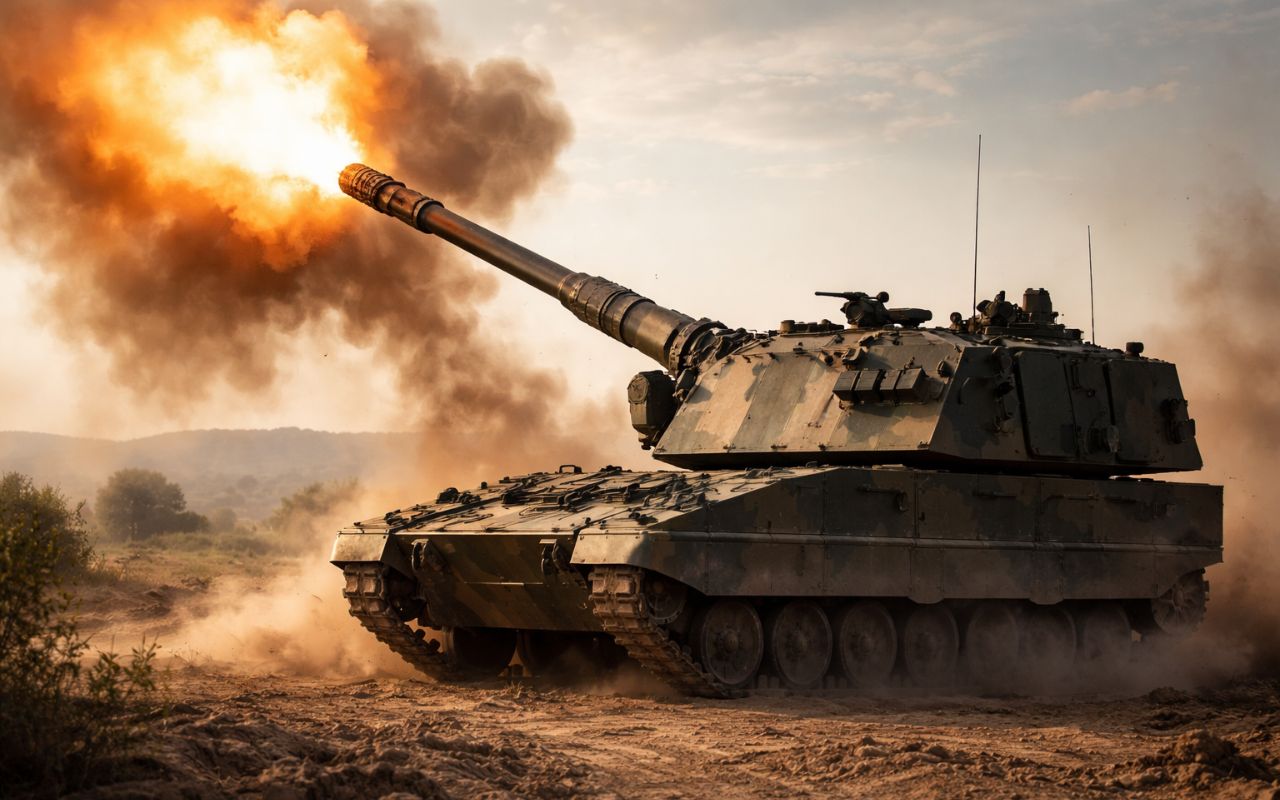
The German “steel monster” weighing 55 tons fires up to 10 projectiles per minute at over 40 km and avoids counterattacks on the battlefield by moving quickly to escape enemy attacks; meet the Panzerhaubitze 2000.
-
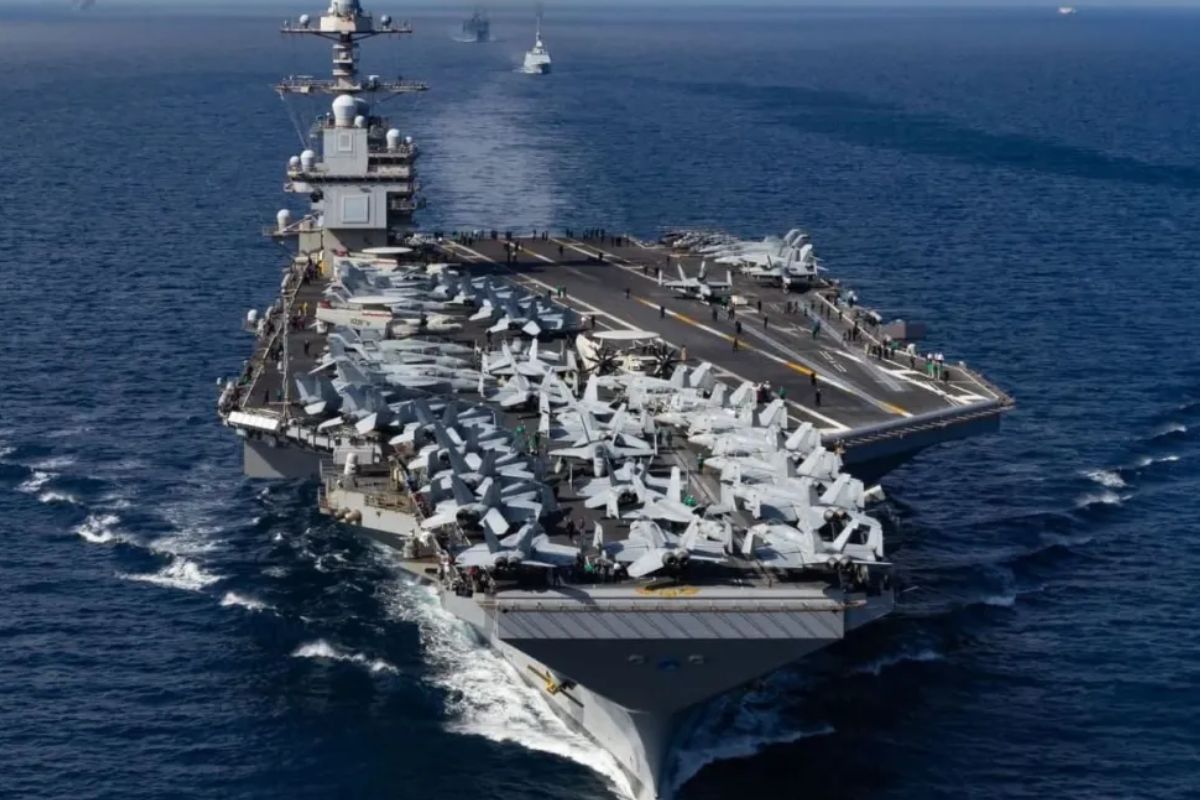
USS Gerald R. Ford, the largest aircraft carrier in the world, returns to sea after a fire in the laundry in the Red Sea; repaired in Crete, it resumes missions of Operation Epic Fury against Iran.
-
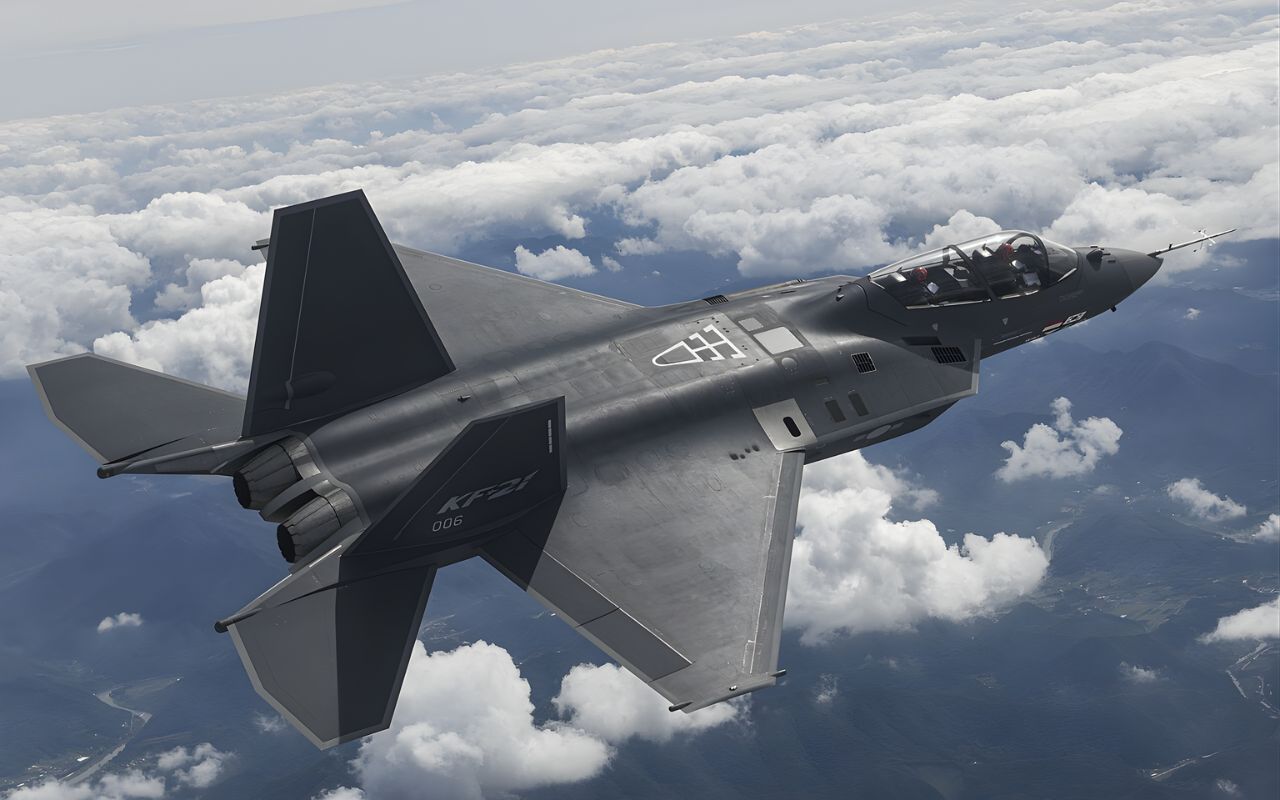
Military power: South Korea’s new KF-21 fighter jet will be a key component in replacing the aging aircraft of the air force, placing the country on the map of air military powers.
-
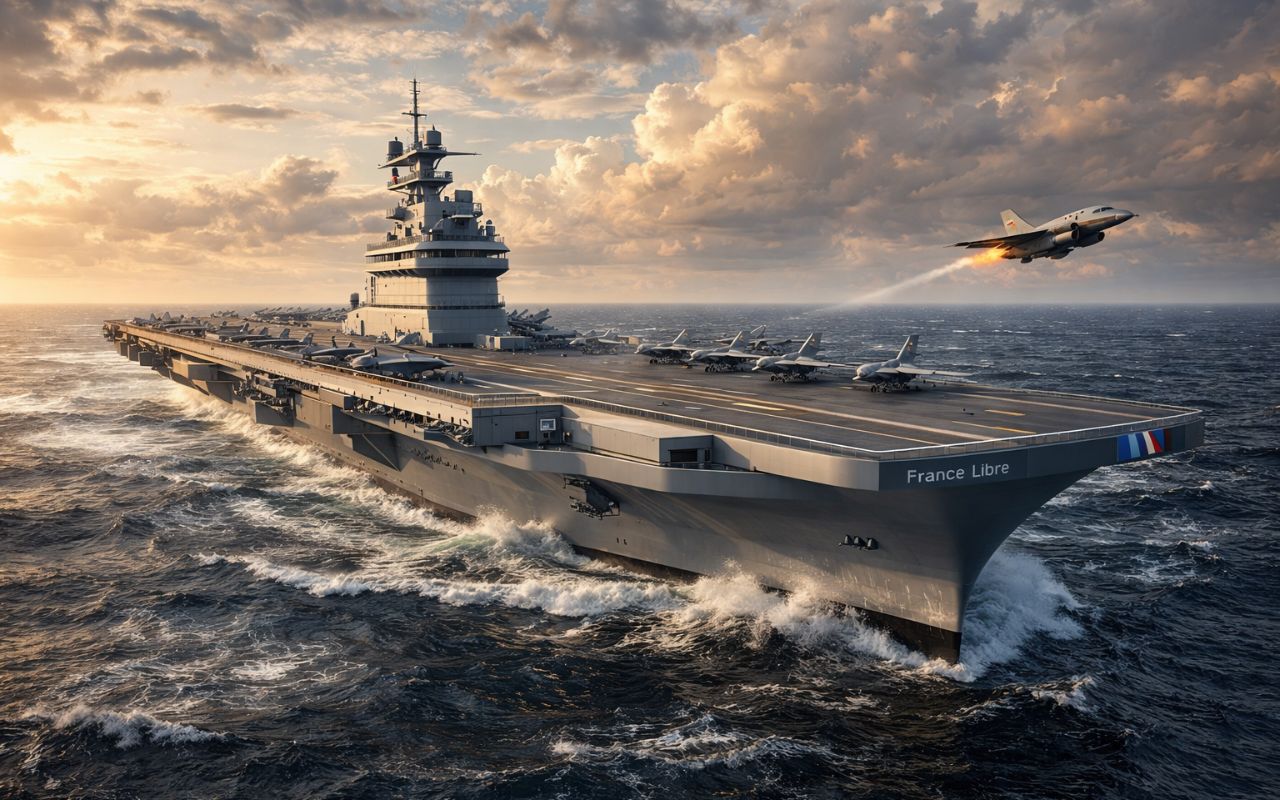
With 310 meters, 80 thousand tons, and capable of operating for 45 years, the new nuclear aircraft carrier France Libre will be the largest in France and will enter service in 2038.

What Fits On A 900 Square Meter Deck
HDMS Absalon was commissioned in 2005. With a length of 137 meters and a displacement of 6,300 tons at full load, the ship was originally classified as a “flexible support ship” — a diplomatic designation adopted not to provoke Russia in the post-Cold War period. In October 2020, after decades of combat missions, the Danish Navy finally reclassified Absalon and its sister ship as anti-submarine frigates.

The most counterintuitive feature of the ship is not its armament. It is the internal deck. Absalon carries a 900 square meter multipurpose deck — comparable to the usable space of an Olympic gym — accessed via a ro-ro ramp at the stern. This space can be configured in radically different ways depending on the mission:
As a combat frigate: the deck houses StanFlex modules with Harpoon Block II missiles, up to 36 Sea Sparrow missiles in vertical launchers, and MU90 anti-submarine torpedoes. The main armament includes a 127mm gun capable of hitting targets over 100 km away with precision-guided munitions. Two Millennium 35mm guns with a rate of fire of 1,000 rounds per minute protect the close perimeter.
As a hospital ship: the same deck accommodates a containerized medical facility capable of 10 surgeries per day, installed as an interchangeable module. The transformation does not require a return to the shipyard.

As a command platform: the deck accommodates a containerized command module for a team of up to 75 officers, with complete communications and intelligence infrastructure for a naval or joint task force commander.
As an armored vehicle transport: the deck can carry up to 7 Leopard II tanks — 62-ton vehicles — or 55 smaller military vehicles. With the ro-ro ramp, loading and unloading are done without additional equipment.
As a minehunter: the deck houses search equipment, ROVs, and the handling system to launch and recover underwater drones via the stern ramp.
As a mining platform: modular rails on the deck can hold up to 300 naval mines. The same vessel. The same hull. Missions that any other navy would require entire fleets of specialized ships.
The Cost Logic That No One Could Imitate
Absalon cost US$ 230 million per unit. A comparable European frigate cost between US$ 413 million and US$ 1 billion in the same period.
The difference was not cheaper engineering. It was a philosophical decision about what constitutes the cost of a warship.
The StanFlex system formally separates the cost of the hull from the cost of the weapon systems. Missile, sensor, and radar modules are acquired and updated independently of the ship that carries them. When a module becomes obsolete, it is simply replaced — without structural renovations, without long dry-docking. The ship ages, but the arsenal can be updated indefinitely. And when a system needs maintenance, it is removed from the ship and sent for repair on land while the hull remains operational with another module in the slot.
The Danish Navy built nine classes of ships compatible with the same StanFlex modules. A Harpoon module removed from a decommissioned frigate can be reinstalled in an Arctic patrol vessel. The investment does not die with the ship that carries it.
The Gulf Of Aden And The Real Test
In 2008, the UN requested international naval support to combat Somali piracy. The Gulf of Aden concentrated over 30,000 merchant ships per year — the entry and exit route of the Suez Canal. Attacks had surged over 600% in the Somali stretch compared to the previous year.
HDMS Absalon was designated flagship of Task Force 150, the multinational coalition led by Denmark. The versatility of the internal deck revealed an immediate tactical advantage: it allowed for the installation of detention facilities, intelligence collection rooms, and special operations equipment without prior notification. The two SRC-90E rapid insertion boats, capable of carrying 10 equipped soldiers each, could be launched and recovered with the ship in motion.

During the first eight months of the mission, Absalon captured 88 piracy suspects. The total number of pirates detained by all the countries in the coalition — over 20 nations with dozens of ships patrolling the region for more than 200 days — was 250. Absalon alone had captured a third of that total.
“None of the suspects we captured were repeat offenders,” said Commander Dan B. Termansen to Stars and Stripes in March 2009. “They probably think, when they get to land, that they want another career.”
The American Paradox
The story of the LCS is the best indirect evidence that StanFlex solved a genuinely difficult problem.
When the U.S. Navy developed the Littoral Combat Ship in the early 2000s, the stated concept was exactly the Danish one: a ship with interchangeable modules for three missions — surface warfare, mine hunting, and anti-submarine warfare. The program cost billions of dollars and produced dozens of ships.
None of them ever swapped modules in active service.
The modules were designed separately by different teams, without adequate systemic integration. The ship’s speed requirements (over 40 knots) conflicted with the acoustic needs of the anti-submarine module — fast ships generate more noise, which compromises sonars. The mine-hunting module did not need any speed at all. The systems were incompatible not just technically, but tactically.
The Danes resolved this contradiction pragmatically decades earlier: StanFlex does not try to make the same ship equally good at everything at the same time. It allows the same hull to be the best possible ship for each mission separately, according to current needs.
The difference is fundamental. It is not a multi-mission ship trying to do everything. It is a general-purpose ship that can become any specific ship.
The Second Life As A Frigate
In October 2020, Absalon and Esbern Snare were officially reclassified as anti-submarine frigates. The reclassification did not require structural modifications. The modernization process for the ASW role included the installation of a towed sonar and new signal processing systems. The investment was made in the weapon systems, not the platform — the 2005 hull received 2020 capabilities without returning to the shipyard.
The third generation based on the same concept, the Iver Huitfeldt frigates, is already in service. The hull is directly derived from Absalon, without the internal ro-ro deck but with six StanFlex slots. The modules are the same. The philosophy is the same.
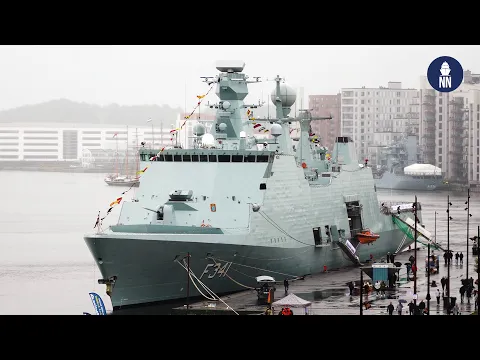

In 1982, when the Danish Navy began feasibility studies that would produce StanFlex, the goal was to replace 22 obsolete ships with 16 new ones — a budget problem that did not add up. The solution they found ended up influencing naval programs in nine countries and serving as a reference for the largest naval construction program in the United States in the 21st century.
The most important outcome, however, was operational: a ship from a navy of 5 million people became the most effective pirate hunter in the world, capturing more criminals in the Gulf of Aden than any naval power with far greater resources, crews, and budgets.









-

-

-

-

-

12 pessoas reagiram a isso.