





 Portuguese
  English
  Spanish
  6 min of reading
  0 comments


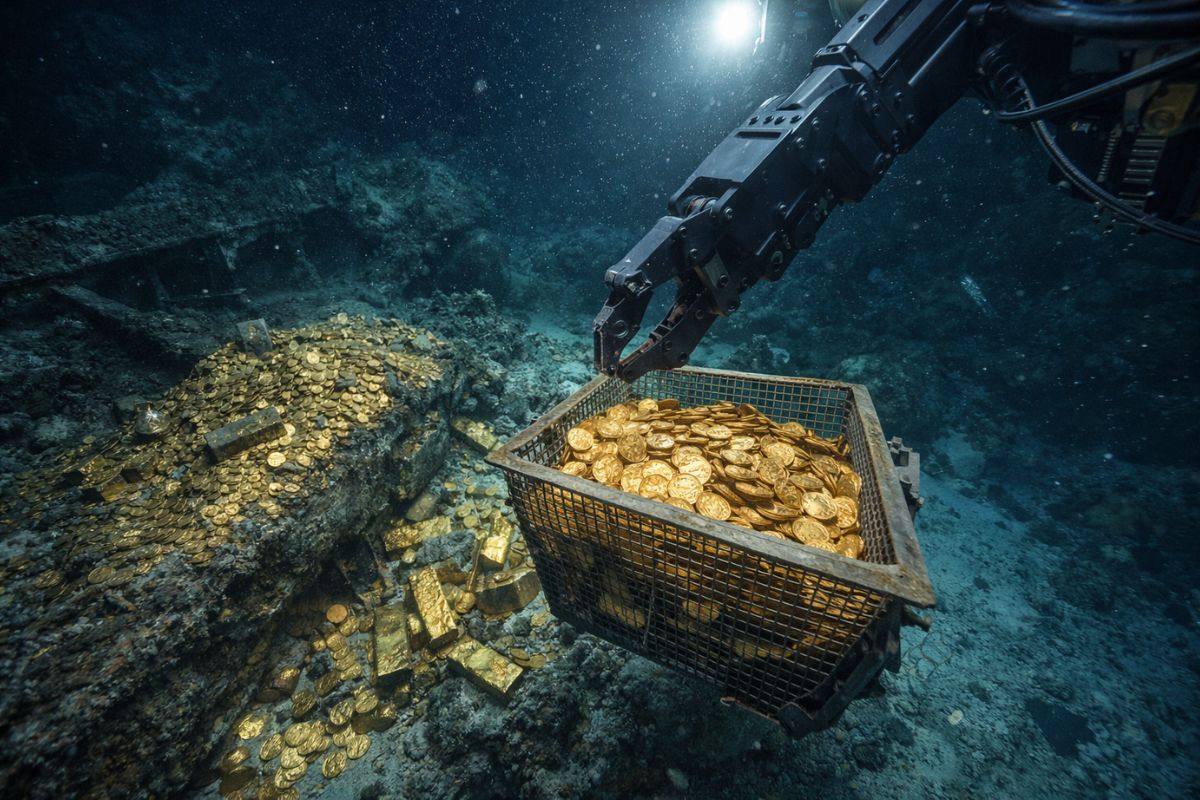
Ocean engineer Tommy Thompson located the largest gold shipwreck in the United States, the SS Central America, at 2,400 meters deep in the Atlantic Ocean using Bayesian theory and an underwater robot, recovered about two tons of gold valued in tens of millions of dollars, and paved the way for one of the greatest treasure hunting sagas in modern history
In 1988, ocean engineer Tommy Thompson did what generations of treasure hunters had tried unsuccessfully: he located the largest gold shipwreck in the United States on the ocean floor. The SS Central America, known as the Gold Ship, had sunk in 1857 carrying tons of gold from the California Gold Rush and was at a depth of 2,400 meters, about 320 kilometers off the coast of South Carolina. Thompson and his team from the Columbus-America Discovery Group descended to the ocean floor with a remotely operated vehicle and brought to the surface a treasure that no one thought possible to recover.
The expedition recovered about two tons of gold from the largest gold shipwreck ever found in the U.S., including bars, nuggets, and coins that had been on the seabed for over 130 years. The discovery of the SS Central America became a milestone in the history of ocean exploration and proved that modern technology could reach treasures that the ocean had swallowed in the 19th century. But the story of the Gold Ship did not end with the recovery: 500 gold coins separated from the rest of the treasure disappeared and were never found.
The story of the SS Central America and how it became the largest gold shipwreck in the U.S.

The SS Central America was a steamship that operated the route between Panama and the east coast of the United States during the Gold Rush era. Its mission was to transport newly minted gold from the San Francisco Mint to bolster the reserves of banks in New York.
-
The United States has a serious problem with its F-35s: China is already producing fighters at a pace that exceeds American capacity and could manufacture up to 300 aircraft per year before the end of the decade, shifting the global military balance.

-
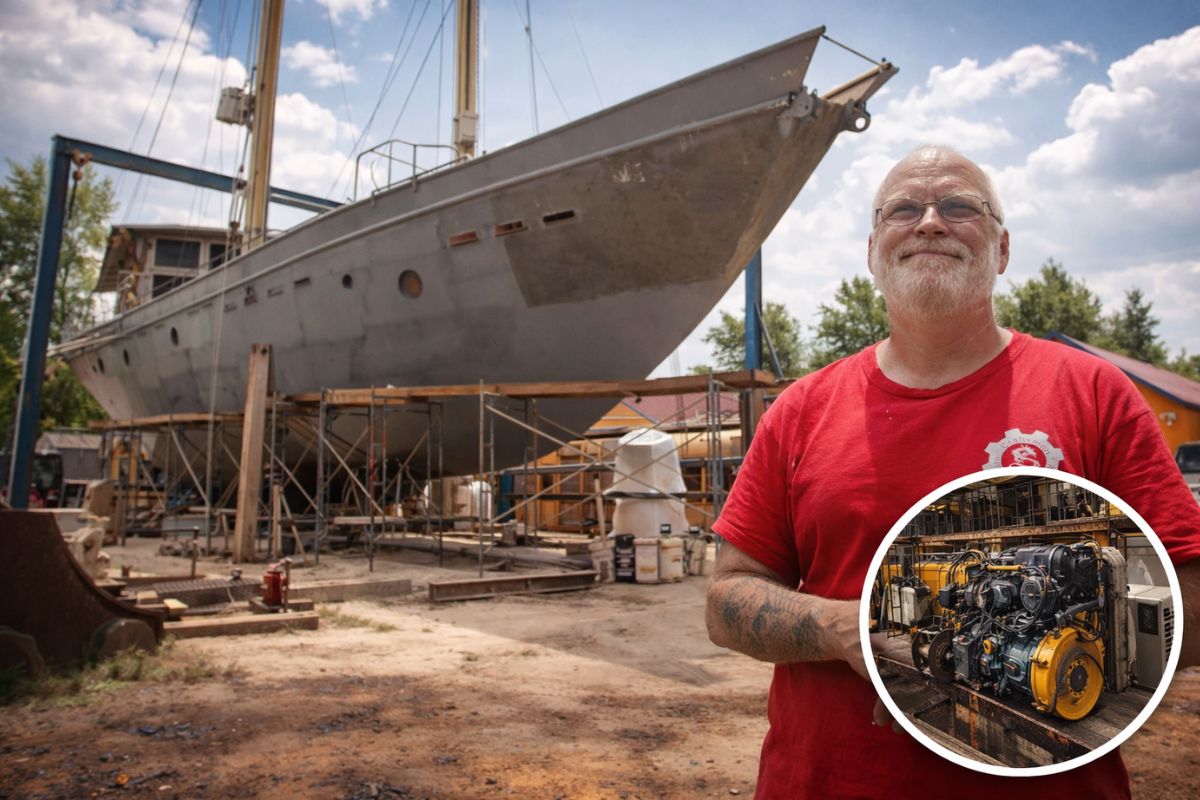
A retired IT professional built a 22-meter boat in his backyard in Oklahoma with a school bus engine, light pole masts, and handmade watertight doors to become the redneck version of Jacques Cousteau.
-
China is building a city in Brazil: a complex with an investment of R$ 5.5 billion comes to light, but allegations involving workers draw attention.

-
While Argentina buys old war equipment, Brazil is keeping an eye open and joins the select group of nations with advanced military technology by investing $5.2 billion, producing 36 Gripen fighters in the country, and reducing operational costs.


On board were 477 passengers, 101 crew members, and a cargo of gold whose exact weight is still debated today, but which made that ship the most valuable cargo to cross the Atlantic at that time.
On September 3, 1857, the SS Central America was hit by a Category 2 hurricane off the coast of South Carolina and sank. 425 people died. The gold sank along with the wreckage to the ocean floor, at a depth that made any rescue impossible with 19th-century technology.
The shipwreck was so devastating that it became one of the factors that triggered the Financial Panic of 1857, when American banks collapsed due to the lack of gold that the ship was supposed to deliver. The SS Central America remained on the ocean floor for 131 years.
How much gold did the largest gold shipwreck in the United States carry

Estimates of the amount of gold on the SS Central America vary by source and continue to fuel the mystery to this day. The book “Ship of Gold” by Gary Kinder, which took a decade to research, records 3 tons of officially consigned gold to banks, plus a similar amount belonging to passengers that was not declared.
A declassified document from the U.S. Department of Defense in 1971 points to an official cargo of 11.2 tons of gold, not counting personal gold or a possible secret military cargo.
The U.S. Naval History Magazine, the closest source from the time, does not mention weight, but rather a value: the consigned gold was worth $40 million at the time. There is also the figure of 30,000 pounds (about 14,000 kilograms) that circulates in historical records.
Regardless of the exact number, the SS Central America has established itself as the largest gold shipwreck in the United States and one of the largest documented sunken treasures in the world. What was down there was more than enough to justify a multimillion-dollar expedition.
The technology that allowed reaching the gold at 2,400 meters deep

Tommy Thompson was not a movie adventurer. He was an ocean engineer and inventor, and treated the search for the largest gold shipwreck as an engineering problem.
To locate the SS Central America in an immense ocean, he used Bayesian search theory, a mathematical method that calculates location probabilities by combining fragmented data from historical documents, navigation records, and current conditions.
The math pointed to a specific area about 320 kilometers off the coast of South Carolina, and that is exactly where the ship was.
To reach the bottom, the Columbus-America Discovery Group team used a remotely operated vehicle, an underwater robot capable of operating at 2,400 meters deep where no human diver would survive.
The robot descended, photographed the wreckage, and began the process of recovering the gold that was scattered among the remains of the ship.
Bob Evans, chief scientist of the expedition, told the Seattle Times that the team recovered about two tons of gold from the largest gold shipwreck ever located in the U.S. The discovery was celebrated as one of the greatest feats of modern ocean exploration.
The 500 gold coins that disappeared and the mystery that no one solved
Much of the gold recovered from the largest gold shipwreck in the United States was sold to a commercial company for approximately $50 million, as reported by Reuters. But not everything was accounted for.
Five hundred gold coins that had been separated from the rest of the treasure disappeared without explanation and were never located. This detail turned a story of discovery into a mystery that fuels speculation to this day.
No one knows where the 500 gold coins are. Possibilities range from secret storage in untraceable vaults to sale through parallel channels. What is known is that they were separated from the main lot at some point after recovery and disappeared from the record.
The disappearance of these coins is the unresolved final chapter of the saga of the largest gold shipwreck in the United States, and every time an auction of SS Central America pieces occurs, the question resurfaces: where are the missing 500?
The treasure of the SS Central America continues to generate millions in auctions
The story of the largest gold shipwreck did not end in the 80s. In 2014, the company Odyssey Marine Exploration returned to the wreck site and recovered additional material from the SS Central America wreckage. The treasure continues to be cataloged, studied, and sold decades after the original discovery.
In 2022, one of the largest bars recovered from the ship, weighing nearly 27 kilograms (866 ounces), was auctioned for $2.16 million, proving that the gold from the SS Central America remains one of the most valuable collections in underwater archaeology.
The fascination with the Gold Ship goes beyond monetary value. Each recovered piece carries the story of the Gold Rush, the Panic of 1857, and the hundreds of lives lost in that storm.
Coins minted at the San Francisco Mint, raw nuggets brought by miners, and bars destined for banks in New York tell an economic story of the United States that was frozen on the ocean floor for over a century.
The largest gold shipwreck in the United States has become a time capsule that reveals much about human ambition as well as the power of the sea.
Tons of gold recovered from the ocean floor and 500 coins that no one found
Tommy Thompson found the largest gold shipwreck in the United States at 2,400 meters deep, rescued tons of gold that had been on the Atlantic floor for 131 years, and proved that mathematics and engineering could reach what the ocean had swallowed.
The SS Central America delivered a treasure valued at tens of millions of dollars, but left behind a mystery that endures through time: 500 gold coins that disappeared and continue to fuel the legend of the Gold Ship.
Did you know that the largest gold shipwreck in the U.S. caused a financial collapse in 1857? Where do you think the 500 missing gold coins are? And if you found tons of gold on the ocean floor, what would you do? Leave your thoughts in the comments and share this article with those who love stories of lost treasures and discoveries at sea.








Seja o primeiro a reagir!