





 Portuguese
  English
  Spanish
  4 min of reading
  0 comments


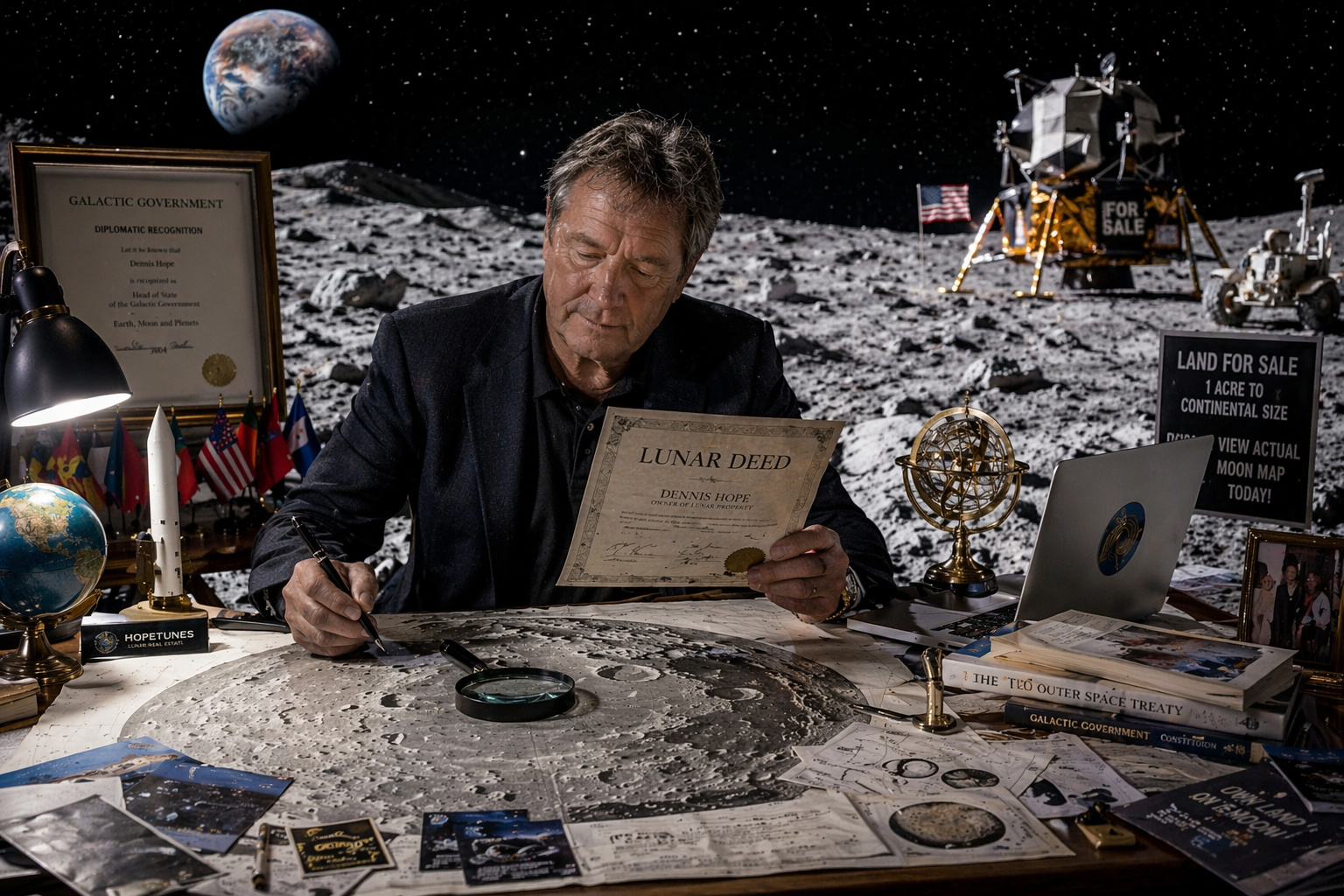
Former U.S. seller claims to have exploited legal loophole in UN treaty to sell lots on the Moon and other planets, according to g1, BBC, and Politico
An unusual proposal drew international attention by involving the sale of land outside Earth, based on a legal interpretation of a space treaty.
Dennis Hope, a former car salesman from the United States, claimed to have initiated this model in 1980 during a divorce process when he was looking for a new source of income.

According to information released by g1, he analyzed the Outer Space Treaty, signed in 1967 under the coordination of the UN, and identified a possible loophole for individual action.
-
Researchers from Rio Grande do Sul have discovered a plant species that does not exist anywhere else on the planet within a park in the far west of Rio Grande do Sul, and it is already critically endangered.

-
More than 411 helicopters, 11.9 million inhabitants, and a trillion-dollar GDP place the largest city in Brazil and the Southern Hemisphere in a league of its own, with figures that already rival giant countries like Morocco, Hungary, and Ecuador.

-
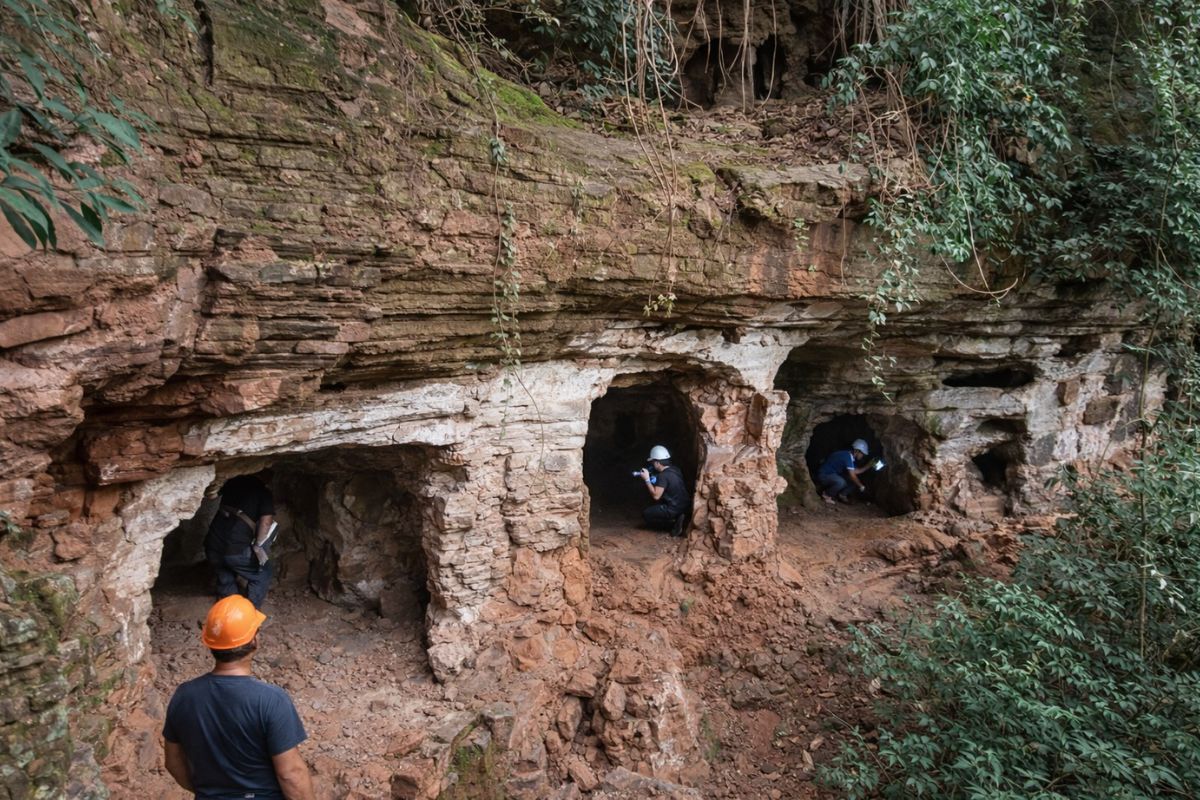
Mysterious rock formation found in the interior of Paraná does not follow any natural erosion pattern, and now specialists are investigating whether humans carved those cavities centuries ago.
-
The Brazilian Air Force has been in Sudan for a year coordinating drone operations, distributing humanitarian aid, and training military personnel from seven countries on a UN peacekeeping mission in one of the most unstable regions of the planet.

Interpretation of the treaty gave rise to the business
Initially, Hope consulted the document in a library and focused on Article 2, which establishes that celestial bodies cannot be appropriated by countries.
Thus, he concluded that if nations could not claim the Moon, then an individual could attempt to make that claim.
He then sent a formal declaration to the United Nations claiming ownership of the Moon, as well as other planets and natural satellites.
However, according to Hope himself, no response was received, which he later interpreted as a lack of contestation.


Sale of land on the Moon and other planets
From this interpretation, Hope claimed to have started selling land on the Moon, as well as areas on Mars, Venus, and Mercury.
According to an interview given to the BBC in 2007, he stated that he sells, on average, 1,500 lots per day, using lunar maps to define the plots.
Additionally, he claimed to choose the areas randomly, closing his eyes and pointing to a spot on the map.
Later, in an interview with Politico in 2019, he declared that he had accumulated about $12 million in profit, making this activity his main source of income since 1995.
Structure of the lots and declared values
According to Hope, the lots sold have different dimensions, with the smallest being 1 acre, equivalent to approximately 0.4 hectare.
Additionally, he claimed to offer large-scale areas, up to 5,332,740 acres, valued at around $13.331 million.
Although these large areas have not been sold, he stated that lots between 1,800 and 2,000 acres have already been traded.
According to his account, about 1,800 large companies would have acquired land, including chains like Hilton and Marriott, as well as public figures.
However, as recorded by the BBC, this information has not been independently confirmed.
Creation of a self-governing political system
In order to support the model, Hope claimed to have created a political structure called the Galactic Government.
According to him, the constitution was drafted over three years and published in March 2004.
Additionally, he stated that the system would have 3.7 million owners and more than 173,000 votes to validate the document.
Hope also claimed there would be diplomatic relations with about 30 governments, as well as attempts at international recognition, including outreach to the International Monetary Fund.
However, the BBC reported that it could not independently confirm these claims.
History of claims on the Moon
Even before this case, other attempts to claim the Moon had occurred throughout the 20th century.
In 1936, Dean Lindsay declared ownership of extraterrestrial objects, while on September 25, 1954, Chilean lawyer Jenaro Gajardo Vera registered a document claiming to own the Moon.
Later, he stated that the action aimed to meet property requirements to join the Social Club of Talca, in Chile.
Experts point out legal limitations
Currently, experts indicate that the Moon cannot be legitimately considered private property.
In this regard, Claire Finkelstein, a professor at the University of Pennsylvania, stated that it is not possible for someone to declare ownership of the satellite.
On the other hand, Ian Crawford from Birkbeck College in London highlighted that there is ambiguity in international law regarding private commercial exploitation in space.
Additionally, he advocated for the need to revise the 1967 treaty, considering technological advancements and the growing economic interest in the space sector.
In light of this, although Dennis Hope’s initiative has gained notoriety over the decades, the discussion about ownership of the Moon remains open in the field of international law.
Will the advancement of commercial activities in space redefine these rules in the future?








Seja o primeiro a reagir!