





 Portuguese
  English
  Spanish
  4 min of reading
  0 comments


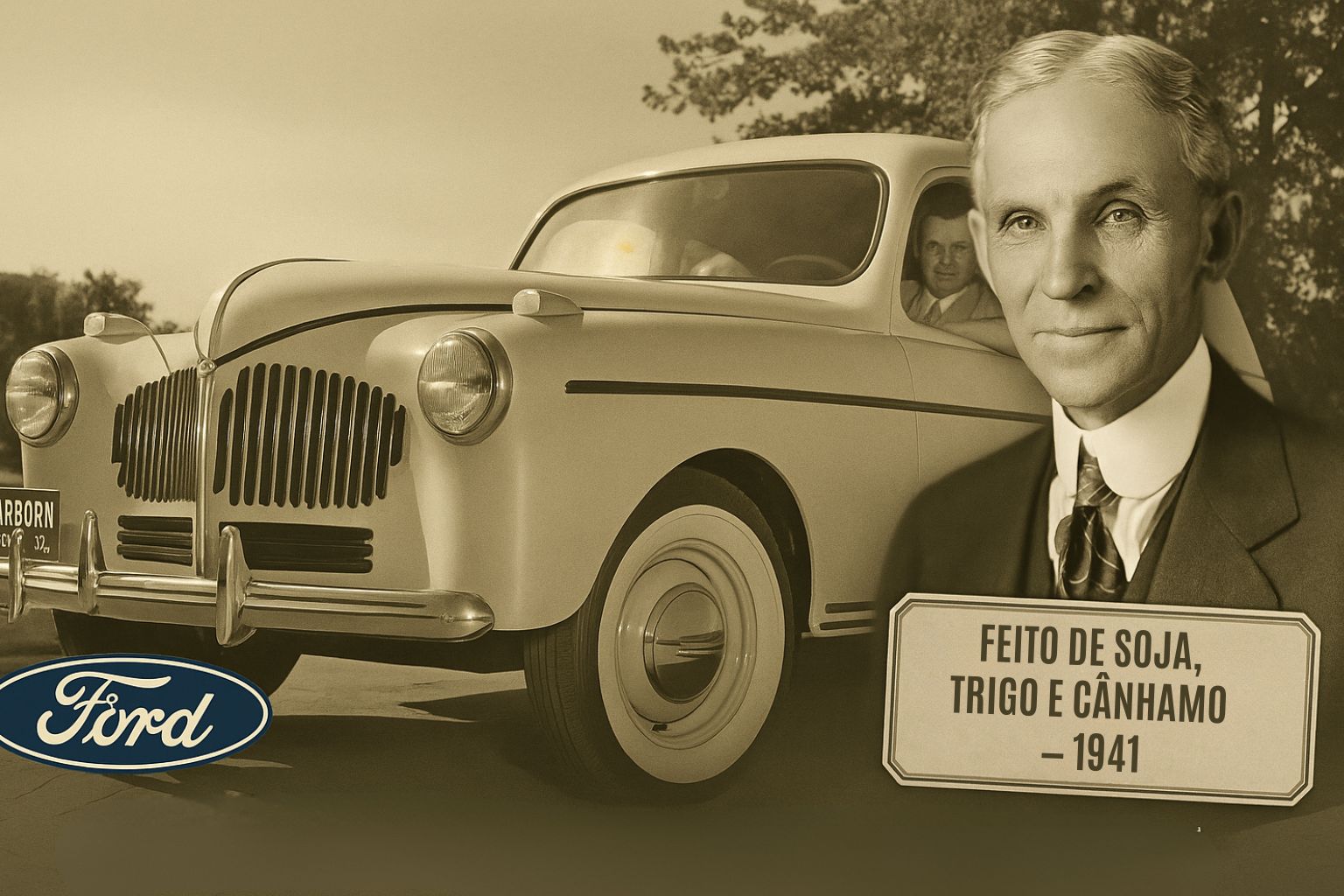
During World War II, Henry Ford created the ‘Soybean Car’, a prototype made of vegetable plastic with soy, wheat, and hemp, a symbol of early innovation and sustainability in the industry.
At the height of World War II, when steel had become a scarce and strategic resource, Henry Ford surprised the world with an idea that seemed to come from a futuristic laboratory: to build a car made of plant materials, with panels derived from soy, wheat, and hemp. The project became known as the “Soybean Car,” or simply the Soybean Car, and is still remembered as one of the boldest and most curious inventions in automotive history.
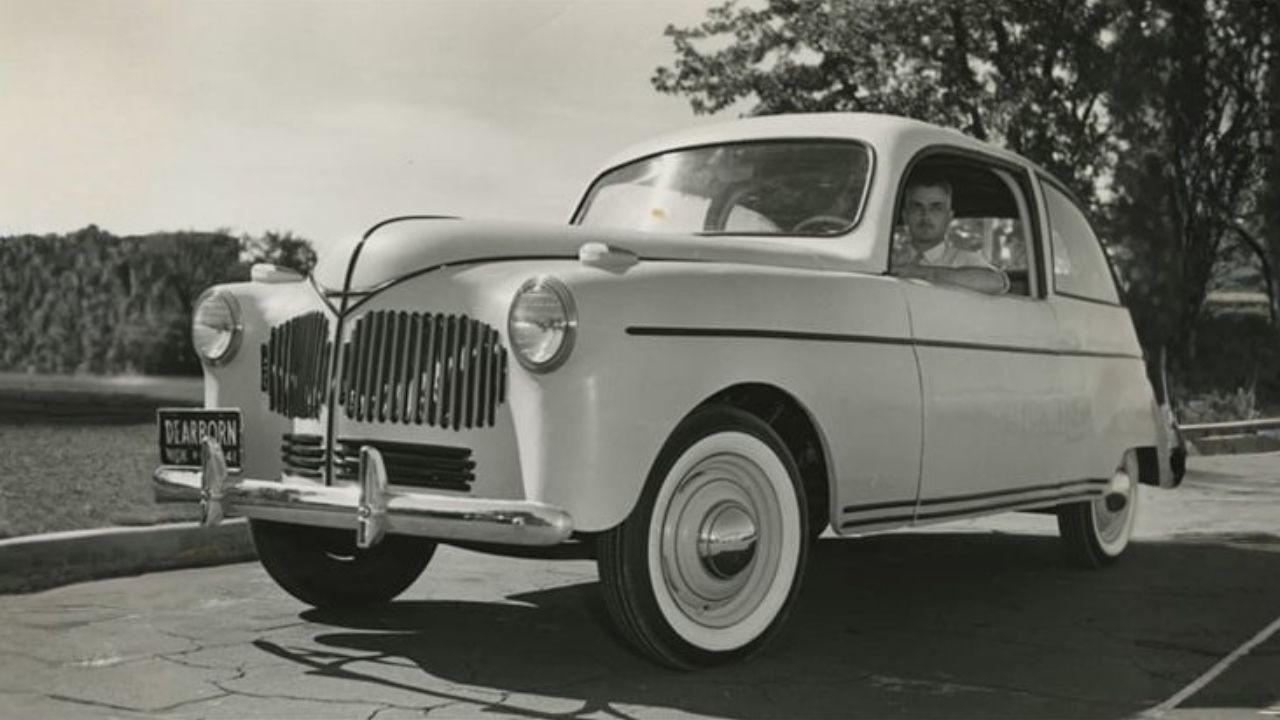
Officially presented on August 13, 1941, during an event hosted by the American Soybean Association in Dearborn, Michigan, the prototype represented the union between two sectors that Ford believed were inseparable: industry and agriculture. His vision was that American farms could supply not only kitchens but also factories.
The Idea Behind The Soybean Car
Since the 1930s, Henry Ford had been investing in research on plant-based plastics and fuels. The magnate believed that American farmers could be the new suppliers of the automotive industry.
-
Six diseases that seem common but can prevent the renewal of the driver’s license for the elderly throughout Brazil and surprise experienced drivers — could any of them affect you without showing clear signs?

-
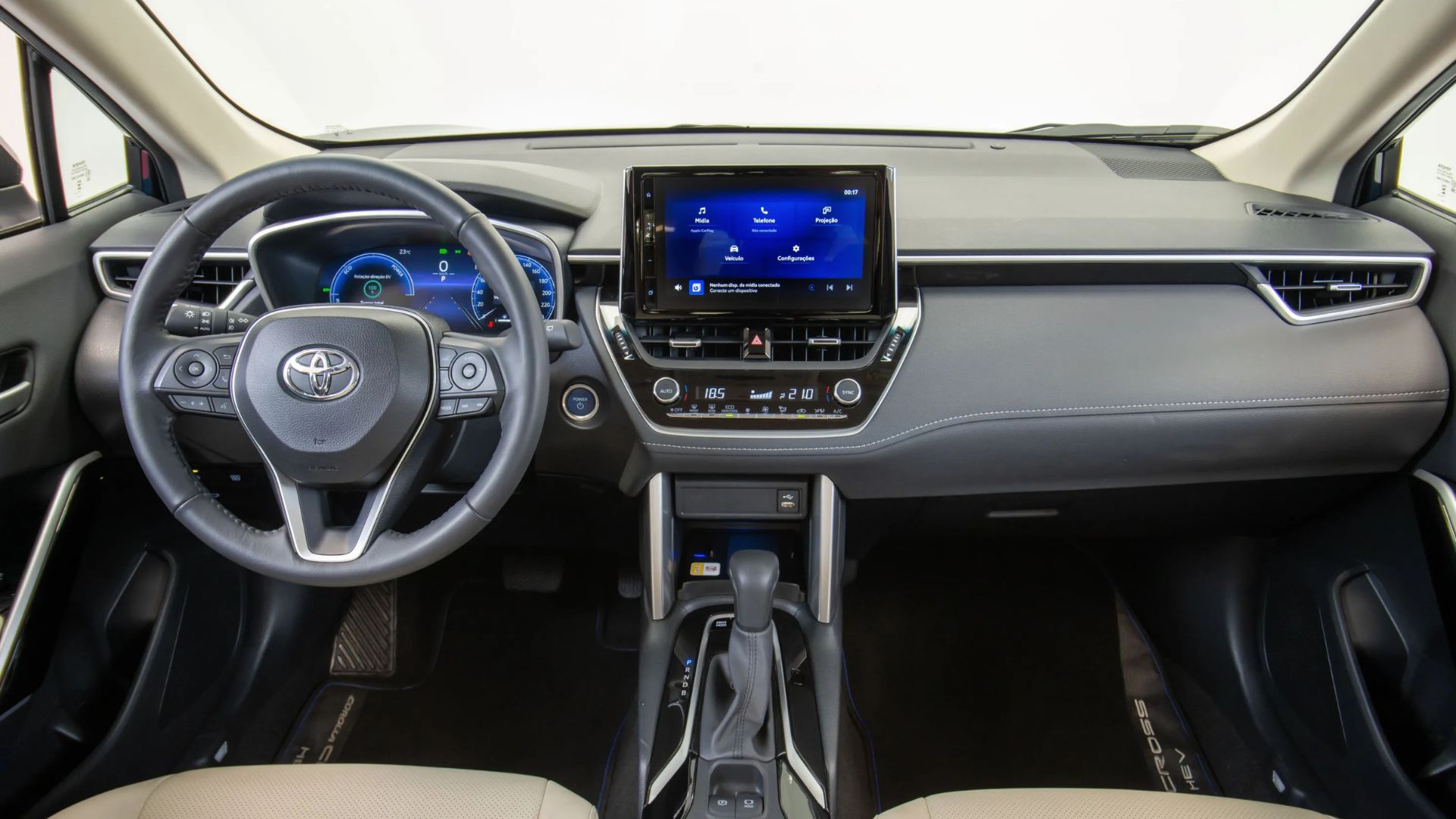
With 122 hp, fuel consumption of up to 17.7 km/l, and a trunk capacity of 440 liters, this hybrid SUV impresses even though it costs up to R$ 47,000 more than the Yaris — meet the Toyota Corolla Cross.
-
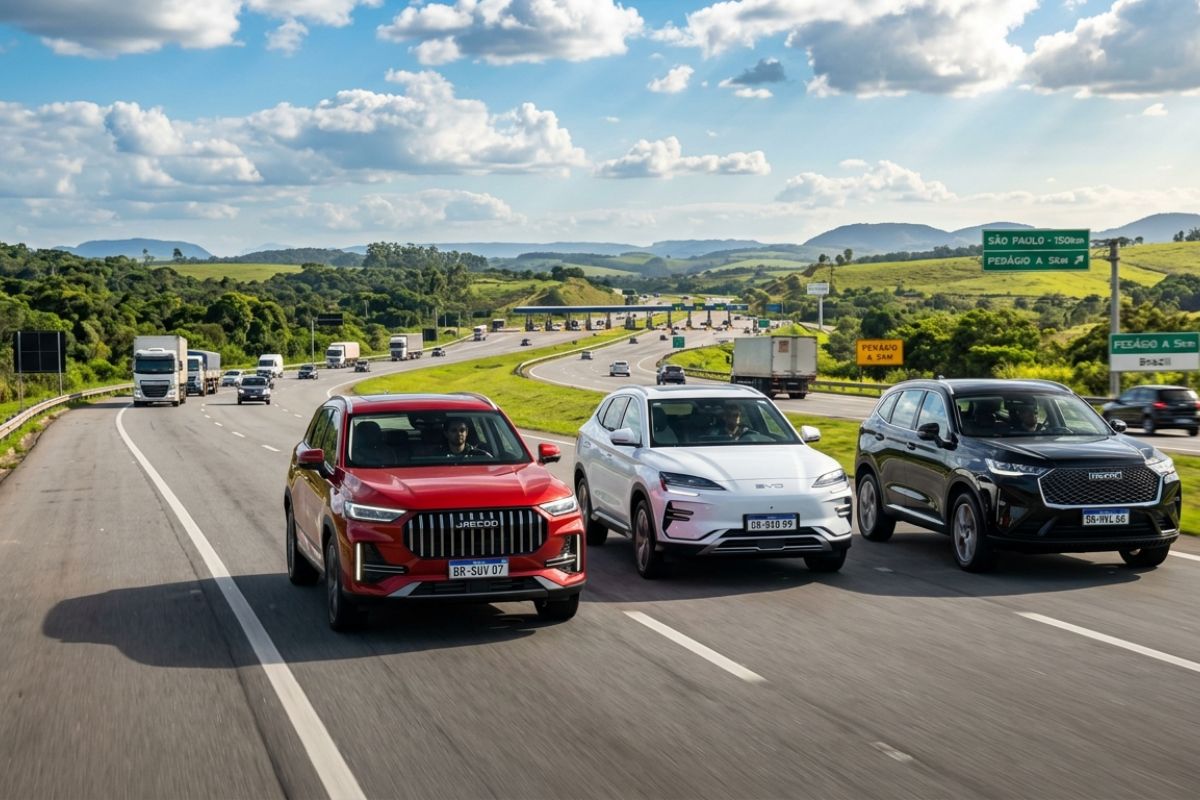
600 km with three Chinese plug-in SUVs, same mode and air conditioning on: Jaecoo 7, BYD Song Plus, and Haval H6 hit the road, and the pump reveals who was truly the most economical.
-
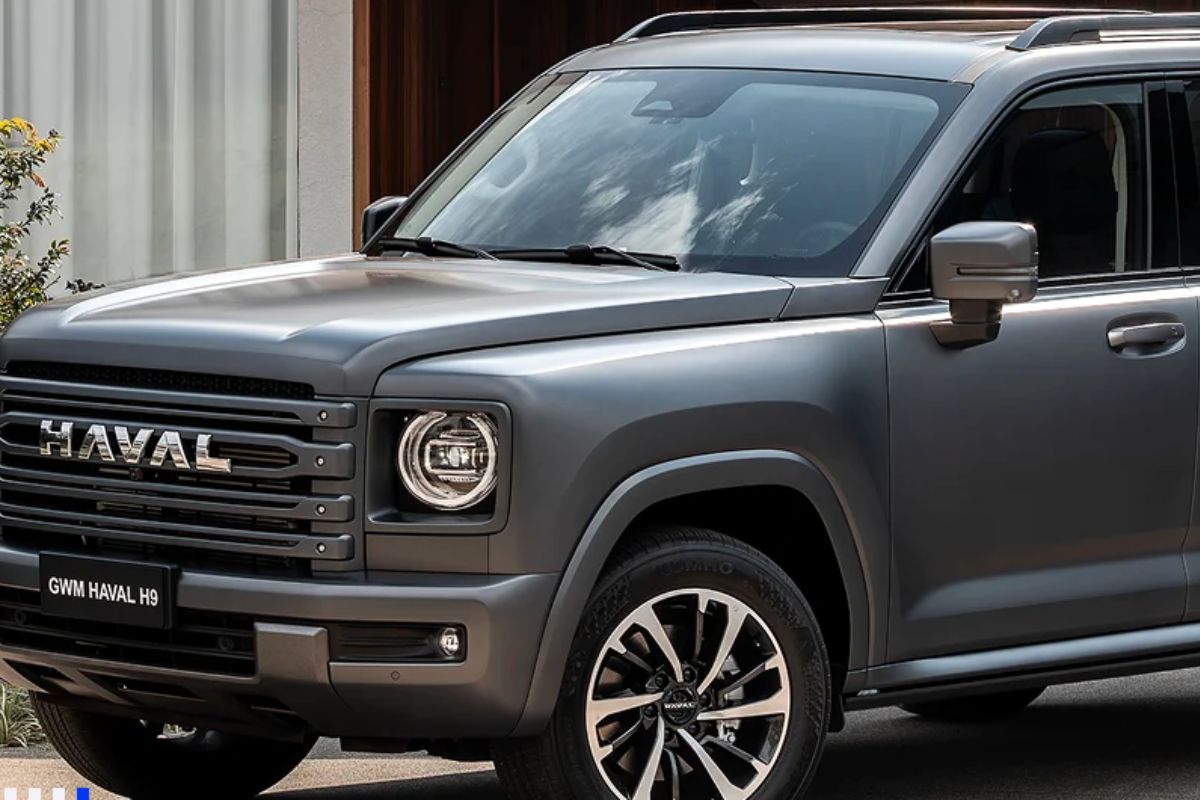
With a price almost R$ 100 thousand lower, the Haval H9 surpasses the SW4 for the first time in March, but Toyota still leads in the accumulated total for 2026; the Chinese SUV bets on technology and premium finishing to compete at the top.

To that end, Ford created laboratories dedicated to studying compounds based on soy, wheat, corn, and hemp, with the goal of replacing part of the steel and synthetic chemicals used in car manufacturing.
In 1941, this idea took physical form in the Soybean Car, an experimental vehicle that, according to Ford Motor Company itself, weighed 30% less than an equivalent steel car and had body panels made of reinforced vegetable plastic. The chassis was made of steel tubes, but the entire exterior — hood, roof, doors, and fenders — was composed of a mixture of agricultural fibers and synthetic resins developed in the brand’s laboratories.
A Car Made Of Plants
The exact composition of the panels was never fully documented, but records from the The Henry Ford museum in the United States indicate that the mixture included soy, wheat, hemp, flax, and other plant fibers, bound by a phenolic plastic base.


This combination resulted in a surprisingly lightweight and resilient material, to the point where Henry Ford himself publicly demonstrated its strength: he hit the body with a sledgehammer in front of cameras without causing any visible damage.
The scene, captured in photos and newspapers of the time, became a symbol of American innovation in wartime. The goal was to show that the car not only saved steel — essential for tanks and airplanes — but also offered resistance comparable to metal.
A Step Ahead Of Its Time
More than just a technical curiosity, the soybean car represented a philosophy. Ford advocated the idea of a circular economy between farmers and industries. He even stated that “the farmer can be not only the producer of food but also of materials for industry.” The vision was bold, anticipating by decades the concept of industrial sustainability that would only gain traction in the 21st century.
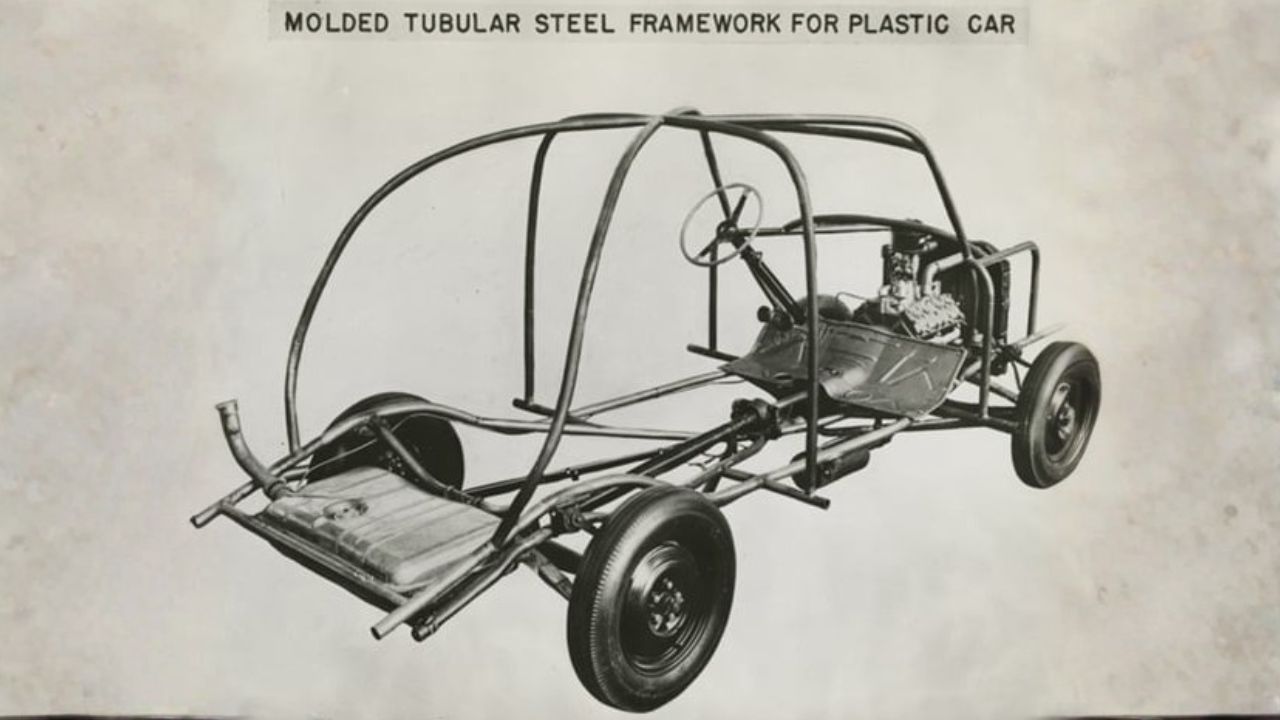
The vehicle was built on a lightweight tubular chassis and used the same 60-horsepower V8 engine that equipped standard models of the time. Its total weight was approximately 900 kg, making it more economical and agile. Estimates suggest that the prototype cost around US$ 25,000 in 1941 values — equivalent to over US$ 500,000 today.
The End Of The Experiment And The Legacy
Just a few months after its presentation, the attack on Pearl Harbor led the United States to fully enter the war, diverting all industrial efforts to war production. The soybean car project was halted, and the only prototype constructed was dismantled and lost over time.
Nevertheless, research on plant-based plastics continued. Ford Motor Company’s laboratories continued developing soy-derived compounds, and decades later, the automaker would return to invest in this concept — today, parts of the interior panels and seat foams of modern Ford models use soy polymers.
A Symbol Of Vision And Innovation
The soybean car of 1941 remains one of the most fascinating chapters in automotive history. Although it never made it out of the experimental stage, it showed that the idea of sustainable vehicles did not begin with electric cars, but with the restless mind of Henry Ford, during the steel and war era.
More than an eccentric prototype, the Soybean Car was a manifesto: proof that technology and nature could coexist long before the term “eco-friendly” became trendy. And, 80 years later, the world is finally starting to follow the path that Ford envisioned in 1941.









Seja o primeiro a reagir!