





 Portuguese
  English
  Spanish
  3 min of reading
  0 comments


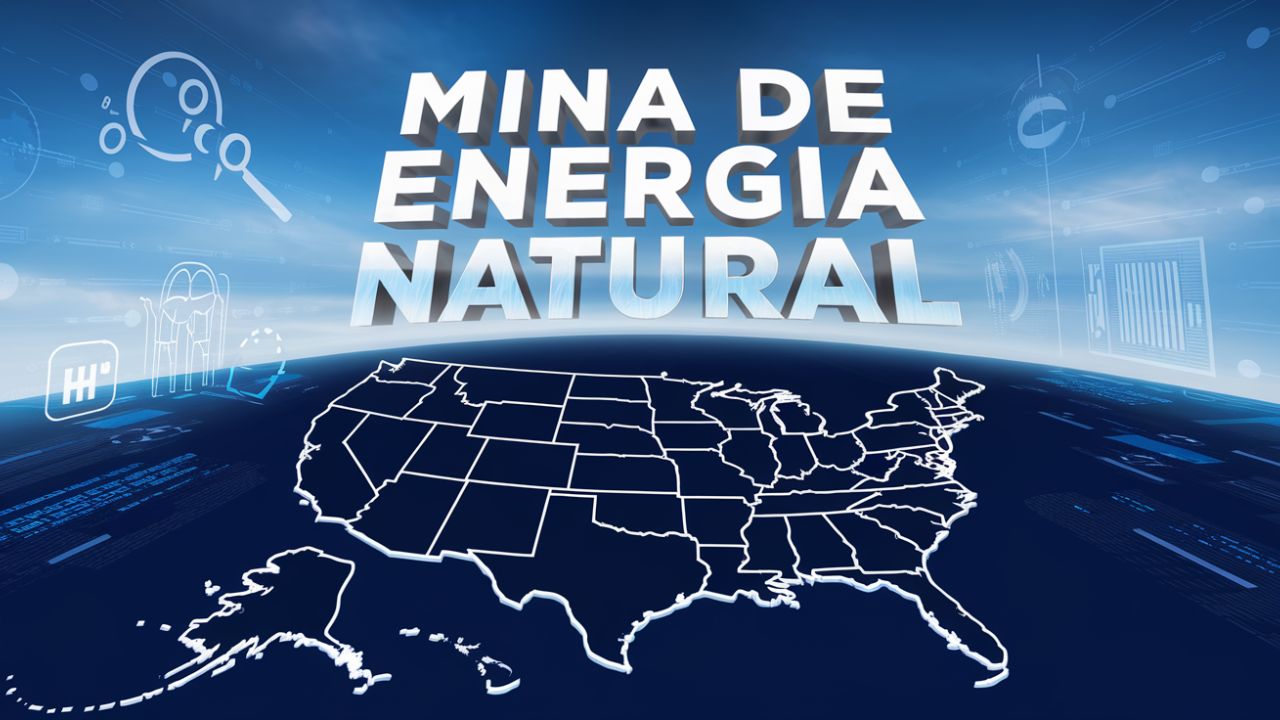
With Potential to Power the Planet for Centuries, the USGS Map Highlights Regions in the US Rich in Natural Hydrogen, Revealing a New Era for Clean and Sustainable Energy.
Have you ever thought about discovering a clean energy mine right beneath our feet, capable of powering the planet for centuries? Sounds like a scene from a movie? Well, that’s exactly what the United States Geological Survey (USGS) revealed with its new natural hydrogen exploration map, also known as geological or white hydrogen.
Launched in January, this map marks an important step in the search for more sustainable energy alternatives, putting natural hydrogen in the global spotlight. Let’s understand why this is so revolutionary.
What Is Natural Hydrogen and Why Is It Important?

Natural hydrogen is a gas found directly underground, accumulated in rocks and natural reservoirs. Unlike the more common forms of hydrogen production (such as gray and green, which depend on complex industrial processes), natural hydrogen is extracted directly from the Earth.
-
Renewable energy advances over protected areas in Brazil, and a survey by the Energy Transition Observatory reveals silent impacts that challenge environmental conservation and pressure sensitive traditional territories.

-
Rio Grande do Sul accelerates energy transition: State invests in renewable technologies and consolidates decarbonization strategies and pathways to attract billions in new industrial investments.

-
With 160,000 m² of collectors, an area larger than 20 football fields, Silkeborg, in Denmark, hosts a solar thermal plant that heats 19,500 homes and could become the largest solar heating plant in the world.

-
A study reveals the expansion of renewable energy procurement in Brazil and shows how companies are taking advantage of opportunities to reduce expenses, ensure energy efficiency, and strengthen strategic environmental commitments.


While industrially produced hydrogen consumes a lot of energy and can generate carbon emissions, natural hydrogen offers an almost “ready-to-use” alternative. It’s like finding water in an oasis in the global energy desert.
In addition to being extremely clean, hydrogen is highly efficient and versatile. It can be used to fuel vehicles, generate electricity, and even as a raw material in industrial processes.
The USGS Map: How It Can Transform Energy in the US
The map developed by the USGS is more than a scientific tool – it’s a window to the future. It identifies regions in the US with the greatest potential to host natural hydrogen deposits, offering a new opportunity to revolutionize the country’s energy matrix.
According to the Eixos website, the most promising areas include central parts of the continent, such as Kansas, Iowa, and Minnesota, as well as western states like Colorado and Arizona. Even the California coast appears as a candidate for future “energy gold.”
With a prospectivity scale from 0 to 1, the map highlights the richest areas in dark blue. This detailed methodology can be replicated in other parts of the world, expanding research beyond North American borders.
The Future of Natural Energy Exploration
Although the potential is enormous, there are still challenges ahead. Extraction techniques, economic viability, and environmental regulations are some of the obstacles that need to be addressed.
It is estimated that even a fraction of the world’s natural hydrogen reserves could meet energy needs for centuries. In the US, exploring this resource could generate jobs, reduce dependence on fossil fuels, and consolidate the country as a leader in the global energy transition.
Still, large-scale exploration depends on technological advancements and a greater understanding of how to locate and extract the gas safely and efficiently.
The Global Role of Natural Hydrogen in the Energy Transition
Natural hydrogen is not just a solution for the US; it is a key piece in the global race for clean energy. Countries such as Brazil, Canada, and Australia are already investing in research on the subject, while renewable energy companies position themselves to explore this new frontier.
In Brazil, Petrobras announced investments in research on natural hydrogen, collaborating with international consortia. This exchange of knowledge and technology is essential to accelerate the energy transition across the planet.
Brazil’s participation in international consortia, such as the one led by the USGS, could open doors to new investments and technological advancements in the country, helping to turn the potential of natural hydrogen into reality.








-

Uma pessoa reagiu a isso.