





 English
  Francês
  Alemão
  Italiano
  Japonês
  Norueguês
  Portuguese
  Spanish
  3 min of reading


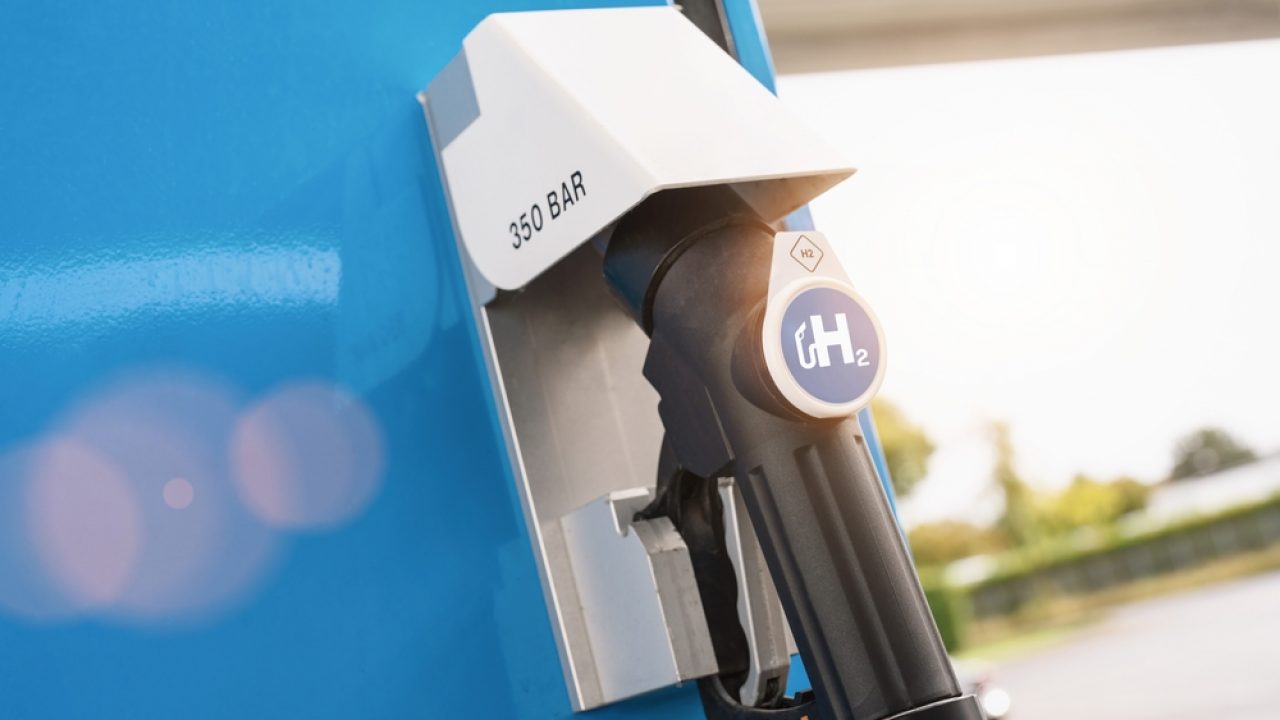
Green Hydrogen Is Gaining Prominence In The Market And Being Considered The Fuel Of The Future, Generated By Renewable Energies, This Can Revolutionize Several Industries.
For light vehicles, the shift to renewable energies is in electric motors and batteries. However, there is a wide range of critical activities for the decarbonization of the economy to which this combination does not apply. This is the case for large airplanes or ships, which cannot be too heavy and do not have the luxury of stopping to recharge along the way, and heavy industries, such as steelmaking, which rely on coal burning for steel production. Thus, a fuel of the future is emerging that can meet all these demands, namely green hydrogen.
Green Hydrogen Production

There are several different ways to obtain this fuel of the future, however, the most promising currently is the method that uses only water and renewable energies.
The two inputs are very abundant here and make Brazil one of the candidates to lead this new sector of the energy industry. Hydrogen, or H₂, is the most abundant element in the universe; however, it is not found freely in nature. It requires some industrial processes to separate the hydrogen molecules contained in other substances like water or methane gas.
-
With 160,000 m² of collectors, an area larger than 20 football fields, Silkeborg, in Denmark, hosts a solar thermal plant that heats 19,500 homes and could become the largest solar heating plant in the world.

-
A study reveals the expansion of renewable energy procurement in Brazil and shows how companies are taking advantage of opportunities to reduce expenses, ensure energy efficiency, and strengthen strategic environmental commitments.

-
Mato Grosso do Sul excels in the sugar-energy sector: the state reaches a milestone of 22 operating mills and accelerates the production of clean energy in MS with a focus on sustainability.
-
National energy dilemma: Brazilians support clean energy but reject increases in tariff costs to finance the sustainable transition.


It gains the classification of green when it is produced without the emission of greenhouse gas. The world already consumes large quantities of hydrogen, however, it is not green.
Currently, the main challenge is to refine the technology and scale up to mitigate the cost of producing the fuel of the future. Hydrogen has several names and colors depending on the associated emissions, such as Gray Hydrogen, which releases between 11 and 13 kilos of CO₂ into the atmosphere for each kilo of hydrogen, Blue Hydrogen, Pink Hydrogen, among others.
Renewable Energies And Electrolyzers
The main projects in development of green hydrogen are currently located in regions of the planet where there is a high volume of solar irradiation or strong winds for generating renewable energies.
In most cases, the production of the fuel of the future will be intermittent, according to energy availability; however, some projects consider using batteries to avoid interruptions.
The heart of hydrogen plants is electrolyzers, which despite being a well-known and mastered technology for a century, interest in green hydrogen is generating a race for efficiency. Some startups are focusing on critical electrolyzer components, compared to traditional companies that are entering the business with an eye on the emerging market.
Functions Of Green Hydrogen
In theory, the potential uses of the fuel of the future generated from renewable energies are numerous and range from heating buildings to passenger jet turbines. However, large-scale production is expected to take a long time.
The expectation is that it will initially be used in sectors and industries that emit many greenhouse gases and whose decarbonization is particularly complicated. One major example is the billions of tons of steel consumed annually, accounting for 7% of all pollutant emissions.
The world’s major steelmakers are creating processes that use green hydrogen instead of coal to transform iron ore and produce the famous green steel. Additionally, vehicles such as airplanes and cargo ships are betting that pure green hydrogen, in the form of ammonia or methanol, will be the shortest path to decarbonization.










Seja o primeiro a reagir!