





 Portuguese
  English
  Spanish
  4 min of reading
  0 comments


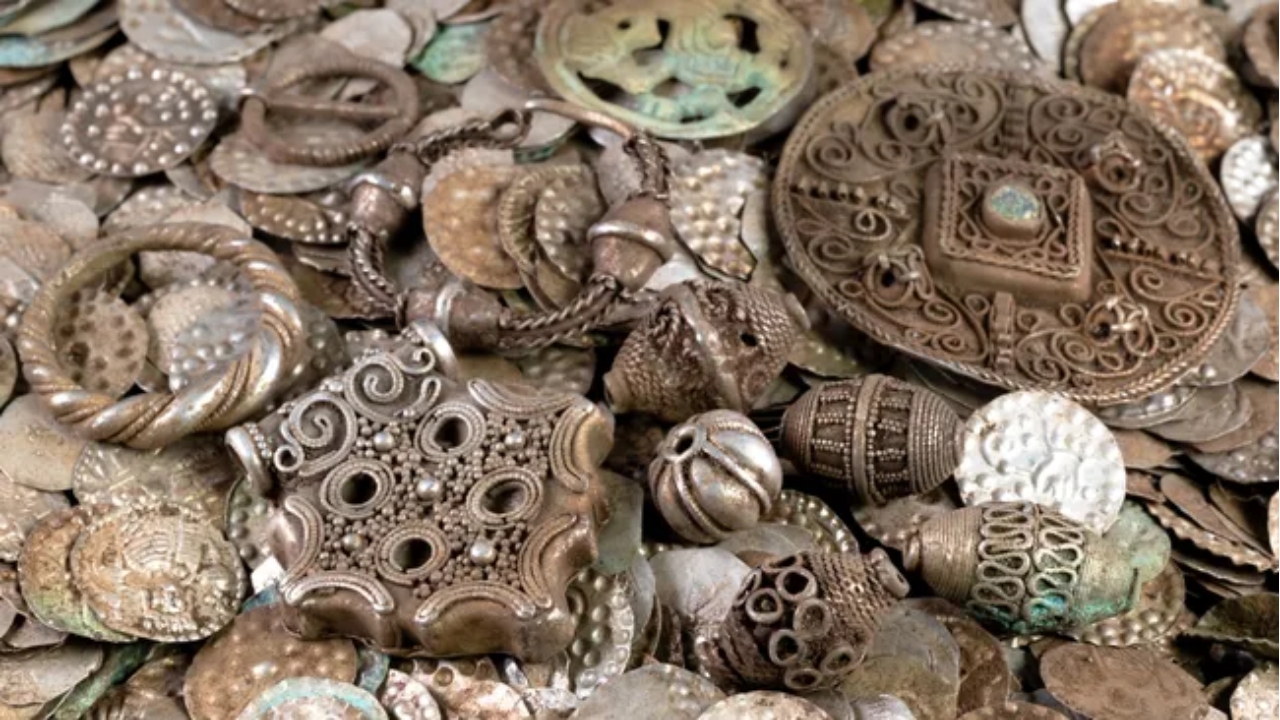
While Digging for Worms, a Man Accidentally Found Over 20,000 Medieval Coins — the Largest Viking Treasure Discovered in the Last 50 Years, Revealing Secrets of 11th Century Europe
A simple fishing day turned into one of the largest archaeological finds in recent Swedish history. A man, while digging to collect worms near Stockholm, accidentally discovered a treasure containing between 15,000 and 20,000 silver coins from the Middle Ages, as well as jewelry and other valuable objects. According to the Swedish National Museum of Antiquities, the find dates back to the 11th century, when the country was still in the process of forming as a unified kingdom.
Accidental Discovery Reveals an Ancient Treasure
The man, whose name has not been disclosed for security reasons, noticed something metallic while digging the soil in a rural area. Upon removing part of the earth, he discovered an ancient corroded copper pot filled with silver coins and small ornamental objects.
The case was immediately reported to the authorities, and archaeologists from the Stockholm Historical Museum and the Swedish National Heritage Agency (Riksantikvarieämbetet) conducted the official excavation. The team confirmed that it was an intentional deposit of valuable objects, possibly buried during a time of political instability or war.
-
The Judean Desert flourishes alongside the Dead Sea, craters turn into freshwater lagoons with fish, and satellite images show Israel greener, raising debate about biblical prophecies in the world.

-
‘Artificial island of Dubai in Brazil’: construction of R$ 65 million inspired by a mega maritime structure, plans for complete urbanization, duplication of 2.2 km of a strategic road, and delivery in 2026, but is ultimately halted by Fepam.

-
The generation that grew up alone at home in the 80s reveals how an unsupervised childhood shaped adults with high adaptability, resilience, and emotional control, according to scientific studies that indicate a significant increase in tolerance for uncertainty.

-
Adolescents who regularly participate in household tasks develop up to 40% more sense of self-efficacy, according to studies in psychology, impacting autonomy, academic performance, emotional health, and the ability to cope with challenges in adulthood.

The exact location of the find is being kept secret to prevent looting or attempts at illegal exploitation, a practice that has unfortunately increased in some regions of Scandinavia.
The Historical Value of the Coins
The coins, dated to approximately 1050 A.D., were minted in different regions of Europe and the Middle East, revealing the reach of the Nordic peoples’ trade networks. Among them, archaeologists identified pieces with Latin and Arabic inscriptions, including examples of the “dirham,” used on trade routes connecting Scandinavia to territories of present-day Iran and the Byzantine Empire.
According to archaeologist Anders Söderberg from the Swedish Historical Museum, finds of this kind are rare but fundamental for understanding the commercial and cultural connections of the Vikings:
“This type of discovery shows how Scandinavia was deeply integrated into a global economy as early as the 11th century,” he explained in an interview with local media.
The use of silver was predominant in the Nordic economies of the time when the metal was used both as currency and in cut fragments — known as hacksilver — for exchanges and payments.
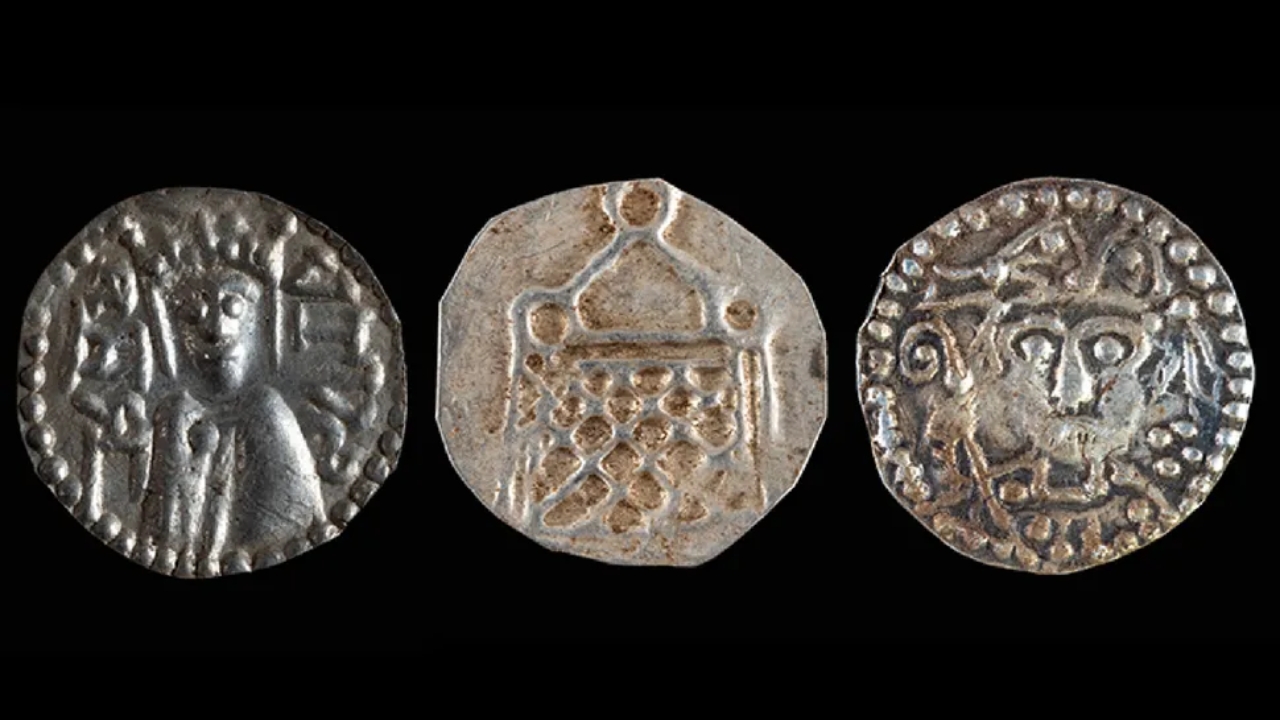
Possible Origins of the Treasure
Although the investigation is still ongoing, archaeologists believe that the treasure may have been buried by a merchant or local chieftain as a way to protect their wealth during times of war. Another hypothesis considers that the deposit may have had a ritual purpose, a common practice among ancient Scandinavian peoples.
The size and variety of the coins also indicate that the original owner had extensive contact with international maritime routes, connecting the Baltic Sea to the Caspian Sea.
According to the National Museum of Antiquities, the find stands out not only for its volume but also for the condition of the pieces, which remain relatively intact after nearly a thousand years buried.
What Will Happen with the Find
In Sweden, any archaeological discovery of this kind is property of the State, according to national legislation on the preservation of historical heritage. The discoverer, however, is entitled to a financial compensation, the amount of which is defined after a technical assessment by the museum.
The treasure will be transported to the Stockholm Historical Museum, where it will undergo cleaning, restoration, and digital cataloging processes. Experts are already planning a public exhibition in 2026, dedicated to the major Viking discoveries of the modern era.
According to the official statement from the institution, this is one of the largest archaeological finds in Sweden in the last five decades, surpassed only by discoveries made on the island of Gotland in the 1980s.
The Archaeological Importance of the Find
Researchers emphasize that this type of discovery is essential for understanding the cultural transitions that marked Northern Europe. In the period to which the treasure belongs, Sweden was experiencing the transition from paganism to Christianity, and the coins served not only as economic instruments but also as symbols of political and religious power.
The find reinforces the importance of Scandinavia as a link between the West and the East, showing that the Vikings’ trade and cultural influence extended far beyond invasions.
In addition to its scientific value, the discovery rekindles public interest in archaeology and highlights how chance still plays a significant role in reconstructing the past. Every year, hundreds of similar finds are reported in countries like Norway, Denmark, and Sweden — many made by civilians during everyday activities, such as gardening or fishing.
The Chance That Made History
The man who was only looking for worms has now become the protagonist of one of the greatest archaeological discoveries of the 21st century. His act of responsibility in notifying the authorities allowed the find to be preserved and studied appropriately.
The case highlights the importance of collaboration between citizens and scientific institutions, showing that significant contributions to history can come from the most unexpected places and moments.
The Stockholm treasure, now under the protection of the Swedish state, is more than a collection of ancient coins — it is a living portrait of the complex commercial, cultural, and spiritual web that shaped medieval Europe.










-

-

-

-

-

-

34 pessoas reagiram a isso.