





 Portuguese
  English
  Spanish
  5 min of reading
  0 comments



A Small Minimalist Cabin of 15 m² Was Built by the Seaside in the Azores in Just 10 Days, Using Sustainable Japanese Cedar, Rainwater Harvesting, Natural Ventilation, Elevated Foundation, Planned Off-Grid Living, and Sea View in an Isolated Atlantic Climate Setting with Strong Constant Winds.
The story of this small minimalist seaside cabin began to gain an audience through videos and reports showcasing how a single builder, with careful planning and fine carpentry, erected a functional structure in record time, in one of the most striking settings of the Azores archipelago.
The project combines sustainable Japanese cedar, elevated foundation, charred pillars, and a compact layout, designed to provide shelter, basic comfort, and protection from the elements in a reduced space, focusing on autonomy, low impact on the land, and maximum integration with the coastal landscape of volcanic origin.
How the Small Minimalist Cabin Was Raised in Just 10 Days
The small minimalist cabin was planned from the outset to be simple, practical, and fully functional.
-
A gigantic dam project in the Himalayas could solve one crisis but silently create another for millions of people.
-
Nikola Tesla said that intelligent people tend to have fewer friends, and now science partially confirms this: a study with over 15,000 people showed that for the more intelligent, socializing too much can even reduce life satisfaction.

-
A superyacht worth US$ 17 million is delivered in impeccable condition, sets out to sail, and hits a bridge in the Bahamas just two hours later.

-
Residents of Australia woke up to a sky completely red like blood before the arrival of Cyclone Narelle, which hit the coast with winds of 250 km/h, tearing off roofs and lifting iron dust in a scene they described as apocalyptic.


Instead of betting on multiple rooms and hallways, the design consolidates everything essential into approximately 15 m², with well-defined circulation and few internal obstacles.
Every centimeter is treated as usable area, not as plant leftover.
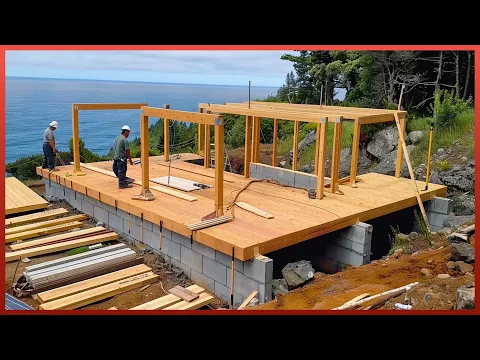
The speed of construction came from three main factors: detailed planning, use of local resources, and precise organization of each stage, from site preparation to wood cutting.
The pieces of sustainable Japanese cedar are sized and cut in advance, reducing improvisation on site, avoiding rework, and allowing assembly to follow an almost industrial sequence.
In about 10 days, this small minimalist seaside cabin transitioned from basic structure to final form, with sealing, defined internal circulation, and already integrated water collection and ventilation systems.
Meanwhile, traditional masonry works in the same region often drag on for weeks just in the structural phase, still without finishing or installed off-grid systems.
Off-Grid Living with Rainwater and Natural Ventilation

The project was designed to bring the resident closer to an off-grid lifestyle, minimizing reliance on public networks for energy, water, and sewage.
The small minimalist cabin shows that it’s possible to live with less space and fewer objects, as long as the design of the environment and systems is precise, prioritizing direct contact with the surroundings instead of accumulating furniture and dividers.
One of the pillars of off-grid living is the collection of rainwater.
The roof and structure of the cabin are configured to direct water to a storage system, which supplies basic daily tasks and reduces the need for sourcing from external sources.
This arrangement minimizes trips, transporting jugs, and pressure on infrastructures that are often limited in islands and remote areas.
Natural ventilation is another central point.
The cabin was designed with strategically placed openings to create constant airflow, reducing the need for artificial air conditioning.
Air inlets and outlets at different heights allow Atlantic winds to be part of the thermal comfort system, keeping the environment cooler even on warmer days, without relying on energy-hungry devices.
Sustainable Japanese Cedar and Low Impact on the Land
The choice of sustainable Japanese cedar as the main material is crucial for the final outcome. It is a lightweight, resistant wood suitable for humid and windy environments, such as the Azores coast.
Thanks to controlled forest management, the environmental impact is lower than with woods harvested without planning, aligning the small minimalist cabin with principles of sustainable construction.
From a construction viewpoint, the Japanese cedar facilitates carpentry work, with cuts and joints that eliminate the need for large metal structures and heavy machinery on site.
This reduces transportation, the need for cranes, and the time teams spend on a site exposed to coastal weather, where rain, wind, and salt can corrode more sensitive materials.
The leftover wood is repurposed into benches, tables, shelves, and internal details, which reduces waste and creates visual continuity between structure and furniture.
Instead of discarding scraps, the project converts these elements into functional pieces, adding aesthetic value and reinforcing the coherence between interior and exterior.
Elevated Foundation, Charred Pillars, and Durability by the Sea
The elevated foundation is one of the most important technical decisions for a cabin installed by the seaside.
By keeping the floor above the ground, the structure reduces direct contact with moisture, standing water during rainy periods, and pests common in coastal regions.
This solution also improves airflow beneath the cabin, helping to keep the interior drier and more stable.
The charred pillars undergo a traditional treatment in which the wood surface is controlled-burned, creating a protective layer against insects, fungi, and the elements.
This technique increases durability in harsh environments and reduces the need for heavier chemical products, which is in line with the proposal for off-grid life and low environmental impact.
The combination of elevated foundation, charred pillars, and sustainable Japanese cedar ensures that the small minimalist cabin has a realistic chance of maintaining its structural integrity for many years, even in settings with constant winds, saltwater spray, and significant humidity fluctuations.
The structure is small in area but robust in protection strategies.
Curiosities, Videos, and Inspiration for New Small Cabins
The construction of this small minimalist cabin in the Azores was documented on channels such as Wild Gnomos and Quantum Tech HD, which show everything from the cutting of the wood pieces to the final fitting of the panels and the interior organization.
The videos highlight the step-by-step of the construction, the tools used, and the adaptation of the project to the region’s volcanic climate.
The repurposing of leftovers into benches, tables, and shelves demonstrates that the concept of off-grid living goes beyond panels and technical systems, reaching concrete decisions of design and material use.
The cabin was positioned to take maximum advantage of the sea view and natural light, without blocking the landscape, and uses precise fittings that reduce the need for hardware and speed up assembly.
This type of initiative has been inspiring projects for small, functional cabins more connected to nature, in remote islands or isolated areas, focusing on basic energy autonomy, use of rainwater, and thermal performance adjusted to the local climate.
The experience shows that minimalism doesn’t have to mean discomfort, but rather smart design, the right materials, and technical decisions coherent with the environment.
Given this story, could you imagine living or spending time in such a small minimalist cabin, with off-grid living, rainwater, and direct sea views instead of a larger traditional house?








-

-

-

4 pessoas reagiram a isso.