





 Portuguese
  English
  Spanish
  6 min of reading
  0 comments


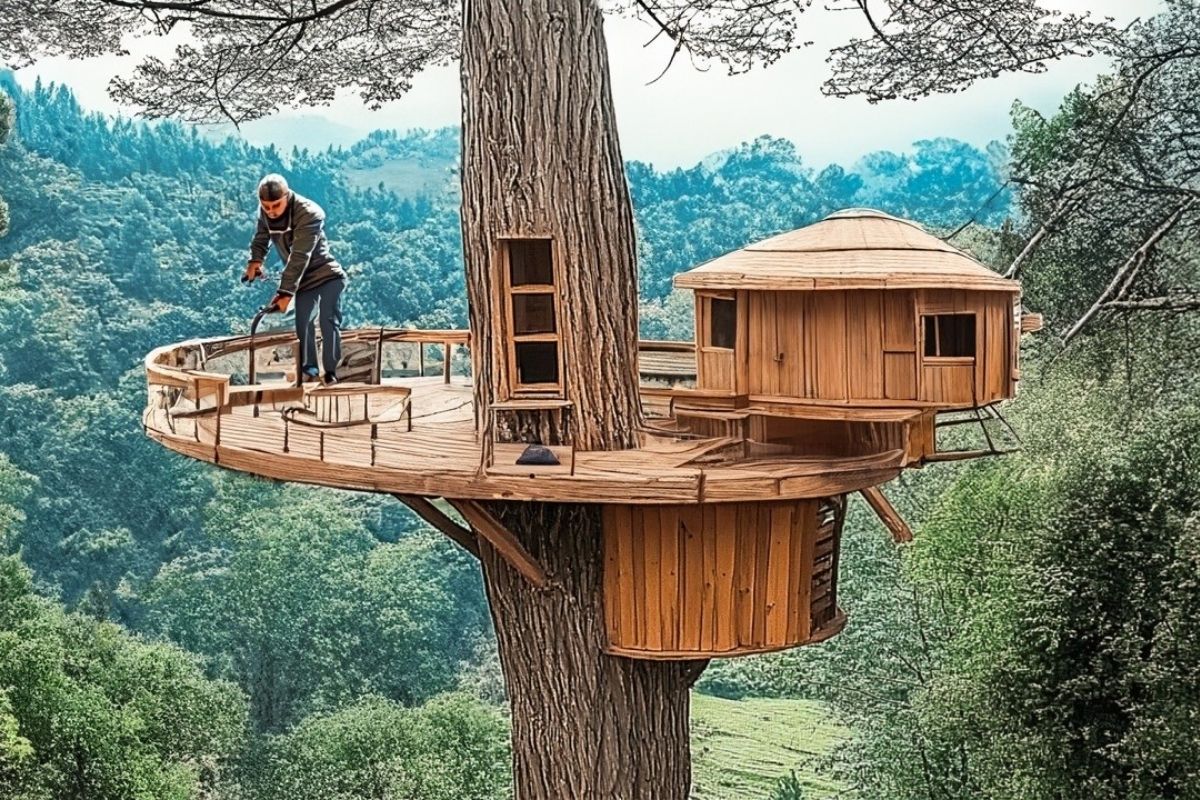
In A Silent Forest, Man Builds Tree House Alone, Sets Anchor Points, Uses Screws And Steel Plates, Adjusts Braces To Distribute Load, Installs Metal Ladder, Closes Walls, Places Windows And Seals Roof With Waterproof Panels And Trapezoidal Sheet To Sleep Off The Ground, Away From Wild Animals.
Man builds tree house alone in a silent forest and starts the work with a sequence of technical decisions that prioritize stability and preservation of the trunk. The work begins on the ground, with materials organized, measurements reviewed, and cuts planned to reduce errors when each piece needs to go up.
The construction progresses through well-defined modules, anchoring, beams, upper frame, ladder and closure, until it becomes a complete shelter with walls, windows, and roof. At each stage, connections are tightened, angles are checked and reinforcements with metal plates and screws are added to keep the structure stable in the forest.
Materials Separated Before The First Drilling

The assembly begins on the forest floor, with a methodical organization of materials and tools.
-
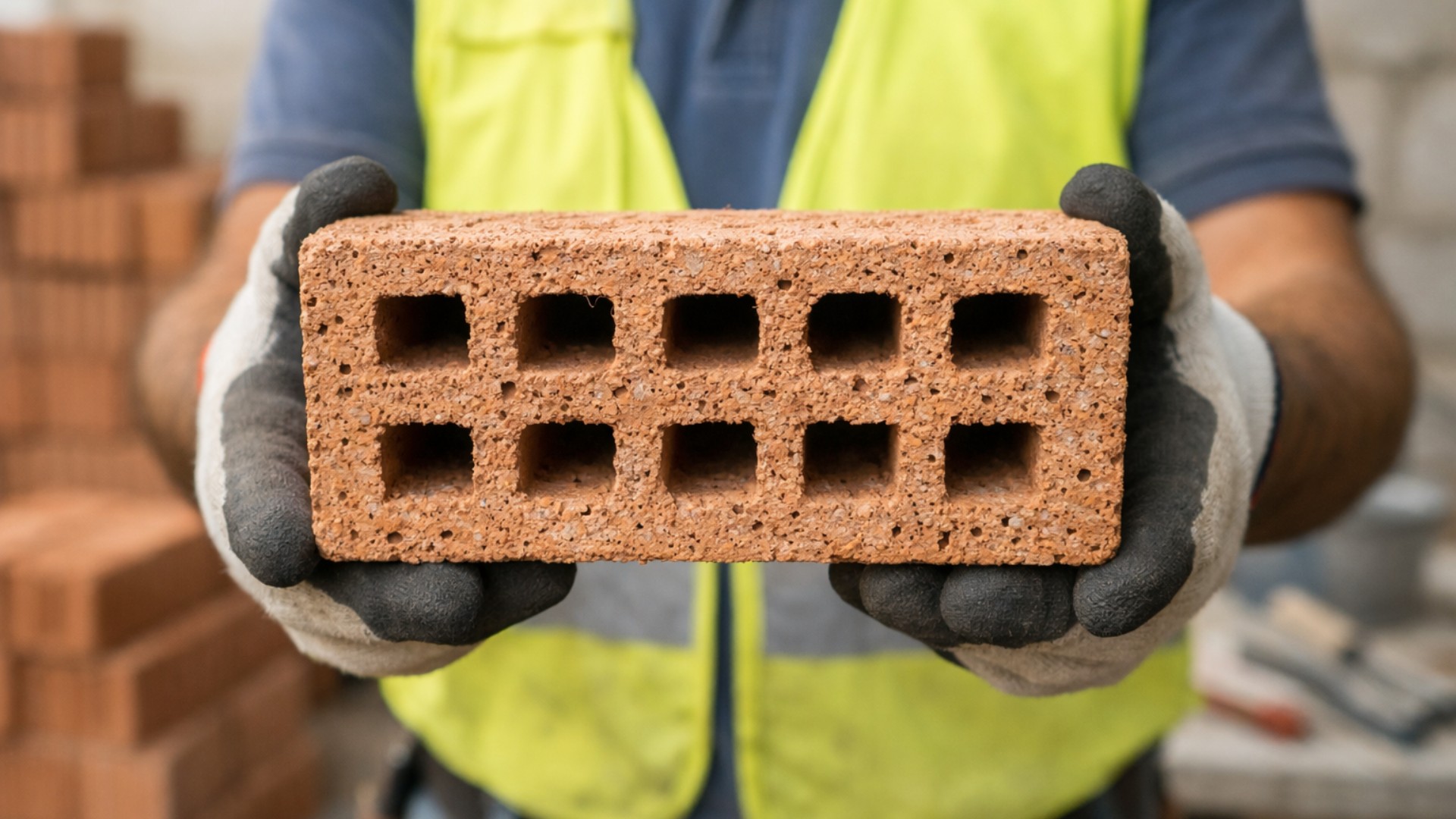
Scientists use sawdust mixed with clay to create a lighter brick, promising efficient thermal insulation and impressing by transforming waste into a solution for construction.
-
With a DNA shape, this bridge in Singapore draws attention in modern architecture and surprises tourists by transforming a simple crossing into an unforgettable visual experience in the urban heart.

-
Giant underwater pipeline begins to take shape with a R$ 134.7 million project at the Port of Santos: the 1.7 km structure uses 12-meter and 700 mm pipes to supply water to 450,000 people in Guarujá.

-
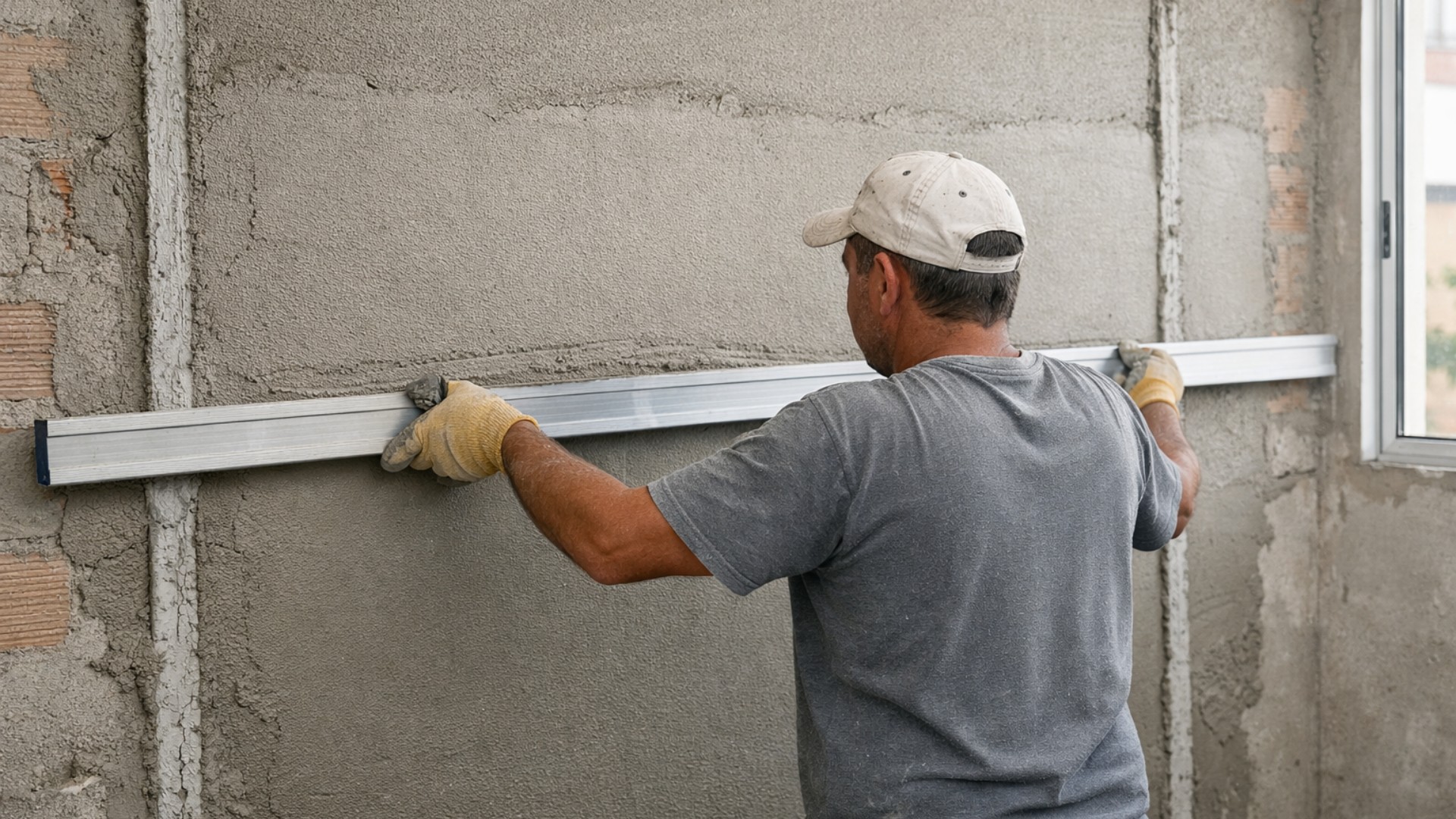
A mason reveals a professional plastering technique that uses aligned guides and a 3-meter ruler to plaster an entire wall in up to 3 hours, without visible seams, with uniform thickness, perfect plumb, and a finish ready for painting without rework.

The builder gathers wooden beams, waterproof boards, metal connectors, steel plates, and high-strength screws.
Everything is laid out in an ordered manner, because the first phase depends on planning: measurements are checked more than once, the boards to be cut are defined, and the tools for the first connection points are already prepared.
The preparation also includes a practical sorting of the wood.
Elements with signs of rot, cracks, or fragility are discarded before cutting.
The approved pieces are measured, marked, and cut to the exact size, paying attention to the ends that need to be straight and to areas that require specific cuts for fitting.
The goal is to reduce gaps up high, where adjustments are slower and riskier.
Anchor Point On The Trunk And Weight Distribution

The most sensitive step occurs when the structure begins to rest on the tree.
A support screw, described as a special anchoring screw, is installed directly into the trunk to hold the weight of the platform.
The logic of this point is twofold: to support the main load and cause minimal damage, focusing on allowing the tree to continue growing without being strangled by permanent ties.
After the anchoring, supports and metal plates are positioned with a slight inclination.
A support is installed at a small angle to stabilize the geometry of the structure, and the platform begins to receive thick wooden beams over the connection points.
At this phase, the margin of error is treated as zero: the beams are placed carefully, secured with metal fasteners and tightened with more screws, already thinking of distributing the load evenly.
Checking is continuous and repetitive.
Each fixation point receives gradual tightening, angles are checked, and fine adjustments reinforce stability.
Adjustable metal supports are a key piece to prevent concentration of weight at a single point of the trunk, keep the platform secured, and, at the same time, allow accommodation over time.
Selection, Cut, And Transport Of The Beams That Will Support The High

Before closing walls and roofing, the builder needs to prepare the structural wood of the upper frame.
The selection involves choosing logs and beams capable of carrying the structure above and maintaining rigidity against bending.
The pieces are measured on the ground, cut points are marked, and the cut is made in a controlled manner to reach the defined length.
After cutting, the ends are adjusted to be aligned and receive the connections. In several places, special cuts appear that help the fitting of the pieces together.
The sequence is repeated until all beams of the upper frame are ready.
Next, the transport becomes work in itself: the pieces are carried one by one and positioned at the assembly site, with a slower pace due to the weight.
Floor Structure And Lifting Of The Upper Frame
With the anchor points prepared and the beams selected, the assembly of the upper frame begins with the larger pieces.
To take the first element up high, the builder uses temporary supports, ensuring that the wood remains stable before the final fixings.
Only after alignment do metal connections come in to lock the set.
The frame takes shape when the main pieces are reinforced with metal plates and long screws. Smaller beams are added to tie the structural rectangle, reduce vibration, and prevent the structure from working with gaps.
The upper floor consolidates as a base to receive walls and the roof, without relying on a single support point.
Meanwhile, angle adjustments continue to happen.
The builder tightens connections, reviews inclinations, and adds extra supports to prevent the structure from sagging over time.
This process of tightening, checking, and reinforcing appears as routine, because a small gap can change the balance of the platform.
Metal Ladder For Access And Safety
With the main volume consolidated up high, access becomes a mandatory step.
The chosen solution is a metal ladder in a spiral shape, which takes up less space and integrates into the structure as a permanent element.
The assembly starts with the fixing of the supporting columns, followed by the alignment of the steps, measured one by one to maintain the correct fit.
Each joint is tightened in sequence to ensure rigidity.
After the steps, the handrails and metal guard are installed to make the climb safer and provide firm support.
In a forest, where moisture and mud are frequent, this detail reduces the risk of slipping and improves the daily use of the shelter.
The choice of a metal ladder also reduces maintenance compared to exposed wood.
The assembly becomes more consistent with the other technical parts, plates, supports, and screws, which already support the rest of the structure.
Walls, Windows, And The Waterproof Roof
With the platform ready and the ladder installed, the closing phase begins.
Pre-cut wood panels rise to form the walls, and corner studs establish plumb and square.
These studs are fixed to the floor with metal connectors and screws, creating a rigid box before the final closure.
The next focus is the roof. To handle rain and wind, waterproof wood panels and support beams come together, forming a top layer capable of protecting the interior.
In the next stage, a trapezoidal metal sheet is installed on the roof, reinforcing the waterproofing and reducing direct exposure of wood to the elements.
Windows appear when the volume is already closed.
They are installed to allow natural light in and improve ventilation, keeping the interior usable as a refuge.
With walls and roof completed, the shelter meets the main objective: to sleep elevated, more protected from the animals that roam in the forest.
Painting, Sealing, And Inspection Before Use
With the structure closed, external finishing begins.
The painting serves as a protective and aesthetic layer, helping to seal surfaces against moisture and wear.
Before considering the shelter habitable, the builder checks each connection, inspects plates and supports, and tightens critical points again, including the main screws.
The final inspection is practical. Climbing the ladder, testing rigidity under its own weight, observing if there is any sway, and identifying noises or gaps becomes part of the procedure.
When there are no signs of loosening and the structure remains firm, the refuge begins to be used as an elevated resting space, integrated into the forest and sustained by repeated measurements, fittings, and checks.
In your view, what detail seems most “suspect of causing problems” in a house like this: screws in the trunk, metal ladder, or waterproof roof?










-

-

-

6 pessoas reagiram a isso.