





 Portuguese
  English
  Spanish
  7 min of reading
  0 comments


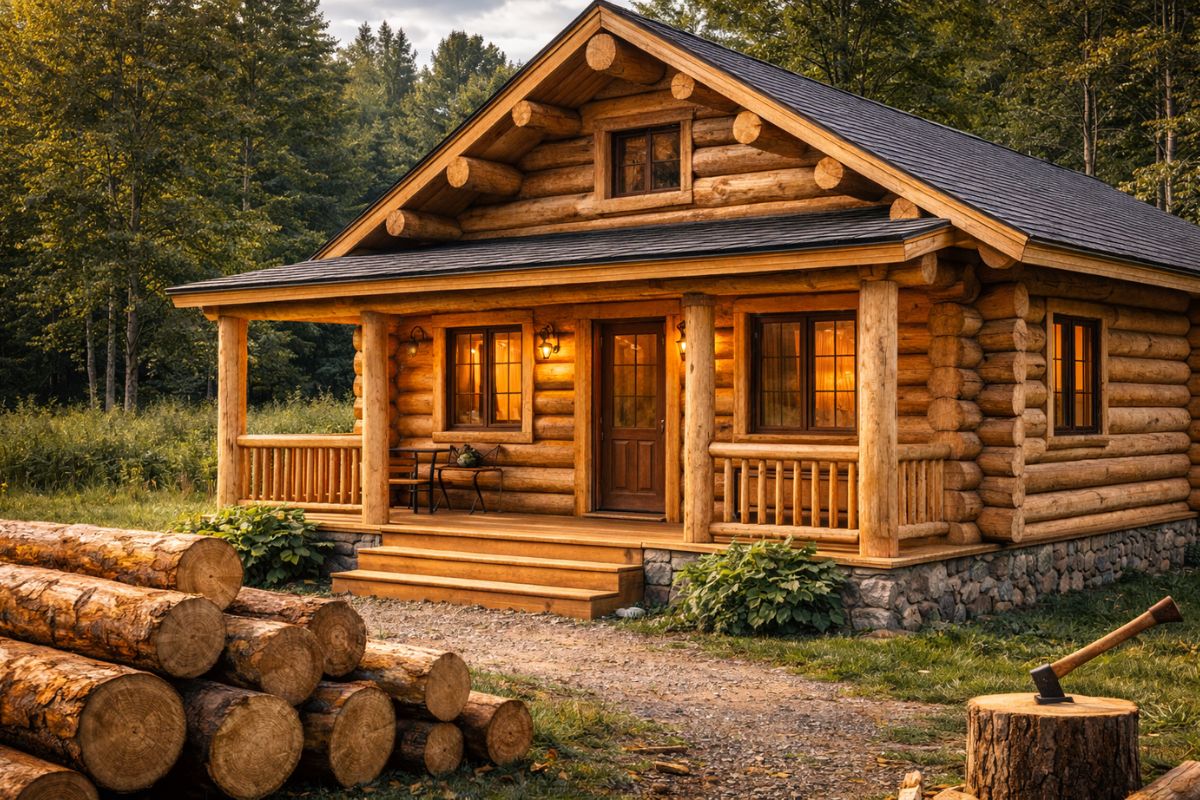
In A Year, He Managed To Build A House Himself, Raised A Wooden House In The Forest, And Transformed The Pine House Construction Into A Complete Handmade Project.
By abandoning college and investing all the money he had in trees and hand tools, Matt decided to build a pine house himself on a secluded plot of land in the middle of the forest. Without a team, heavy machinery, or prior experience in cabin construction, he aimed to transform raw logs into a solid, aligned structure, roofed and ready to shelter someone for real.
Over the course of a year, he peeled logs, dug foundations in rocky soil, raised walls, aligned columns, closed the roof, and sealed every crack. What starts as freshly cut wet wood ends up as a complete pine house, with a porch, windows, fitted doors, and a dry, insulated interior protected from the elements, built using technique, patience, and daily consistency.
The Decision To Trade College For The Pine House
Matt begins his journey by introducing himself: he decided to leave college to build, with his own hands, the wooden cabin of his dreams in the Croatian forest. The goal was not to raise any improvised shelter, but a solid, beautiful, and durable pine house capable of functioning as a true home.
-
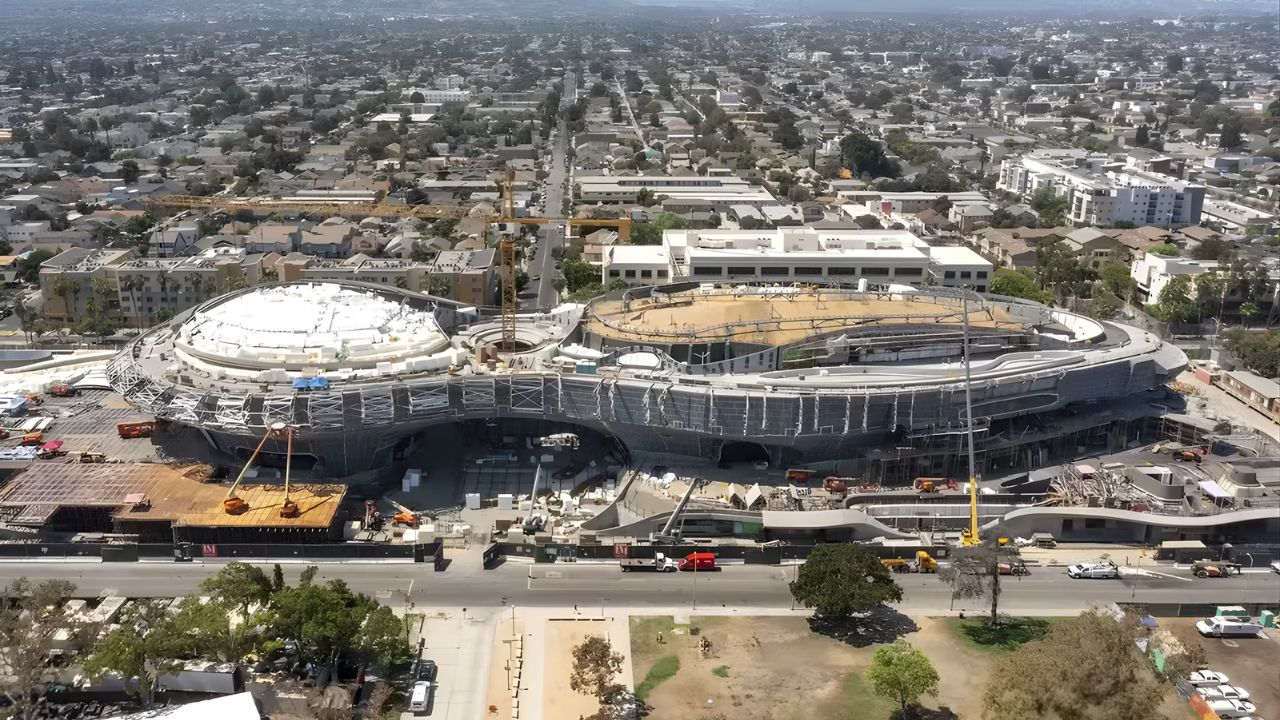
Created by George Lucas with over $1 billion, a futuristic museum in the shape of a spaceship with 1,500 curved panels is about to open in Los Angeles and will house one of the largest private collections of narrative art in the world.
-
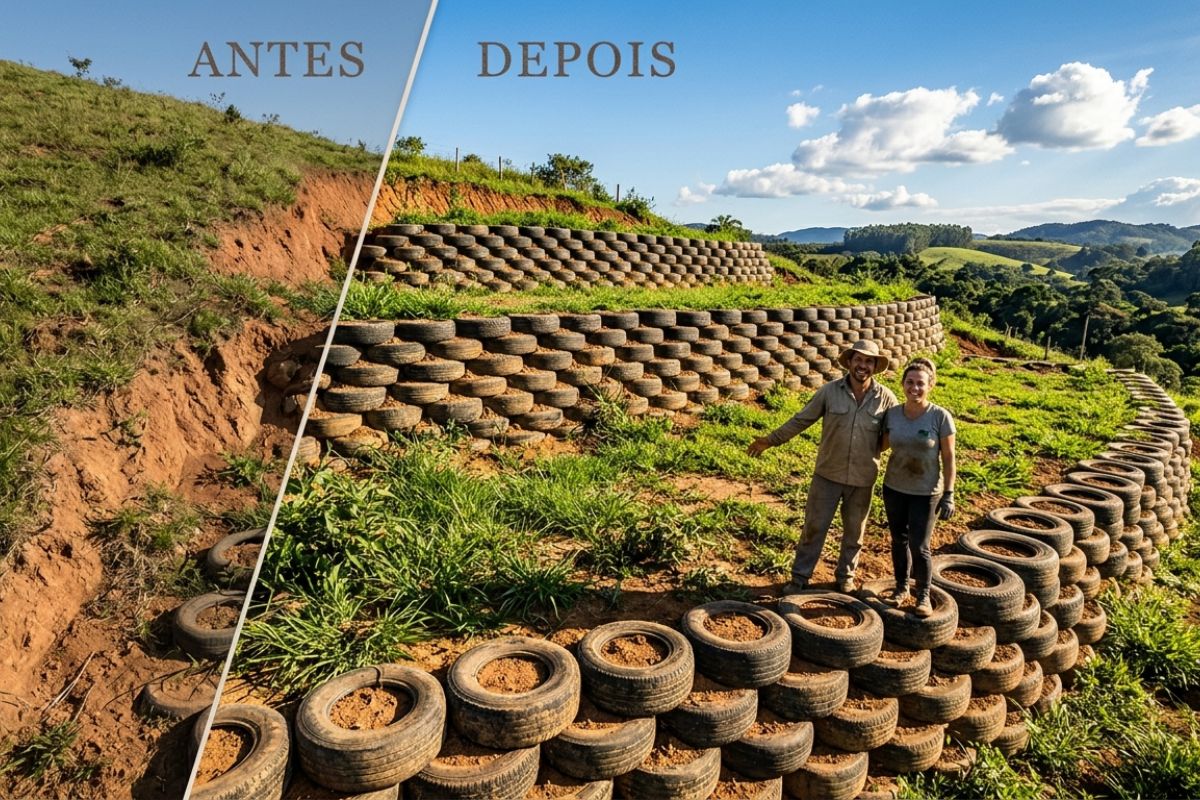
Couple shows how they built a retaining wall on their property using 400 old tires: sloped land turned into plateaus, tires are aligned, filled, and compacted with layers of soil, with grass helping in support and at almost zero cost.
-
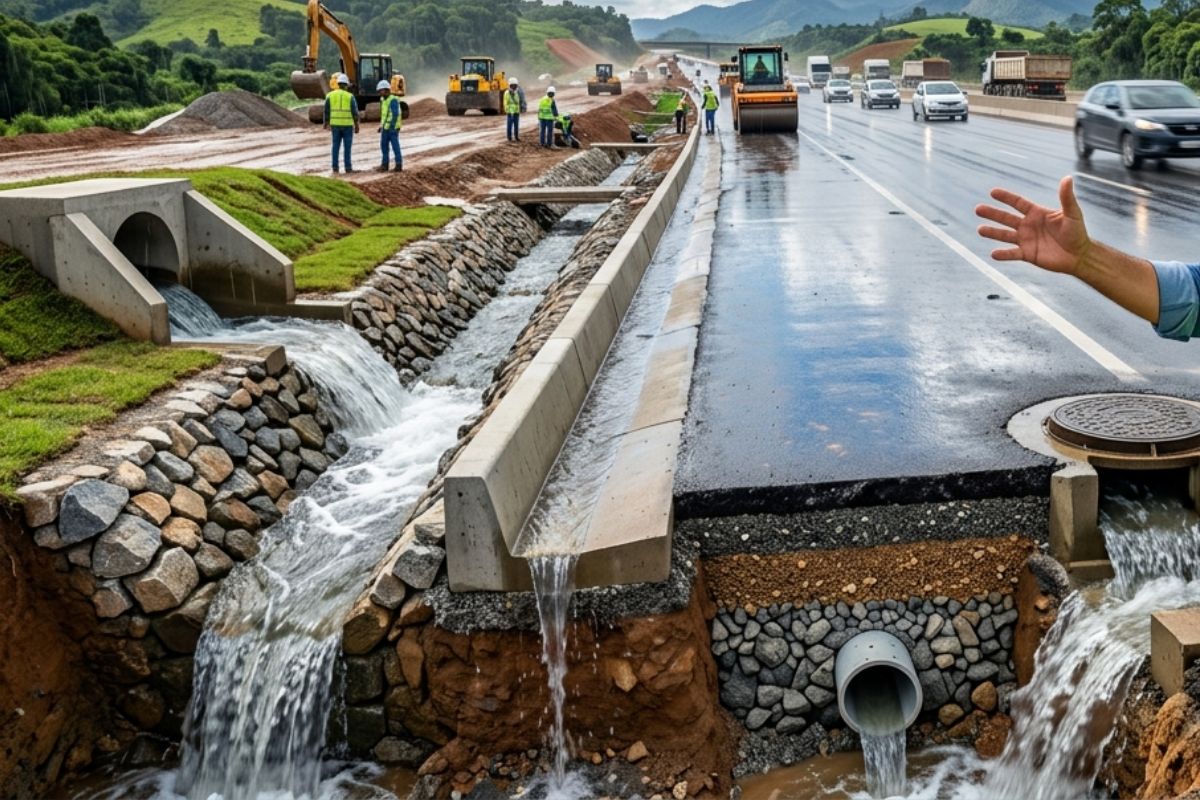
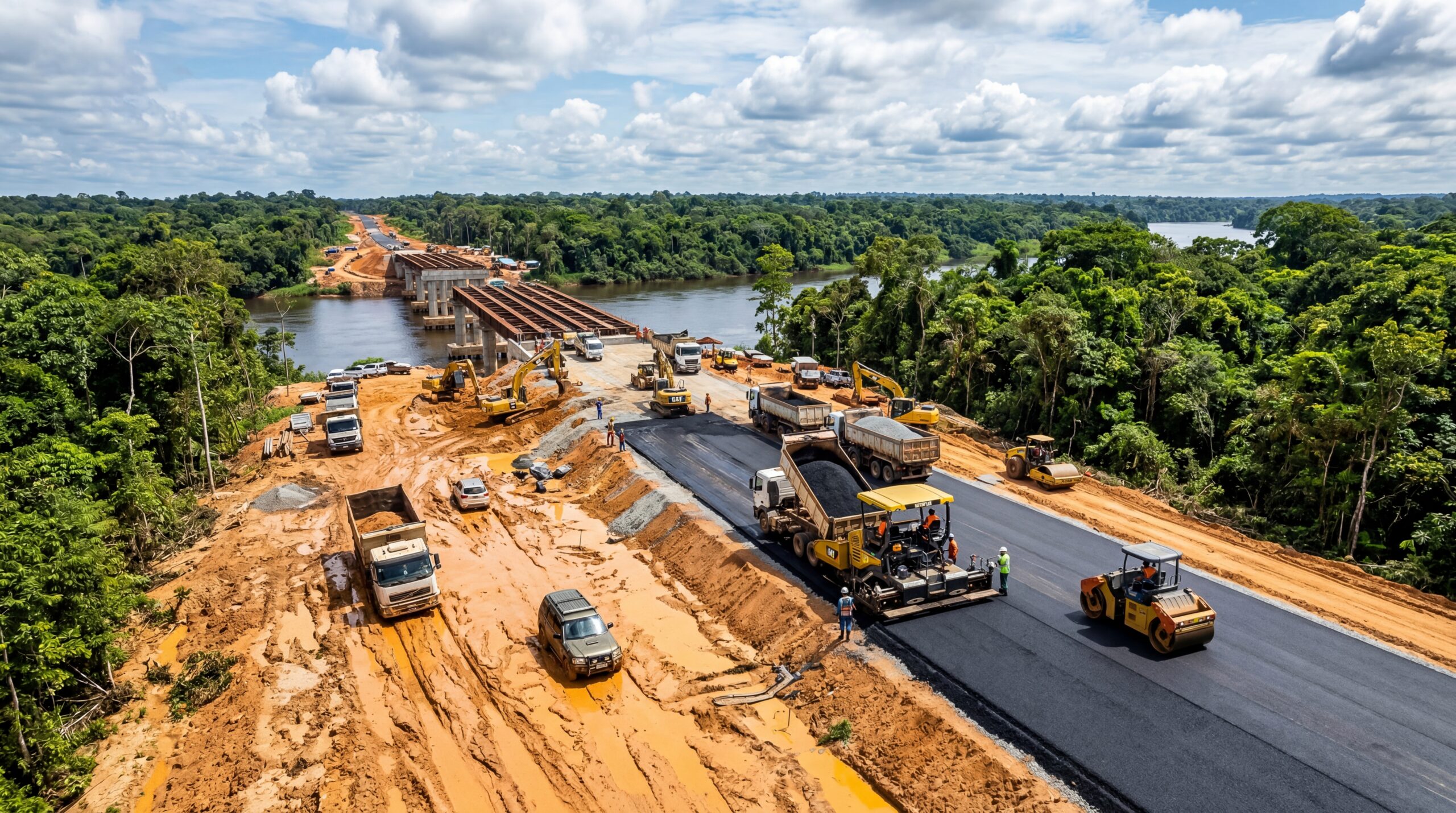
Engineer explains drainage during the rainy season: the difference between surface water and deep water, ditches, gutters, and water outlets on the road, as well as drains and drainage mattresses, to prevent erosion, aquaplaning, and flooding at the construction site today.
-
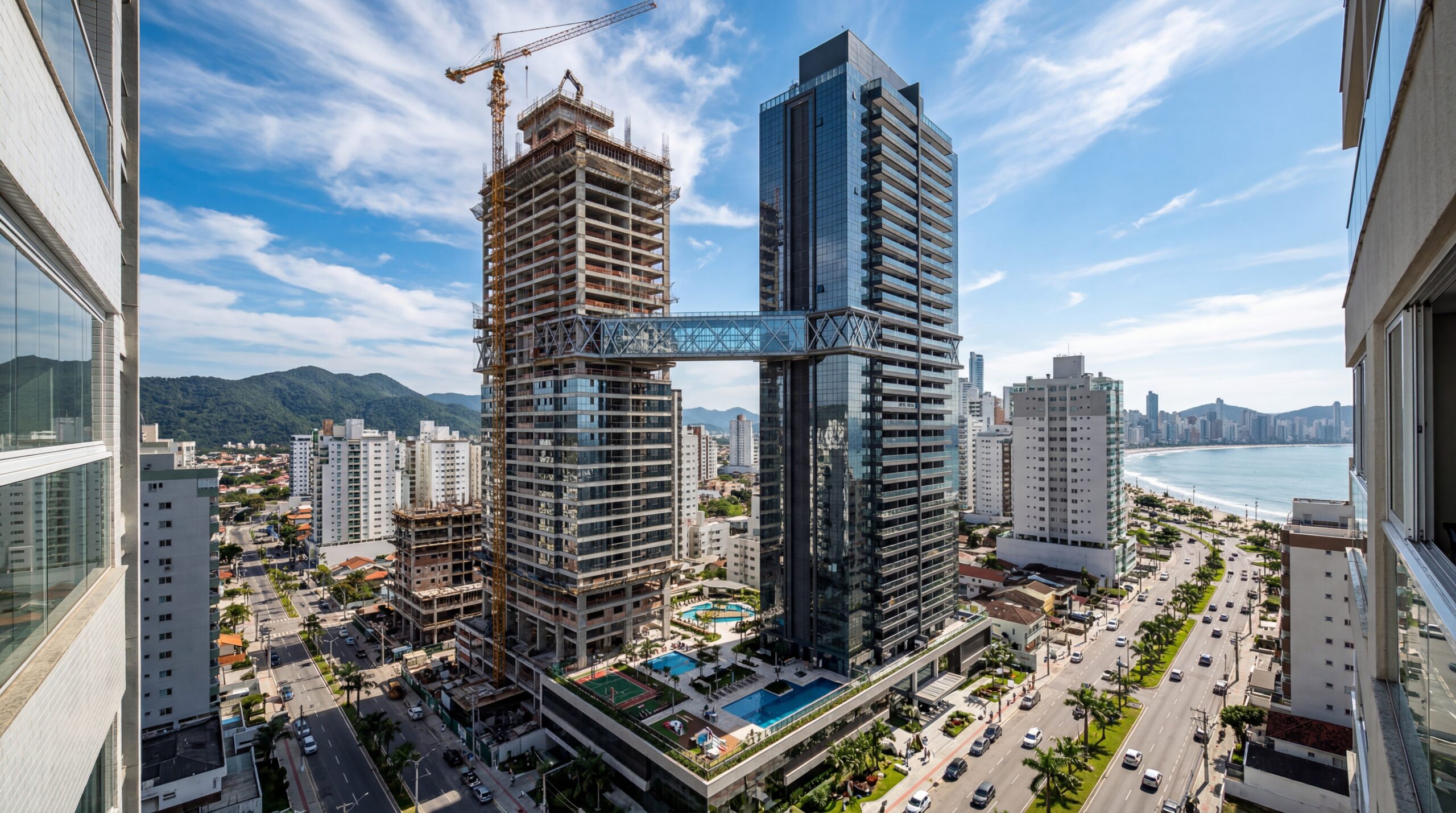
With 55 floors, 177 meters in height, a 15-meter walkway between the twin towers, ventilated facade, and 6,300 m² of leisure space, Ápice Towers already has one tower completed and another nearly at the top.


All the money he had, savings and what he earned from working, was invested in trees and a lean set of hand tools. There was no guarantee that the pine house would be finished, nor any certainty that he could handle such heavy, fresh, and moist logs. But he decided to take the risk, setting a clear goal for himself: to finish the construction in a year.
From Tree To Ready Log: Peeling And Preparing The Wood
The first step in raising the pine house was transforming trees into building material. Matt started by peeling all the logs with a drawing knife, removing the bark from the fresh, heavy, and still-wet spruce.
Each log required care: it was necessary to align the knots, adjust the tool, and work patiently until the entire surface was cleaned.
After peeling, he stacked the logs to dry a bit. Over time, the wood loses moisture, becoming lighter and easier to handle, which is essential when building practically alone.
In total, he prepared 67 logs, which would become the foundation, walls, beams, and structural elements of his future pine house.
Sturdy Foundation: Where The Pine House Meets The Ground
With the logs prepared, it was time to take care of the ground. Matt chose to build the pine house on the land he bought with his own money, in an area of hard and rocky soil.
He carefully measured where the foundations would be, prepared the worksite, and after digging and adjusting the base, he poured concrete for the footings that would support the structure.
For the first foundation log, he needed to cut it in half and adjust it in place. Then, he extended logs that would go to the future porch, carving saddles and notches so that each piece was well supported.
The fittings are crucial: if the base of the pine house isn’t stable, the entire rest of the structure suffers.
Raising The Walls: Fittings, Moss, And Craftsmanship Precision
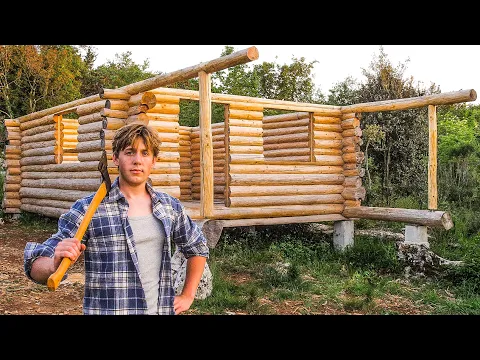

With the foundation ready, Matt could finally start the first complete layout of the walls. He calibrated the tracer, marking the notches precisely to copy the irregularities of the lower log onto the upper log. In this way, each log fits snugly into the other, minimizing gaps.
By properly flattening the logs, he achieved what he calls completely adjusted cabins: the logs of the pine house meet with such precision that there is almost no need for caulking.
Between the logs, he placed moss, a natural and free insulator traditionally used in wooden constructions. In some regions, sheep wool is also common, but here, moss fills small spaces, helping with insulation.
A curious detail is the drill that Matt uses to bore the logs and place them on wooden pins. He says he found the tool, cleaned it, and discovered that it was manufactured in 1916 by Cornelius Whitehouse & Sons.
More than a century separates the first use of this drill from the construction of this pine house, but it continues to function as it did in the past, connecting generations of craftsmen.
Temporary Floor, Increasing Height, And Timely Help From Family
As the walls rise, working directly on the ground becomes impractical. When the logs already form three layers and begin to gain height, Matt puts together a temporary floor structure. These are simple boards, supported to serve as a walkway.
This temporary floor allows him to move around safely inside the pine house while continuing to raise the walls.
At this moment, an important help comes into play: Matt’s father, who helps him transport boards to the property with the truck.
Despite the logistical reinforcement, construction remains true to the original proposal: manual assembly, tool by tool, piece by piece, without heavy machinery. The final floor and actual insulation of the ground will only come into play after the roof is completed.
Hand Tools And Daily Discipline As A Work Method
One of the most remarkable points of the project is that Matt decides to build the pine house using only hand tools.
He shows his set of instruments, calibrates the tracer in relation to the vertical line, peels some logs again solely for aesthetics, to make them lighter, and continues adjusting each notch carefully.
Even on rainy days, he keeps going. In his words, the commitment is to finish the construction in a year, which means working even when the conditions are uncomfortable.
The pencils he uses write better on wet surfaces, which helps in tracing when the logs are damp. It’s a combination of technique with persistence, where consistency weighs as much as physical strength.
The Temporary Cabin: Rest To Continue

Building a pine house practically alone requires energy. To rest without straying too far from the worksite, Matt builds a small temporary cabin, simple and functional, where he spends the nights while the main house takes shape.
This small construction serves as a support shelter, a dry place to sleep, store tools, and recuperate strength.
It symbolizes how the main work is a long-term project, requiring routine planning, not just one-off effort. While the definitive pine house rises, the smaller cabin ensures that he doesn’t have to abandon the worksite during the busiest times.
Opening Windows, Doors, And Giving Identity To The Facade
With the walls underway, it’s time to think about openings. Some shorter logs are strategically cut so that later they can make way for windows.
In one of the stretches, Matt comments that one log was too short for the entire wall, so he cut it in half and reserved the area for a future window.
In the front part of the cabin, a main door and other windows will be opened, as well as on one of the sides. Each opening is marked, cut, and finished with care, maintaining the structure’s stability.
After completing the first window, he temporarily covers the pine house with a tarp, protecting the wood until the roof is properly closed.
Porch Columns, Long Beams, And The Roof Taking Shape
As the walls of the pine house approach the final height, the porch comes into play. Some logs extend beyond the main body of the house, creating the base for the eaves and front extension. These are long pieces, about 30 feet long, which need to be supported by well-aligned columns.
Each column is positioned in its concrete footing, aligned with the roof line and the future porch space.
Matt carefully measures the height of each to match the protruding beams and then secures them with sturdy notches and metal anchors at the base. When the columns stand tall, the pine house gains a new silhouette, with the entrance starting to become clearly defined.
Next, he begins to close the roof with wooden boards. He starts from the lower edge, aligning the first row to ensure a straight base, and proceeds from bottom to top, plank by plank.
Each board is cut to the right size, secured firmly, and pressed tightly against the previous one, avoiding gaps that could let wind or rain in.
As the rows progress, the roof stops being an open framework and becomes a solid wooden surface, providing real protection to the structure.
The constant sound of the boards being laid marks the progress: the pine house finally becomes a closed house, with stable walls and efficient coverage.
Finished Pine House: Dry Interior, Solid Walls, And Reliable Structure
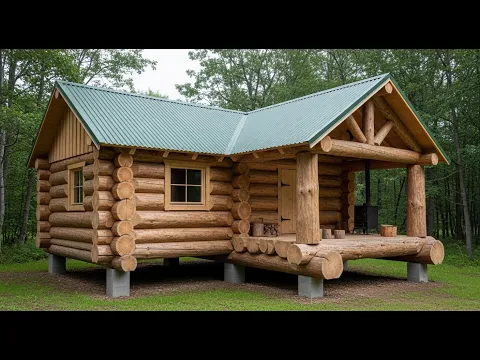
At the end of the journey, what started as open land and raw wood transforms into a fully completed pine house.
The roof is waterproofed, the walls are solid, and the doors and windows fit snugly into their frames.
From the foundation to the ridge beam, each part carries the mark of patient work. The interior of the house is dry and protected from the elements, ready to receive furniture and become a lived-in home.
More than just a construction, Matt’s pine house is proof that practical knowledge, discipline, and consistency can transform an apparently impossible project into something concrete.
In the end, he thanks those who followed the journey, remembering that everything was done step by step, with continuous effort and a focus on learning in practice.
The feeling is clear: a single person, with simple tools and dedicated time, managed to raise a pine house from scratch, ready to last.
And you, would you have the courage and patience to build a pine house practically alone, just with hand tools, or would you prefer to hire a team and just see the finished result?








-

-

-

-

-

55 pessoas reagiram a isso.