





 Portuguese
  English
  Spanish
  6 min of reading
  0 comments


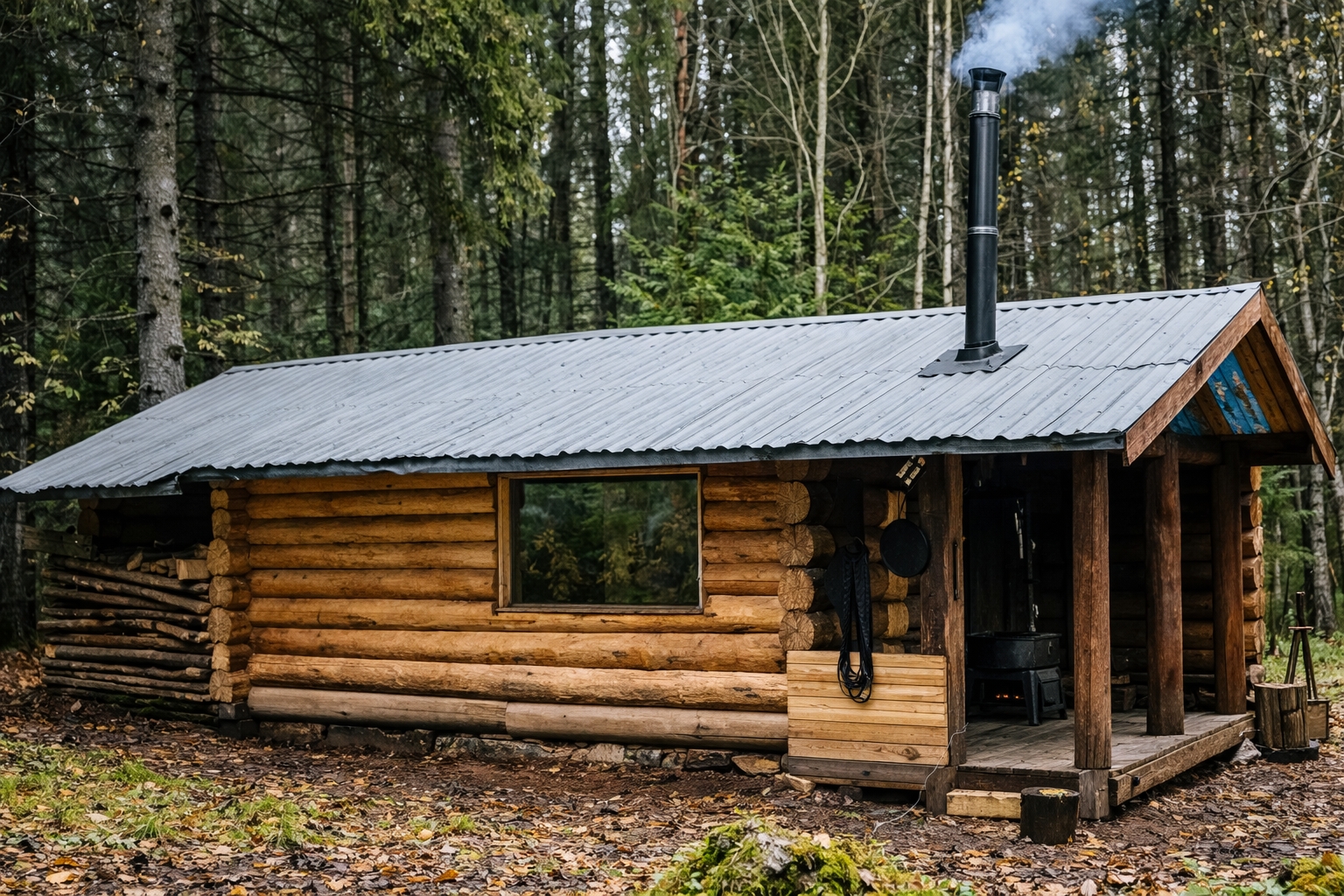
Construction of a Wooden House Built by Two Men: A True Worksite Without Luxury and Flood Protection Takes Shape with Wood, Mud, and Persistence
Construction of a wooden house in one year due to a recurring reason, the old cabin dug into the ground completely flooded every spring. Misha and Sasha grew tired of losing the battle against the water. The solution was radical yet practical at the same time: demolish what existed and start from scratch, but above ground, to create a real flood-proof house.
Nothing comes ready. Without a truck delivering materials, without a contractor to “solve” things, the friends use trees, cold, mud, and snow to close the essentials before winter turns any delay into a problem. And it’s this detail that captivates: it’s not a weekend project; it’s a whole year of persistence.
When the cabin finally stands tall, it becomes more than a roof; it is a testament to what was necessary to conquer that space, piece by piece, joint by joint, with decisions that change the outcome in practice.
-
He started running at 66 years old, broke records at 82, and is now a subject of study for having a metabolic age comparable to that of a 20-year-old, in a case that is intriguing scientists and inspiring the world.

-
Oldest tree on the planet reappears after 130 years of searches: Wattieza, 385 million years old, was 10 meters tall and had no leaves or seeds; Gilboa fossils in New York solved the mystery in 2007.

-
A 48-square-meter house assembled in hours with 4,000 bricks made of recycled plastic that does not absorb moisture, has natural thermal insulation, and costs less than 90,000 reais in a complete kit.

-
Luciano Hang revealed that Havan’s air fleet has already accumulated more than 20,000 landings, 10,000 flight hours, and 6 million kilometers traveled, and he says that without the planes, the company would never have grown so quickly.


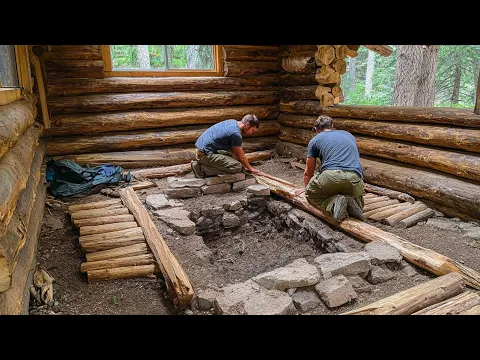

Friends Build the Worksite First, and This Prevents the Job from Becoming Chaos
Before walls, there is organization. The land becomes a workspace with piles of wood separated, tools at hand, and a light shelter made with posts and tarps, just to keep the basics dry. It may seem like a detail, but in the woods, the detail can swallow the whole day when things go wrong.
The rhythm is born from repetition. Measure, mark, cut, test, adjust. The chainsaw comes into play when volume needs to be opened. Axe and hammer take over when the fit requires control. The wood shifts from a loose log to a piece that serves its purpose, as if the worksite teaches the project to happen.
The effect appears quickly: less useless to-ing and fro-ing, fewer pieces lost in the mud, fewer tools “disappearing” in the midst of work. When the routine becomes predictable, the body can endure more, and construction progresses without relying on luck.
Construction of a Flood-Proof House Begins When They Accept That the Foundation Failed
The turning point is almost painful. The old house, dug into the ground, seemed like a good idea until the spring cycle repeated the same message: water seeps in, the ground turns to mud, and the shelter becomes a risk. They stop trying to mend the inevitable.
The decision is brutal and simple. Demolish. Restart, but now with the house above the ground, without the earthen wall “holding” the structure and without the floor serving as a tray for water. The logic changes: instead of digging inward, they build upward.
This change aligns with a basic principle of wood preservation: keeping the piece dry and protected from constant contact with moisture is what separates durability from headaches.
A technical report from the Forest Products Laboratory, associated with the USDA, explains that wood initially kept dry under shelter and protected from condensation does not rot.

Elevating the Base Above the Ground Changes the Game for the Flood-Proof House
When the construction of the structure comes off the ground, the water loses its most cruel advantage. It may still pass through the land, but it no longer invades the interior with the same ease. This is where the flood-proof house begins to make sense without discourse, only with geometry and height.
In practice, this shows in posts, beams, and bracing. They drive wood into the ground, compact the surroundings, and create support points that can bear weight. Before closing the walls, they reinforce the assembly to prevent the structure from “dancing” when the logs begin to rise.
The result of the construction is stability for the next stage. The house ceases to be an idea and becomes a body that supports. And this is not just an impression. A technical manual from FEMA, which deals with elevating structures in flood-prone areas, reinforces the logic of placing the floor above risk level to reduce vulnerability.
The Log House Requires a Real Fit, and They Discover This the Hard Way
The most time-consuming part of the construction is also the one that most determines the future: the log wall. A wooden house does not forgive a lazy fit. If the log does not settle, it wobbles. If it wobbles, the entire assembly requires rework, and each rework costs energy and time.
Men work in layers. They lift the log, position it, mark the contact, remove it, cut, clean, and reposition. It seems slow, but it’s the way to make the wood “lie down” without gaps. Gradually, the weight begins to help, pressing joints and reducing visible spaces.
Closing the Roof Becomes the Most Important Race of the Whole Year
There’s a moment when focus shifts: from “building walls” to “closing the top.” With beams and straps at the top, the interior begins to resemble a shelter. Working at height requires more attention because any wrong adjustment costs dearly when the piece is heavy.
Men apply large sheets to the internal roof and treat seams with tape, smoothing and pressing to maintain continuity. It’s a less glamorous step than raising logs, but it changes everything in day-to-day life. The space receives less direct moisture and less dirt falling from above.
The practical effect is immediate: the contraction no longer depends so much on the mood of the weather. The house enters a phase where it’s possible to organize the interior, store materials, and prepare for the next stages without becoming a hostage to each change in the weather.
Door, Window, and Interior Put the Log Cabin in User Mode
With the structure closed, it’s time to truly shape the shelter. Men cut openings, assemble frames with boards, and adjust edges with fine cutting tools, scraping and correcting until the piece settles without forcing.
The glass window marks the transition. The board door, with braces, defines the boundary between outside and inside. The wooden house against flooding ceases to be a project and begins to become a place of permanence, as it now controls entry, wind, and moisture more efficiently.
The interior follows suit. A board floor appears, shelves go up, and a countertop occupies a wall. A set of metal pipes rises to the top, creating a defined exit path. The message is clear: they are not just “building,” they are preparing the space to function.

Misha and Sasha Experience a Year of Real Work: Construction in One Year of Flood-Proof Shelter Becomes a Record in the World
Misha and Sasha experience a year of real work, with repetition, corrected mistakes, and fine adjustments until the house stops fighting against them and begins to respond. The most decisive technical factor is simple to understand: keep the wood off the ground, well-settled, with the coverage closed at the right time.
The construction of the flood-proof house does not arise from momentary courage. It comes from practical decision-making, method, and persistence. By demolishing what flooded and reconstructing above ground, they demonstrate what sustains a project in a harsh environment: organization, fit, protection against moisture, and respect for the calendar.
If this story caught your attention, comment on which stage seems the most difficult in a log cabin, or share it with someone who appreciates building from scratch and the entire process from start to finish.









-

-

-

-

-

-

45 pessoas reagiram a isso.