





 Portuguese
  English
  Spanish
  6 min of reading
  0 comments


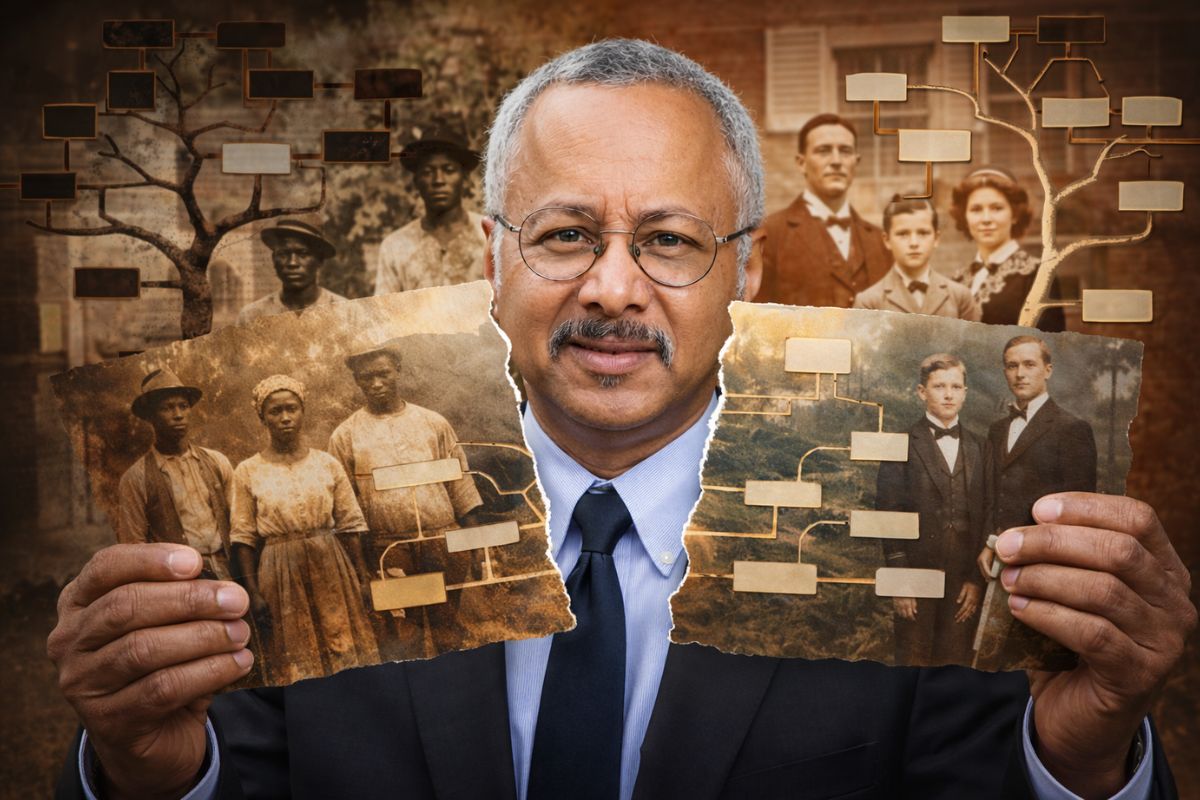
In The Genealogy That Charles Holman Pursued For Over 50 Years, The Name Foree Broke A Brutal Bridge Between His Relatives Thomas And The Ancestors Of The Bush Family, Showing How Slavery United Through Dominance And Violence Two Lineages That Time Kept Formally Separated Until Then In The USA.
The genealogy of Charles Holman began with an absence and ended with an uncomfortable historical connection. At 66, after more than 50 years gathering names, documents, and family connections, he discovered that ancestors of the Bush family enslaved his ancestors in Kentucky, bringing together two trees separated for generations by captivity.
The discovery did not come about by mere coincidence. It surfaced when Holman recognized the name Foree in an inquiry about this Kentucky lineage and confirmed that the family had owned land of several members of the Thomas family, a branch of his ancestors. It was at this point that genealogy stopped being just a search for origin and became a direct confrontation with the structure of slavery.
A Childhood Search That Lasted More Than Half A Century

Holman’s journey began in school when a fifth-grade teacher asked the class for a paper about their own ancestors before immigration to the United States. He could not answer.
-
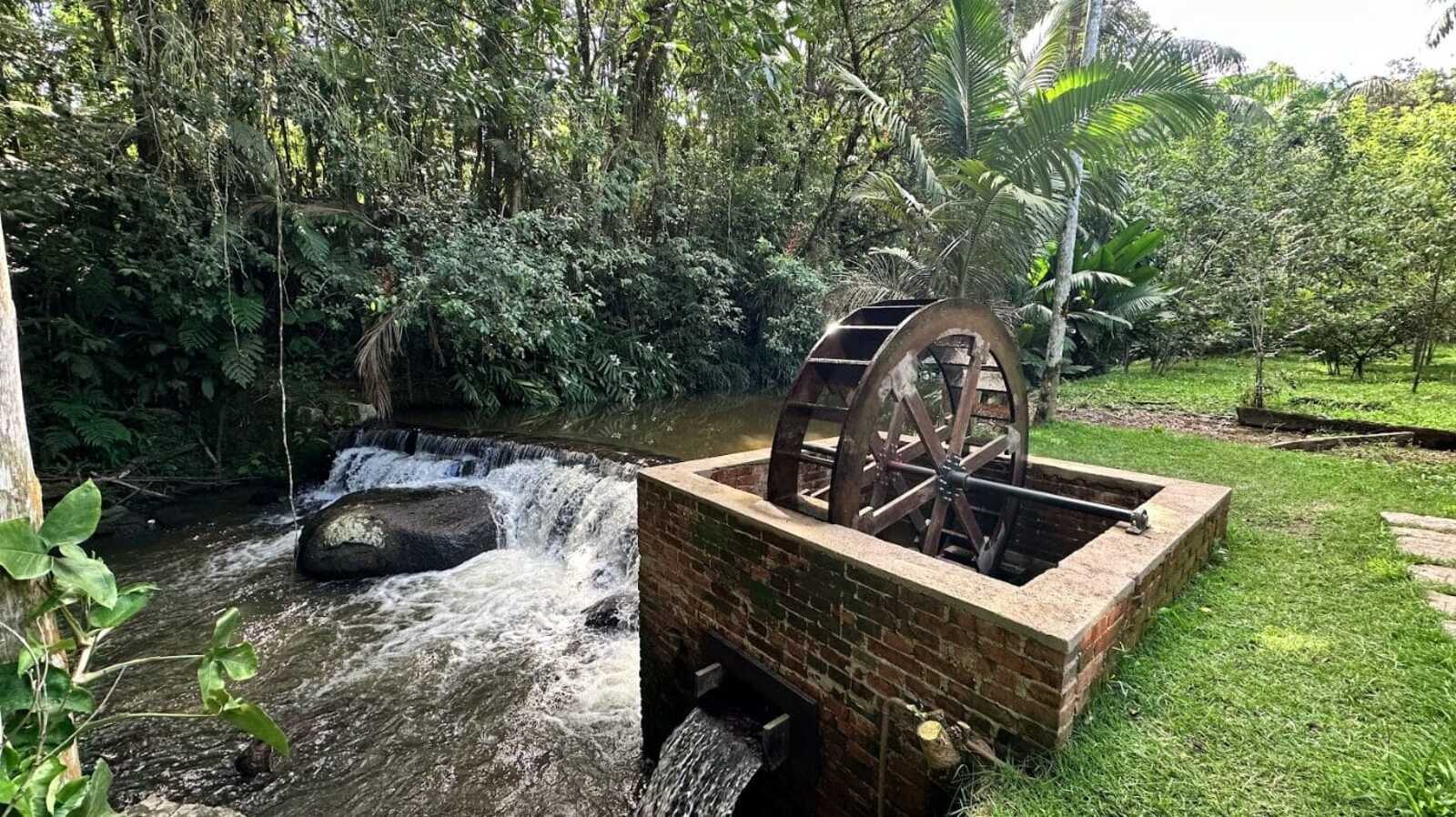
While restoring a historic mansion from 1910, a brick structure with an old turbine that generated energy from the Rio do Testo emerged, along with a hidden door and a rare floor concealed under layers of wax.
-
Italian researchers have detected what appears to be a second Sphinx buried under the sands of Egypt, and satellite scans reveal a gigantic underground megastructure hidden beneath the Giza Plateau for over 3,000 years.

-
There are 4,223 drums and 1,343 metal boxes concreted with 50-centimeter walls that store the radioactive waste from Cesium-137 in the worst radiological accident in Brazil, just 23 kilometers from Goiânia, with environmental monitoring every three months.

-
Giant Roman treasure found at the bottom of Lake Neuchâtel in Switzerland reveals an advanced trade system, circulation of goods, and armed escort in the Roman Empire about two thousand years ago.


The question remained open and, over time, became the engine of a personal investigation that spanned decades.
Later, as a teenager, Holman came into contact with Alex Haley while the author was working on Roots. This meeting deepened the interest that was already forming.
From then on, genealogy transformed into a persistent project, carried out over more than 50 years by a man who decided to fill in the gaps left by slavery in his family’s records.
Along the way, Holman found both Black and White relatives, as well as descendants of people who legally held his relatives during the 19th century.
Each new document not only expanded the family tree but also exposed the logic of captivity as a mechanism of separation and unequal memory recording.
This long research explains why the revelation involving the Bush family did not appear as an isolated shock but as the most visible point of an investigation that had already matured.
The genealogy, in this case, did not produce simple surname curiosity. It produced a concrete connection between contemporary political power and the history of people held in captivity.
The Name Foree And The Documentary Bridge With The Bush Family
The decisive link emerged when Holman read an inquiry about the Foree family from Kentucky, identified as a direct ancestral lineage of presidents George H.W. Bush and George W. Bush.
The surname did not seem strange to him.
As he deepened his inquiry, he confirmed that the Foree had owned land from several members of the Thomas family, his ancestors.
This point is central because it is not a vague association.
What Holman’s research found was an overlapping between two family histories that had been held together by the violence of slavery and separated by how the past was transmitted.
On one side, a lineage preserved in the space of political prestige; on the other, a lineage broken by captivity and erasure.
From there, Holman reached out to members of the Bush family, including George W. Bush, Laura Bush, Jenna Bush Hager, and Jeb Bush.
As of the moment mentioned in the base, none of them had responded. The silence does not alter the main data, but reinforces the discomfort of the case: genealogy produced a documentary bridge that directly connects Holman’s family memory to one of the most well-known political families in the United States.
There are also other elements that intensify the historical weight of this connection.
In the mentioned investigation, the Foree family appears linked to the ownership of over two dozen enslaved people, while one of the ancestors of the Bush family supposedly participated in nearly a dozen slave trade voyages between the United States and the west coast of Africa.
When genealogy reaches this point, it stops merely recounting where someone came from and begins to show how certain fortunes and surnames were built.
What Captivity Did To The Two Family Trees
The symbolic force of the discovery lies in the fact that these two trees were never truly separated in the past. They were brutally united by captivity.
What was separated was the way this link was remembered, recorded, and transmitted. At one end were surnames linked to wealth, land, and public projection.
On the other, ancestors whose history had to be pieced together against the documentary disappearance caused by slavery.
This difference matters because slavery did not operate merely as economic exploitation. It also reorganized memory.
Captivity broke family lines, shuffled names, erased ties, and made it difficult for descendants to know who they were.
Holman’s research faces exactly this prolonged effect: that of a structure that did not end when slavery formally ended.
That is why the connection with the Bush family carries more weight than public curiosity about a famous surname.
The case shows how slavery remains present not only in archives but in the very architecture of American society, where lineages of power and lineages marked by the violence of captivity often emerged from the same historical relationship.
By identifying this connection in Kentucky, Holman did not find just a genealogical coincidence. He found proof that two families that today seem to occupy completely distinct places were united by a social order founded on the ownership of people.
Genealogy, when it reaches this type of evidence, also becomes a way of dismantling the false neutrality of the past.
When Genealogy Stops Being Private Memory And Becomes Public Problem
Holman’s discovery occurs at a moment when families, universities, and powerful institutions are being pressured to confront their own ties to slavery.
The base sent reminds, for example, of the investigation announced by King Charles regarding the connections of the British royal family with the slave trade and Harvard’s decision to allocate US$ 100 million to address racial disparities linked to its slaveholding past.
In this context, Holman’s research gains a clear public dimension. It does not just speak of the Bush family or its ancestors.
It speaks to the difficulty of the United States in dealing with its own formation. While some institutions begin to confront this legacy, other political environments continue to try to minimize slavery or reduce its place in history teaching.
Genealogy, in this scenario, becomes a tool for confronting comfortable versions of the past.
The case also helps understand why such family searches are so sensitive. They do not produce only reconciliation or belonging.
Sometimes they produce friction, silence, and discomfort. In Holman’s case, the discovery unites two lineages from Kentucky that captivity separated in social position, memory, and power.
What reappears is not a story of harmonious reunion, but of historical proximity built by violence.
Still, there is a reparative effect in this type of investigation.
By reconstructing the trajectory of the Thomas and linking it to the Foree and the Bush family, Holman gives density back to his ancestors and prevents the past from remaining reduced to opacity. When genealogy manages to name those who were erased, it already shifts the balance of memory.








Seja o primeiro a reagir!