





 Portuguese
  English
  Spanish
  4 min of reading
  0 comments


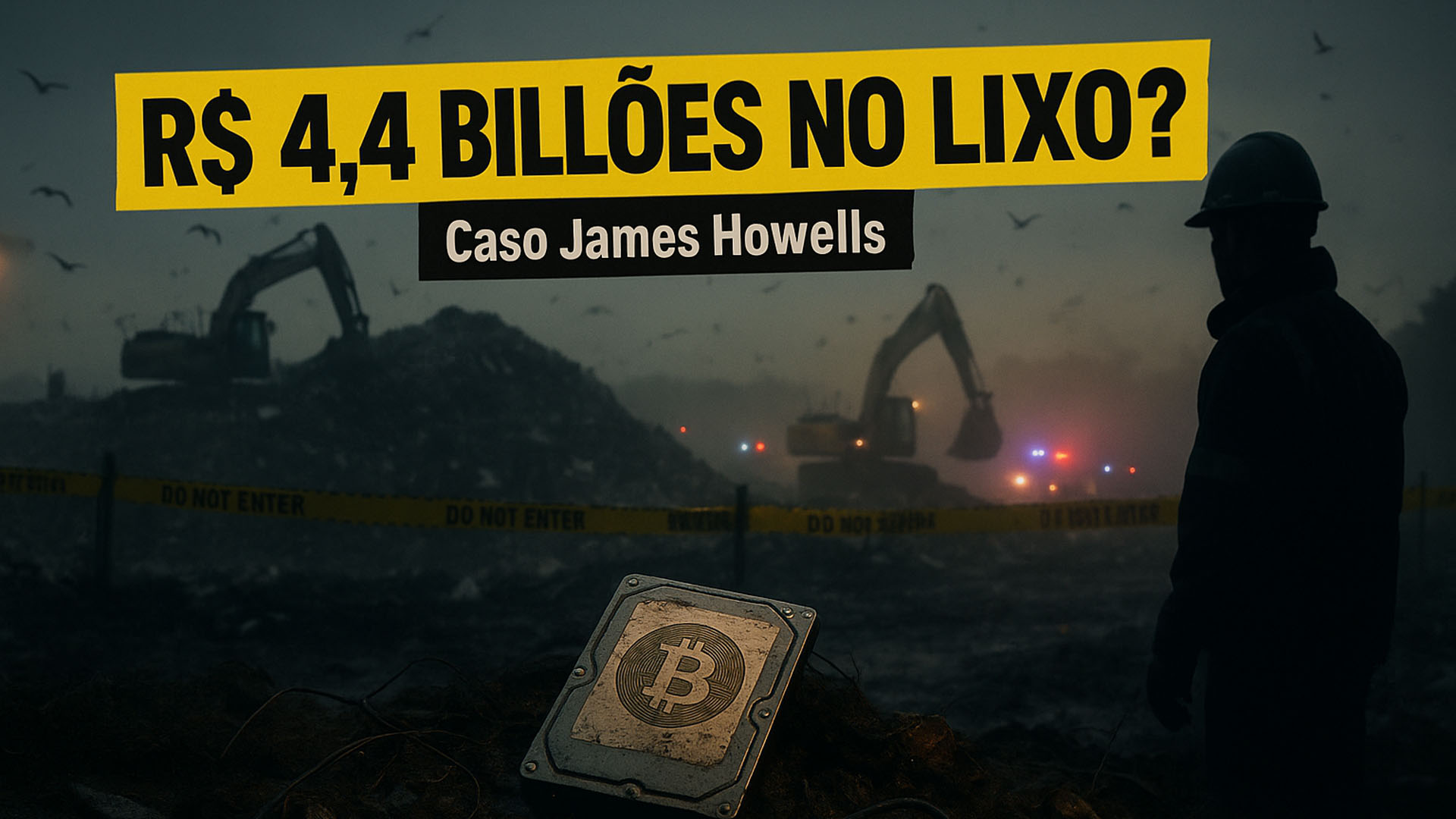
In 2013, Welsh Engineer James Howells Accidentally Threw Away the HD Containing the Key to 8,000 Bitcoins, Which Is Currently Worth More Than R$ 4.4 Billion. After 12 Years of Searching and Lost Legal Disputes, a 2025 Documentary Series May Reignite the Hunt and Attract Support to Open the Landfill in Newport, Wales.
In 2013, Howells discarded the wrong hard drive, which contained the private key to his bitcoin wallet, at the Docksway landfill in Newport. At the time, bitcoins were relatively worthless; today, the amount of 8,000 BTC is worth over 4.4 billion reais at the current cryptocurrency exchange rate.
Since then, he has sought permission to excavate the site, mobilized experts and investors, and proposed to fund the operation without public money. The Newport Council resisted, citing costs, risks, and environmental impact. The dispute became a landmark case about waste ownership and access to lost digital assets.
The legal battle culminated on January 9, 2025, when the High Court of the United Kingdom rejected Howells’ claim in the case of Howells v Newport City Council [2025] EWHC 22 (Ch), stating that the claim “did not have a realistic prospect of success”.
-
These living root bridges and ladders are over 700 years old and help indigenous people survive in one of the rainiest regions in the world.

-
From sertanejo star to international investor: Ana Castela invests millions in a mansion in the USA, creates a themed accommodation in Orlando, and shows that the “boiadeira” also wants to grow away from the stage.

-
The 10 most stunning motorhomes in the world: a $3 million trailer with a rooftop nightclub and garage for a Ferrari, “palaces on wheels” with Italian marble, private cinema, and five-star hotel luxury for billionaires.

-
Trump wanted to spend $400 million on the White House, but the courts prohibited the million-dollar construction.
This ruling reinforced the municipality’s power over what enters the landfill and dismissed the claimant’s search right theory.
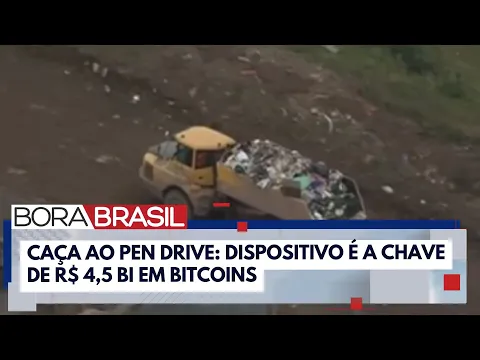

In February 2025, in light of the imminent closure of the landfill and plans to install a solar plant in the area between 2025 and 2026, Howells began considering buying the site to facilitate the excavation on his own. The idea arose after the legal defeat and keeps the story in the spotlight of cryptocurrencies and environmental regulation.
The Turnaround of 2025: Series “The Buried Bitcoin” and New Sponsors
In April 2025, the American company LEBUL announced the acquisition of exclusive rights to develop and produce the series “The Buried Bitcoin: The Real-Life Treasure Hunt of James Howells”, promising docudrama language and a technical focus on the search. The production aims to combine cinematic narrative, blockchain technology, and environmental innovation solutions.
LEBUL and industry publications reported that the series will follow the engineer’s journey, reconstruct the mistake of 2013, and detail excavation and sorting strategies in an active landfill, a sensitive topic involving environmental licenses and waste management.
The expectation is to attract streaming services, sponsors, and experts capable of financing a complex operation and possibly convince authorities to allow controlled search phases.
For Howells, global exposure could change public perception and demonstrate that the recovery is technically feasible with risk mitigation. Even though the script promises tension of a treasure hunt, success depends on factors beyond TV: official permits, engineering plans, and environmental compliance.
What the Justice Said and What Is Still at Stake
The ruling of the High Court in 2025 is educational: there were no consistent legal foundations to impose on the municipality the release of the landfill.
The court accepted, in general terms, that the discarded device passed into public control and that the operational and environmental risks did not justify intervention. The judgment also criticized the legal viability of the claim and the proportionality of the measure.
This understanding creates a regulatory barrier to excavation, even with the series on the horizon. The municipality, in turn, was already planning to finalize and “cap” the site and advance with a solar project, which would make any subsequent attempts even more difficult. Hence the parallel strategy of acquiring the land with private investors, discussed by Howells after the ruling.
In practical terms, the series may not open legal doors on its own. But it can influence public opinion, private capital, and technical solutions that, collectively, make a phased sweeping and sorting plan with environmental monitoring under the supervision of authorities more palatable. The law and the environmental license will continue to be the bottleneck.
How Much Is the “Treasure” Worth and What Are the Technical Risks
The number of coins cited by James Howells is 8,000 BTC. In 2025 values, this amounts to hundreds of millions of euros and is reported as US$ 750 to 800 million in international publications.
For the Brazilian public, this equates to 4.4 billion reais, variation depending on the exchange rate of bitcoin and currency. It’s money that changes destinies, but is subject to extreme volatility.
From a technical standpoint, the HD would be buried under tens of thousands of tons of waste and soil, in layers deposited over the course of months in 2013. Even if found, the crucial question remains: did the physical media withstand twelve years of compression, moisture, and corrosion?
It is important to highlight that, without an intact private key, there is no recovery of the 8,000 BTC.
Teams have already suggested using robots, AI, sensors, and mechanical sorting to locate areas where the HD could be, reducing the volume to process and environmental damage.
Still, any operation would require protocols for health and safety, leachate containment, and emissions management, elements that weigh on the authorities’ decision and help explain the resistance of the municipality.
Do you think that the public authorities should allow a controlled excavation in the name of a potential “digital treasure” or is the environmental risk too high? Could the series influence the authorities’ decision or will it be just entertainment? If it were in Brazil, under our environmental rules, would you be for or against a similar operation?







-

-

-

-

-

14 pessoas reagiram a isso.