





 Portuguese
  English
  Spanish
  6 min of reading
  5 comments


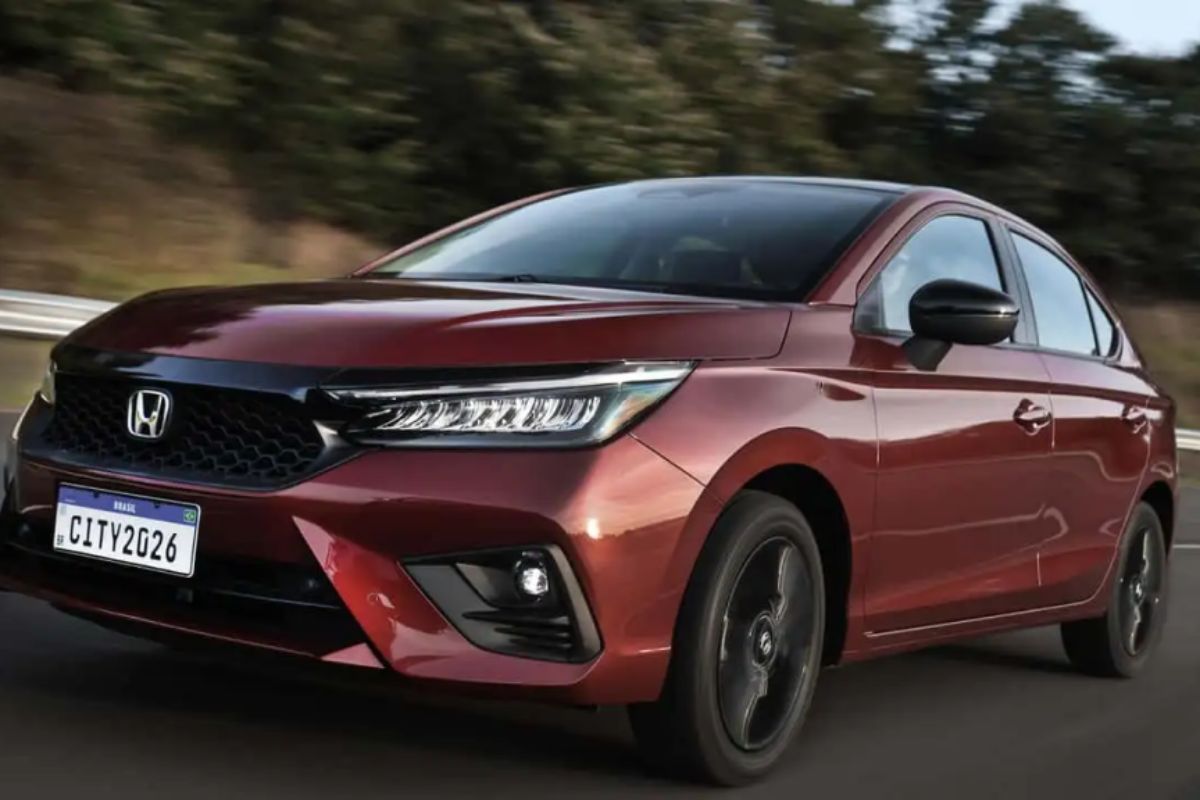


With Urban Consumption of Up to 13.3 km per Liter, the Honda City Hatchback Combines 1.5L Naturally Aspirated Engine, Modular Magic Seat, Complete Honda SENSING Package and Six Airbags to Offer Versatility, Safety and Comfort Above Average Among Brazilian Compact Hatches in Daily Trips and Medium-Distance Road Trips
In 2025, with the 2026 line already highlighted in dealerships, the Honda City Hatchback consolidated its role as a premium compact hatch that escapes the power war and bets on efficiency, comfort, and advanced electronic safety. By combining fuel consumption of up to 13.3 km per liter in the city with the Honda SENSING package and six airbags, the model reinforces the brand’s strategy of appealing to the public through rationality rather than just performance.
At the same time, the Honda City Hatchback revives the internal modularity of the old Fit with the Magic Seat system, offering rare space solutions in the segment. While turbo rivals compete for torque and acceleration numbers, Honda’s hatch targets those who want to drive a lot, spend less fuel, preserve the mechanics over the years, and still have an adaptable interior for family, work, and leisure.
1.5L Naturally Aspirated Engine Prioritizes Consumption and Reliability
At the center of the setup is the 1.5L i VTEC direct-injection engine, delivering 126 horsepower and 15.5 kgfm of torque, always coupled with the CVT transmission.
-
OMODA & JAECOO grows in Europe in 2026 with an integrated strategy of sales, innovation, local production, and technological advancement in the United Kingdom, Italy, and Spain.

-
OMODA & JAECOO expands after-sales service in Brazil with competitive maintenance, a 7-year warranty, and high availability of parts for technological SUVs.

-
OMODA & JAECOO appoints Alessandra Souza as executive marketing director in Brazil and accelerates brand expansion with a focus on innovation, networking, and hybrid portfolio.

-
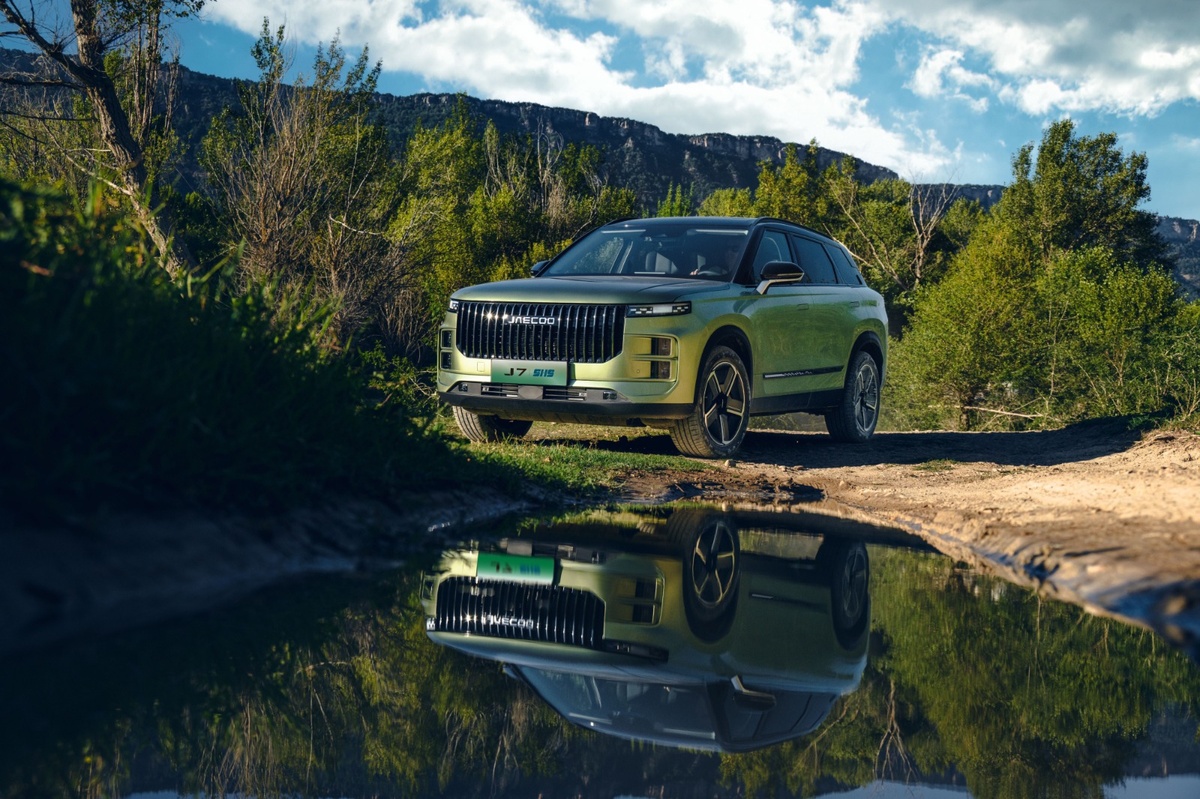
Jaecoo 7 with super hybrid SHS system exceeds 1,200 km of combined range with a 1.5 turbo engine, high-density battery, and intelligent energy management.

It is not the fastest hatch in the category, especially when compared to turbo rivals, but the Honda City Hatchback was designed to deliver consistent efficiency and smooth operation in urban and highway use.
The CVT transmission simulates seven virtual gears and works to keep the engine always in a rotational range that favors consumption.
In real-world use, averages of up to 13.3 km per liter in the city with gasoline become a central argument for those who drive daily in congested routes and need to predict monthly fuel costs more accurately.
The choice for the naturally aspirated setup follows the Japanese brand’s tradition of prioritizing durability.
Fewer components subject to wear, like turbines and supercharging systems, mean more predictable maintenance, with a direct impact on total ownership costs.
For buyers looking to keep the same car for several years, the Honda City Hatchback positions itself as a more stable investment than options focused solely on performance.
Magic Seat Transforms the Interior into an Intelligent Space Tool
The element that most differentiates the Honda City Hatchback from other compact hatches is the Magic Seat rear seat system, reviving a well-regarded feature from the old Fit.
Instead of a conventional rear seat, the model offers modular configurations that completely change the use of the interior, allowing the car to adapt to the type of load and the driver’s routine.
In daily use, three main modes stand out: the Refresh mode creates a kind of rest support, ideal for breaks during trips or prolonged waits; the Tall mode allows for carrying tall objects resting on the rear floor, such as plants, professional equipment, or boxes standing up; and the Long mode accommodates long objects, taking advantage of the cabin’s length from end to end.
This flexibility compensates for the trunk’s 268 liters, which in absolute numbers may seem modest compared to some rivals.
In practice, the Honda City Hatchback delivers a much higher useful volume, especially for those transporting work equipment, musical instruments, irregular luggage, or bulky purchases.
Instead of relying solely on the traditional trunk, the owner gains a mutable interior that alternates between family car, urban vehicle, and support for professional activities.
Honda SENSING and Six Airbags Raise the Safety Standard
In terms of safety, the Honda City Hatchback relies on a technology package that places it above many of the compact hatches available on the Brazilian market.
The most complete versions come with the Honda SENSING system, a suite of driving assistance features that combines cameras, radars, and electronic processors to act in critical situations and reduce the risk of accidents.
Among the features are automatic emergency braking, which detects the risk of frontal collision and can activate the brakes even without the driver’s reaction, adaptive cruise control, which maintains a safe distance from the vehicle ahead, and lane-keeping assistance, capable of correcting minor involuntary departures from lane markings.
Together, these technologies transform the Honda City Hatchback into a hatch that approaches the safety standard of higher segments.
In addition to active assistances, the model offers six airbags as standard and a body structure designed to absorb and dissipate energy in collisions, better protecting the cabin and occupants.
On highways, this combination of electronic resources and passive protection creates a more stable, quiet, and predictable driving environment, a characteristic frequently highlighted in reviews that consider the City Hatch as a reference in acoustic and highway comfort within the category.
How the Honda City Hatchback Compares to Turbo Rivals
In the market, the Honda City Hatchback directly targets premium compact hatches equipped with turbo engines, such as the VW Polo Highline and Chevrolet Onix RS.
These models stand out for delivering torque at low RPMs and for stronger accelerations, characteristics that appeal to those who prioritize quick responses when pressing the pedal.
The City Hatch, on the other hand, relies on a different philosophy. Instead of competing in numbers from 0 to 100 km per hour, it leverages urban consumption, the reliability of the 1.5L naturally aspirated engine, onboard silence, and the modularity of the Magic Seat as its advantages.
The result is a hatch that resonates with more rational usage profiles, including small families, freelancers, and drivers who cover long distances with no interest in sporty behavior.
In comparison, the City Hatch tends to cost more than intermediate versions of turbo rivals but returns value in areas such as mechanical comfort, internal ergonomics, and lower price volatility in the used car market.
The perceived reliability of the brand and the liquidity in resale help to dilute the initial investment over the years, especially for those planning to keep the vehicle for more than four or five years.
For Whom the Honda City Hatchback Makes More Sense
The profile that aligns most with the Honda City Hatchback is that of drivers who drive a lot in urban environments, value controlled consumption, and reject the need for aggressive accelerations.
Those who need a compact hatch with a family car behavior, versatile internal space, and robust safety packages find a balanced solution for their routine in this model.
Also standing out as a target audience are those who use the car as an extension of work, transporting equipment, boxes, instruments, or small materials.
The possibility of reorganizing the interior with the Magic Seat reduces dependence on larger vehicles and allows the same hatch to serve both personal commutes and specific professional demands.
In summary, the Honda City Hatchback does not aim to be the champion of acceleration but rather the compact hatch that delivers more project intelligence, comfort, and cost predictability for those who see the car as a daily tool and a medium-term financial asset.
You, who are eyeing a premium compact hatch, would you consider giving up the turbo engine to have a more economical, modular, and comfort-focused Honda City Hatchback for real everyday use?








Na gasolina com essa imposição dos E30 o meu está fazendo mais de 17 km na estrada…..fato.
Tenho um Honda City EXL 2023.
Abastecido com etanol, faz 5.3 na cidade, combustível
bandeira Ipiranga. Portanto é pura “balela”
quando alguém vem defender esse motor da Honda. Isso sem dizer que só leva 4 pessoas.
Isso só quer dizer que vc dirige mal.
Imagina na rodovia, será 18