





 Portuguese
  English
  Spanish
  5 min of reading
  0 comments


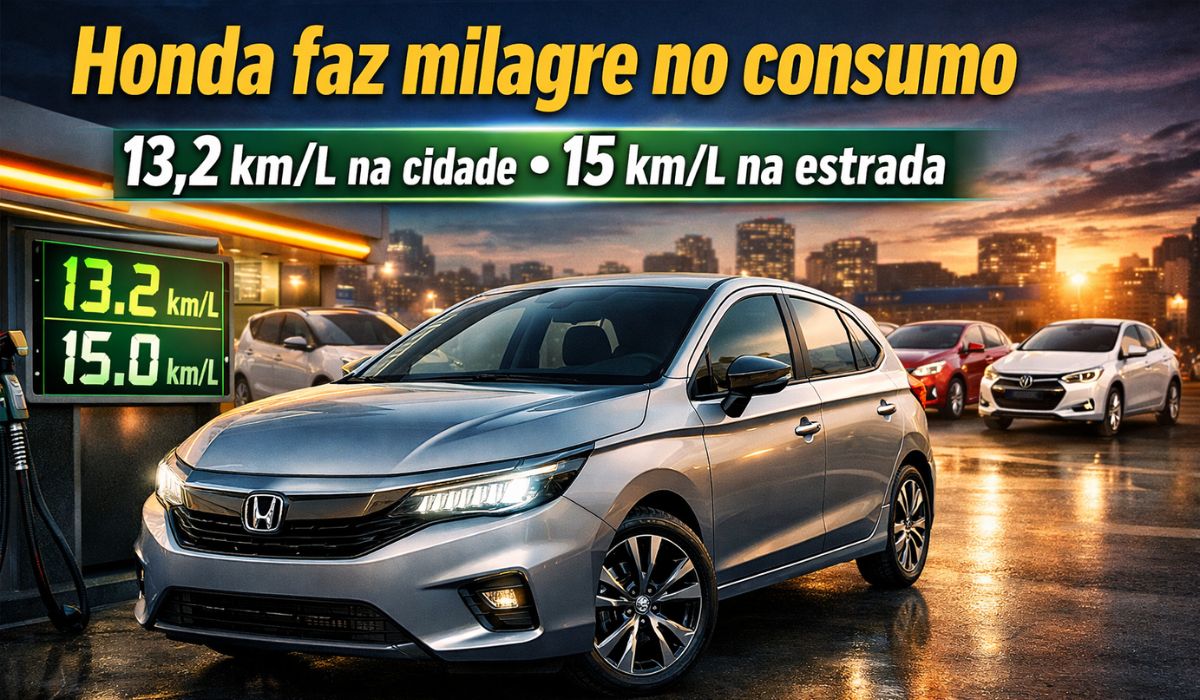
Among the most observed automatic hatchbacks in the market, consumption remains one of the points that most influence the driver’s choice and helps redraw the dispute between established brands in Brazil.
The Honda City Hatchback Touring Sport ranks among the most economical automatic compact cars sold in Brazil when considering gasoline consumption.
Data from the Brazilian Vehicle Labeling Program, from Inmetro, indicate 13.2 km/l in the city and 15 km/l on the highway.
In the same official database, the Honda model surpasses automatic versions of Chevrolet Onix and Peugeot 208 in both cycles and records performance similar to competitors like Volkswagen Polo and Hyundai HB20, depending on the version analyzed.
-
Six diseases that seem common but can prevent the renewal of the driver’s license for the elderly throughout Brazil and surprise experienced drivers — could any of them affect you without showing clear signs?

-
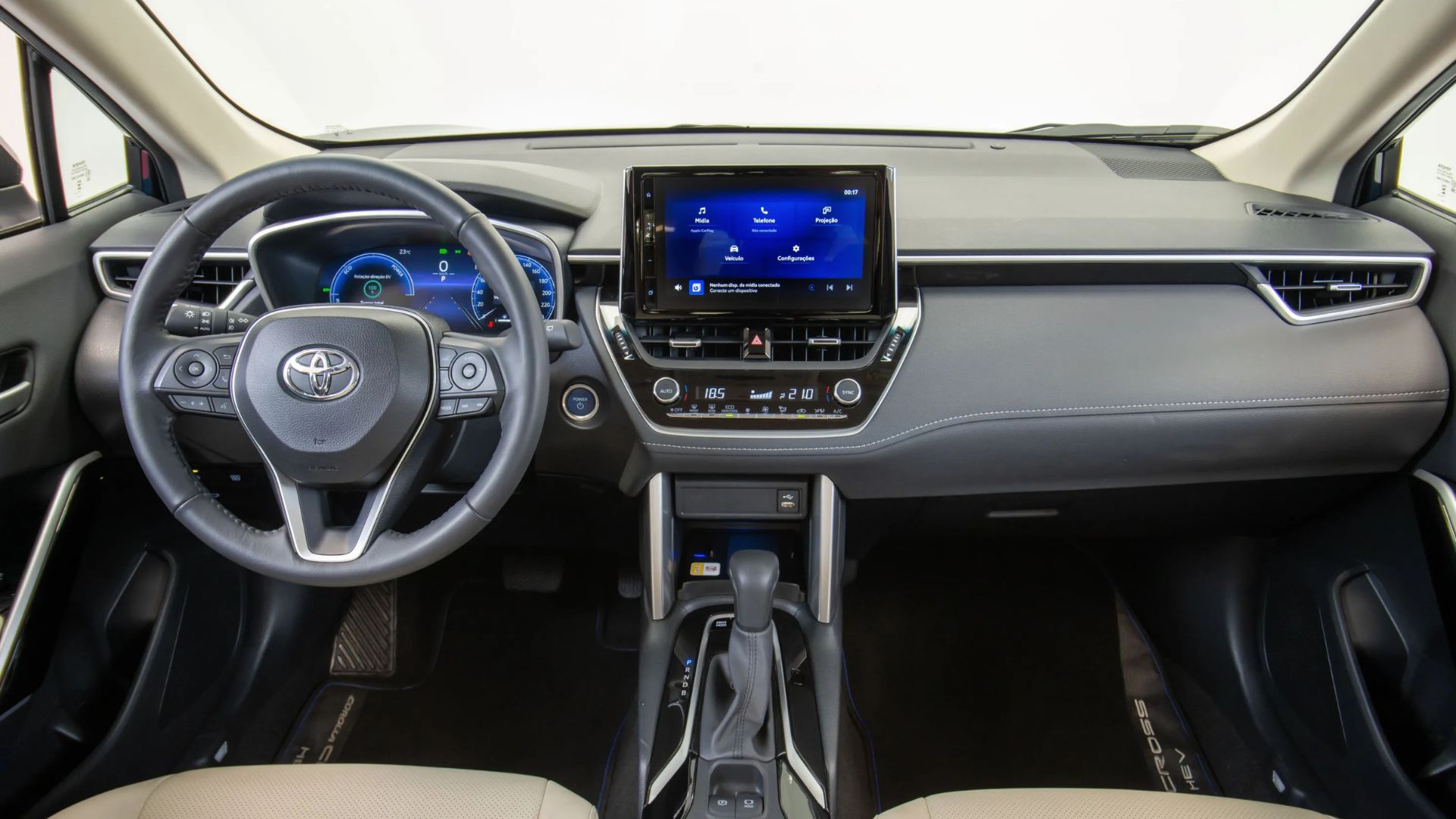
With 122 hp, fuel consumption of up to 17.7 km/l, and a trunk capacity of 440 liters, this hybrid SUV impresses even though it costs up to R$ 47,000 more than the Yaris — meet the Toyota Corolla Cross.
-
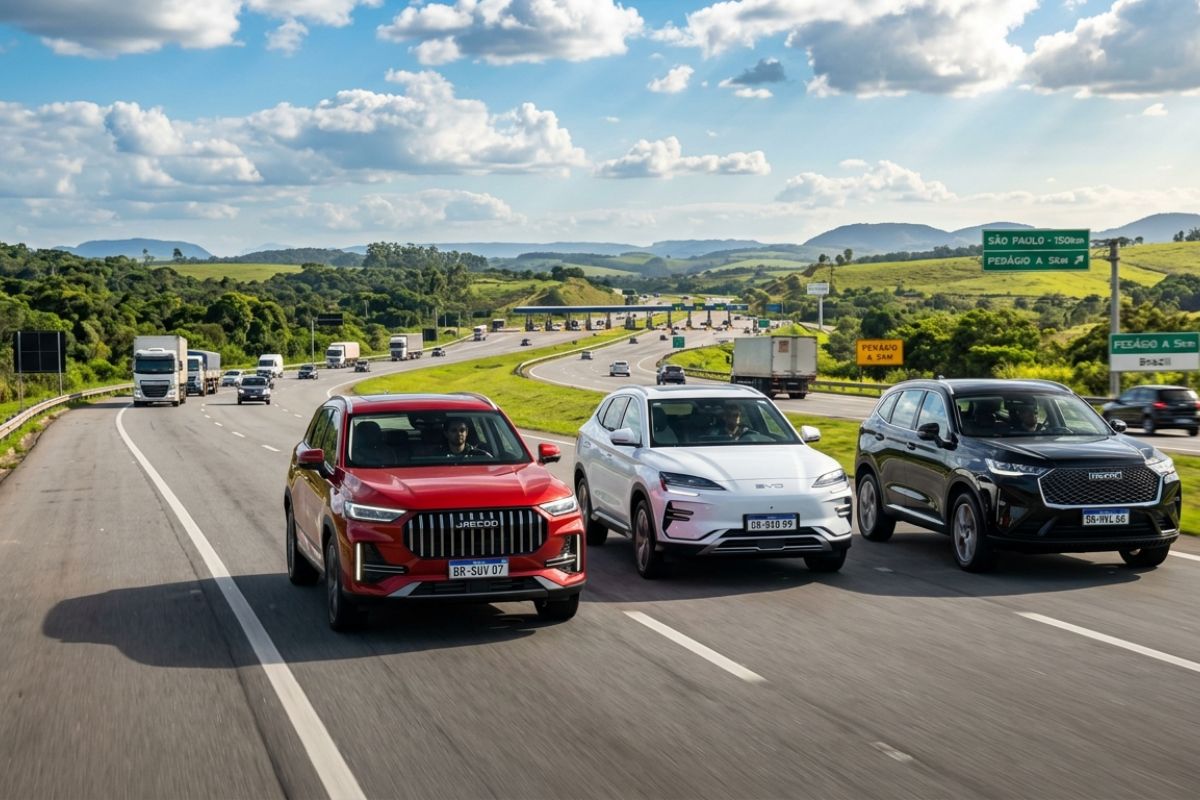
600 km with three Chinese plug-in SUVs, same mode and air conditioning on: Jaecoo 7, BYD Song Plus, and Haval H6 hit the road, and the pump reveals who was truly the most economical.
-
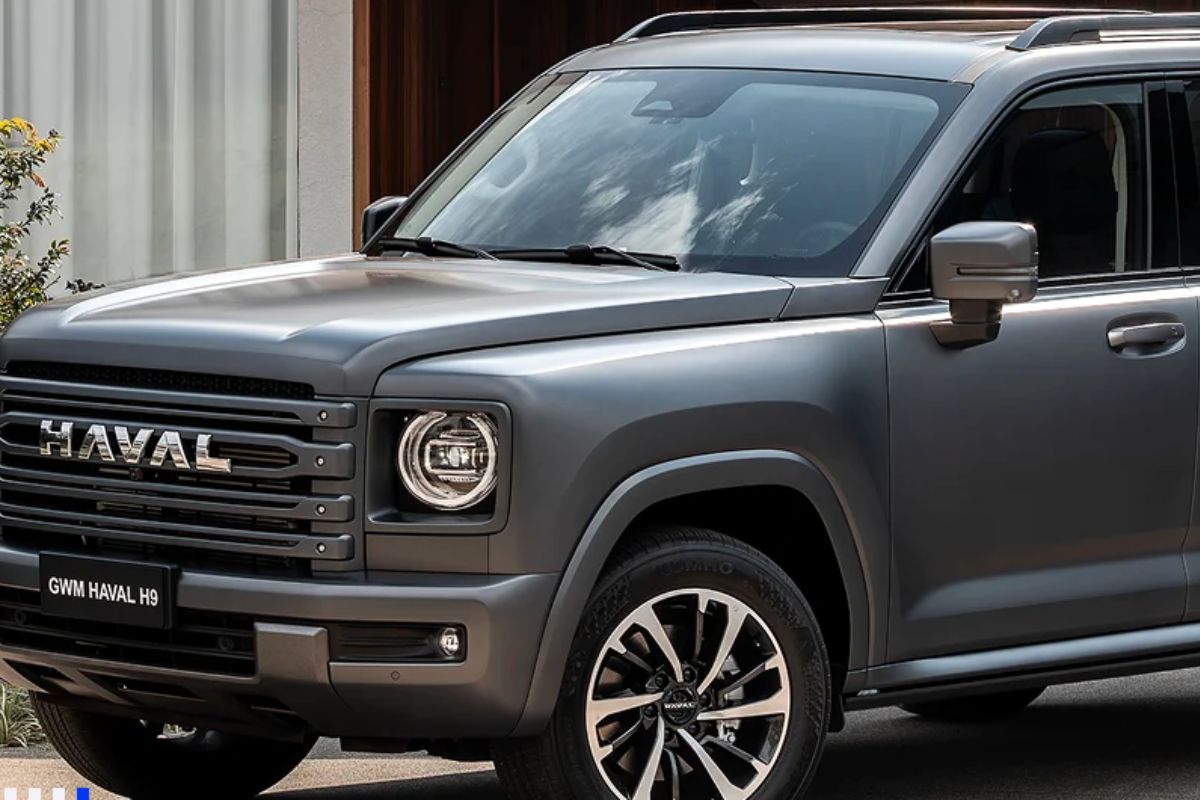
With a price almost R$ 100 thousand lower, the Haval H9 surpasses the SW4 for the first time in March, but Toyota still leads in the accumulated total for 2026; the Chinese SUV bets on technology and premium finishing to compete at the top.

In the Brazilian market, the combination of consumption and cost of use weighs heavily in the choice of automatic hatchbacks.
In this scenario, the City Hatchback appears as an option for those who prioritize energy efficiency without resorting to electrification.
The setup includes a 1.5 naturally aspirated engine with direct injection and CVT transmission, a configuration maintained by Honda throughout the model’s lineup.
Consumption of the Honda City Hatchback with data from Inmetro
According to Inmetro, the City Hatchback records 13.2 km/l in urban cycle and 15.0 km/l in highway cycle with gasoline.
The numbers place the model in a competitive position within the segment and help explain why consumption often appears among the main selling points of the hatch.
In the brand’s official material, Honda states that the car uses a 1.5L DOHC i-VTEC engine with direct injection and CVT transmission.
The manufacturer associates this setup with the pursuit of efficiency and linear driving, focusing on daily use.
The PBEV classifies the model in energy consumption classification B within the corresponding category.
These data are from laboratory tests and follow standardized methodology.
Therefore, they serve as a comparative basis among vehicles in the same range.
Real consumption, on the other hand, may vary according to traffic, topography, load, tire pressure, and driving style, as Inmetro itself emphasizes in its consumer guidance.
Comparative with Polo, HB20, Onix, and Peugeot 208
In comparison with automatic versions of direct competitors, the performance of the City varies according to the model and usage cycle.
The Volkswagen Polo Sense TSI automatic, for example, records 13.1 km/l in the city and 16.1 km/l on the highway with gasoline.
In this case, the Honda hatch is numerically ahead in urban use and behind in highway use.
The Hyundai HB20 1.0 turbo automatic shows 13.2 km/l in the city and 14.7 km/l on the highway in versions listed in the official table.
The result indicates a tie in the urban cycle and an advantage for the City on the highway.
In the case of the Chevrolet Onix LTZ 1.0 turbo automatic, the numbers are 12.0 km/l in the city and 14.8 km/l on the highway, below those recorded by Honda in both measurements.
The same occurs with the Peugeot 208 Allure T200 CVT, which records 12.6 km/l in the city and 14.3 km/l on the highway with gasoline.
In this analysis, the City also appears ahead.
The reading of the official data, therefore, indicates that the Honda model ranks among the most economical in the group, although the advantage is not equal in all scenarios and depends on the version used as a reference.
1.5 Naturally Aspirated Engine and CVT in Daily Use
While some competitors bet on a 1.0 turbo engine, Honda maintains a 1.5 naturally aspirated engine in the City Hatchback.
This choice alters the car’s profile within the segment.
Instead of focusing the discourse on performance, the brand sustains the proposal on smooth operation and efficiency.
The CVT transmission also plays a role in this calibration.
In models with this type of transmission, the logic usually prioritizes lower RPMs in everyday situations, which can help reduce consumption in certain usage contexts.
In the case of the City, this characteristic aligns with the numbers disclosed by Inmetro.
This does not mean broad superiority in all aspects of the category.
Rivals with turbo engines may offer different responses in acceleration and recovery, for example.
Still, when the focus is on homologated consumption with gasoline, the City remains in a relevant position in the competition among automatic hatchbacks sold in the country.
Autonomy of the Honda City and Tank Capacity
One of the points that enter this calculation is the tank capacity.
The public technical sheet of the City Hatchback indicates 39.5 liters, a volume lower than that of some competitors.
This reduces the car’s potential autonomy compared to models with larger tanks, although the official consumption helps to offset part of this effect.
Based on Inmetro’s averages, the theoretical range exceeds 500 kilometers in urban cycle and approaches 600 kilometers in highway cycle.
However, this is an estimate calculated from standardized tests.
In real use, this result can change significantly depending on road conditions.
Therefore, reports from owners about averages above or below the standard do not replace the official reference.
In journalistic texts, the safest parameter remains the homologated data, precisely because it allows direct comparison with other vehicles in the category.
How Honda Positions the City Hatchback Line
In the manufacturer’s current portfolio, the nomenclature displayed on the official site is City Hatchback Touring Sport, and not just “City Sport”.
The lineup also includes LX, EX, EXL, and Touring versions, all with the same mechanical base.
The difference between them is concentrated in finishing, equipment, and visual proposal.
This detail matters because the correct identification of the version avoids confusion when comparing with rivals.
In texts about consumption, the accuracy of the commercial name helps relate the technical data to the correct model and reduces the margin for incorrect interpretations about engine, transmission, or package offered.
Within this context, the City Hatchback occupies a specific space in the market.
The model combines automatic transmission, naturally aspirated engine, and official consumption numbers that place it among the most efficient options in the segment with gasoline.
This combination does not eliminate the differences in proposal compared to Polo, HB20, Onix, and 208, but supports the argument that Honda’s hatch remains competitive when the focus is on fuel expenditure in daily use.








Seja o primeiro a reagir!