





 Portuguese
  English
  Spanish
  5 min of reading
  2 comments


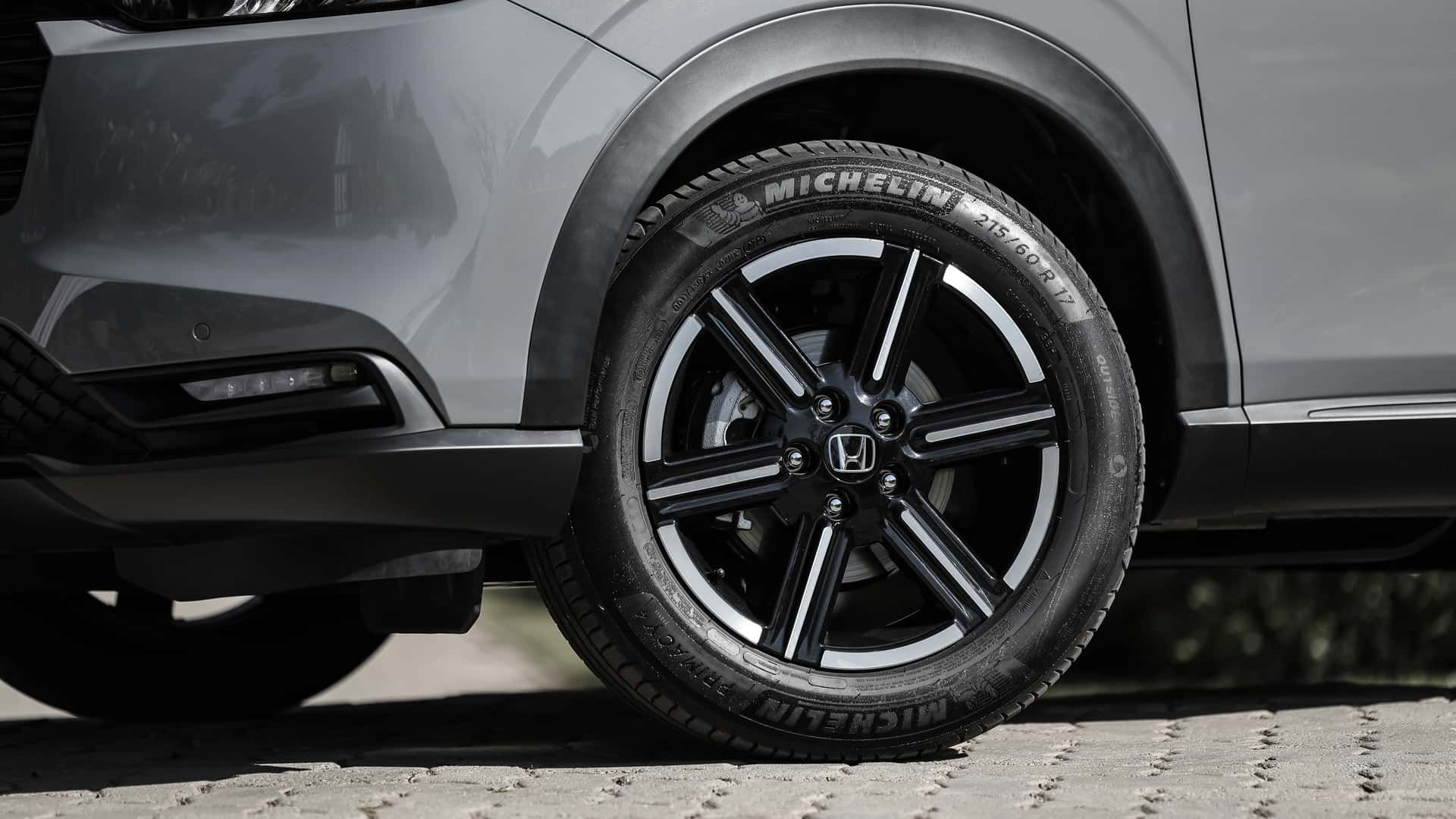


New WR-V Arrives in Brazil Focused on Space, Technology, and Competitive Pricing, While the HR-V Maintains Its Role as the Brand’s More Refined SUV. Both Share a 1.5 Flex Engine but Deliver Distinct Proposals.
Honda has opened up space for an internal duel between its compact SUVs.
The WR-V 2026 debuts with prices ranging from R$ 144,900 (EX) to R$ 149,900 (EXL) to attract customers who found the HR-V expensive and the City small, while the HR-V 2026 EX starts at around R$ 13,3 thousand above the newcomer.
Both use the 1.5 DI i-VTEC flex with 126 hp and a CVT that simulates seven gears, but they deliver distinct proposals in terms of equipment, space, and efficiency.
-
Six diseases that seem common but can prevent the renewal of the driver’s license for the elderly throughout Brazil and surprise experienced drivers — could any of them affect you without showing clear signs?

-
With 122 hp, fuel consumption of up to 17.7 km/l, and a trunk capacity of 440 liters, this hybrid SUV impresses even though it costs up to R$ 47,000 more than the Yaris — meet the Toyota Corolla Cross.
-
600 km with three Chinese plug-in SUVs, same mode and air conditioning on: Jaecoo 7, BYD Song Plus, and Haval H6 hit the road, and the pump reveals who was truly the most economical.
-
With a price almost R$ 100 thousand lower, the Haval H9 surpasses the SW4 for the first time in March, but Toyota still leads in the accumulated total for 2026; the Chinese SUV bets on technology and premium finishing to compete at the top.

Dimensions, Space, and Practical Use
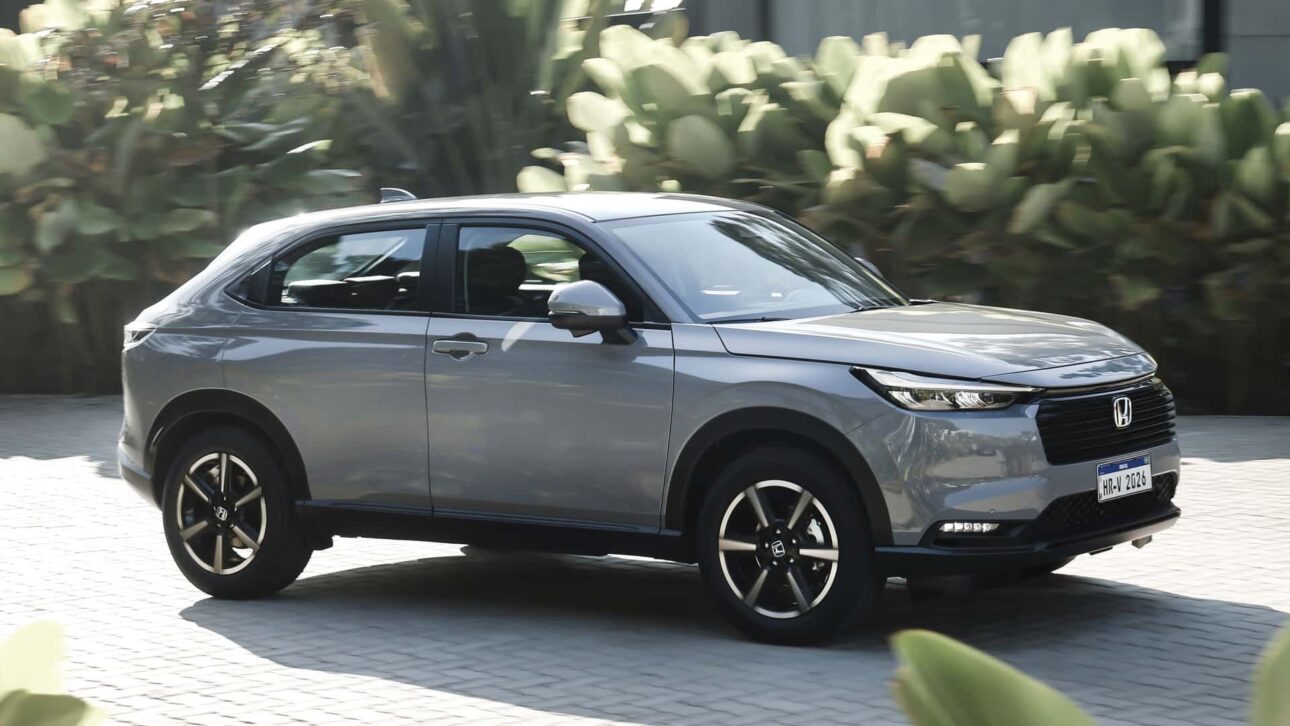
The WR-V has leveled up and now measures up as a compact SUV: 4.32 m in length, 1.79 m in width, 1.65 m in height, and 2.65 m in wheelbase.
The HR-V measures 4.385 m in length, maintains the same width, is lower (1.59 m), and offers 2.61 m in wheelbase.
Despite being shorter, the WR-V is 6 cm taller and has an advantage in wheelbase, which benefits rear space.
The trunk also highlights the newcomer: 458 liters, compared to 354 liters in the HR-V, a difference that reinforces the WR-V’s family appeal.
In terms of ground clearance, the WR-V also has an advantage with 223 mm, compared to 185 mm in the HR-V, a feature useful for speed bumps and uneven surfaces.
Positioning and Proposal of Each Version
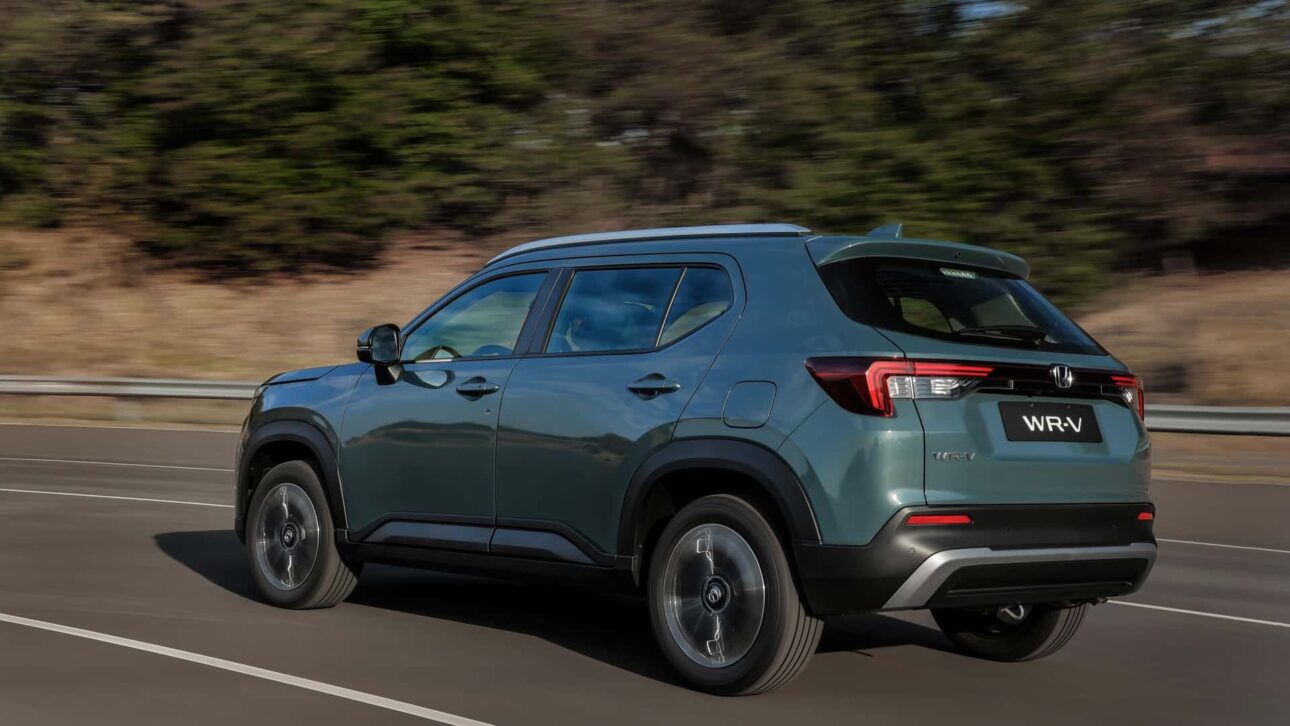
The version strategy is simple for the WR-V: EX and EXL.
The visual and interior package changes little between them; the EXL adds specific items, such as roof rails, LED fog lights, and leather trim.
Honda’s reading is clear: deliver technology and practicality in an entry-level product, priced at the same level as the top configurations of smaller SUVs and the basic versions of more expensive compacts.
In the HR-V EX, the emphasis is on construction refinement, dynamics, and safety.
There is a more sophisticated structural set, disc brakes on all four wheels, and broader assistance electronics, targeting an audience willing to pay more for comfort items and driving solutions.
Equipment and Assistance
The WR-V EXL concentrates the technological highlights of the model: 10″ multimedia system with wireless Android Auto and Apple CarPlay, 7″ digital panel, induction charger, remote start, and myHonda Connect for remote functions via app.
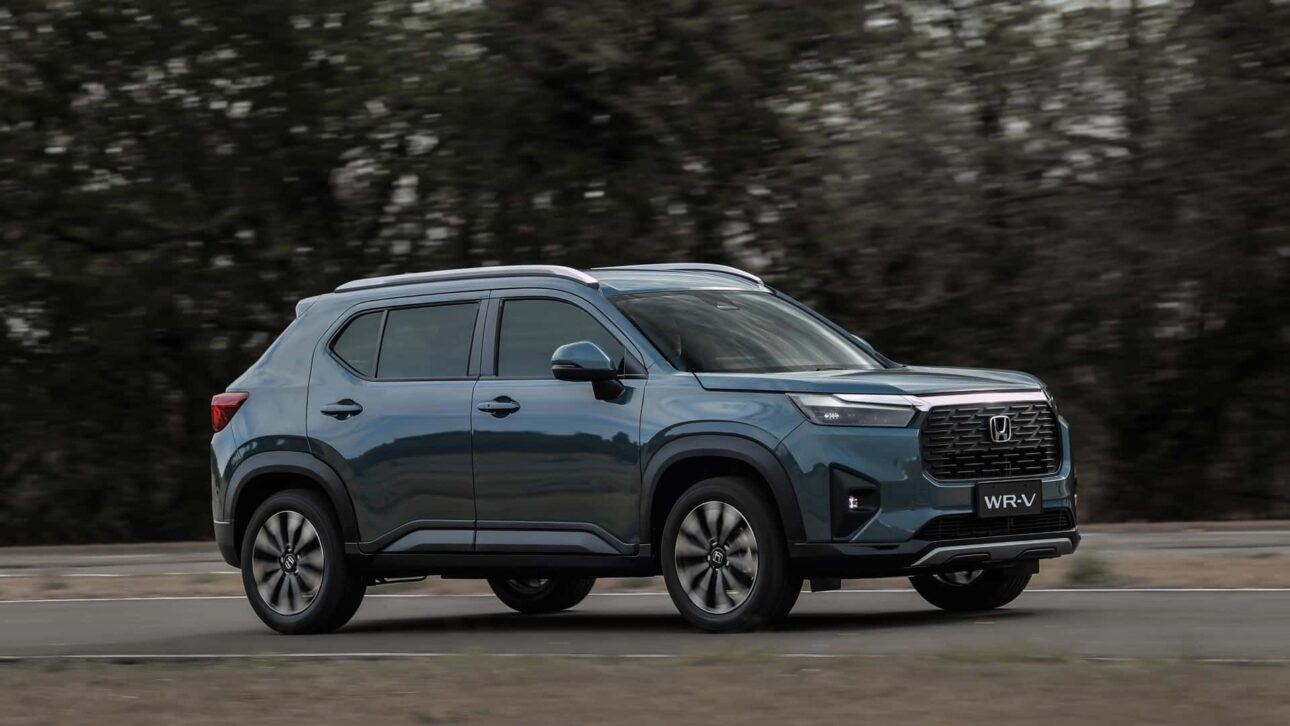
The air conditioning is automatic with rear vents, there are six airbags, a rear camera, and parking sensors.
The headlights and taillights are LED, and the mirrors have automatic electric folding.
A practical point that is lacking is the offer of USB-C ports: in the WR-V, there are two front type A.
In terms of active safety, the WR-V brings Honda Sensing with adaptive cruise control, autonomous braking, lane keeping/ departure assistant, and automatic high beam.
This is the same core of assistance spread across the brand’s most recent line.
The HR-V EX bets on a combination of comfort items and broader assistance.
The multimedia center is 8″, but the package compensates with electronic parking brake with Brake Hold, hill descent assist, disc brakes on all four wheels, and LaneWatch, a camera in the right mirror that expands the lateral field of view.
The ACC of the HR-V includes the Low Speed Follow mode, capable of stopping and restarting in traffic jams, a feature absent in the WR-V.
Moreover, the HR-V includes digital air conditioning, a leather-wrapped steering wheel, and four USB ports — with two rear type C sockets, facilitating the use of newer smartphones.
Engine and Performance: What Changes in Use
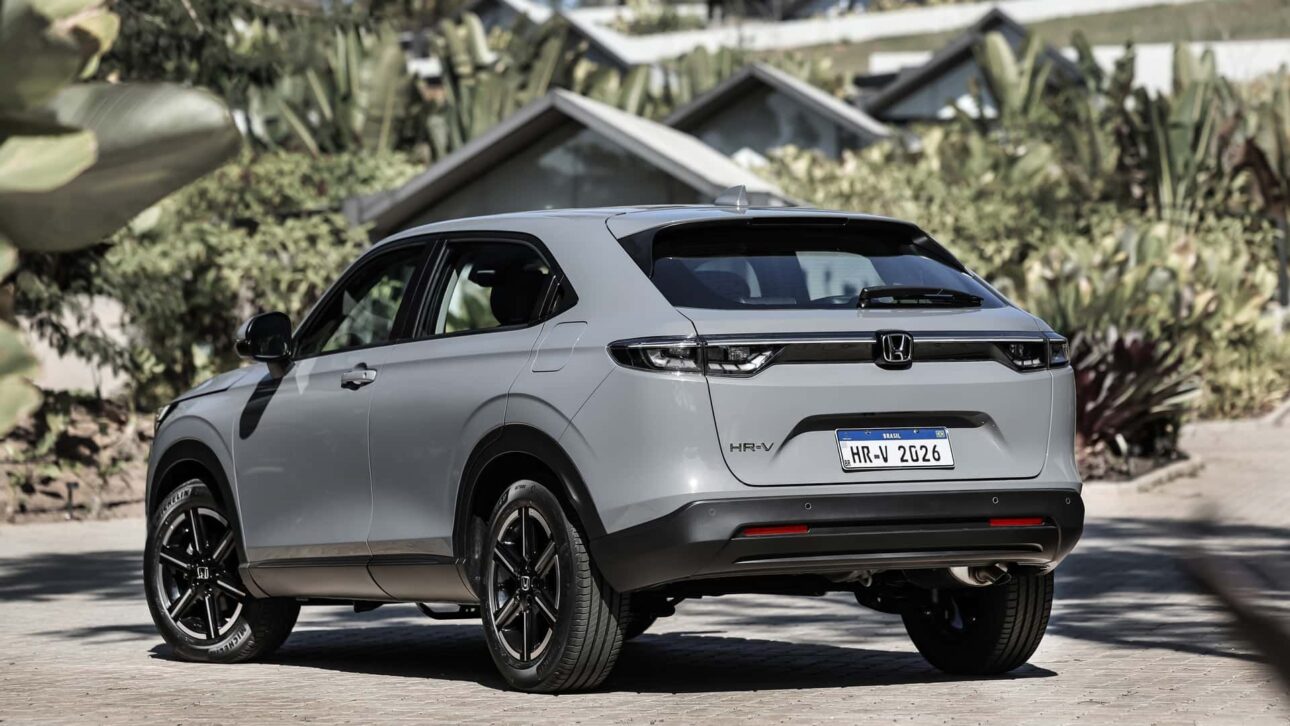
Under the hood, there is no mechanical difference: both models use the 1.5 aspirated flex with 126 hp at 6,200 rpm and 15.8 kgfm (ethanol) or 15.5 kgfm (gasoline) at 4,600 rpm, coupled to a CVT.
The variation appears in weight and calibration.
The WR-V, weighing 1,278 kg, achieves 0 to 100 km/h in 11.5 s; the HR-V, slightly heavier (1,297 kg), records 11.8 s. The difference is small, but enough for the WR-V to feel more agile in urban accelerations.
Fuel Consumption, Tank, and Range
In terms of consumption figures, the advantage leans towards the HR-V. With gasoline, it reaches 12.5 km/l in the city and 13.9 km/l on the highway.
The WR-V registers 12.0 km/l and 12.8 km/l, respectively. The range follows the tank size: 50 liters in the HR-V compared to 44 liters in the WR-V, resulting in a greater range for the HR-V both in urban and highway cycles.
Who Is Each One For?
With more luggage space, greater height, and a complete tech package even in the first versions, the WR-V 2026 is designed for those seeking practicality and connectivity at a controlled price.
The HR-V 2026, on the other hand, offers more refined finishing, solid driving, and more advanced assistance, targeting a profile that prioritizes safety and comfort even at a higher cost.
While the WR-V aligns with entry-level SUVs and the basic versions of larger compacts, the HR-V remains a more balanced option in terms of dynamic behavior and safety content, in addition to offering the 1.5 turbo in higher versions for those seeking extra performance.
In everyday use scenarios, the choice tends to reflect priorities: trunk space and ground clearance favor the WR-V; range, brakes, and heavy traffic assistance tilt the balance towards the HR-V.








Poderia jurar que estava vendo Creta da primeira geração, aí vendo entendi que era WR V, nada de **** no carro!
Your blog has become an indispensable resource for me. I’m always excited to see what new insights you have to offer. Thank you for consistently delivering top-notch content!