





 Portuguese
  English
  Spanish
  4 min of reading
  0 comments


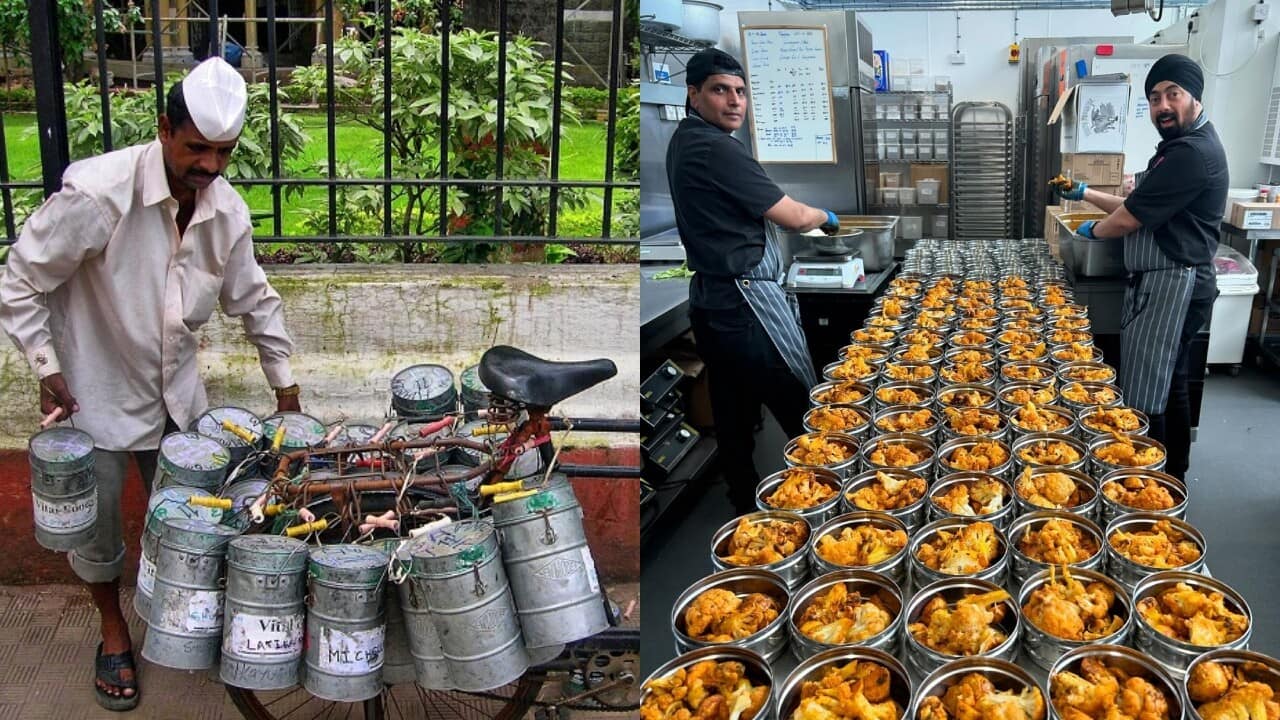
For over a century, the dabbawalas have maintained in Mumbai a delivery network based on bicycles, suburban trains, and visual codes, transporting around 200,000 lunchboxes per day in a human operation that has become an international reference in urban logistics
In a city marked by traffic jams, long distances, and millions of daily commutes, the dabbawalas of Mumbai have maintained for over a century a system of delivering homemade meals that has become an international reference in urban logistics.
The activity began in 1890 and is now carried out by about 5,000 workers, responsible for moving approximately 200,000 lunchboxes per day between homes and workplaces in the Indian metropolis.
How the collection of lunchboxes works
The routine starts early, when the dabbawalas pass through residential neighborhoods to collect the meals prepared in the customers’ homes. These lunchboxes are gathered and sent to sorting points, where signals come into play that allow for the organization of the entire distribution chain.
-
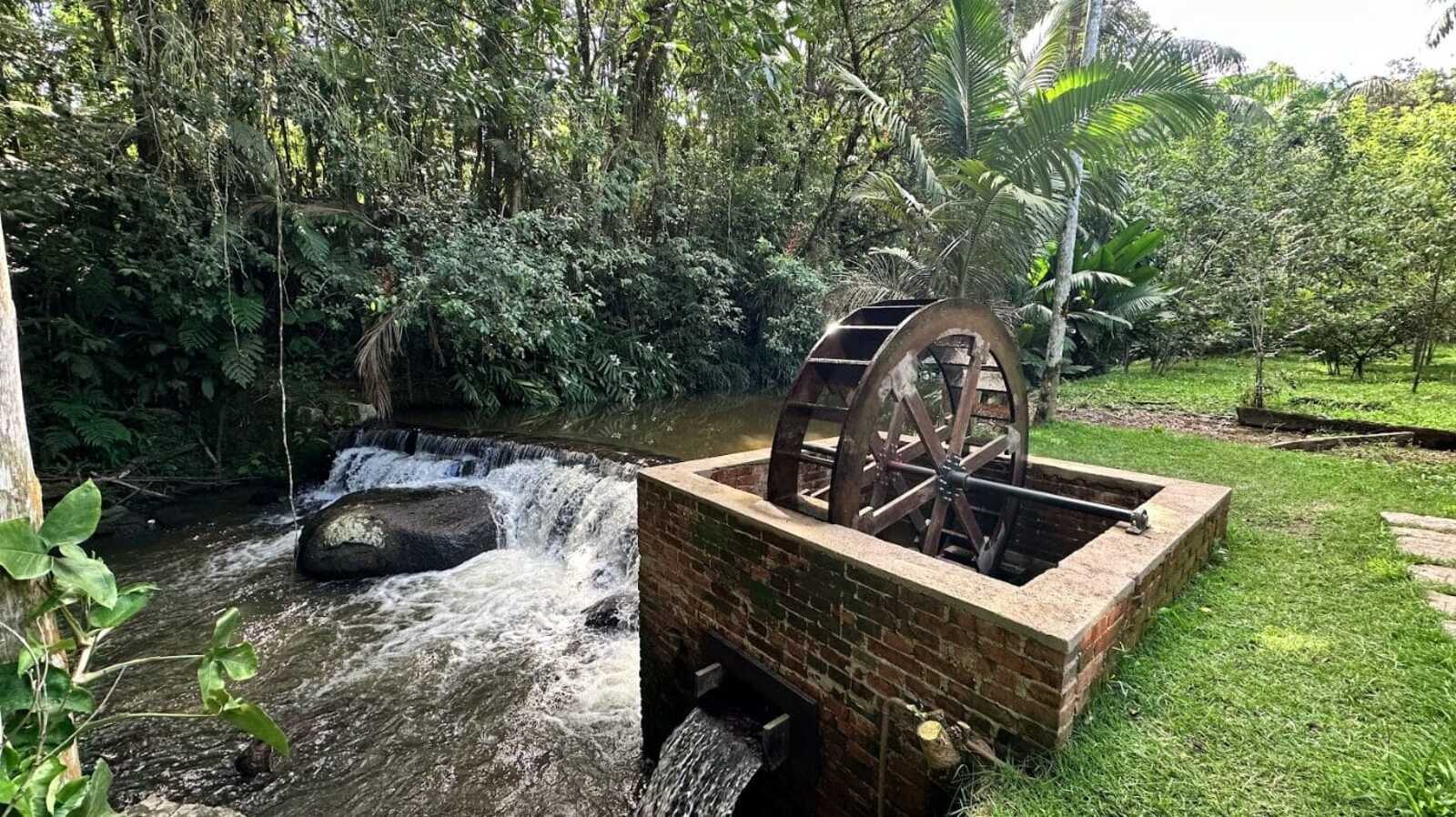
While restoring a historic mansion from 1910, a brick structure with an old turbine that generated energy from the Rio do Testo emerged, along with a hidden door and a rare floor concealed under layers of wax.
-
Italian researchers have detected what appears to be a second Sphinx buried under the sands of Egypt, and satellite scans reveal a gigantic underground megastructure hidden beneath the Giza Plateau for over 3,000 years.

-
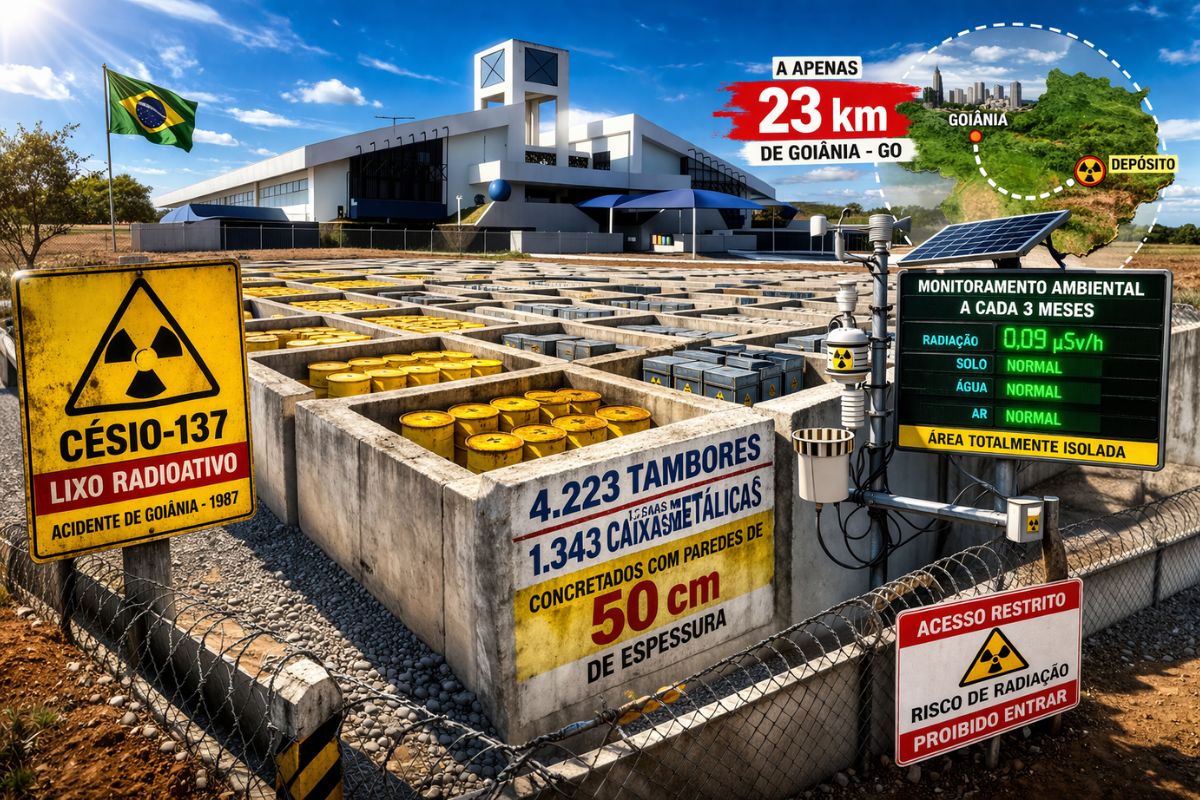
There are 4,223 drums and 1,343 metal boxes concreted with 50-centimeter walls that store the radioactive waste from Cesium-137 in the worst radiological accident in Brazil, just 23 kilometers from Goiânia, with environmental monitoring every three months.
-
Giant Roman treasure found at the bottom of Lake Neuchâtel in Switzerland reveals an advanced trade system, circulation of goods, and armed escort in the Roman Empire about two thousand years ago.

Instead of relying on apps, digital labels, or electronic tracking systems, the network operates with a visual method that combines colors, letters, numbers, and symbols to indicate origin, train station, destination, and the delivery person responsible for the next stage.
This manual process requires that each container be quickly identified and follow the correct flow amidst the daily volume of deliveries. The simplicity of the code does not mean improvisation. On the contrary, it is a central part of a mechanism consolidated over decades, based on repetition, practical knowledge, and precise division of tasks among group members.
Bicycles, trains, and sorting in the heart of Mumbai
After the initial collection, the lunchboxes are transported by bicycles to concentration centers and train stations. The suburban train network in Mumbai plays a decisive role in this system, as it allows large quantities of meals to cross the city in a short period of time. Upon arriving at the stations, the containers go through new sorting stages to be redistributed according to the neighborhoods and destination buildings.
The operation depends on successive transfers between workers, always within a strict schedule. Each stage needs to occur at the right moment for the meal to arrive at the office before lunch. In the afternoon, the process is repeated in reverse, with the collection of empty lunchboxes and the return to their original homes. This back-and-forth movement helps explain why the dabbawalas are seen as a structural part of daily life in Mumbai.
The reputation for efficiency that caught the world’s attention
The system gained international prominence for achieving an unusual level of regularity for an essentially human and low-tech operation. A study from Harvard Business School describes the dabbawalas as a remarkable case of logistics and operational management, often associated with the Six Sigma standard due to the very low failure rate attributed to the service. The business school treats the model as an example of efficient coordination, standardization of processes, and strong collective discipline.
Although the fame of near-absolute precision has helped make the dabbawalas known outside India, the relevance of the system is not limited to an error statistic. What sustains the operation is the combination of training, well-defined routines, knowledge of routes, and shared responsibility among workers. In a city with intense flow and infrastructure pressured by the size of the population, the ability to maintain regularity over so many decades has transformed the group into a subject of study for universities, companies, and supply chain experts.
A human network based on trust and collective organization
The dabbawalas do not act solely as food deliverers. The group also represents a model of community organization, in which trust, discipline, and cooperation play a central role.
The operation depends on a network in which each worker is responsible for part of the journey, but the final result only works when all stages fit together without delays.
This format has helped consolidate the image of the dabbawalas as a professional brotherhood deeply connected to the daily life of the city.
The continuity of the service over more than a century also accompanies the transformation of Mumbai itself. As the city has grown as a financial and commercial center, the need to connect workers and homes spread over large distances has increased.
In this context, the suburban train network and the knowledge accumulated by the dabbawalas have allowed the system to remain functional even in the face of urban expansion.
The impact of the pandemic and the persistence of the traditional model
The activity, however, has not remained immune to recent changes. During the COVID-19 pandemic, the reduction of in-person work strongly affected the demand for the service and compromised the income of many group members.
A report from Reuters showed that the temporary collapse of office routines hit the operation hard, which depends precisely on the daily movement of workers to maintain the traditional volume of deliveries.
Even so, the system remained active and preserved its basic structure. In a period dominated by apps, digital platforms, and real-time monitoring, the dabbawalas continue to exemplify that logistical efficiency does not necessarily depend on advanced technology.
In Mumbai, the combination of bicycles, trains, visual markings, and human coordination still sustains one of the most well-known urban operations in the world. More than a meal delivery service, the dabbawalas represent a daily link between homes, workers, and the dynamics of a megacity that never stops.









Seja o primeiro a reagir!