





 Portuguese
  English
  Spanish
  4 min of reading
  1 comment


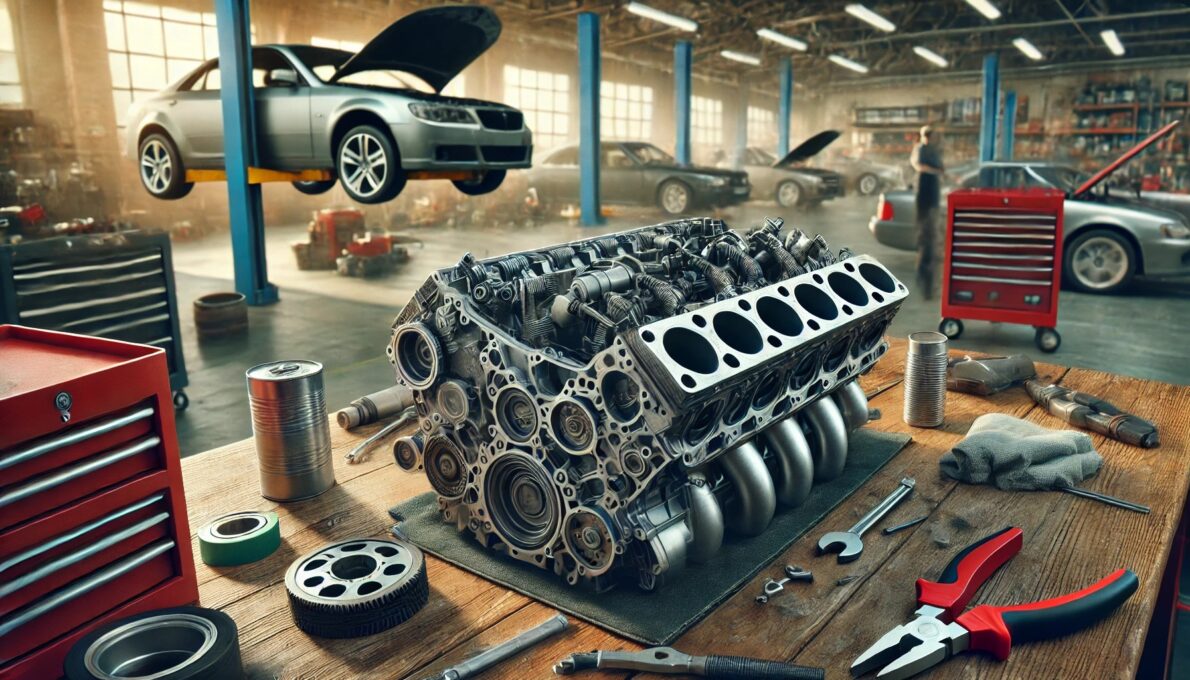

With the Variety of Types of Car Engines Available, It Is Essential to Understand How the Otto Cycle Engine and the 4-Stroke Engine Work.
Do you know how a car engine works? If not, this is a good time to better understand what happens under the hood of your vehicle. The car engine is an amazing machine, capable of converting fuel into life so that the car can run.
Throughout this article, we will learn more about how a car engine works, understand what an Otto cycle engine and a 4-stroke engine are, in addition to demystifying everything that happens in each phase of the cycle and how this can be compared to other types of engines, such as diesel engines.
OTTO CYCLE ENGINE: What Kind of Car Engine Is This?
The car engine known as the Otto cycle engine is a type of internal combustion engine. The Otto cycle engine is named after its creator Nikolaus Otto, who developed the engine in 1876, being considered an innovation at the time.
-
Honda performs miracles in fuel consumption with a hatch that marks 13.2 km/l in the city and 15 km/l on the highway, leaving Polo, HB20, 208, and Onix behind and becoming a reference among compact cars without resorting to turbo or hybrid systems.

-
Six diseases that seem common but can prevent the renewal of the driver’s license for the elderly throughout Brazil and surprise experienced drivers — could any of them affect you without showing clear signs?

-
With 122 hp, fuel consumption of up to 17.7 km/l, and a trunk capacity of 440 liters, this hybrid SUV impresses even though it costs up to R$ 47,000 more than the Yaris — meet the Toyota Corolla Cross.

-
600 km with three Chinese plug-in SUVs, same mode and air conditioning on: Jaecoo 7, BYD Song Plus, and Haval H6 hit the road, and the pump reveals who was truly the most economical.


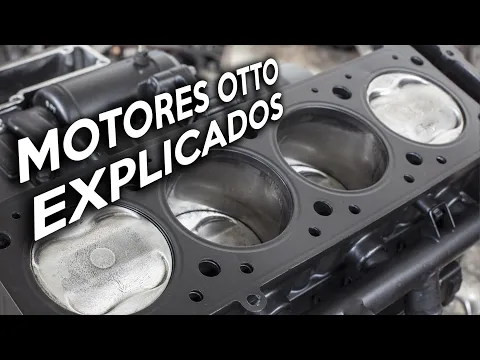

The Otto cycle engine is still widely used today in cars, motorcycles, and even in some types of boats. The operation of the Otto cycle engine is based on a 4-stroke thermodynamic cycle, which is essential for understanding how it generates energy for the vehicle.
Stages of the Otto Cycle Engine
This engine has four stages, which occur in a sequence. Check them out below:
- Intake: in this phase, the mixture of air and fuel occurs, which is introduced into the engine’s combustion chamber;
- Compression: in the second phase, the piston moves up, compressing the mixture mentioned in the first phase in the combustion chamber;
- Explosion: at this moment, when the piston reaches the top of the cylinder, a spark plug is responsible for producing a spark. This spark ignites the compressed mixture and pushes the piston back down;
- Exhaust: finally, in the last phase, the gases resulting from the explosion generated in the previous phase are expelled from the combustion chamber as the piston moves back up.
With this demystification, we can conclude that the Otto cycle engine and the 4-stroke engine are the same thing. The cycle repeats continuously, generating energy for the vehicle’s wheels through a system of axles and drives, which consequently moves the car.
Characteristics of the Otto Cycle Engine or 4-Stroke Engine
Now that you understand that the Otto cycle engine and the 4-stroke engine are the same type of car engine, it’s time to learn some of the main characteristics of this engine:
- This type of car engine uses gasoline as fuel, although it can be adapted to use ethanol, methanol, or even alternative mixtures;
- Unlike the diesel engine, the 4-stroke engine has a lower compression ratio;
- The Otto cycle engine or 4-stroke engine operates with a fuel intake system or carburetors to mix air and fuel;
- The RPM range is usually higher compared to a diesel car engine, but it is lower than 2-stroke engines.
Modernity, Power, and Efficiency
The Otto cycle engine or 4-stroke engine is known for delivering power and efficiency, especially when combined with modern technologies. The fuel electronic injection and emissions control systems are essential for improving performance and sustainability of this type of car engine.
The mixture of fuels such as ethanol and gasoline has been a trend among drivers, especially here in Brazil, where flex models allow for such alternative fuel mixtures.
Performance of the 4-Stroke Engine in Different Conditions
The 4-stroke engine or Otto cycle engine operates ideally, even under different conditions. This happens because it is designed to provide high RPM performance, making it suitable for passenger cars, for example, which require quick acceleration and high power. However, its efficiency may be lower when compared to diesel engines, with applications that demand higher torque and operations at lower RPM.

Finally, understanding more about the Otto cycle engine, also known as the 4-stroke engine, is fundamental for anyone who wants to own a vehicle but does not fully understand how a car engine works. This knowledge is also ideal for mechanical engineering students and even automotive enthusiasts.
Engines like the Otto cycle play a crucial role in the automotive industry, and with the advancement and evolution of technologies, more and more this type of engine can reduce gas emissions and improve its efficiency in traffic.
With all doubts clarified about the Otto cycle engine, its operation, characteristics, and performance of the engine, continue to explore the world of automotive engineering, keeping yourself updated about the latest information and trends in one of the fastest-growing and evolving sectors in the industry.








1