





 Portuguese
  English
  Spanish
  5 min of reading
  0 comments


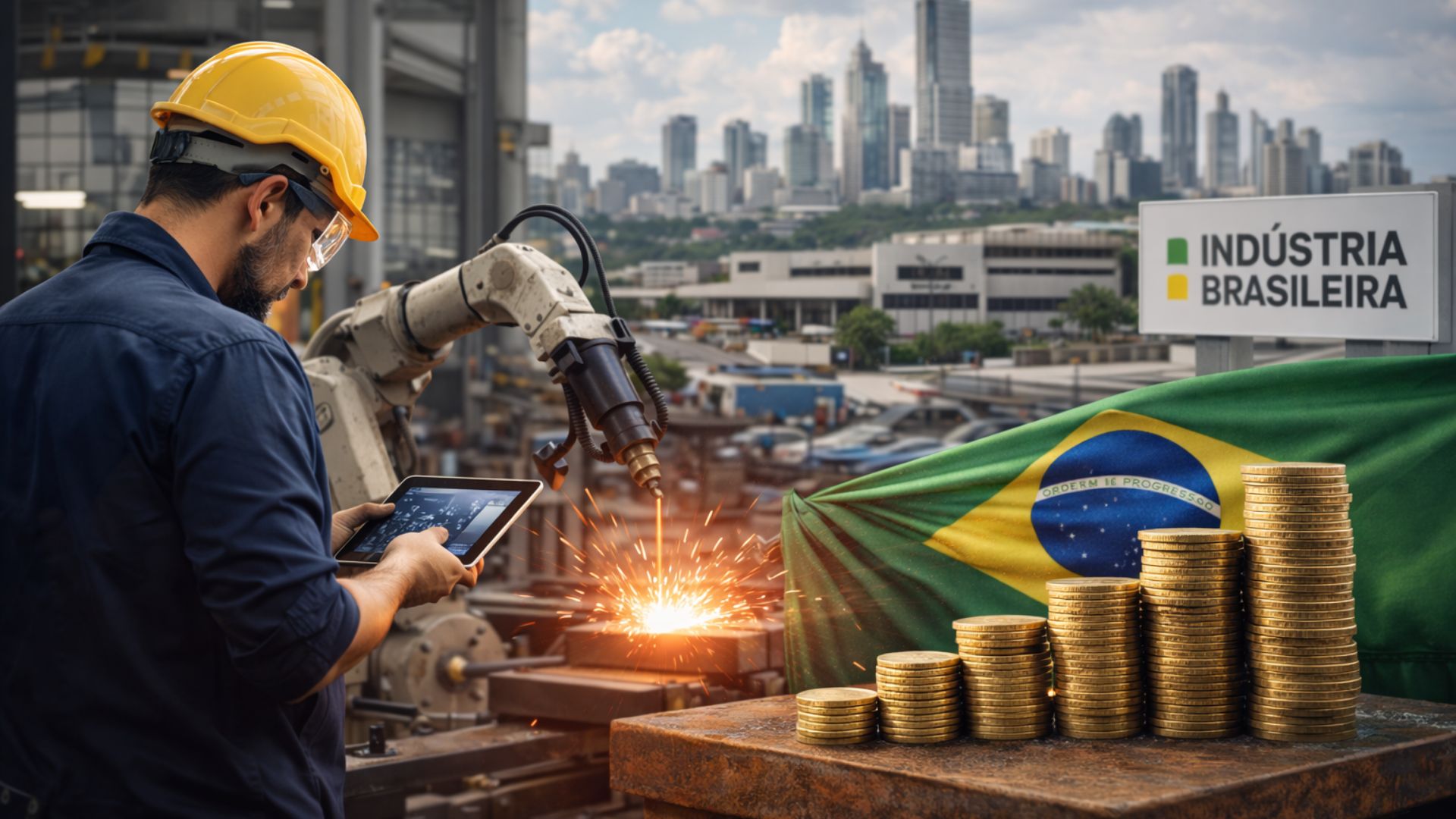
Discover how investment in technology strengthens the national economy, increases industrial productivity, and drives innovation in Brazil, according to a study that reveals direct impacts on wealth generation.
The investment in technology industrial has proven to be one of the most effective ways to transform the national economy and enhance Brazil’s competitiveness on the global stage. A study by P&D Brasil, released by CNN Brasil, revealed that products developed with national technology can generate up to 85% internal economic return.
This data draws attention for a simple reason: the more technology is created and applied within the country, the greater the value that remains in the economy. This means more skilled jobs, higher revenue, and sustainable growth. In the sector’s assessment, in a context of strong international competition, investing in innovation ceases to be just an advantage and becomes a strategic necessity for Brazil.
Study highlights how national technology increases added value and strengthens industry
The study shows that the impact of investment in technology goes far beyond production itself. It involves the entire value chain, from engineering development to final marketing margins.
-
The largest food company on the planet, JBS, has just opened a 4,000 square meter laboratory in Florianópolis to develop customized proteins that modulate muscle mass gain, immune response, and metabolic performance.

-
After nearly 30 bids and competition among industry giants, a Spanish company purchases one of the largest airports in Brazil for almost R$ 3 billion and takes over the management of Galeão in a concession that will last until 2039.

-
The Federal Revenue Service now automatically cross-references everything you declare with data from banks, credit cards, brokerage firms, and insurance companies, and any discrepancy between your income and your expenses triggers an alert in seconds.

-
Amid global tensions, Brazil blocks the United States’ proposal at the WTO and paves the way for a trade crisis and possible retaliations.


In practice, this means that products with national technology carry a greater amount of knowledge, innovation, and participation from Brazilian companies. This process increases the added value and strengthens the local industry.
Among the main perceived effects are:
- Greater retention of wealth within the country
- Stimulus to continuous innovation
- Growth of national production chains
- Generation of specialized jobs
This scenario directly contributes to strengthening the national economy, creating a positive development cycle.


Difference between national production, PPB, and imports reveals direct impact on the national economy
One of the most relevant points of the study is the comparison between different production models. The numbers clearly show how investment in technology directly influences economic results.
Products with national technology can retain up to 85% of the value within Brazil. Meanwhile, products classified under the Basic Productive Process (PPB) maintain about 52%. On the other hand, imported items generate only 30% return in added value for the national economy.
This difference occurs because, in the case of PPBs, a large part of the technology used comes from abroad. This reduces the internal economic impact, even if production occurs in Brazil.
Imported products contribute less to local industrial development, limiting wealth and job generation.

Investment in technology and national economy go hand in hand in the quest for global competitiveness
The competitiveness of the Brazilian industry increasingly depends on the ability to innovate. And this is only possible with a consistent increase in investment in technology.
The Ministry of Development, Industry, and Commerce has reinforced this view by highlighting the importance of increasing the added value of industrialized products in the country. The strategy includes more efficient use of resources and strengthening strategic sectors.
During recent discussions promoted by P&D Brasil, government representatives highlighted that the country already has an innovation ecosystem capable of supporting more robust public policies.
This alignment between the public and private sectors is essential to transform the national economy and position Brazil more competitively in the international market.
Low investment in technology still limits advances in the national economy, points out study based on OECD
Despite the identified potential, Brazil still invests little in innovation compared to other economies. According to OECD data, the country invests about 1.2% of GDP in research, development, and innovation.
This percentage is lower than that observed in countries that lead global technological advancement:
- China invests approximately 2.8% of GDP
- United States reach 3.4%
- Israel leads with about 6.3%
- South Korea invests about 5%
These numbers show that, although there is potential, there is still a long way to go for Brazil to reach higher levels of technological competitiveness.
Without increasing investment in technology, the national economy may face difficulties in keeping pace with the major global powers.
How investment in technology increases productivity, innovation, and wealth retention
One of the main impacts of investment in technology is the increase in productivity. Companies that adopt technological solutions can produce more, with greater efficiency and lower cost.
Moreover, innovation becomes a competitive differentiator. Businesses that invest in research and development can create more sophisticated products with higher added value.
This process generates clear benefits:
- Reduction of operational costs
- Improvement in product quality
- Increase in international competitiveness
- Expansion of markets
Another important point is wealth retention. When technology is national, the generated resources remain in the country, strengthening the national economy and encouraging new investments.
Study highlights the strategic role of technology in reducing external dependence
The dependence on foreign technologies is one of the historical challenges of the Brazilian industry. The study reinforces that increasing investment in national technology is essential to change this scenario.
By developing its own solutions, Brazil gains more autonomy and reduces its vulnerability to external fluctuations. This is especially important in strategic sectors such as energy, base industry, and advanced technology.
Furthermore, technological mastery allows the country not only to consume but also to export innovation. This opens new economic opportunities and strengthens Brazil’s presence in the global market.
Public policies and investment in technology define the pace of industrial transformation
The advancement of innovation in Brazil depends on a combination of private investment and well-structured public policies. The study points out that the country already has a relevant ecosystem but still needs greater coordination.
Among the initiatives that can accelerate this process are:
- Tax incentives for innovative companies
- Increased investments in scientific research
- Partnerships between universities and industry
- Support for the development of technology startups
These actions can create a more favorable environment for the growth of national technology and consistently strengthen the national economy.
The path to a stronger national economy passes through investment in technology
The data presented in the study leaves a clear message: investment in technology is one of the main engines for Brazil’s economic development.
By allowing greater wealth retention, increasing productivity, and stimulating innovation, technology becomes a central element for the future of the national economy.
Although the country still faces challenges, such as low investment levels compared to international standards, the growth potential is evident. With well-defined strategies and greater integration between government and the private sector, it is possible to transform the Brazilian industry.
More than a trend, investing in technology is a strategic decision that can redefine Brazil’s role in the global economy and ensure more sustainable growth in the coming years.






Seja o primeiro a reagir!