





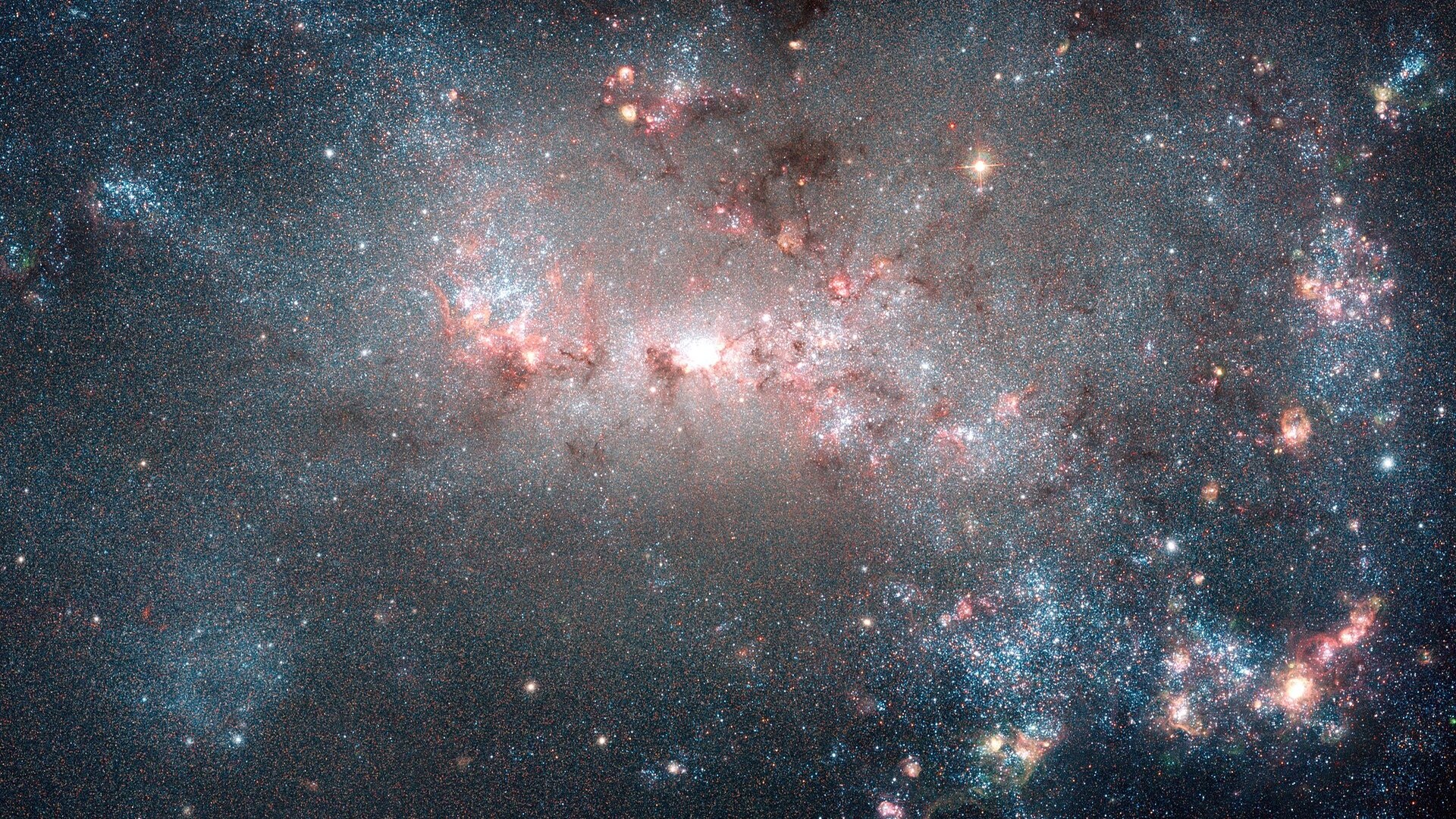

Astronomer Kristen McQuinn and her team used Hubble data to take a census of oxygen in 37 nearby dwarf galaxies and found that, on average, they hold on to only about 11% of the oxygen their stars have made over their lifetimes.
The results were published on November 2 in The Astrophysical Journal, NASA said. The galaxies kept between 4% and 25% of their oxygen, according to a summary of the paper by Sci.News.
The rest, the team argues, was pushed out by winds from supernova explosions, and those winds appear more effective in small galaxies than current models predict.
“The oxygen must have been ejected”
The logic is simple. “Oxygen is produced by stars, which are inside of galaxies,” said co-investigator Grace Telford, an assistant professor of physics and astronomy at the University of Utah.
-
NASA’s Swift principal investigator Brad Cenko says tungsten pieces and parts of the mirrors of the 1.5-ton observatory could survive when it falls back to Earth this week, after 22 years and more than 2,000 gamma-ray bursts

-
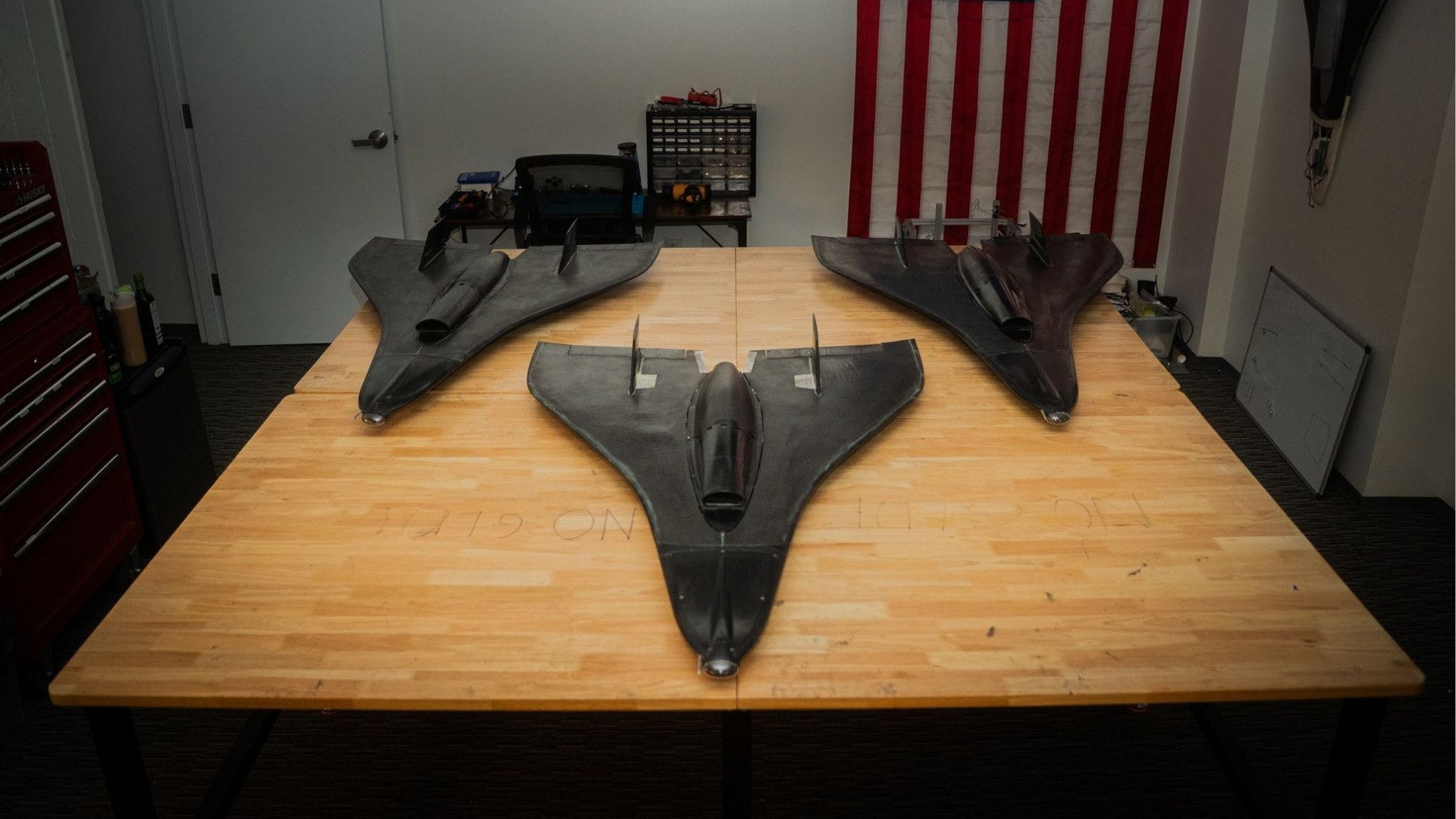
Georgia Tech student Tomas Salvo says the jet drone he built in his dorm room hit 491 mph carrying a 2.6-pound payload, beating the 465 mph mark, and now he wants Boom Supersonic’s $800,000 prize for reaching Mach 1
-
Gwangju mayor Park Gwan-yeol inspected three early Joseon white porcelain kilns, two of them more than 22 meters long, the largest ever found in excavations at the South Korean city’s historic kiln sites
-
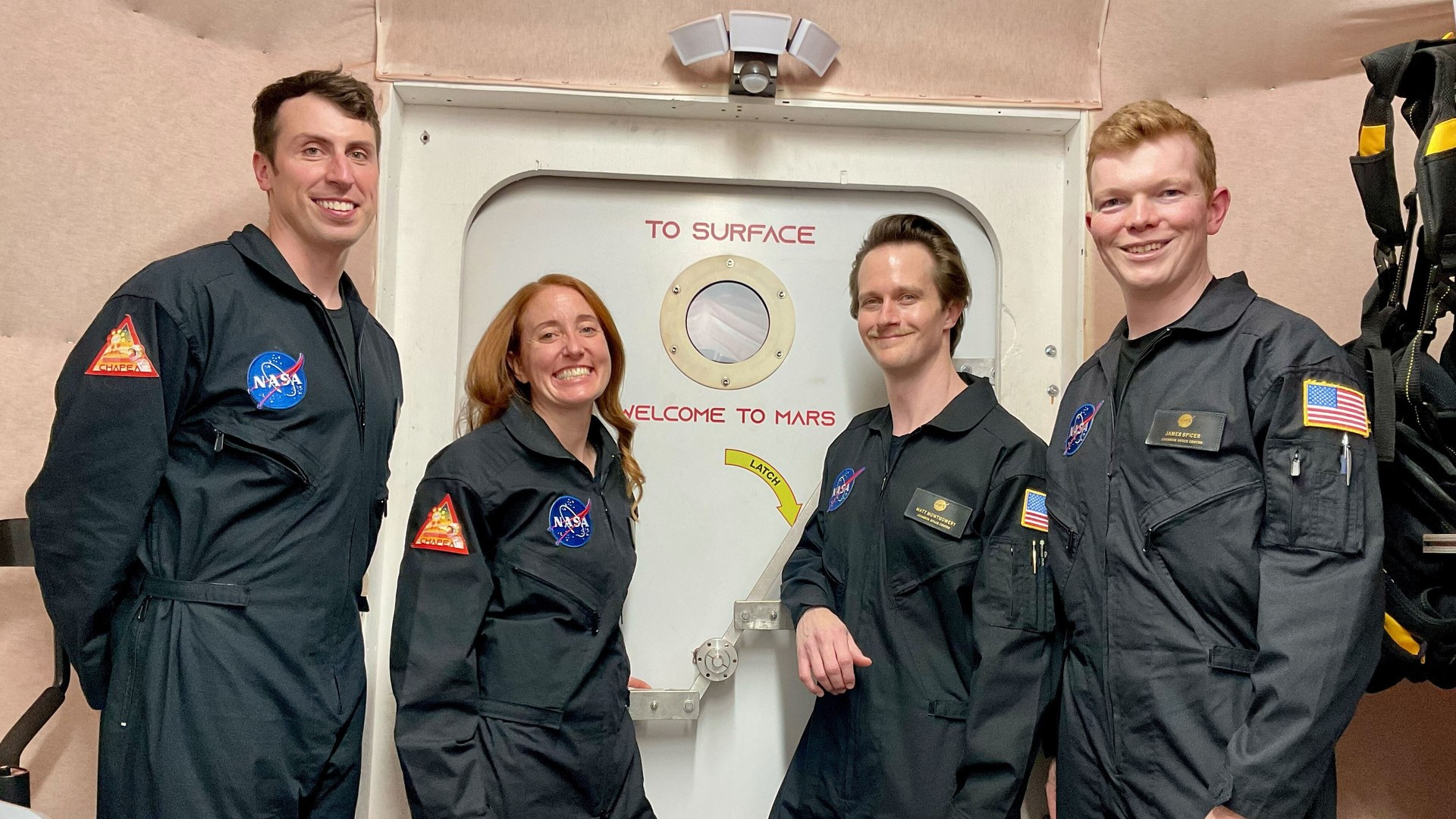
Commander Ross Elder and three other NASA volunteers walked out of a 1,700-square-foot 3D-printed Mars habitat in Houston on October 31, after 378 days sealed inside with crops to grow and 22-minute delays on their messages home


“We know that the oxygen had to be inside of the galaxies at some point in the past, so the oxygen must have been ejected,” she said in the NASA release.
Pushing it out takes energy, Telford explained, and that comes from massive stars and supernova explosions that drive material out of the host galaxies and into the space between them.
37 galaxies within 19.5 million light-years
The project is called GLOW, for Galaxies Losing Oxygen via Winds, and it is funded by NASA and the US National Science Foundation.
The team chose dwarf galaxies within roughly 19.5 million light-years of Earth, with stellar masses from about 3 million to 3 billion times that of the Sun, Sci.News reported.
All 37 are close enough for Hubble to resolve individual stars. NASA notes that this is not true for the vast majority of known dwarf galaxies, which are too far away for this kind of study.

Why the team chose oxygen
Oxygen is the most abundant element after hydrogen and helium. It is relatively easy to detect, and how stars make it is well understood, so it works as a tracer for a wider set of heavy elements.
“So, it’s really for practical reasons that we’ve chosen oxygen,” said McQuinn, the GLOW principal investigator and an associate professor at Rutgers University in New Jersey.
“Being able to trace how much oxygen gets made, and then how much is distributed inside and outside of galaxies, helps us understand galaxy evolution,” McQuinn said in the NASA release.
McQuinn is also mission head of the Science Operations Center for NASA’s Nancy Grace Roman Space Telescope at the Space Telescope Science Institute in Baltimore.
Counting what was made, then what is left
To work out how much oxygen each galaxy should have, the team used Hubble’s views of individual stars to rebuild each galaxy’s star formation history.
They then added up the oxygen actually present in the gas, the stars and the dust. Data from the retired Spitzer Space Telescope, the Very Large Array and the Australia Telescope Compact Array filled in the picture.
The answer was lopsided. Nearly all of the oxygen that remains sits in the gas, not in stars or dust, and the mean retention came out at about 11%.
Isolated galaxies keep less than 15%
Location made a difference. Galaxies more than 3.3 million light-years from a massive neighbor consistently kept less than 15% of their oxygen, according to Sci.News.
Those in denser surroundings, or closer to a large galaxy, showed more scatter and held most of the highest retention values in the sample.
The authors offer two explanations. Oxygen may be recycled back into those galaxies, or they may be pulling in gas that their bigger neighbors had already enriched.
Where the missing oxygen went
The open question is whether the oxygen sits in the halo of gas around each galaxy, called the circumgalactic medium, or escaped entirely.
Earlier ultraviolet observations of a highly ionized form of oxygen account for roughly 1% to 7% of what the galaxies produced. After corrections, the authors estimate the halos could hold 5% to 35%.
That leaves room for a large share to have left the galaxies’ gravitational reach altogether and spread into the space between galaxies, known as the intergalactic medium.
Simulations keep too much
The team compared the results with three cosmological simulations. All three reproduce the known link between a galaxy’s mass and its metal content, but they predict that dwarf galaxies keep more metals than observed.
A simple model matched the data best when outflows carried away proportionally more mass from smaller galaxies and the escaping gas was about twice as metal-rich as the gas left behind.
The same model also needed gas falling onto these galaxies to be suppressed by about 40%, Sci.News reported. In other words, small galaxies both lose more and take in less.
Following up a 2014 study
Astronomers already suspected that galaxies expel much of their oxygen. A 2014 study found that galaxies like the Milky Way lost a large fraction, some of it into the halo around their disks.
GLOW extends that work to low-mass galaxies across many masses and environments, which is where simulations predict the strongest losses through supernova winds.
Next targets: even smaller galaxies
McQuinn has an approved program to use the Roman telescope to find even fainter and smaller galaxies across a wide area of sky, NASA said. Hubble and Webb would then observe their stars in more detail.
Telford plans to use Hubble to study the massive stars that make oxygen and blow it out of their host galaxies, starting with some of the nearby GLOW targets.
Hubble has been producing results like this for more than three decades, including a ten-sided wave at Saturn’s south pole in September.
The new census puts hard numbers on an old idea. If dwarf galaxies lose nearly nine-tenths of their oxygen, where in the dark between galaxies does all of it end up?


