





 Portuguese
  English
  Spanish
  3 min of reading


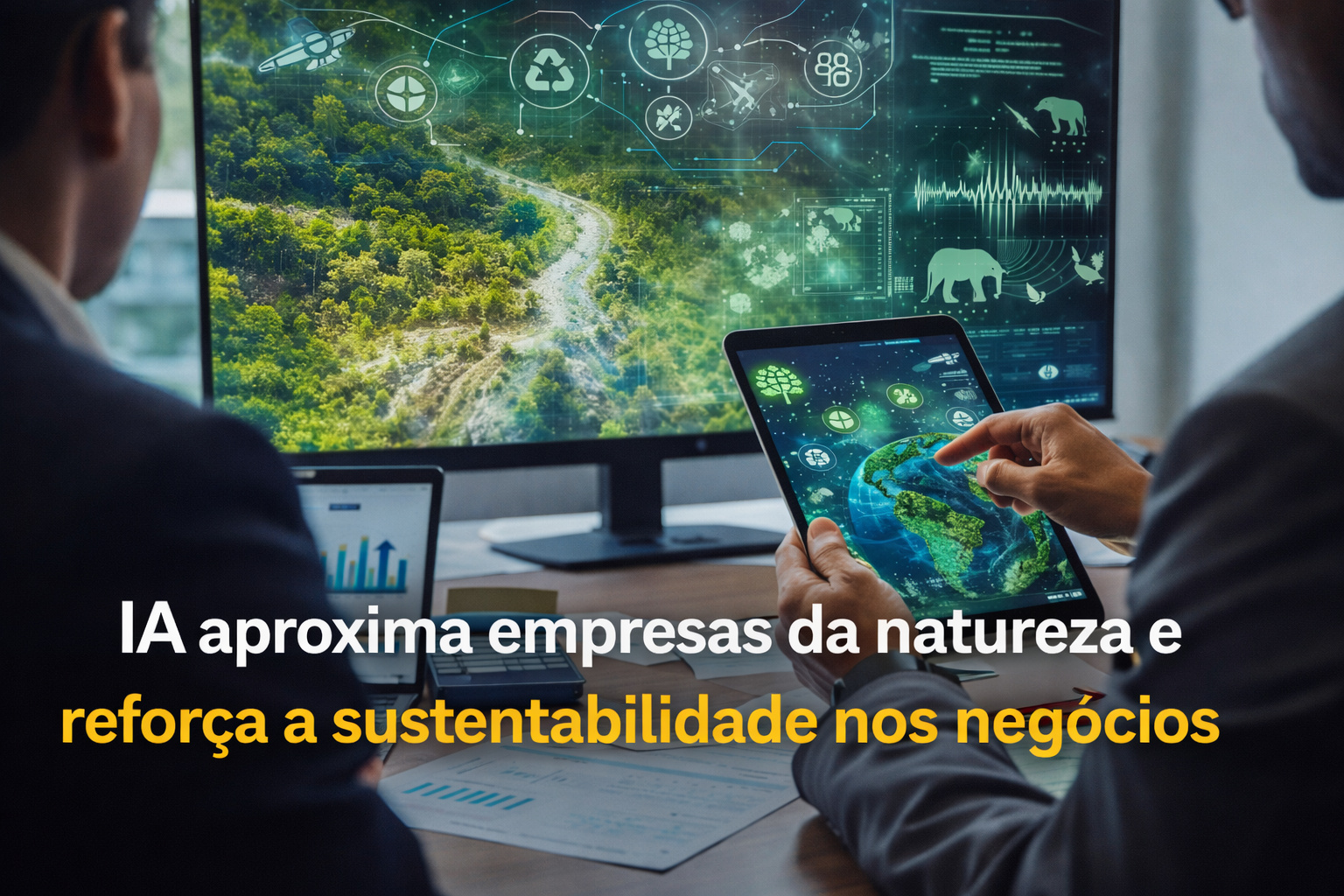
Sustainability has ceased to be just a promise and has become a real part of business decisions.
More and more companies are turning to artificial intelligence to understand environmental impacts and act efficiently.
This movement is growing because technology allows us to see clearly what was previously invisible.
In recent years, advancements in sensors, satellites, and connectivity have created an unprecedented data ecosystem.
As a result, companies can measure environmental risks and plan actions based on real information, not just estimates.
From Forest to Computer: Data That Changes Decisions
One of the most curious sources of this flow is bioacoustics, a field that records sounds from nature.
It captures everything from bird songs to insect movements.
These recordings help scientists and companies identify changes in ecosystems, the presence of species, and impacts generated by construction or land exploitation.
-
Embrapa’s discovery reveals an unexpected advancement by allowing the production of seedlings from the caatinga using brackish water, opening a new frontier for farmers to face drought more efficiently.

-
6 sources of free fertilizer that you are throwing away every day and can transform your garden without spending anything.

-
With a water crisis on the radar, Sabesp invests in reclaimed water for data centers and transforms sewage treatment into a solution that saves millions of liters and protects public supply.

-
Foresea achieves 100% offshore waste reuse in 2025, eliminates landfill disposal, and consolidates sustainable strategy with 1,500 tons recycled.


Furthermore, satellites orbit the Earth and send constant images.
With them, AI systems can map wildfires, deforestation, and changes in vegetation almost in real-time.
Consequently, the private sector can react faster and prevent greater damage.
The Explosion in Data Volume
According to Drew Purves, head of nature at Google DeepMind, the scale has reached another level.
In a recent conference, Purves stated:
“We are conducting experiments now with 100 million times more data than we were doing 20 years ago.”
This difference illustrates how technology has evolved.
And it proves that AI not only analyzes information but also learns from it.
Therefore, systems can predict trends, anticipate problems, and suggest feasible solutions.
Artificial Intelligence as an Ally of Business Sustainability
The adoption of AI accelerates environmental goals in various ways.
Companies can measure emissions, monitor supply chains, and ensure compliance with global standards.
Moreover, they assess financial risks linked to environmental degradation, something increasingly demanded by investors.
With this data, managers can make informed decisions and justify investments in environmental protection.
Therefore, AI supports both business strategy and the preservation of the ecosystems that sustain these operations.
Transparency and Accountability Gain Strength
The expanded use of data also increases public trust.
Organizations can clearly demonstrate how their activities affect nature and what measures they are taking to correct their paths.
This strengthens credibility and opens doors to sustainable financing.
At the same time, it pressures companies that are still reluctant to adopt environmental goals.
As analyses become more accessible, it becomes harder to ignore the real environmental impact.
The Future: Nature in the Boardroom
Experts believe that AI will continue to bring nature and the market closer together.
Trends indicate models that integrate climate, biodiversity, and resource use into strategic plans.
This way, the environment ceases to be a cost and becomes a central part of productivity.
With more data, more precision, and more responsibility, sustainability becomes not just an ethical recommendation but a competitive advantage that shapes the corporate world of the 21st century.
The analysis includes statements made by Drew Purves, head of Google DeepMind for nature, at a conference held in early 2026.
The advancement described relies on the growth of environmental data captured by satellites, bioacoustics, and digital sensors, now integrated into corporate systems.
Thus, artificial intelligence expands the reach of sustainability and brings nature to the center of business decisions.









Seja o primeiro a reagir!