





 Portuguese
  English
  Spanish
  7 min of reading
  1 comment


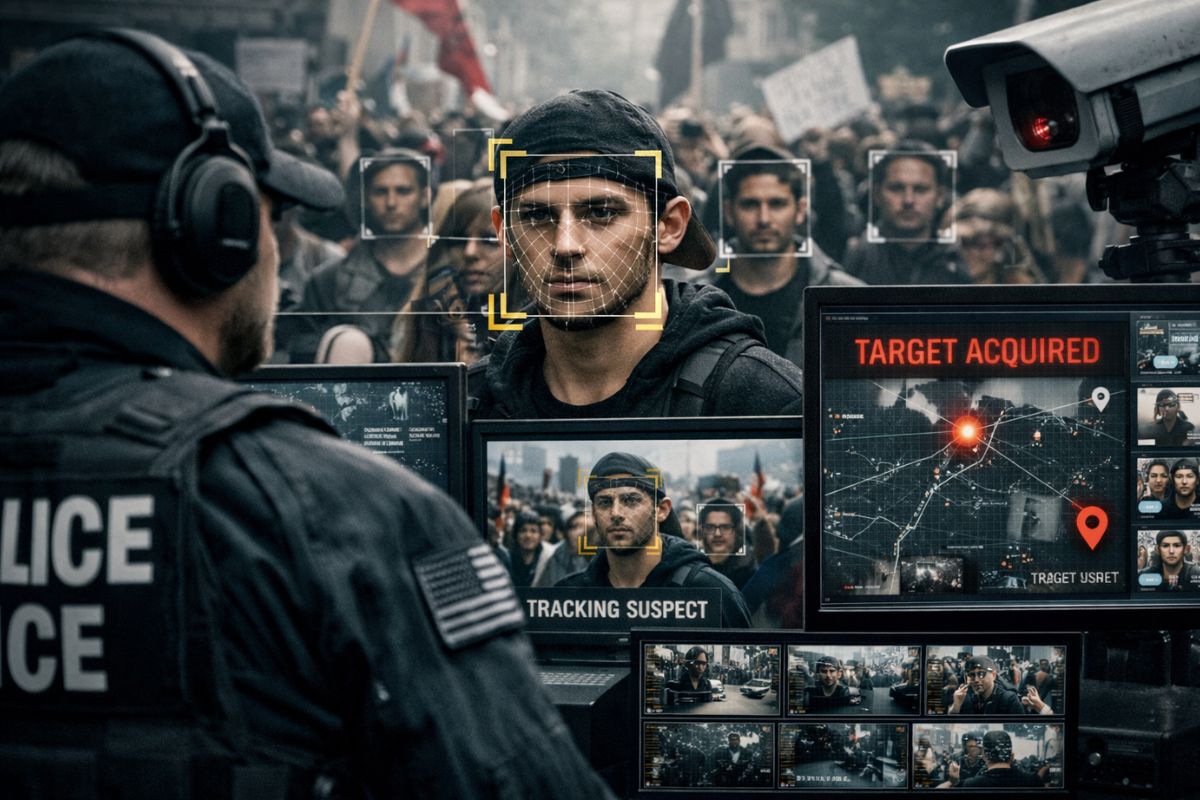


After Approach in Richfield, Minnesota, ICE Agents Claimed to Use Facial Recognition on Body Cameras and Cell Phones. In January, at least seven citizens reported unauthorized records in Minneapolis. With contracts mentioning Clearview AI, Mobile Fortify, Palantir, and network monitoring, the alert about civil rights is growing.
On the morning of January 10, ICE turned the tables on those trying to observe its operations in Minneapolis and nearby areas. Nicole Cleland, 56, a volunteer with a local group monitoring immigration agents’ activity, said she was taken by surprise when an agent approached her and called her by name, even though he had never met her before.
The same sequence raised uncomfortable questions at the center of the debate: who is being identified on the streets, where this is happening and why, when the technology used to locate undocumented immigrants might also reach citizens who protested. In Minneapolis, local activists and videos posted on social media reported that people were informed they were being recorded with facial recognition, without consent.
Facial Recognition on the Street and the Immediate Effect on Observers
The incident in Richfield, Cleland’s hometown, describes a type of contact that changes the dynamics of public space. The agent reportedly said he had facial recognition and that the body camera was on. The feeling reported by her was that identification went from being a hypothesis to an active tool, right there in the encounter.
-
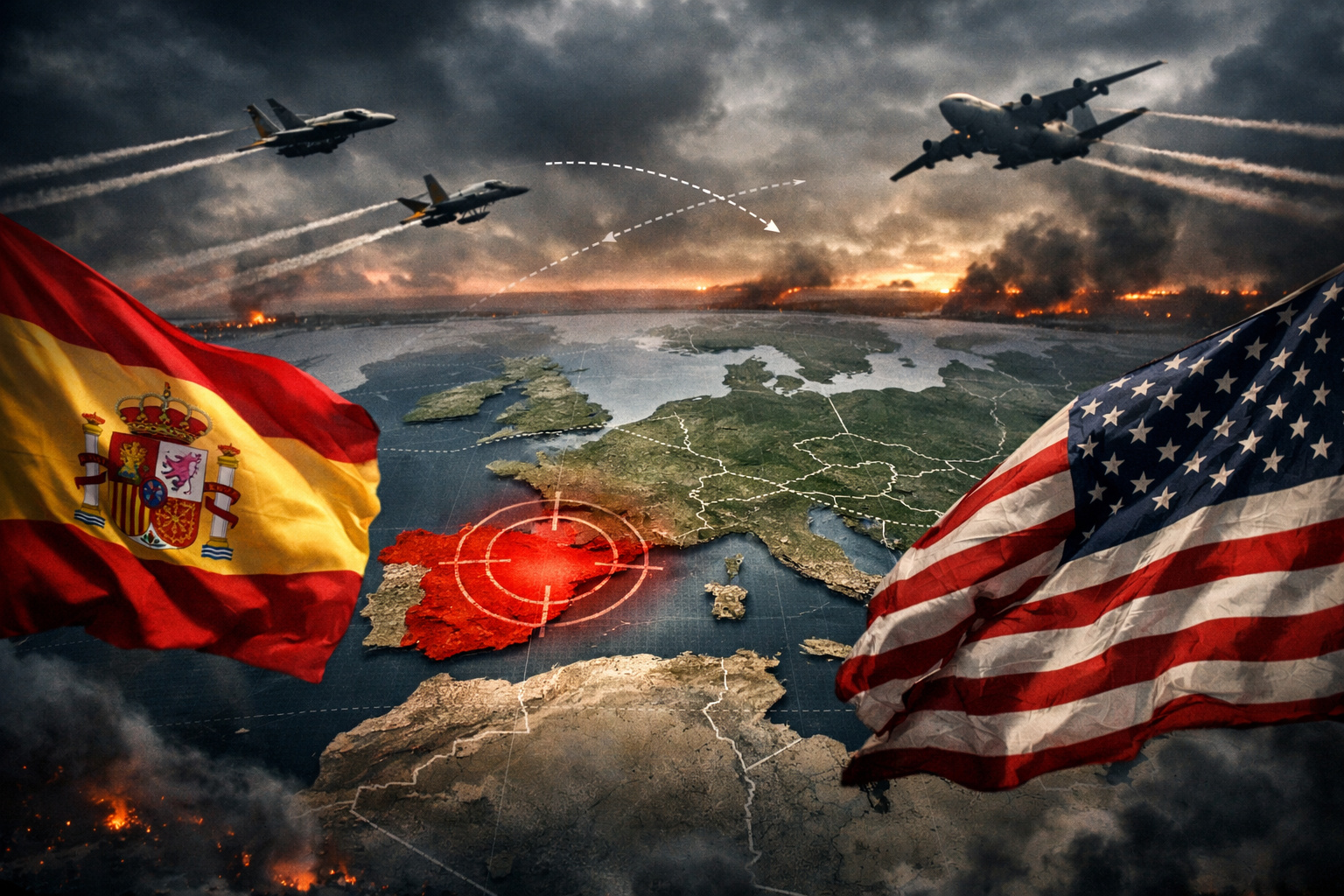
Spain challenges the USA and closes its airspace for operations against Iran, raising global tension and provoking the threat of a trade rupture.
-
While no other country manufactures tanks in Latin America, Argentina activates the TAM 2C-A2 and raises a curiosity about the technological lag in the region.

-
A Russian ship with 730,000 barrels of oil has just arrived in Cuba while Mexico negotiates fuel sales through private companies: the communist island is desperately seeking alternatives after losing its supply from Venezuela due to American military action.

-
Iranian drones and missiles destroyed a 270 million dollar American spy plane in Saudi Arabia, splitting the E-3 Sentry aircraft in half and injuring 12 military personnel in an attack that exposes the vulnerability of U.S. bases in the Persian Gulf.


In January, Cleland was one of at least seven people, all American citizens, notified by ICE agents that they were being recorded with facial recognition technology in Minneapolis and nearby areas. None of them had authorized their faces to be recorded.
The central issue was not just the recording, but the idea of inclusion in a database, mentioned in a video, according to reports.
Minneapolis as Epicenter and What Agents Do Not Publicly Detail
Minneapolis appears as the epicenter of a repression operation with thousands of agents. In this scenario, facial recognition is described as just one of the tools deployed. The combination of technologies, and not an isolated piece, is what raises the alert for those monitoring the case.
The Department of Homeland Security has not disclosed which technologies are being used in the city. A spokesperson stated that the agency would not detail methods and defended that law enforcement in the country has been utilizing technological innovation to combat crime, saying that ICE would be no different.
The lack of transparency, however, amplifies the space for distrust, especially when there are records of approaches and monitoring linked to protests.
Clearview AI and Mobile Fortify: Two Paths to the Same Identification
According to three people who work or have worked at the Department of Homeland Security and were not authorized to speak on confidential matters, ICE uses two facial recognition programs in Minnesota.
Among them, one is made by Clearview AI and the other more recently, Mobile Fortify. In practice, this suggests multiple identification routes, with tools that can be activated in the field.
In photos reviewed and in videos from local activist groups in Minnesota, uniformed agents were captured using cell phones to scan the faces of protesters in Minneapolis.
The technology visible in the photographs has been identified as Mobile Fortify, defended by a department spokesperson as a legal law enforcement tool and used in the country according to applicable legal authorities. The controversy is not just in “can use,” but in “how, when, and against whom.”
The Palantir Database and Real-Time Tracking
In addition to facial recognition, agents would be accessing a database built by Palantir that combines government and commercial data to identify real-time locations of individuals being pursued.
This is where the discussion shifts from “photo of a face” to “movement map”, with the potential to locate people throughout their daily routines.
The Department of Homeland Security awarded Palantir a contract of nearly US$ 30 million in April to build an artificial intelligence-supported system that would help locate and track individuals for deportation.
The company was expected to deliver a prototype by September 25, according to public bids, and the agency reportedly started using the system, according to two current employees. One person familiar with Palantir said the database integrates different information to help agents identify only non-citizens.
The word “only” is crucial, as the line between target and observer can become blurred when tools accumulate.
Social Media, Cell Phone Tools, and the Logic of the Permanent Dossier
The material also describes the use of cell phone tools and social media to monitor online activity and potentially invade phones.
In September, the Department of Homeland Security spent nearly US$ 10 million acquiring at least three social media monitoring tools and services, according to acquisition records and public contracts. The focus shifts from the corner to digital life, where traces are more persistent.
One of the tools was built by Paragon, an Israeli technology company, and would allow remote control of phones or hacking them to read messages or track locations.
The others were built by Penlink, a software company based in Nebraska, and use social media data extracted from the web and information from data brokers to help build dossiers on anyone with a social media account. The companies did not respond to inquiries. When the dossier becomes a product, the discussion about consent takes on a different weight.
The Money Behind the Expansion and Why the Debate Escalated
The leap in technological capacity appears linked to a leap in budget. In July, President Donald Trump signed a bill increasing ICE’s annual budget from US$ 8 billion to approximately US$ 28 billion, making the agency the most richly funded among law enforcement agencies in the federal government. When the budget scales up, the reach of the tools changes accordingly.
ICE is also continuing to seek more technology: in January, it published a request for information on how to acquire and integrate big data and advertising technology into operations, citing “increasing volumes” of criminal, civil, and regulatory documentation from various internal and external sources.
Meanwhile, in a US$ 3.75 million contract with Clearview AI in September, the agency indicated that the tool would also be used to investigate attacks on law enforcement, although a spokesperson for Clearview said the focus was on supporting investigations into child exploitation and cybercrimes.
The breadth of declared uses, and how they overlap, feeds the feeling of a gray area.
What Lawyers and Senators Are Saying, and Where the Tension Clashes with Civil Rights
Nathan Freed Wessler, an attorney with the American Civil Liberties Union, stated that the technologies seem to be deployed more aggressively than in the past and that the confluence of these technologies gives the government unprecedented abilities.
The criticism is not about the existence of the technology, but the entire package operating at the same time, with little external visibility.
In November, Democratic senators, including Edward Markey, Chris Van Hollen, and Adam Schiff, requested more information about facial recognition software and called for the agency to suspend its use in American cities.
This political movement shows that doubt has moved from local to institutional, especially in light of reports of monitoring reaching individuals connected to protests.
When Monitoring Becomes a Personal Consequence: The Cleland Case
Three days after the encounter with the agent, Cleland said she received an email from the Department of Homeland Security informing her that her travel privileges had been revoked, without explanation.
Amid anger and fear, she stated that she tries to understand how far ICE can go and what it can do without increasing risks for herself or others.
Surveillance stops being a theory and becomes routine when a notice arrives in the inbox.
In January, Cleland signed a statement joining a lawsuit against the Department of Homeland Security in the U.S. District Court in Minnesota, contesting ICE’s actions.
In the statement, she questioned why her traveler status had been revoked and stated she would not tolerate what was happening. The dispute, then, has two fronts at the same time: the street and the court.
What This Dispute Reveals About Power, Technology, and Limits
The case in Minneapolis exposes a question that reappears in different forms: what happens when real-time identification meets massive operations and integrated databases.
Facial recognition, network monitoring, and location tracking cease to be separate tools and become a unique ecosystem, difficult to audit from the outside.
At the same time, there is an official argument that technological innovation is already part of public safety work in the country.
The real tension arises when reports indicate that the same structure used to locate undocumented immigrants may also reach citizens who protested, without consent, with practical and personal effects. It is not just about who is the target, but about who can become a target without realizing it.
What clear and visible checks should ICE have when using facial recognition in the field, integrating data with AI, and crossing social networks in operations like those in Minneapolis?








Quero ver fazer o mesmo para pegar os ped0s, opps eles sao os ped0s,hipocritas