





 Portuguese
  English
  Spanish
  5 min of reading
  0 comments


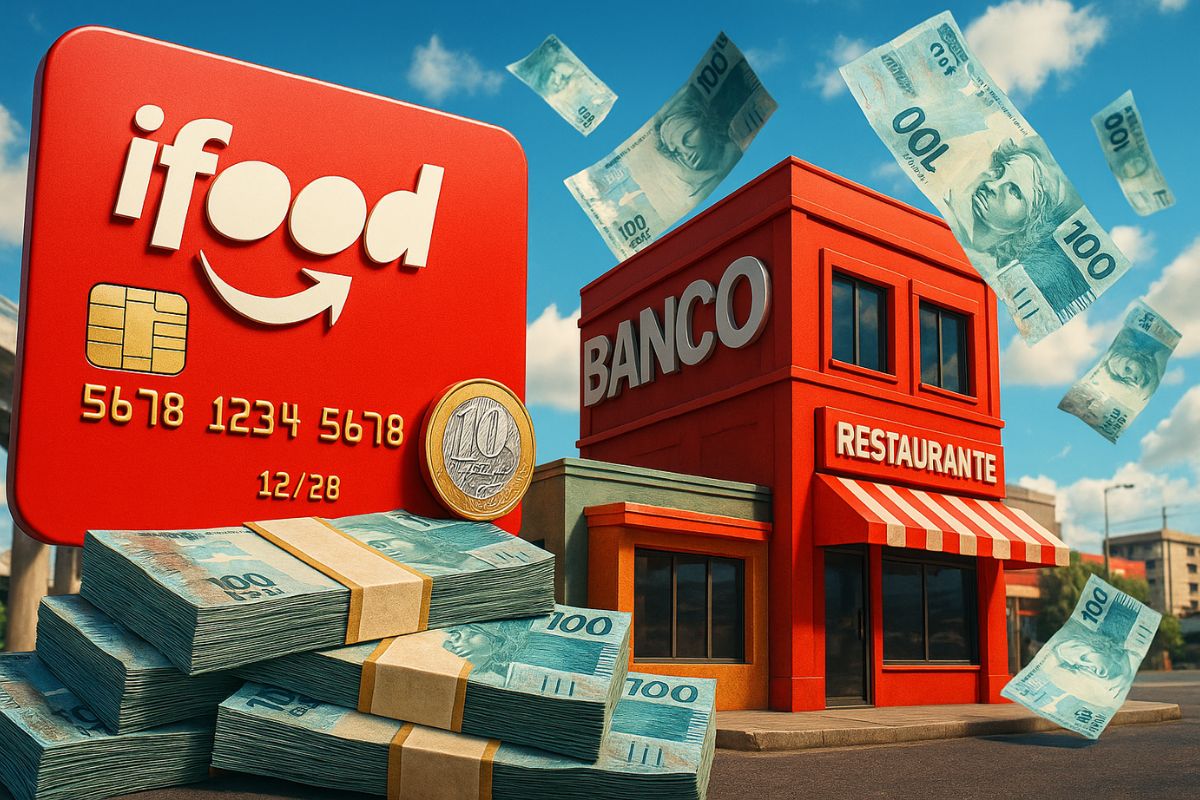
iFood’s Plan Includes Offering Deposits, Investments, and Real Estate Credit for Restaurants and Consumers, Consolidating the App as a Complete Financial Platform Integrated with Brazil’s Digital Retail
The iFood is preparing an unprecedented move among technology companies in Brazil: to transform itself into a full commercial bank by 2028. The goal is to obtain a license from the Central Bank and operate with deposits, investments, and real estate credit products, integrating these services into its ecosystem of restaurants, delivery people, and consumers. According to company management, the objective is to create its own financial structure, allowing it to reduce costs, expand margins, and strengthen customer loyalty.
The initiative comes in the wake of R$ 2 billion projected in credit disbursed to restaurants alone in 2025, a volume that places iFood at the center of the operational microfinance market in the food sector. The initial focus is on credit for establishments, but the company is already projecting expansion to individuals and investment and interest-bearing deposit products, opening the way to compete with fintechs and digital banks.
Strategy: From Delivery to Bank Account
The transition of iFood into the financial sector follows a step-by-step plan.
-
Oil surged to $115 a barrel due to the war in the Middle East, and diesel in Brazil has already risen to R$ 7.45 per liter, while the United States…

-
Brazilian city bets on the business environment to generate jobs and attract investments in the energy sector — secretary reveals strategy at Macaé Energy 2026.

-
50 viaducts, 4 tunnels, 28 bridges, and 40 kilometers of bike paths: BR-262 in Espírito Santo will receive 8.6 billion reais for the largest engineering project in the state’s history, inspired by the Immigrant Highway in São Paulo.

-
Brazil produces too much clean energy and doesn’t know what to do with it: over 20% of solar and wind capacity was wasted in 2025 while investors flee and 509 renewable generation projects were abandoned in the last year.


Today, the company already has an active digital account and offers payment, transfer, and credit services to partner restaurants.
The next step is to request authorization to receive deposits directly, which represents a leap from fintech to commercial bank.
According to the company’s CEO, the design of the new bank is not that of a generic institution but rather an internal financial system aimed at strengthening its own ecosystem.
This means that financial products will be customized for use within the platform, with complete integration between sales, credit, cashback, and cash flow of the restaurants.
Credit and Working Capital: The Basis of Expansion
The initial pillar of the financial strategy is credit.
Since 2022, iFood has been operating its lending fintech and maintains monthly disbursements of around R$ 160 million, aimed at working capital, expansion of stores, and equipment purchases.
The average contract term is 18 months, and the default rate is considered controlled by the company.
The goal now is to expand the scope and offer lines of real estate credit, aimed at the purchase or renovation of commercial points.
With this, the app positions itself as a direct financier of restaurant expansion, a strategy that generates loyalty and circulation of resources within its own base.
Synergy Between Physical and Digital Worlds
The company bets on a complete integration between the restaurant floor and the app, seeking synergy between in-person and digital consumption.
The “Eating Out” feature, already available in cities such as São Paulo, allows customers to accumulate balance and discounts when opting for in-person meals.
The greater the physical flow, the higher the restaurant’s credit potential, as iFood begins to see the complete performance of the partner.
This ecosystem perspective also facilitates the pricing of credit risk.
By concentrating data from orders, deliveries, in-person sales, and consumer behavior, iFood builds its own predictive base, capable of adjusting limits, rates, and financial offers in real-time.
Deposits and Investments: The Next Leap
The plan to become a bank involves a complex regulatory stage, but the company has already mapped out the timeline.
The banking license will allow iFood to accept deposits, reward balances, and offer investments, movements that bring the platform model closer to that of large digital banks.
The expectation is that licensing will occur by 2026, with the launch of complete products by 2028.
In the medium term, the target audience should also include end consumers, with digital wallets, direct cashback, and investment opportunities.
The logic is to keep the financial experience integrated with the consumption journey, reducing friction between paying, investing, and consuming within the same app.
Investment in Technology and Financial AI
The advance into the financial sector is supported by a total estimated investment of R$ 17 billion in 2025, with projections to exceed R$ 20 billion in 2026.
A significant portion of this amount will go towards the development of artificial intelligence systems, including the proprietary model Ailo, which enables personalized recommendations and large-scale risk analysis.
Another bet is the Large Commerce Model (LCM), a language model trained with 32 billion parameters and 10 trillion data units, aimed at automating communications, offers, and credit decisions.
With this technology, iFood intends to offer tailored financial products, with notifications, limits, and rates adapted to each user’s actual behavior.
The New Competitive Landscape
The move occurs in an environment of intense competition.
Platforms like 99Food and Keeta, from the Chinese Meituan, are expanding operations in Brazil with billion-dollar investments.
Despite this, iFood dismisses competing for restaurant exclusivity, a policy that has already been limited by an agreement with Cade, and bets on product innovation and experience as its competitive advantage.
The company’s leadership believes that loyalty should come from the utility and efficiency of the ecosystem, not just from financial incentives.
The expectation is that the base of restaurants and delivery people will see a concrete advantage in using the integrated services, generating natural retention over time.
The Future of iFood as a Financial Platform
By migrating from a delivery company to a financial and technology ecosystem, iFood follows a global trend among digital platforms.
The creation of its own banks allows retaining revenues, reducing dependence on third-party institutions, and creating a self-sustaining cycle of credit and consumption.
The company also intends to invest in financial education for small entrepreneurs, strengthening its long-term relationship with the food sector.
If the plan comes to fruition, iFood will become one of the first Latin American platforms to combine delivery, credit, digital banking, and investment in a single app, transforming the financial experience of small business owners.
The expansion of iFood into the banking sector represents one of the most ambitious moves in the Brazilian digital market, uniting technology, finance, and retail into one ecosystem.
Deposits, credit, and investment now become part of the same consumption journey, which could redefine the relationship between restaurants, delivery people, and customers.
Do you believe that a bank created within iFood can benefit small entrepreneurs or create dependence on a single platform? In your opinion, does the future of fintechs lie in integrated ecosystems like this? Share your point of view in the comments — we want to hear from those experiencing this transformation firsthand.










Seja o primeiro a reagir!