





 Portuguese
  English
  Spanish
  5 min of reading
  0 comments


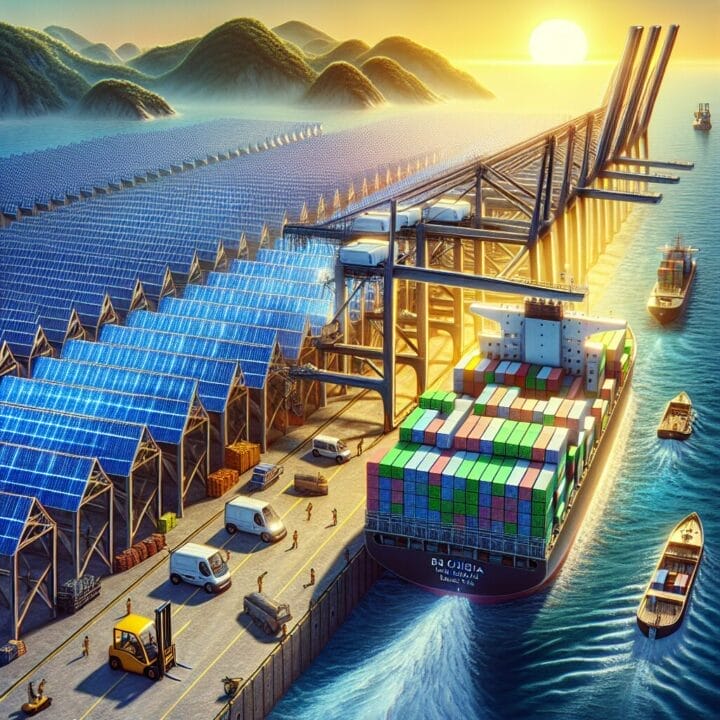
High Shipping Costs Increase Photovoltaic Products. Market Expectation Is for an Increase of US$ 500 to US$ 600 Per Week, Directly Impacting the Components of Photovoltaic Systems.
The increase in shipping costs has raised the prices of photovoltaic products. The current scenario points to an expectation of an increase of US$ 500 to US$ 600 weekly, which directly affects the components of these eco-efficient systems. The rise of the dollar and delays in deliveries are significantly contributing to this increase.
With the rise in shipping costs, the cost of transporting photovoltaic products imported from China to Brazil has become more burdensome. The market anticipates that this scenario will persist for a while, putting further pressure on the final prices of photovoltaic systems. This scenario is expected to place significant pressure on final costs, especially during times when high demand makes quick adjustments difficult.
Impacts of Maritime Freight on the Photovoltaic Sector
Sources consulted by Canal Solar indicated that numerous factors are interacting to increase maritime freight, which directly impacts the components of photovoltaic systems. According to these sources, the increase particularly affects containers with photovoltaic modules, which have lower added value than containers with inverters.
-
Oncorp wins auction and enables biodiesel and gas thermal plants in Brazil, with strategic projects in Suape and Xavantes Aruanã.

-
Raízen Recovery: Shell Cosan May Reduce Control After R$ 65 Billion Debt

-
Outback Montes Claros: Chain Confirms First Unit in Northern Minas in 2026

-
OceanPact Announces Acquisition of CBO and Creates One of Brazil’s Largest Maritime Support Structures with 73 Vessels, Annual Revenue Above R$ 4 Billion and R$ 14 Billion Backlog


Increase in Freight and Adjustments in Routes
The picture that is emerging from this situation is that both the U.S. and Europe are paying higher maritime freight to receive products from China. This causes ships to preferentially direct their routes to these destinations instead of heading to the East Coast of South America, resulting in delays in product deliveries to the Brazilian market. Moreover, the time for goods to be dispatched has increased, due to the reduced number of ships for this region and the fact that vessels are only dispatched when the cargo is complete. There are also reports of blank sailings, where the cancellation of a ship’s docking at a certain port is communicated, partially or completely modifying its route.
Market Expectations and Forecasts
According to Roberto Caurim, CEO of the importer and distributor Bluesun Solar do Brasil, another notable factor for this increase is that the value of Wp (Watt-peak) of the photovoltaic module has dropped in recent months in China, which has made transportation per module proportionally more expensive. The businessman adds that the forecasts are that this scenario will persist at least until the end of the year. This is a situation that is not likely to change anytime soon; shipowners do not foresee a reduction in these prices, meaning that we will have high freight costs until the end of the year, according to the market expectation.
Implications of the Increase in Maritime Transport
However, for Eduardo Villas Boas, CEO of the distributor Esfera Solar, the distributed generation (GD) market should not evaluate this specific period of high maritime freight exclusively as a determining factor, as it will not decisively dictate the sale or not of the products. Villas Boas also notes that there is market expectation for freight costs to begin adjusting from August, as they rose due to unforeseen factors that have already adjusted. As a result, a price reduction should occur again by the end of the year.
Influence of Currency Fluctuation and the Dollar
Regarding the influence of the dollar’s high on this scenario, Caurim and Villas Boas comment on the dollar’s impact on the increase in maritime freight and on taxes: Two months ago, a module cost a certain amount; today, due to the impact of the dollar, especially on the 17th, and the impact of maritime freight, the cost has increased by just over 15%, precisely 15.4%. In summary, anyone lowering prices now or selling without a margin will probably not restock. We are seeing many distributors leaving the photovoltaic market, and worse, ending up in criminal courts because they could not fulfill the delivery of pre-sale kits. This situation is likely to worsen in the coming months, said Caurim.
Prices and Consumption of Photovoltaic Products
Villas Boas argues that, at the moment, what impacts the most is not the freight itself, but the currency fluctuation, which affects modules, inverters, and other inputs. Each distributor has a reality regarding stocks, payment terms, strategies, and suppliers, besides dealing with the aftermath of a challenging year for distributors and importers. However, the prices of modules and inverters have been falling over the last 12 months, and the cost-benefit for the end consumer remains attractive, accelerating the transition to a cleaner energy matrix.
Pre-Sale Challenges and Impacts on Projects
This scenario of high impacts pre-sales, as a distributor selling products in this modality often does not consider the fluctuation of freight, harming itself when the agreed price is below the market, forcing them to work with negative margins. As a precaution, Bluesun does not work with long pre-sales. We authorize pre-sale only when the products are already at the port, and we work with many BOLs for the same shipment, ensuring that a red channel does not impact the entire lot sold in advance, explains the businessman.
Advisements and Strategies in Pre-Sale
Villas Boas believes that the impact on pre-sales depends on the type of project. If it’s a complete project, freight affects negotiations; if it’s the sale of small daily projects, the impact is lower, as usually the distributor only releases the pre-sale after boarding, when the freight cost has already been defined. In this case, what impacts more is the currency fluctuation, currently very volatile, concludes the executive.
Difference Between CIF and FOB in Freight
There are two types of freight: CIF (Cost, Insurance and Freight), which means Cost, Insurance, and Freight, and FOB (Free on Board). In Brazil, the type of freight used is CIF, so the burden falls on the supplying company, and the freight is included in the final price of the product. When taxation is based on CIF rather than FOB, this increase in freight integrates the tax chain, notes Eudes Silveira, director of Port Trade, to Canal Solar.
Source: © © 2024










Seja o primeiro a reagir!