





 Portuguese
  English
  Spanish
  4 min of reading
  2 comments


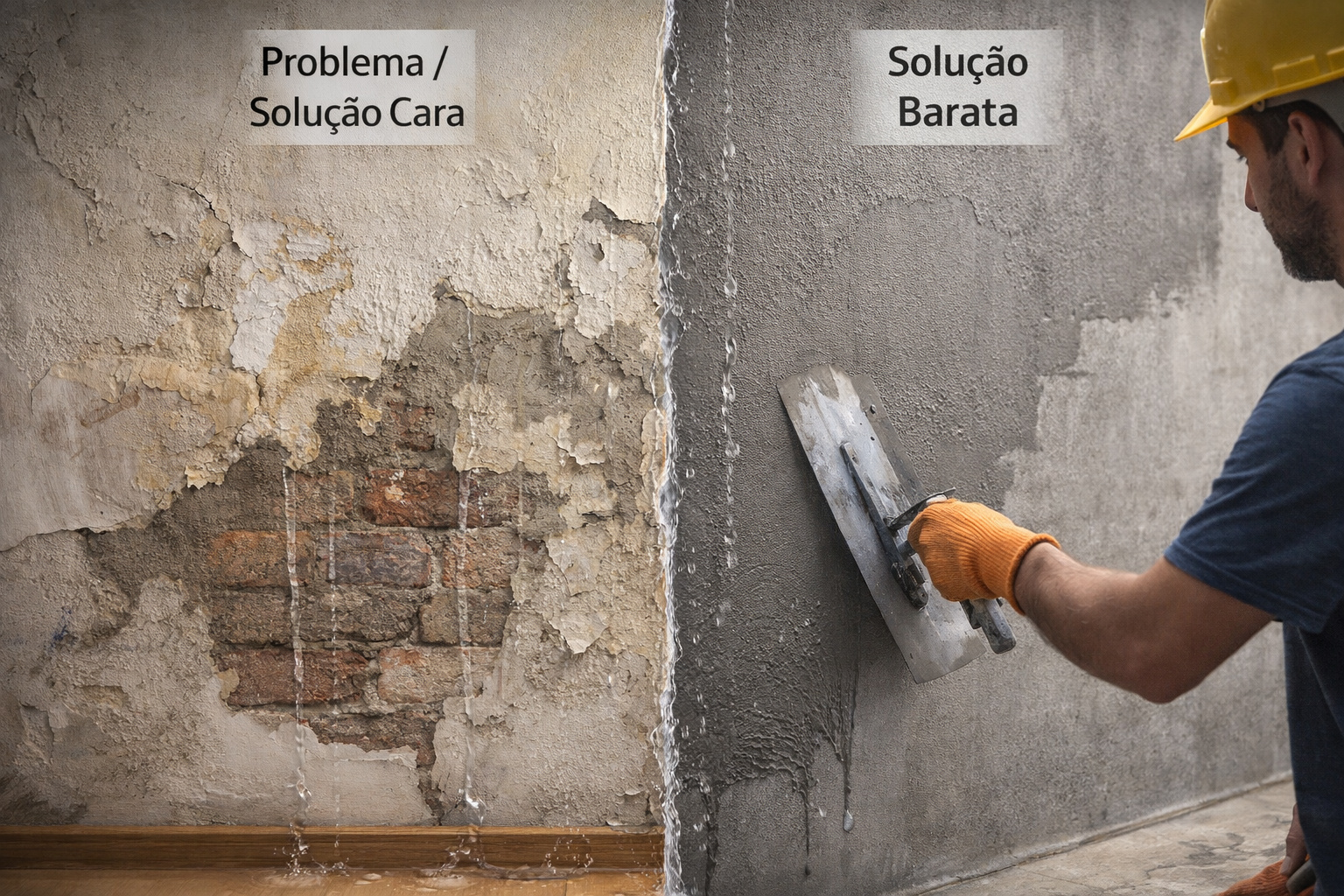


Cementitious Waterproofing with Additive Can Cost Less Than R$ 800 and Reduce Infiltration in Slabs and Walls, A Technical Alternative Before a Complete Renovation.
Infiltration is among the most common structural problems in Brazilian residences. Dark spots, bubbles in paint, peeling plaster, and musty odors are often the first signs that moisture is penetrating walls or slabs. In many cases, the traditional solution involves breaking down the coating, removing the plaster, and reapplying external waterproofing – a procedure that can easily exceed R$ 5,000 depending on the affected area.
Before resorting to heavy structural renovation, there is a widely used method in construction that can significantly reduce moisture ingress: the application of cementitious waterproofing with polymer additive, a technical solution used in reservoirs, basements, retaining walls, and exposed slabs.
What Is Cementitious Waterproofing and Why Does It Work
Cementitious waterproofing is a mortar modified with polymers that reduces the permeability of concrete and masonry. It can be found as a ready-to-use product (in two components) or as an additive mixed with cement. Its action occurs through two main mechanisms:
-
With a DNA shape, this bridge in Singapore draws attention in modern architecture and surprises tourists by transforming a simple crossing into an unforgettable visual experience in the urban heart.

-
Giant underwater pipeline begins to take shape with a R$ 134.7 million project at the Port of Santos: the 1.7 km structure uses 12-meter and 700 mm pipes to supply water to 450,000 people in Guarujá.
-
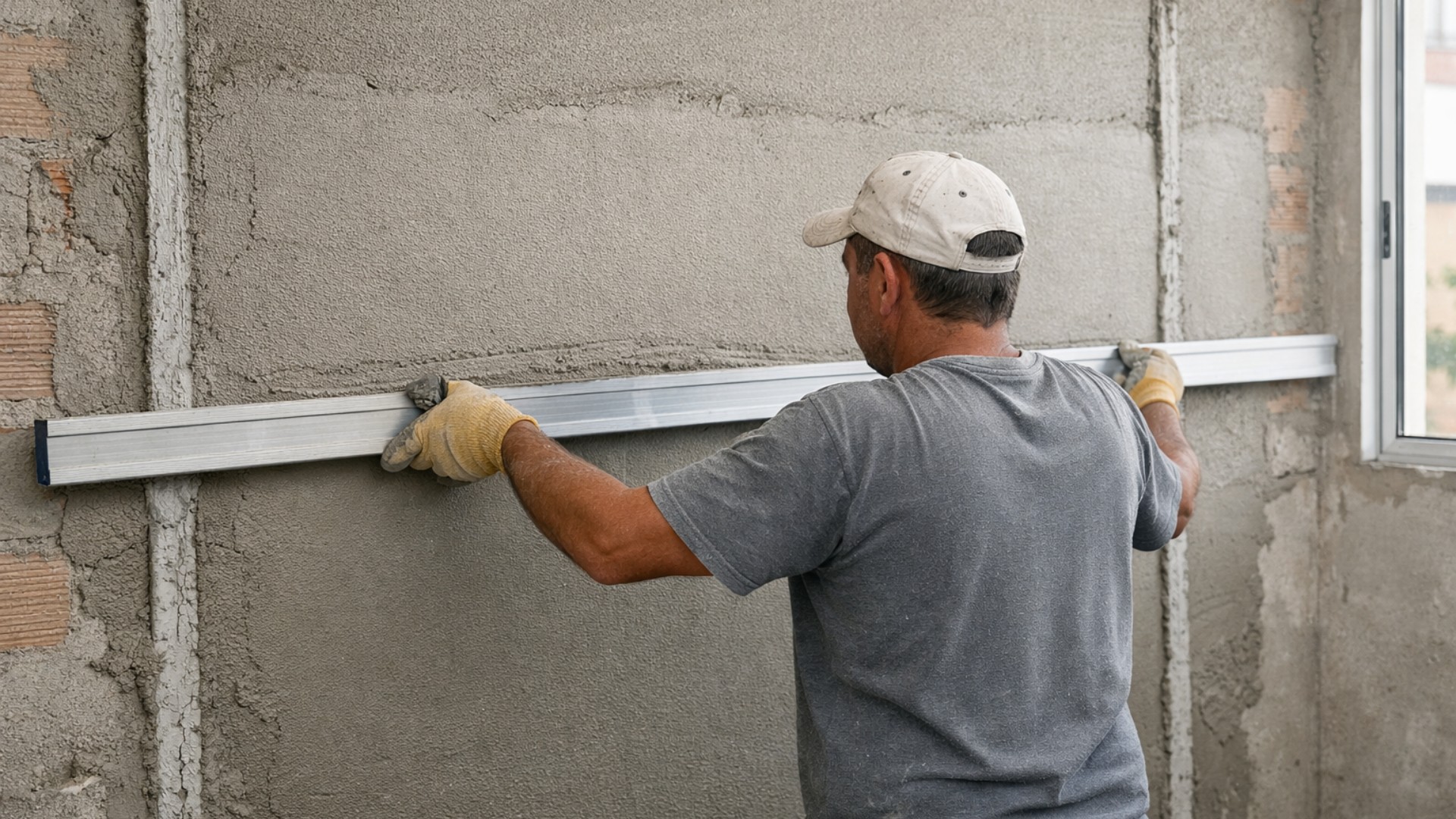
A mason reveals a professional plastering technique that uses aligned guides and a 3-meter ruler to plaster an entire wall in up to 3 hours, without visible seams, with uniform thickness, perfect plumb, and a finish ready for painting without rework.
-
The project that was supposed to be ready for the 2014 World Cup in Brazil debuted with a 12-year delay and nearly R$ 6 billion invested: the Line 17-Gold of the São Paulo monorail opened with reduced hours and is only expected to operate fully in October.


- Filling Concrete Pores, reducing water absorption
- Formation of a Waterproof Layer, capable of resisting moisture pressure

When applied correctly on a clean and prepared surface, the product creates a rigid barrier against infiltration from rain, lateral splashes, and moderate soil pressure. This type of solution is widely used in:
- Water tanks
- Swimming pools
- Grade beams
- Basements
- External walls
- Exposed slabs
How Much Does It Really Cost to Apply Cementitious Waterproofing
Costs vary according to the brand and area to be treated, but a realistic estimate for application on about 40 m² includes:
- Buck of cementitious waterproofing (18 kg): R$ 180 to R$ 300
- Acrylic sealant base preparer: R$ 70 to R$ 120
- Polyester mesh for reinforcement in cracks (optional): R$ 100 to R$ 150
- Basic tools (brush, roller, or paintbrush): R$ 100 to R$ 200
The total investment can vary between R$ 600 and R$ 1,000, depending on the area and conditions of the surface. When compared to a complete structural renovation, which involves removing the coating, external waterproofing, and repainting, the cost can represent a significant savings.
How Is Proper Application Done
The effectiveness of waterproofing directly depends on surface preparation and proper execution. The technical process generally follows these steps:
- Deep Cleaning of the Surface: Removal of dust, loose parts, peeling paint, and mold. The surface should be firm and slightly damp before application.
- Correction of Cracks: Cracks should be opened in a “V” shape and filled with suitable mortar or specific sealant before waterproofing.
- Application of the Product in Cross Layers: Cementitious waterproofing is usually applied in two or three coats, respecting the drying time between them.
- Proper Curing: Some manufacturers recommend light dampening for a few days to ensure adequate curing and avoid cracking.
The application can be done with a brush, paintbrush, or low-pile roller, depending on the consistency of the product.
In Which Situations Is the Solution Effective
Cementitious waterproofing is mainly indicated for:
- Moisture caused by lateral rain
- Exposed slabs without membrane
- External walls with excessive absorption
- Light soil pressure on retaining walls
- Grade beams with initial rising moisture
It is effective when infiltration occurs due to porosity or microcracks.
When the Solution Alone Does Not Resolve
It is important to highlight that not all infiltration can be solved solely with cementitious coating. Situations requiring structural intervention include: groundwater under high pressure, serious failure of external drainage, deep structural cracks, or foundation problems.
In these cases, it may be necessary to install drains, correct the slope of the land, or apply flexible systems like asphalt membrane.
Difference Between Cementitious Waterproofing and Liquid Membrane
Although both are used against infiltration, there are important technical differences.
The cementitious waterproofing:
- Is rigid
- Indicated for internal or buried areas
- Resists negative pressure
On the other hand, the elastomeric liquid membrane:
- Is flexible
- Ideal for exposed slabs
- Absorbs small structural movements
The choice depends on the origin of the moisture and the movement of the structure.
Why Infiltration Should Not Be Ignored
The constant presence of moisture can generate:
- Corrosion of reinforcements
- Degradation of concrete
- Proliferation of fungi
- Long-term structural compromise
Besides the aesthetic impact, infiltration can affect the durability of the construction.
Lifespan of Waterproofing
When applied correctly, cementitious waterproofing can last between 5 and 10 years, depending on climatic exposure and maintenance. Periodic reviews help identify failure points before infiltration returns.
Before investing thousands of reais in a complete structural renovation, applying cementitious waterproofing with polymer additive can represent a viable technical alternative for blocking moisture in walls and slabs.

With an estimated cost of less than R$ 800 for medium areas, the method is widely used in construction and can significantly reduce infiltrations caused by porosity and microcracks.
However, the solution must be applied according to technical recommendations and after proper diagnosis of the moisture source.









Há métodos eficaz e mais barato.
dissolva eps em tonner e misture cola branca extra e aplique com um rolo antigota.
eficácia satisfação e bom resultado.
Melhor investir em argamassa C3 o custo é muito menor e eficiente, se tiver massa corrida na parede picotar com uma ferramenta, depois fazer a limpeza e aplicar a argamassa