





 Portuguese
  English
  Spanish
  5 min of reading
  0 comments


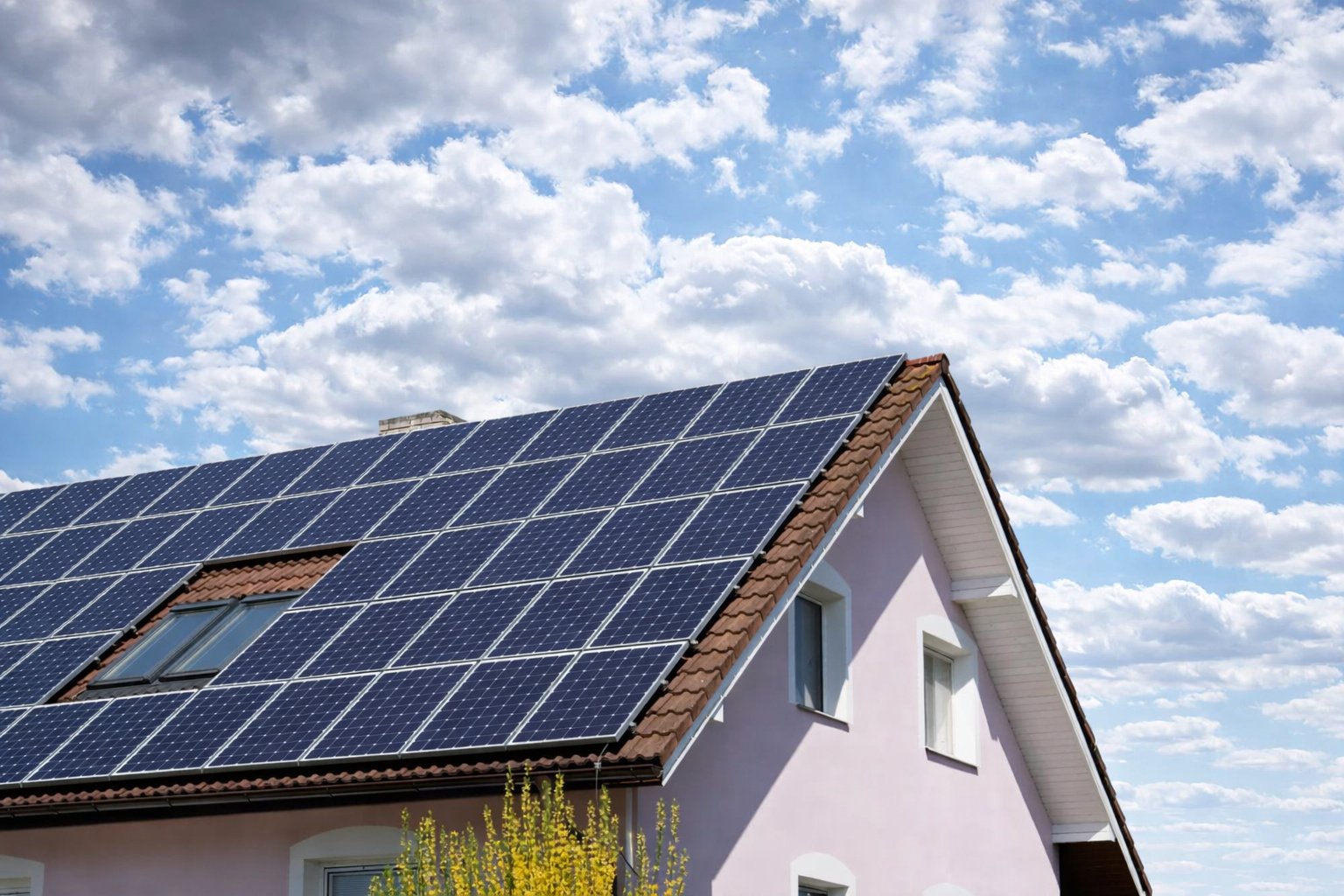
Understand Whether the Tax on Solar Panels Can Reach 35%, Why This Information Created Confusion in the Market, and What the Official Position of the Government is on the Taxation of Solar Energy in Brazil.
Currently, the debate about tax on solar panels has gained even more strength in Brazil, especially as it has followed the accelerated growth of photovoltaic energy in the country. In this context, conflicting information began to circulate quickly and, consequently, the narrative that the Federal Government had raised the import tax on solar panels to 35% spread.
As a result, consumers, investors, and companies in the sector showed insecurity. However, shortly thereafter, official clarifications showed that this interpretation does not correspond to reality.
To understand the topic clearly and timelessly, it is essential to observe the historical context of the tax policy applied to solar energy. In addition, it is necessary to understand how the import tax works in Brazil and, at the same time, analyze why misinformation found space.
-
Seagri’s headquarters invests in solar energy with Neoenergia Coelba and promises to cut electricity costs, highlighting a strategic advance in sustainability and energy efficiency within state public administration.
-
Solar Pyramid draws attention by converting solar energy into million-dollar savings and repositioning the City Hall of Curitiba as an example of innovation, sustainability, and intelligent use of public resources.
-
Europe records strong euro economy with solar energy in March and sparks curiosity about which country leads growth that redefines the energy market and reduces costs.
-
Piauí reaches a historic milestone in energy transition: State records nearly 160,000 households powered by solar energy and leads growth in the Northeast.
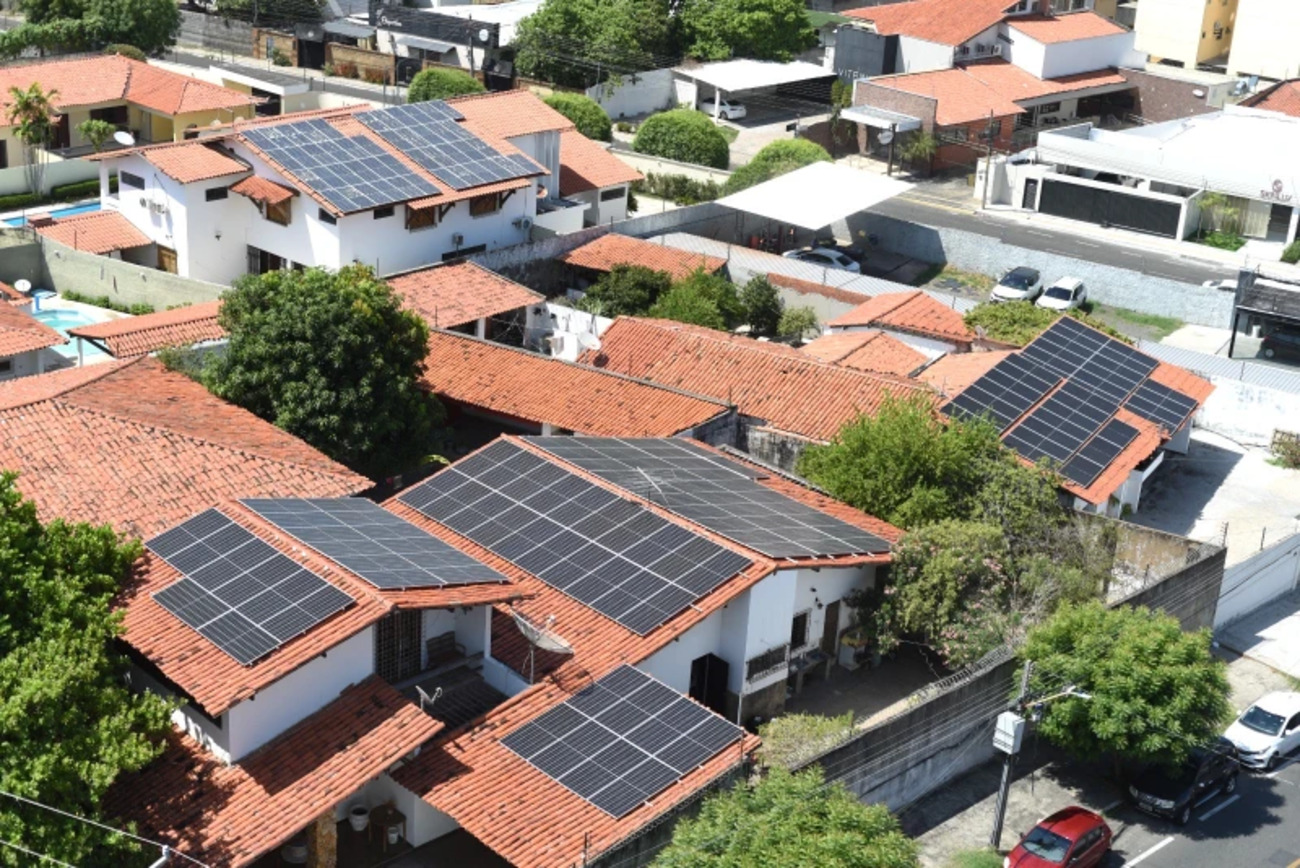
After all, the renewable energy sector depends on regulatory predictability and, whenever there are noises in this environment, the market reacts almost immediately.
Solar energy, in turn, gained ground in Brazil in a more consistent manner starting in the 2010s. At that time, the global drop in equipment prices, combined with technological advances and the need to diversify the electrical matrix, drove this movement.
Thus, for many years, the country encouraged the import of photovoltaic modules, since the national industry was still unable to meet the growing demand.
The Evolution of the Tax on Solar Panels in Brazil
In this initial period, the tax on solar panels maintained lower levels and, therefore, enabled distributed generation and large solar plants. Thus, residences, businesses, industries, and investors began to see solar energy as a financially viable alternative.
In addition to the predictable financial return, the environmental benefits reinforced this perception. Consequently, the combination of regulatory incentives and cost reductions accelerated the popularization of the technology.
As the market matured, however, the government began to discuss mechanisms capable of strengthening the national industry of photovoltaic equipment. In this sense, the strategy followed the logic adopted in other strategic sectors, as it sought to reduce external dependence and, at the same time, stimulate the generation of local jobs.
Furthermore, the objective included the development of a more robust internal production chain, aligned with global discussions on energy security.
It was exactly in this context that, in November 2024, the government set the import tax rate for solar modules and panels at 25%. Although this decision marked a significant change in tax policy, it did not halt the expansion of solar energy in Brazil.
On the contrary, the measure sought to balance the protection of the national industry with the continuity of investments, avoiding abrupt impacts on ongoing projects.
The Origin of the Confusion About the 35% Rate
According to the portal Canal Solar, shortly thereafter, information began to circulate that the tax on solar panels had risen to 35%. As expected, the narrative gained strength on social media and then reached some media outlets.
Thus, the renewable energy market reacted with apprehension. While consumers began to fear cost increases, investors reevaluated projects and timelines.
In response, the Ministry of Development, Industry, Commerce, and Services clarified objectively that there was no increase in the tax to 35%. On the contrary, the rate of 25% remains in effect, with no plans for an increase and no requests from the productive sector for such a change.
Thus, the information about the supposed increase finds no support in official acts.
A large part of the confusion, therefore, arose from the flawed comparison with the electric vehicle sector. In this segment, the government defined a schedule for gradual recomposition of the import tax, with rates starting at 10% and set to reach 35% by 2026.
At the same time, many publications mixed the two topics and, consequently, led the public to believe that the same process would apply to solar panels, which is not the case.
The Current Tax Scenario and the Quota System
In the photovoltaic sector, on the other hand, the tax scenario presents greater stability. In addition to the standard rate of 25%, the government created a mechanism that allows for a reduction of the tax on solar panels in specific projects.
In this case, the quota system primarily serves large-scale projects and acts as a transitional solution.
The government formalized this system in 2025 and, from that point, authorized projects over 5 MW to import solar modules with a reduced rate of 9.6%, provided they meet defined limits. Thus, the measure avoided the financial unfeasibility of plants that were already contracted or in advanced stages of development.
In this way, the adopted structure reveals a clear government strategy. While protecting already made investments, it ensures legal security and encourages the strengthening of the national industry.
Meanwhile, smaller projects, especially those linked to distributed generation, remain subject to the 25% rate, which stimulates the purchase of equipment produced in Brazil.
Impacts of Misinformation and the Importance of Predictability
Still, it is important to emphasize that the quota system is not permanent. On the contrary, the government designed the model as an adaptation phase, allowing the market to gradually adjust to the new rules.
As time passes, the expectation is that the national industry will expand its production capacity, gain scale, and reduce the dependence on imports.
In this scenario, misinformation about the tax on solar panels concerns the sector because it influences strategic decisions. For example, investors may delay significant investments, while consumers may decide against installing photovoltaic systems.
In addition, companies may unnecessarily revise their planning. In a market that depends on trust, imprecise information directly affects the pace of growth.
Moreover, solar energy occupies a central position in Brazil’s energy transition. The country has a high potential for solar irradiation, a predominantly renewable electrical matrix, and a growing demand for sustainable solutions.
Therefore, a clear and well-communicated regulatory environment helps transform this potential into economic development, job creation, and emission reductions.
What Consumers and Investors Need to Know
For residential and business consumers, the message is clear. So far, the government has not raised the tax on solar panels to 35%.
Thus, the costs of systems continue to be influenced by factors such as exchange rate variation, production scale, technological advances, financing conditions, and competition among suppliers.
Similarly, for investors and developers, the episode reinforces the importance of following official sources, such as the Official Federal Gazette and communications from regulatory agencies.
After all, careful verification of information is essential in a dynamic and strategic sector, where long-term decisions require reliable data.
In summary, the debate about the tax on solar panels reveals, above all, the challenges of communication. The standard rate remains at 25%, with mechanisms for reduction for specific projects, and there is no government decision indicating an increase to 35%.
Therefore, with correct information, regulatory security, and a long-term vision, the Brazilian solar sector remains one of the most promising in the economy and contributes decisively to the country’s energy transition.











-

-

9 pessoas reagiram a isso.