





 Portuguese
  English
  Spanish
  5 min of reading
  0 comments


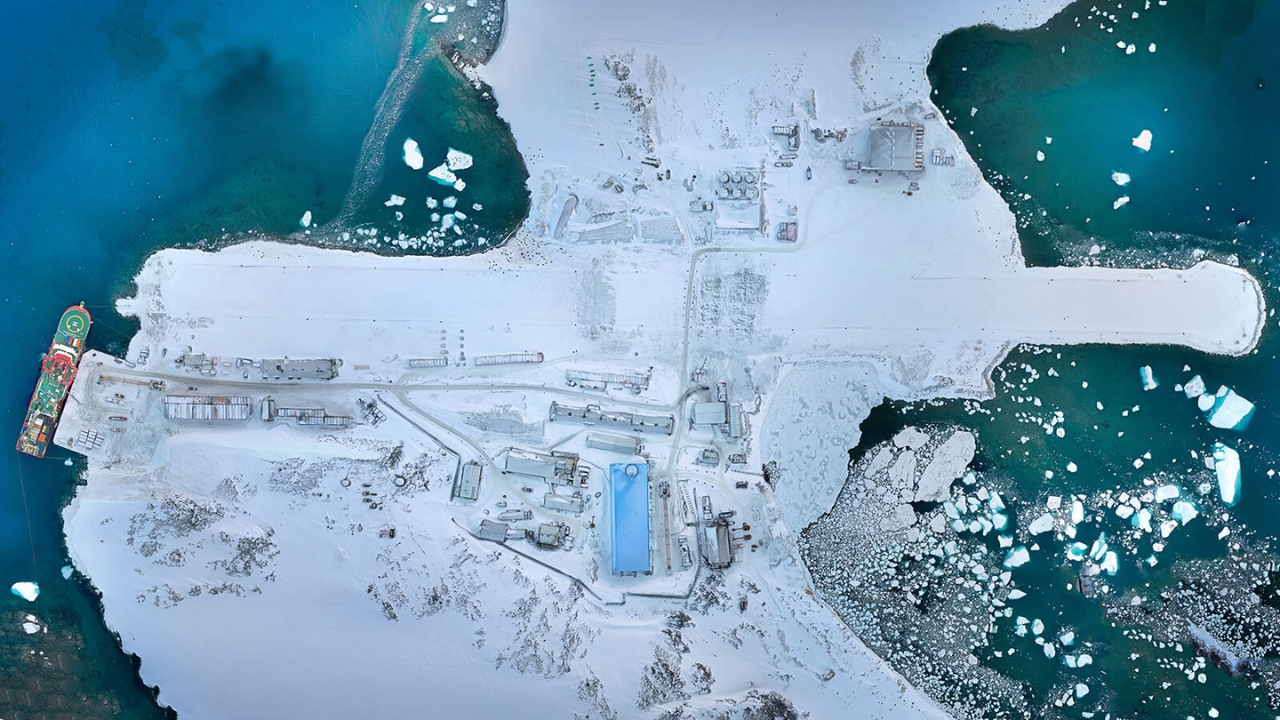
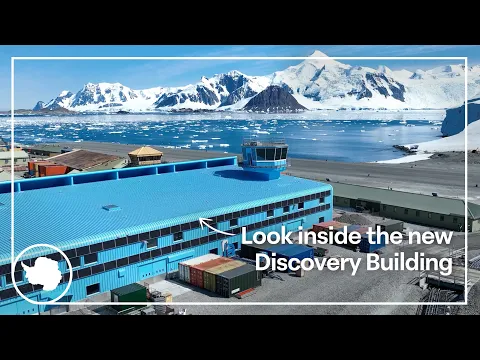
The Discovery Building at Rothera Base has become the first building in Antarctica to receive the Outstanding level from BREEAM, a milestone in sustainable engineering in one of the most extreme and challenging regions on the planet
In one of the most extreme environments on the planet, a construction has just achieved a rare feat. The Discovery Building from the British Antarctic Survey (BAS) at the Rothera station has become the first building in Antarctica to receive the “Outstanding” rating from BREEAM, one of the most respected sustainability certifications in the world.
The fact that makes this achievement even more impressive is straightforward: this level is reserved for a minimal range of evaluated projects. According to BAS, it is a standard achieved by only 1% of accredited projects, placing the Antarctic work in a global elite of sustainable construction.
What is the Discovery Building
The Discovery Building was not conceived as a symbolic work. It is, in practice, the new operational center of the British base at Rothera, one of the most important scientific facilities in Antarctica.
-
A Meta employee is accused of downloading over 30,000 private photos of Facebook users, and one of them could be you.

-
A diver found a 900-year-old sword at the bottom of the Mediterranean Sea, and its state of preservation impressed scientists so much that it could rewrite what is known about the Crusades.

-
The city has 33 islands, urban beaches, and the highest education rating among all the capitals of Brazil, but almost no one remembers it when thinking about living or traveling in the Southeast.

-
Drones come into action as teams of young people build 74 artificial dams and 100 rock structures to contain erosion, restore threatened streams, and try to return moisture and stability to degraded areas.
The building consolidates essential functions that were previously scattered across older structures. Among them are energy generation, water supply, workshops, medical areas, communications, training spaces, logistical support, and expedition preparation sectors.
This centralization improves the base’s routine, reduces operational losses, and makes operations more efficient in a place where every resource matters.
Why this achievement draws so much attention

Image: courtesy of BAS.
Antarctica is among the most difficult places in the world to build. Extreme cold, intense winds, snow accumulation, isolation, and short windows for construction make any project on the continent an extraordinary challenge.
Therefore, the merit of the Discovery Building goes beyond architecture. It was not only built in a hostile environment, but it also achieved the highest standard of sustainability within an internationally recognized certification system.
It is precisely this combination that makes the story compelling: Antarctica, extreme engineering, record, and a rare certification on a global scale.
What does the “Outstanding” certification from BREEAM mean
BREEAM is an international methodology used to assess the environmental performance of buildings. It considers criteria such as energy efficiency, resource management, environmental impact, innovation, health, and property operation.
Within this scale, the “Outstanding” level represents the highest category. It is not a common rating nor an easy seal to obtain. It is a distinction reserved for projects that far exceed conventional standards of sustainable construction.
In the case of the Discovery Building, the recognition is even more relevant as it was achieved in a place where efficiency is not just a competitive advantage but an operational necessity.
The engineering behind the project

Image: courtesy of BAM.
The building was designed to operate with greater energy intelligence in an environment where wasting heat or fuel is costly. One of the highlights is the use of systems that recover waste heat from energy generation for reuse in internal heating.
This means that some of the energy that would normally be lost is reused within the facility itself. In a polar climate, this type of solution makes a real difference in consumption and performance at the base.
The project also includes automation for heating and ventilation, adjusting operations according to space usage. This helps maintain comfort and safety without increasing energy expenditure beyond what is necessary.
A building prepared to withstand the polar environment
In addition to efficiency, the Discovery Building was designed to tackle typical problems of Antarctica. One of the most relevant examples is the system aimed at reducing snow accumulation around the structure.
The BAS highlights the presence of a large wind deflector, created to redirect airflow and prevent snow from accumulating in critical points. In such an environment, controlling the wind effect on the terrain and operations is crucial.
The building’s thermal envelope was also planned to minimize heat loss. In practice, this helps protect internal activities and reduces the need for extra energy consumption.
Reduction of emissions in a place where everything costs more
The new structure also has a direct impact on the carbon footprint of the Rothera station. According to BAS, the Discovery Building is expected to contribute to a reduction of up to 25% in carbon emissions from the base.
This result is especially important because operations in polar regions often depend on complex logistical chains and high fuel consumption. Any gain in efficiency, in this context, carries environmental and strategic weight.
More than a modern building, the project represents a concrete attempt to make scientific presence in Antarctica more coherent with the climate urgency studied there.
Why this matters for science
Rothera is a key base for research on climate, oceans, ice, and marine ecosystems. In other words, it is not just about infrastructure: it is about the physical base that supports studies with an impact on understanding the planet.
When a facility like this becomes more efficient, safe, and resilient, it enhances the working capacity of scientists and technical teams in one of the most sensitive regions on Earth.
This reinforces the value of the Discovery Building not just as an engineering work, but as a strategic piece for modern polar research.

The true weight of this record
The case of the Discovery Building draws attention because it breaks a common idea: that high-level sustainable constructions are restricted to large urban centers or luxury corporate projects.
In Antarctica, the logic is different. There, sustainability means reducing vulnerabilities, conserving scarce resources, and ensuring operational continuity in severe conditions.
This is what transforms this certification into something greater than a technical seal. The building shows that even in the most hostile environment on the planet, it is possible to raise the standard of construction.
An achievement that repositions the debate on sustainable construction
The Discovery Building enters history for two reasons at the same time. First, for being the first in Antarctica to receive the Outstanding rating from BREEAM. Second, for proving that high-performance engineering and advanced sustainability can go hand in hand even in extreme conditions.
In the end, the message is powerful: if a building in Antarctica can achieve a standard that only 1% of projects in the world reach, the level of demand for the rest of the planet also rises.







Seja o primeiro a reagir!