





 Portuguese
  English
  Spanish
  6 min of reading
  0 comments


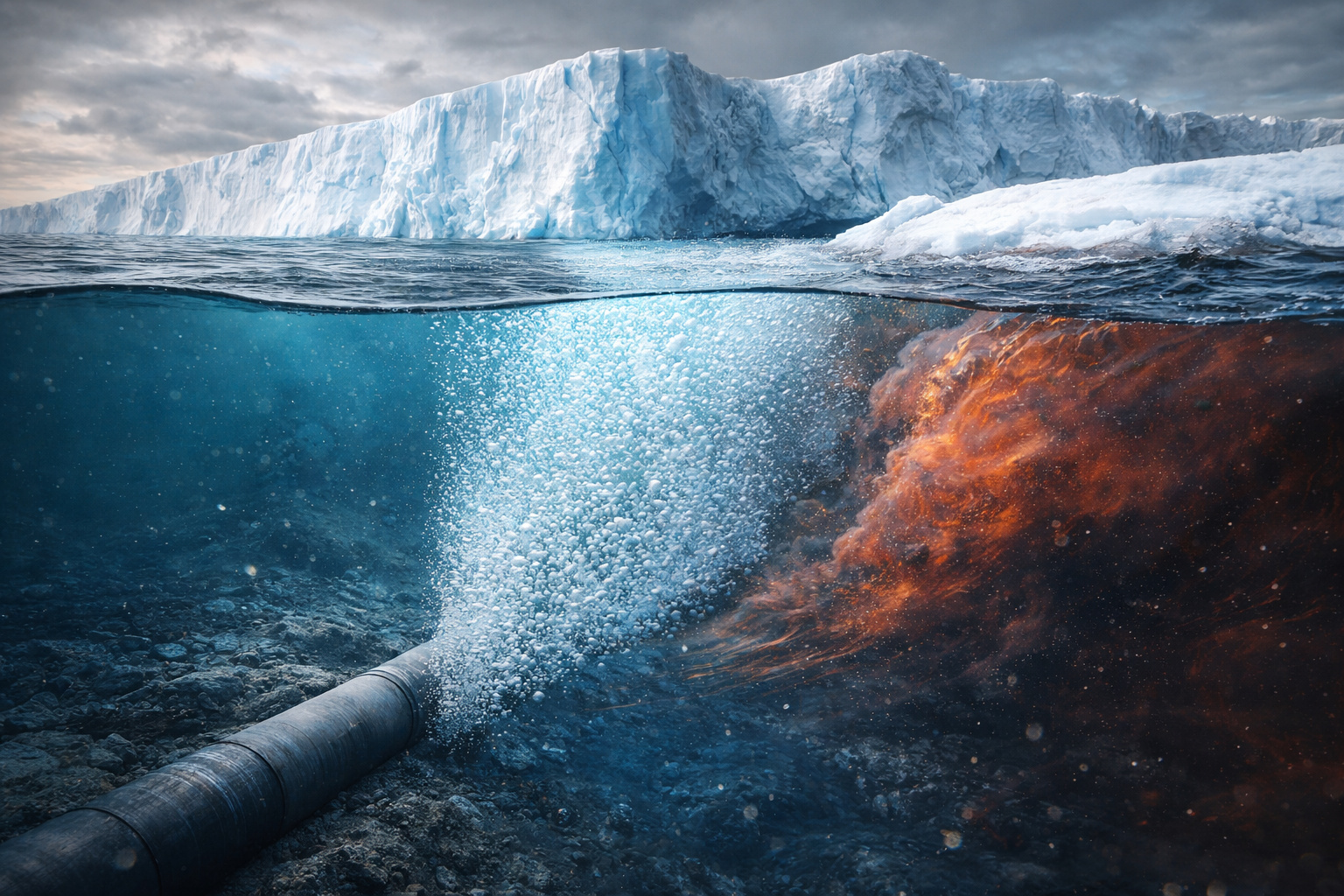
Scientists propose using billions of bubbles in the ocean to contain the melting of the Thwaites glacier in Antarctica.
In 2024, with analyses released by Yale Environment 360 and the advancement of academic proposals on submarine barriers published in PNAS Nexus, an unusual idea gained prominence in the scientific debate about the future of Antarctica. Among the alternatives discussed for the Amundsen Sea in West Antarctica, the possibility of using a line installed on the seabed to continuously release air or cold water bubbles emerged, in an attempt to disrupt the entry of warmer ocean currents beneath the Thwaites glacier, globally known as the “Doomsday Glacier.” The proposal most directly associated with this concept was described by Hugh Hunt, a professor at the University of Cambridge and Deputy Director of the Centre for Climate Repair, who has been exploring geoengineering solutions to slow down ice loss in polar regions.
The goal would not be to “freeze” Thwaites, but to reduce the amount of heat reaching its base, altering the flow of relatively warm water that accelerates melting beneath the glacier.
The proposal draws attention because it attempts to intervene directly in one of the planet’s most complex systems: the interaction between ocean, ice shelf, and deep currents in one of the most sensitive areas of the cryosphere. By targeting the very mechanism that brings heat to the base of Thwaites, the idea has been treated as an extreme attempt to buy time in the face of a process that already worries scientists due to its potential impact on global sea level.
-
New dual motor technology from Xiaomi features silent operation and voice control: meet the Mijia Smart Curtain 3 Pro.

-
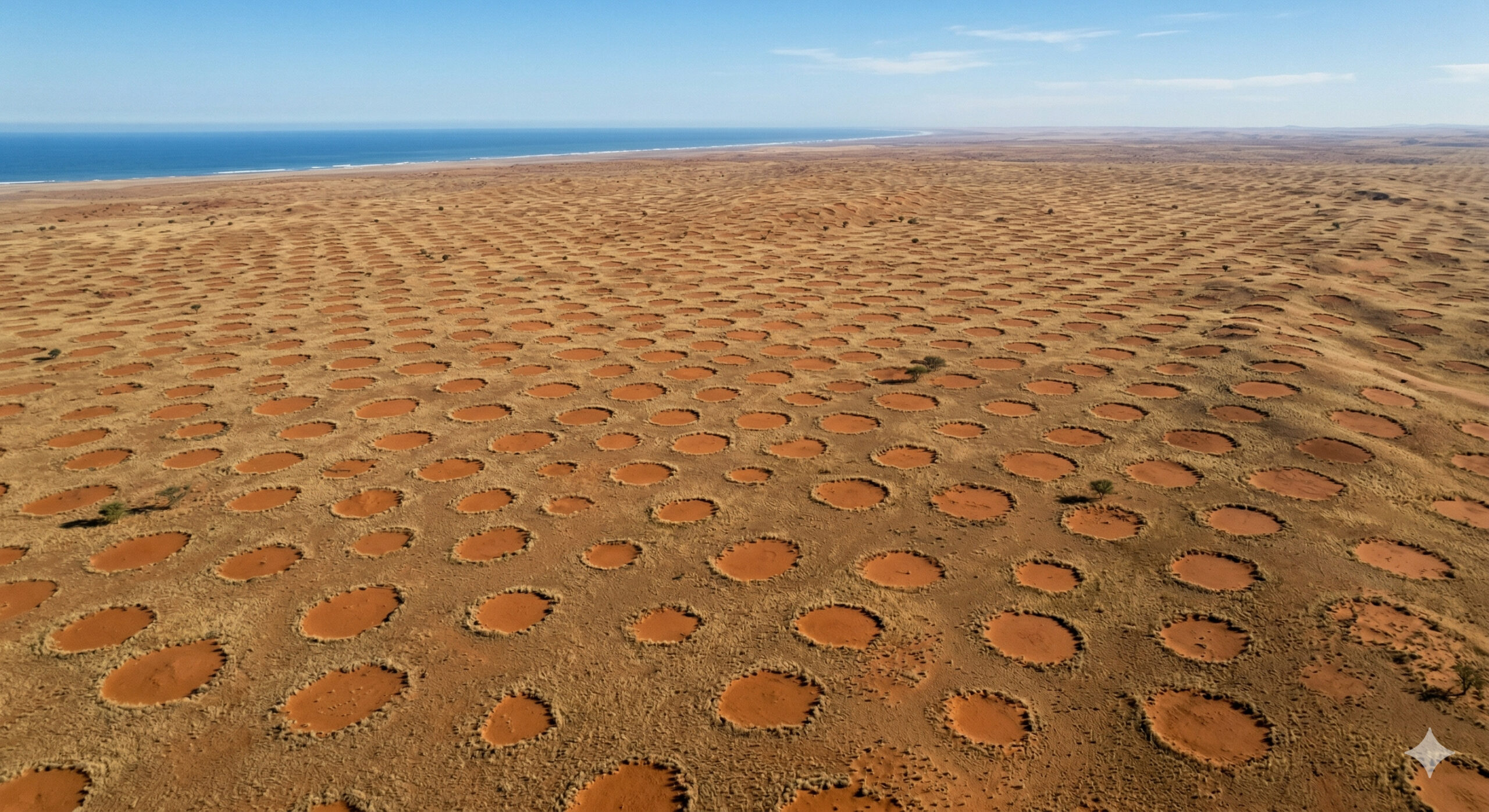
In the Namib Desert, the “fairy circles” form more than 10 million perfect rings, ranging from 2 to 15 meters in diameter, distributed over a stretch of up to 2,000 km along the coast, organized in hexagonal patterns visible from space.
-
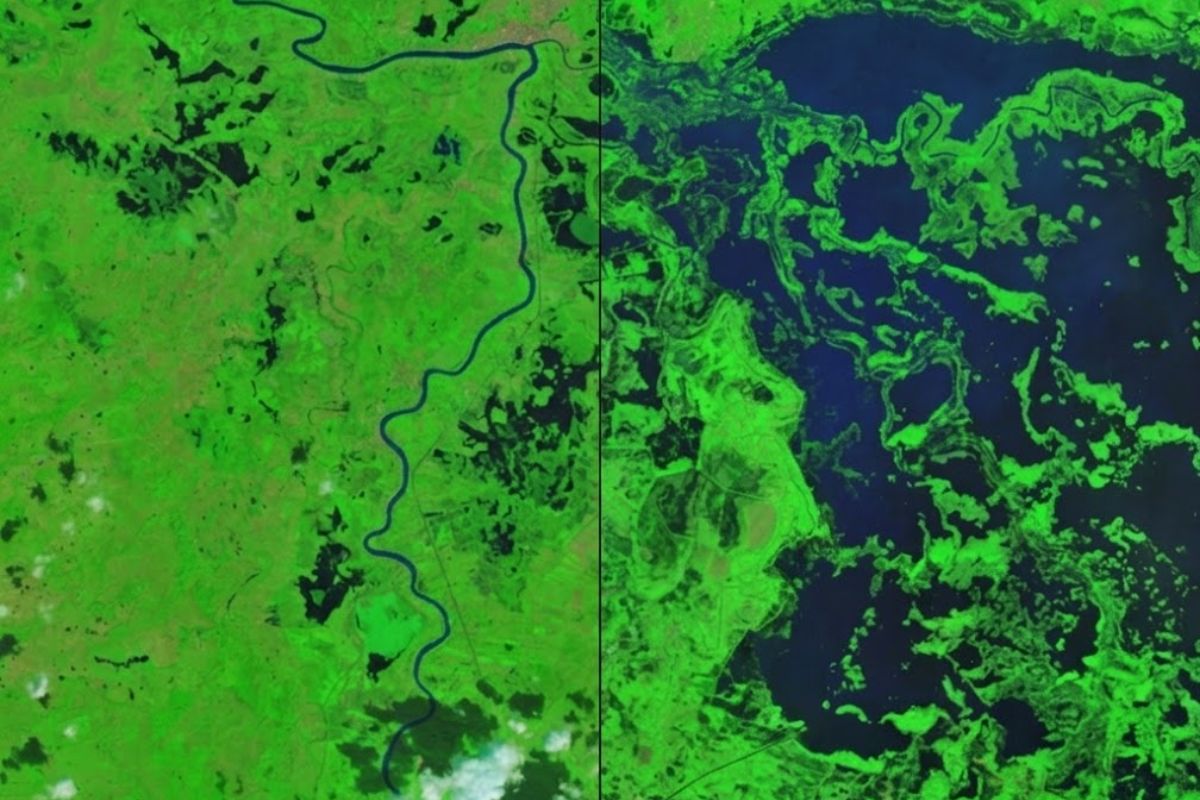
February was supposed to be the driest month of the year, but such intense rains hit Córdoba in Colombia that 80% of the department was underwater, and NASA satellites recorded a giant lake from space where farms and pastures used to be.
-
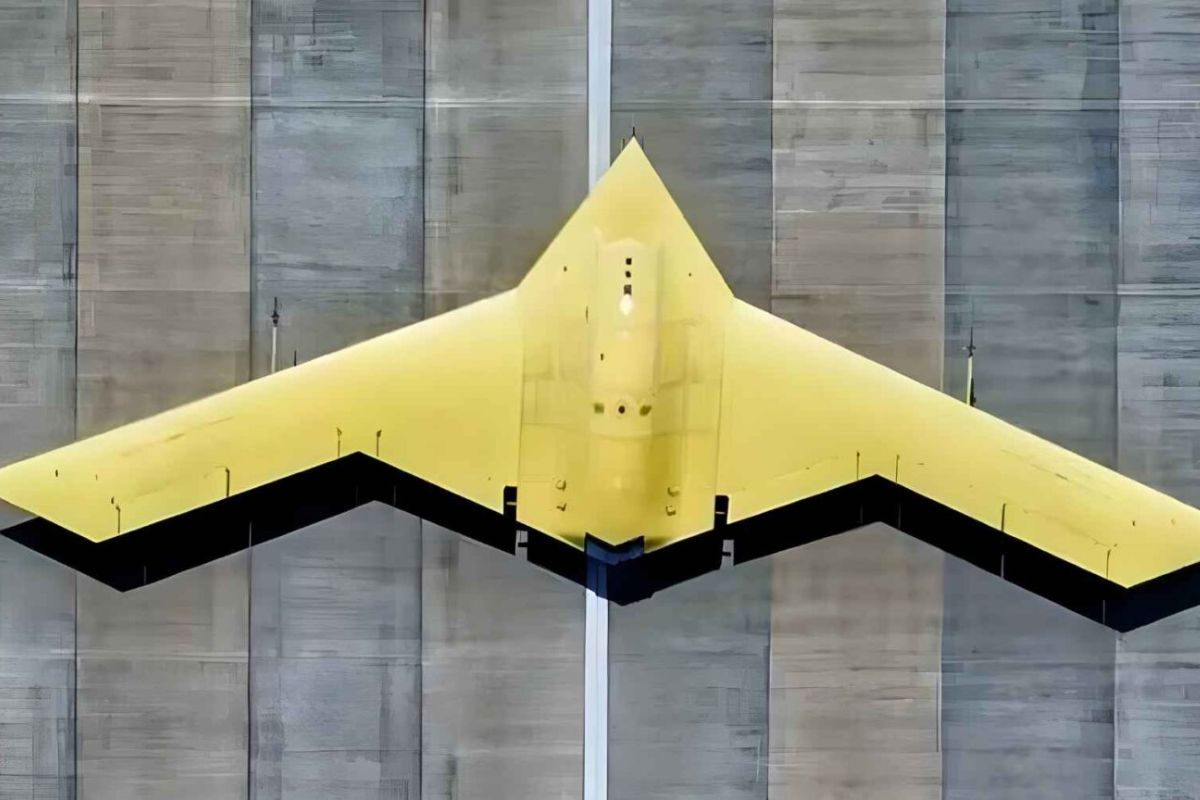
China has just launched for the first time the CH-7, a stealth drone in the shape of a flying wing that flies at 925 kilometers per hour, is nearly invisible to radar, and was designed to monitor battlefields and entire oceans.
Thwaites glacier is considered one of the greatest threats to global sea level
The Thwaites glacier, located in West Antarctica, is colossal in size. It has an area comparable to the state of Florida and plays a critical role in the stability of the Antarctic ice sheet.


Alone, Thwaites has the potential to raise global sea level by about 65 centimeters if it completely collapses, but its indirect impact could be even greater. This is because it acts as a kind of “plug” that helps hold other ice masses within the continent.
If this natural barrier fails, the retreat of ice could trigger a chain reaction, releasing much larger volumes of ice into the ocean.
The main melting mechanism does not occur at the surface but at the base of the glacier. Relatively warm ocean waters can penetrate beneath the ice, accelerating the melting process invisibly, making the phenomenon even harder to contain.
Deep warm water is the main driver of accelerated melting
Unlike what many people imagine, the greatest risk to Thwaites does not come directly from rising air temperatures, but from ocean dynamics.
Deep currents, especially the so-called Circumpolar Deep Water, transport warmer water to regions near the base of the glacier. This water enters through submarine cavities and comes into direct contact with the ice.
Even small temperature variations, on the order of a few degrees above zero, are sufficient to cause significant melting, due to the large amount of heat stored in the water.
This process occurs continuously and silently, making any attempt at intervention extremely difficult.
Proposal uses technology inspired by bubble barriers already used in ports
The idea of the “bubble curtain” did not come out of nowhere. Similar technologies are already used on a smaller scale in ports and rivers around the world.
These barriers work by releasing compressed air at the bottom of the water, creating a column of bubbles that rises to the surface. This flow can:
- contain pollutants
- redirect sediments
- reduce the propagation of underwater noise
In the case of Antarctica, the proposal is to adapt this concept to a completely different scale. Instead of containing debris, the barrier would attempt to alter water circulation, preventing warmer currents from reaching the base of the glacier, creating a kind of “invisible shield” in the ocean.
System would involve pipes on the seabed releasing continuous flow of bubbles or cold water
The technical proposal involves the installation of pipes or structures on the ocean floor, strategically positioned in front of the glacier. These pipes would continuously release:
- compressed air bubbles
- or cold water pumped from the surface
The goal would be to generate an upward current capable of mixing water layers and weakening the flow of warm water, reducing the heat available for melting the ice.

This type of intervention would require continuous operation and precise control, as any interruption could compromise the desired effect.
Scale of the project would be unprecedented in the history of ocean engineering
Although bubble technology already exists, applying it in Antarctica involves gigantic challenges. The environment of the Amundsen Sea is one of the most extreme on the planet, with:
- temperatures close to freezing
- presence of sea ice
- frequent storms
- intense ocean currents
The installation of structures on the seabed in this region would require complex logistics, specialized equipment, and high costs, in addition to continuous maintenance. No similar system has been tested on a comparable scale.
Scientists consider the proposal experimental and without proof of effectiveness
Despite the interest generated, the scientific community itself acknowledges that the idea is in its early stages. There are no real-scale tests proving that the bubble curtain would be capable of containing or significantly reducing the flow of warm water, especially in light of the strength of the ocean currents in the region.

The Antarctic Circumpolar Current is one of the most powerful on the planet, continuously circulating around the continent. This raises important questions about:
- the system’s capacity for interference
- the stability of the barrier
- side effects on ocean circulation
Alternative emerges after even more complex proposals such as submarine walls
The bubble curtain has been proposed as a simpler alternative to even more ambitious ideas. Among them are projects suggesting the construction of:
- physical barriers on the seabed
- giant structures to block currents
- artificial submerged islands
These solutions, while theoretically more effective, are considered extremely expensive and difficult to implement. The bubble proposal emerges as an attempt to find a more flexible, removable, and potentially less costly solution, although it still carries significant uncertainties.
Climate geoengineering gains ground as a response to extreme risks
The idea is part of a growing field known as climate geoengineering, which seeks to develop technological interventions to mitigate the effects of climate change. This type of approach includes solutions such as:
- carbon capture
- solar radiation modification
- intervention in natural systems
In the case of Antarctica, geoengineering attempts to act directly on the dynamics of ice and ocean, something considered extremely complex and controversial.
Another critical point of the proposal is the potential environmental impact. Altering ocean circulation can affect: marine ecosystems, nutrient patterns, food chains, and sea ice dynamics.
The lack of data on these effects makes the proposal even more uncertain, as interventions of this kind can lead to unexpected consequences.
Project evidences the difficulty of containing natural processes on a planetary scale
The case of the Thwaites glacier shows how natural processes can operate on scales that challenge human solutions.
The interaction between ice, ocean, and climate involves interconnected systems that have been functioning for thousands of years. Attempting to interfere in this balance requires not only advanced technology but also a deep understanding of the impacts involved, something that is still under development.
The proposal for the bubble curtain represents one of the boldest ideas ever considered to protect a glacier. It attempts to directly interfere with deep ocean currents, something that remains beyond the reach of traditional engineering.
In your view, could this type of solution become viable in the future, or does it merely highlight the limits of human attempts to control natural systems on a global scale?








Seja o primeiro a reagir!