





 English
  Francês
  Alemão
  Italiano
  Japonês
  Norueguês
  Portuguese
  Spanish
  3 min of reading
  0 comments


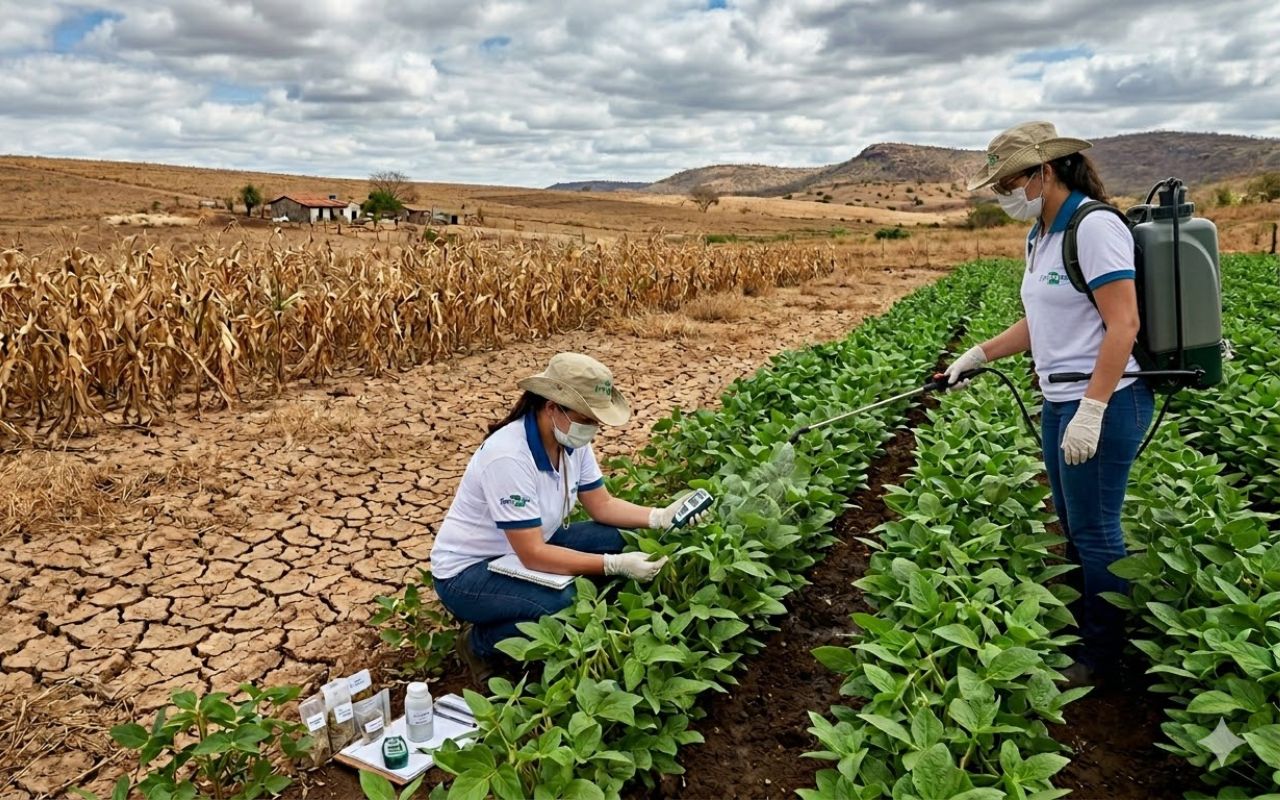
Embrapa’s study with Brazilian algae shows potential to reduce drought impacts and increase productivity with a sustainable solution.
With the intensification of drought and irregular rainfall in Brazil, Embrapa researchers developed an innovative study that uses algae as an alternative to protect crops.
The research, conducted by the Agroenergy and Environment units, aims to increase plant resistance and reduce productivity losses.
The initiative arises as a direct response to climate changes impacting the field.
-
350-year mystery may have been solved: remains of a soldier who inspired the hero of The Three Musketeers found beneath a church in the Netherlands.

-
NASA photographed a nearly perfect square with 3 km sides on Mars, 13 times larger than the Great Pyramid of Giza, but the official explanation is natural erosion; still, no one has explained why the four sides have almost identical lengths.

-
Starlink breaks the barrier of 10,000 satellites in orbit and takes its expansion to an unprecedented level, with a direct impact on global internet, technological competition, and the race for space.

-
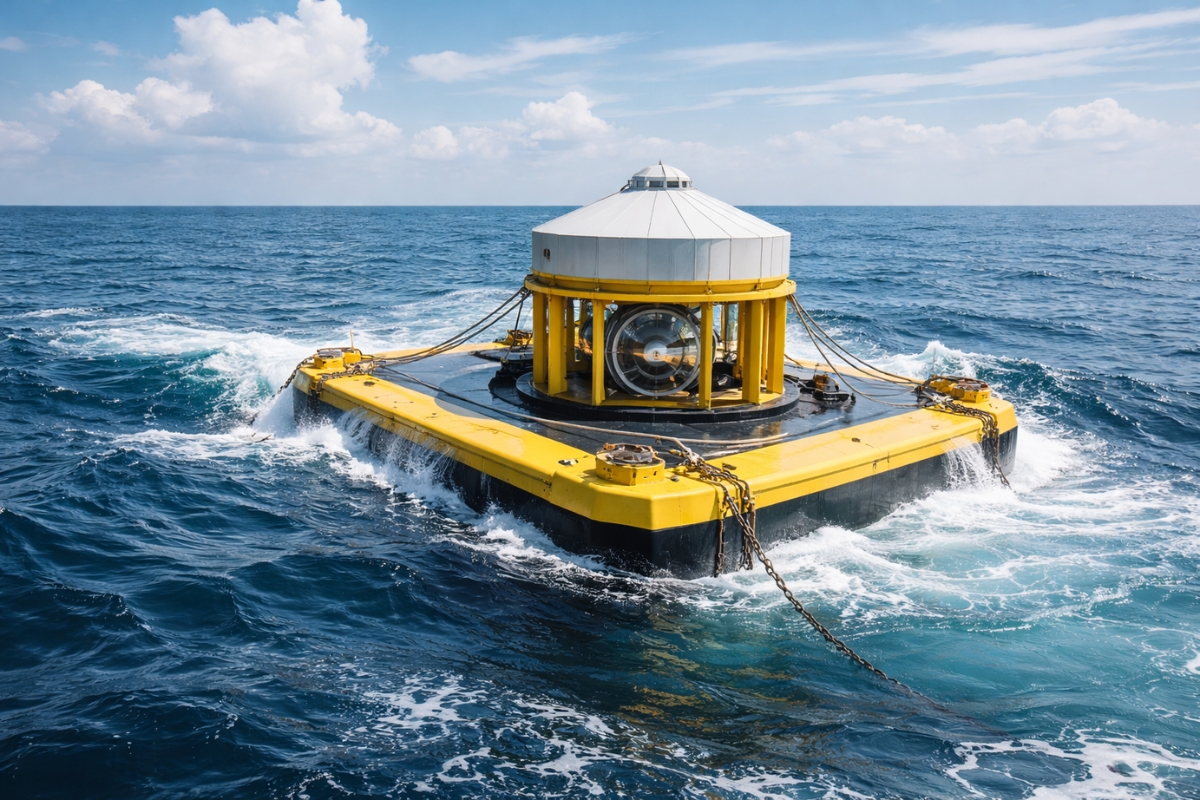
Japan finds an alternative to oil amid rising prices by transforming ocean balance into electricity with a new technology that maintains efficiency even when the sea changes.

Thus, the project gains relevance by proposing a sustainable solution based on Brazilian biodiversity.
Embrapa’s study with algae identifies compounds that help plants during drought
The increasing frequency of drought periods has pressured the agricultural sector to seek new strategies.
In this scenario, Embrapa’s study bets on the use of algae as a natural resource.
Researcher Simone Mendonça highlights the initiative’s potential: “it is an opportunity for the producer to work with materials from our biodiversity and invest in actions that contribute to adaptation to climate changes.”
Thus, the research combines innovation with sustainability.
The focus of the study is on the bioactive compounds present in algae, known as phytohormones. These substances act directly on plant development.
Over two years, researchers tested different extraction methods until arriving at two promising formulations. Additionally, a powdered version of the bio-stimulant was created.
With this, the technology becomes more practical and adaptable for use in the field.
Results of Embrapa’s study with algae show gains in productivity
The initial tests of the study were conducted in a controlled environment, with crops such as canola and wheat. Even under simulated drought conditions, the results were positive.
There was an increase of up to 160% in the formation of siliques and a 12% growth in the root system. These factors are fundamental for agricultural productivity.

Thus, algae demonstrated potential to improve plant performance in adverse scenarios.
Embrapa’s study advances to the field and tests algae under real conditions
After the promising results, the study now enters a decisive phase: validation in real crops.
Until now, tests have occurred in environments with controlled temperature and humidity.
In the field, researchers will evaluate the behavior of algae in the face of climate variations, including different levels of rainfall. Additionally, the ideal dosages will be defined.
Thus, the technology can be adjusted to the reality of producers.
The expectation of Embrapa’s study with algae is to generate gains even during drought
Despite the optimism, researchers acknowledge that the results in the field may differ from those obtained in the laboratory. Still, the potential impact is significant.
Researcher Agnaldo Chaves states: “If we can replicate 5 to 10% of this productivity in the field, it would already be a great increase.”
Therefore, even moderate gains can represent an important advancement for the sector.
Partnerships strengthen Embrapa’s study with algae in combating drought
The project, called Algoj, is developed in partnership with the company CBKK and with support from Embrapii.
This collaboration expands the reach of the study and accelerates the development of the technology.
Furthermore, it brings research closer to the needs of the field. Thus, the use of algae gains strength as a practical solution against drought.
With positive initial results and progress towards field tests, Embrapa’s study points to a new strategy in agriculture.
The use of algae can help producers face drought, increase productivity, and reduce environmental impacts.
Thus, the initiative reinforces the role of science in building a more resilient agricultural sector prepared for the future.
With information from AgroEstadão.





Seja o primeiro a reagir!