





 Portuguese
  English
  Spanish
  5 min of reading
  0 comments


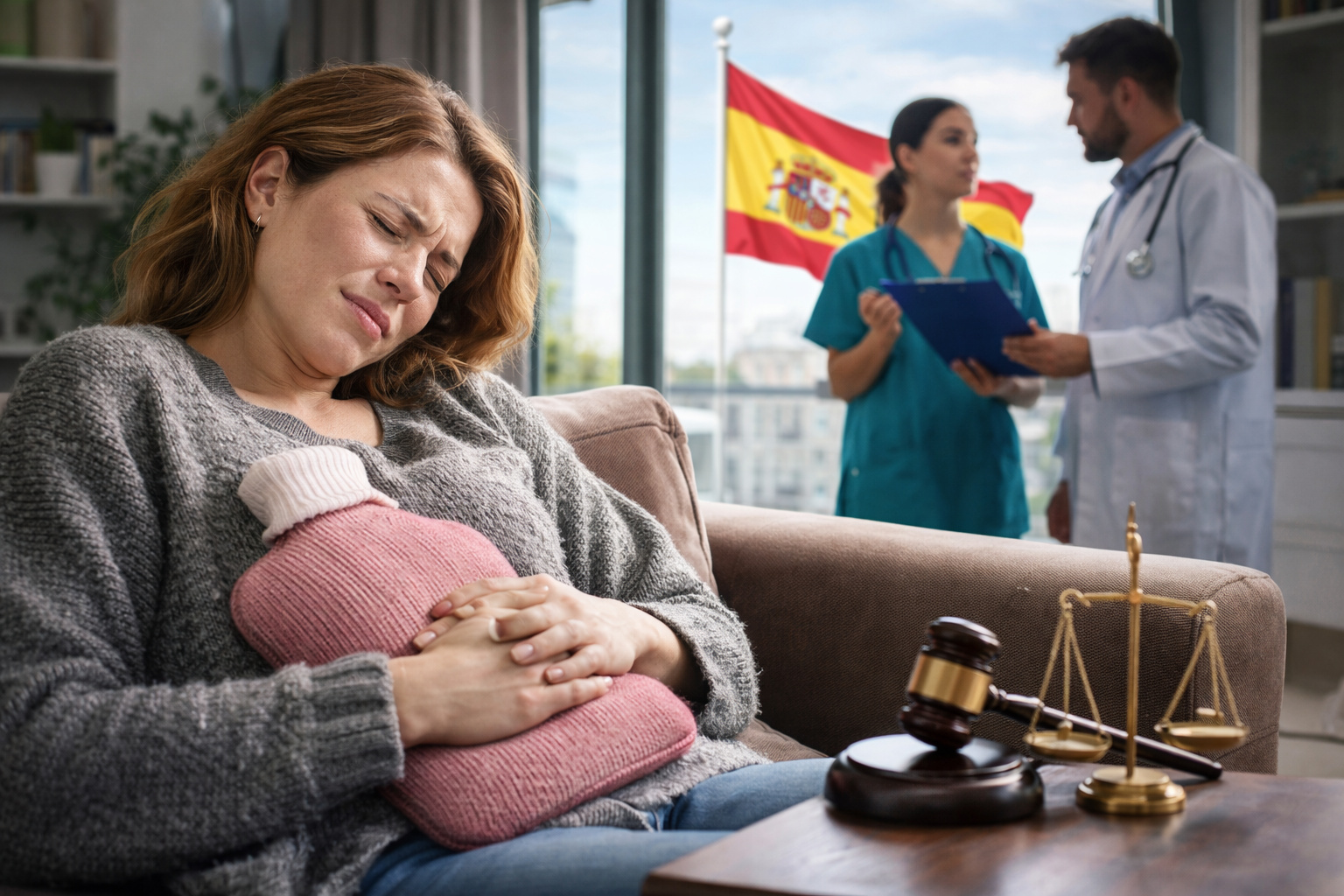
Spain establishes unique paid menstrual leave in Europe, ensuring leave for women with disabling pain, without minimum waiting period, with payment by the public system and focus on reproductive health and labor dignity.
In February 2023, the government of Spain, through the Spanish Parliament (Cortes Generales), approved one of the most discussed legislations in recent Europe by instituting the so-called paid menstrual leave, integrated into the reform of the Sexual and Reproductive Health Law. The measure was widely covered by outlets such as Reuters, BBC News, and the official portal of the Spanish government (La Moncloa), consolidating the country as the first in Europe to adopt this type of leave with legal backing and public funding.
The new rule allows women who suffer from disabling menstruation, clinically known as severe dysmenorrhea, to take leave from work with guaranteed payment by the public health system, without the need to meet a minimum contribution period, something uncommon in other types of medical leave.
The central point of the legislation is clear: disabling menstrual pain is formally recognized as a condition that justifies labor leave, with legal protection equivalent to other medical conditions.
-
Government enacts new law: paternity leave increases from 5 to 20 days with gradual increases until 2029, and Social Security pays the paternity salary; companies no longer bear the absence cost, estimated at R$ 5.4 billion.
-
End of the 1-hour lunch break in the CLT? Current labor law maintains the break, allows for negotiated reductions, and defines rules for working hours and home office in Brazil.

-
Employee Fired After Accumulating 114 Days of Medical Leave in One Year, Labor Court Upholds Company’s Decision

-
Employee Fired While Treating Depression Wins in Court and Vale Is Required to Rehire Him Following Decision Based on the CLT and INSS Benefits

Paid menstrual leave is funded by the State and not by the employer
One of the most relevant elements of the Spanish law is the funding model. Unlike other types of leave, where the employer may bear part of the costs, in this case, payment is made by the public system, through the Seguridad Social, equivalent to the country’s social security system.


This means that the employer does not directly bear the cost of the leave; the worker receives the benefit directly from the State, and there is no immediate financial impact on the company. This design was adopted to avoid discrimination in the labor market and reduce possible barriers to hiring women, ensuring that the cost of the public policy is absorbed by the state system.
Leave depends on medical diagnosis and is not automatic
Despite the media impact of the measure, the leave is not automatic. To access the benefit, the worker needs to undergo a medical evaluation and obtain a diagnosis that proves the disabling condition. This includes clinical analysis by a health professional, issuance of a medical certificate, and fitting within the conditions provided by the legislation.
In other words, the law does not allow indiscriminate leave, but rather creates a legal mechanism for cases where there is medical proof of temporary incapacity caused by intense menstrual pain.
Law also expands reproductive rights and access to female health products
The menstrual leave was not an isolated measure. It is part of a broader legislative package that includes other significant changes in Spanish legislation.
Among the approved points are the expansion of access to abortion in the public system, the guarantee of distribution of menstrual products in public institutions, and the reinforcement of sexual education policies.
These measures show that the legislation was conceived within a broader context of public policies aimed at women’s health and autonomy.
Spain becomes a reference in Europe by formalizing leave for menstrual pain
Before Spain, few countries had implemented similar measures. The most cited case is Japan, which has had legislation on menstrual leave since the post-war period, although with limited application.
In Europe, however, Spain was a pioneer in formalizing leave at the national level, integrating the benefit into the public health system and ensuring payment during the leave.
This positions the country as a reference in discussions about labor legislation and women’s health on the continent.
Debate on economic and social impact gained strength after approval
The approval of the law generated immediate repercussions in different sectors of society. Experts, unions, and business entities began to discuss the possible impacts of the measure. Among the points analyzed are:
- Possible effects on productivity;
- Impact on work organization;
- Adaptation of companies to the new rules.
At the same time, health organizations highlighted that the measure contributes to the recognition of conditions often underestimated in the workplace.
Severe dysmenorrhea affects millions of women and can compromise daily activities
The medical basis of the legislation lies in severe dysmenorrhea, a condition characterized by intense pain during the menstrual cycle. Studies indicate that a significant portion of women of reproductive age faces symptoms that can directly interfere with their routine.
Among the most common symptoms are: intense abdominal pain, nausea, fatigue, and difficulty concentrating. By recognizing this condition as a legitimate reason for leave, Spanish legislation establishes a new treatment parameter for women’s health issues in the workplace.
Spanish model may influence other legislations around the world
After the approval of the law, several countries began to discuss similar proposals. The Spanish model, being state-funded and integrated into the health system, has become a reference in legislative debates. The discussion involves topics such as:
- Gender equality in the labor market;
- Recognition of specific health conditions;
- Role of the State in labor protection.
Although each country has its particularities, the Spanish experience has begun to be analyzed as a possible basis for future public policies.
Regulation reinforces trend of integration between health and labor legislation
The creation of paid menstrual leave shows a growing trend of integration between public health and labor legislation. Instead of treating work and health as separate spheres, Spanish law recognizes that medical conditions can directly impact labor capacity.
This type of approach broadens the scope of labor laws, incorporating aspects that go beyond working hours and remuneration.

Can legal recognition of specific conditions change the future of work?
The Spanish legislation raises a relevant question about the future of labor relations. As new health conditions begin to be legally recognized, the traditional model of fixed working hours may undergo adaptations.
The inclusion of biological and individual factors in legislation indicates a shift in how work is regulated and organized.
In light of this, an inevitable discussion arises: could other specific health conditions also be incorporated into labor laws in the coming years?










Seja o primeiro a reagir!