





 Portuguese
  English
  Spanish
  6 min of reading
  0 comments


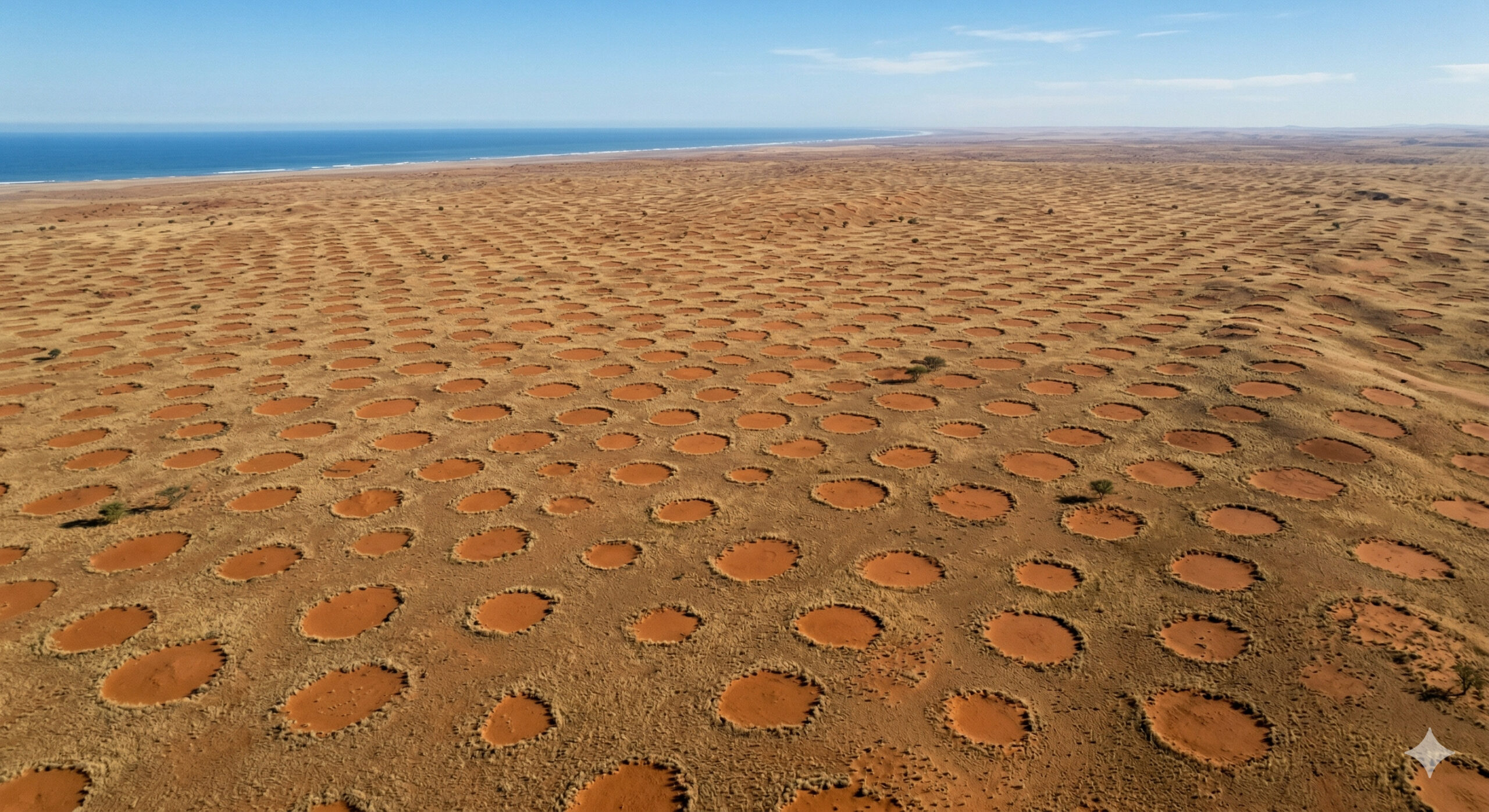
Fairy circles in Namibia form millions of geometric patterns visible from space and challenge science with origin still debated.
In 2017, a study led by researchers from Princeton University, including mathematician Corina Tarnita, and published in Nature helped consolidate one of the most robust scientific explanations for the “fairy circles” of the Namib Desert. Instead of supporting a single definitive cause, the work showed that these patterns can emerge from the interaction between local ecological mechanisms, such as the self-organization of vegetation and the spatial dynamics of social insects, providing a strong theoretical basis for one of the most intriguing natural phenomena ever documented in arid environments.
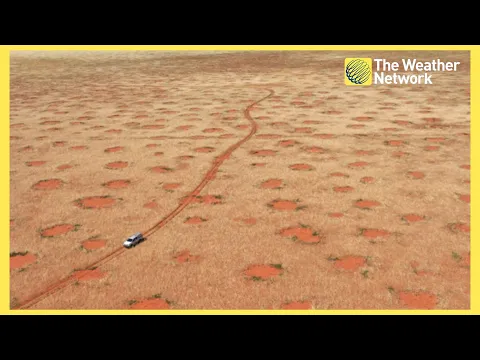
Distributed along the arid stretch of the southwest of Africa, especially in Namibia, these circles appear in satellite images as almost circular areas of bare soil surrounded by vegetation, repeated with impressive regularity over thousands of square kilometers. At a landscape scale, this design transforms the terrain into a natural geometric mosaic that has challenged ecologists, geographers, and complex systems modelers for decades.
The data described in the scientific literature indicate that these circles generally have about 2 to 10 meters in diameter, although there are larger regional variations, and that when densely distributed, they are often spaced about 5 to 10 meters apart, forming a pattern close to a typical hexagonal arrangement of self-organized systems. It is precisely this combination of spatial repetition, territorial scale, and geometric regularity that has turned fairy circles into one of the most emblematic cases of natural organization in dry ecosystems.
-
New dual motor technology from Xiaomi features silent operation and voice control: meet the Mijia Smart Curtain 3 Pro.

-
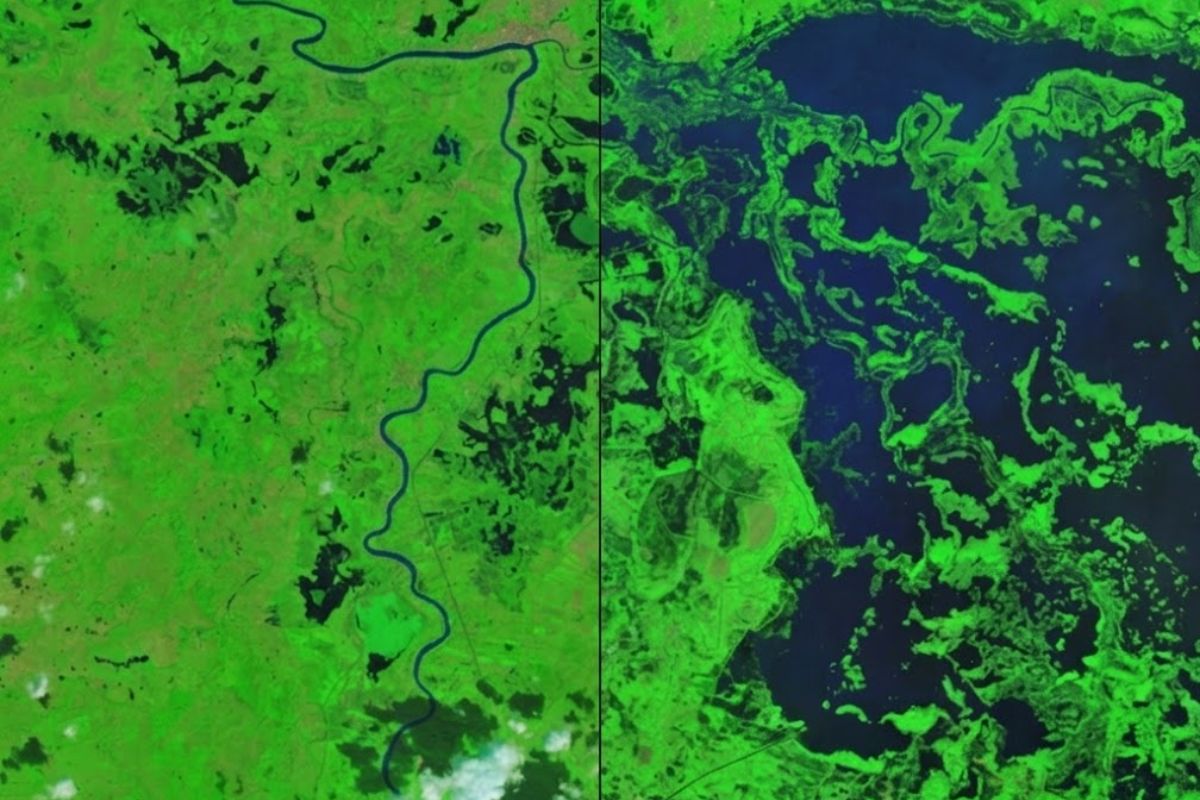
February was supposed to be the driest month of the year, but such intense rains hit Córdoba in Colombia that 80% of the department was underwater, and NASA satellites recorded a giant lake from space where farms and pastures used to be.
-
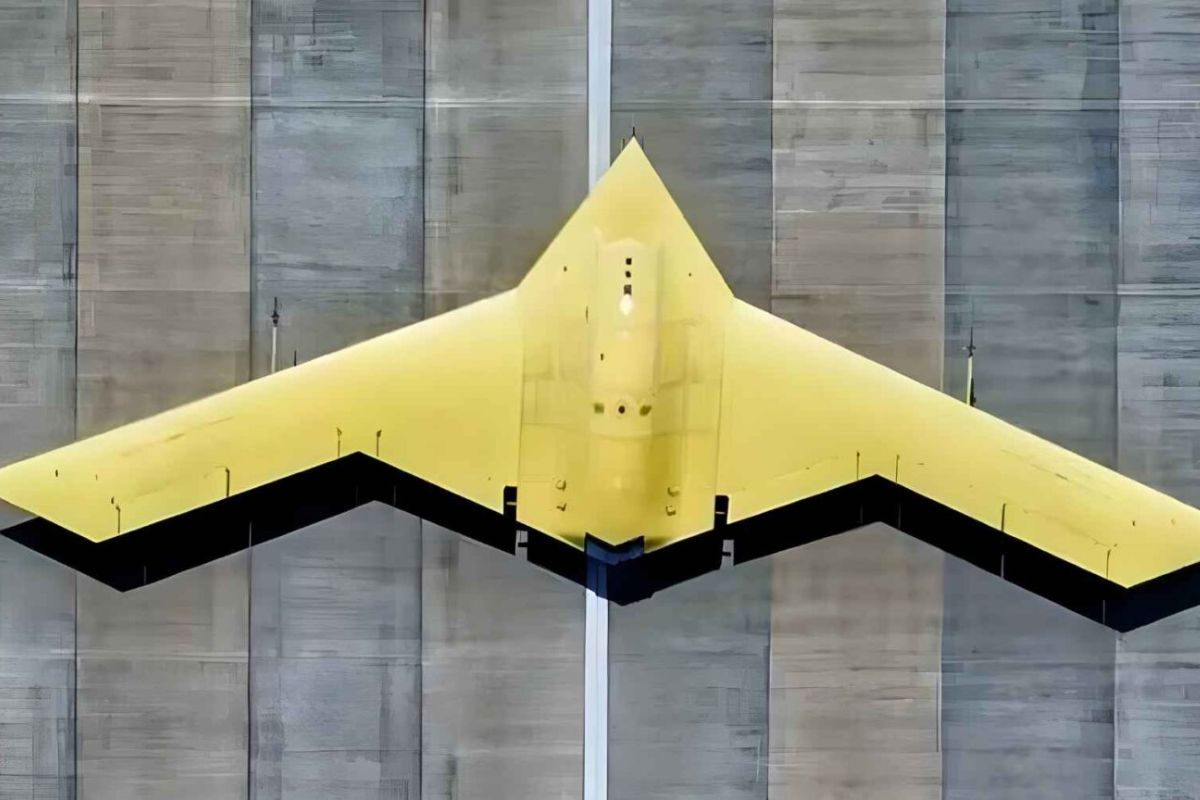
China has just launched for the first time the CH-7, a stealth drone in the shape of a flying wing that flies at 925 kilometers per hour, is nearly invisible to radar, and was designed to monitor battlefields and entire oceans.
-
Found in Giza 100 years ago, an Egyptian dress made of 7,000 beads belonged to a woman from the time of Khufu and impresses with the details preserved after millennia.

Distribution of fairy circles covers up to 2,000 km along the Namib Desert
The fairy circles do not appear randomly. They follow a well-defined geographic band that can extend up to 2,000 kilometers along the coast of Namibia, in regions with extremely specific climatic conditions.
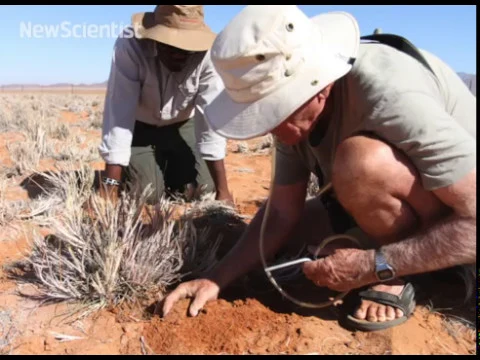

This band is associated with areas where annual precipitation is very low and irregular, usually between 50 and 150 millimeters per year, creating a constant water stress environment for vegetation.
The spatial regularity of the circles is one of the most intriguing aspects of the phenomenon, as each formation maintains a relatively constant distance from the others, as if obeying an invisible mathematical rule. This pattern is not common in simple natural systems and requires more complex explanations based on the interaction between multiple factors.
Self-organization of vegetation explains almost mathematical patterns in the desert
One of the main scientific hypotheses to explain the fairy circles involves the concept of self-organization of vegetation, a phenomenon observed in environments where resources are extremely limited.
In this model, plants compete intensely for water in dry soil. When competition reaches critical levels, central areas completely lose vegetation, while the surrounding vegetation benefits from the available water, creating a circular pattern.

This process generates highly organized spatial structures, often with hexagonal symmetry, similar to patterns found in physical systems like crystals or soap bubbles.
The self-organization theory is capable of explaining the geometric regularity and stability of the circles over time, being considered one of the most solid bases for understanding the phenomenon.
Termites reinforce soil structure and help keep the circles active
In addition to vegetation, another important factor involves the action of subterranean termites, especially species adapted to arid environments.
These insects modify the soil by:
- digging galleries
- altering compaction
- influencing water infiltration
Studies show that areas with fairy circles often exhibit greater termite activity, suggesting that these organisms play a relevant role in maintaining the structures.
The interaction between subterranean biological activity and vegetation dynamics creates a hybrid system that helps stabilize the circles over decades, preventing vegetation from fully reoccupying the central areas.
Circles can last decades and go through cycles of formation and disappearance
Although they appear permanent, fairy circles are dynamic structures. Research indicates that they can exist for decades, going through cycles of birth, growth, and disappearance.
During their lifespan:
- new circles may emerge
- old circles may disappear
- patterns may reorganize
This behavior reinforces the idea that the system is highly sensitive to environmental variations, especially related to water availability.
The longevity of these structures, combined with their ability to reorganize, indicates a complex balance between ecological and physical factors, making the phenomenon even more difficult to fully explain.
Satellite images reveal spatial organization comparable to complex physical systems
The advancement of satellite monitoring has allowed for the analysis of fairy circles on a scale that was previously impossible. From these images, researchers have identified patterns reminiscent of organized physical systems.
The circles tend to form arrangements similar to hexagonal networks, where each unit occupies a position relatively equidistant from the others. This type of organization is typical of systems that seek to maximize efficiency in resource distribution.

The similarity to mathematical patterns reinforces the hypothesis that the phenomenon is the result of self-organized natural processes, rather than isolated causes.
Extreme water stress is the main driver of the phenomenon in the Namib Desert
The essential condition for the formation of fairy circles is extreme water stress. In environments where water is scarce, small variations in availability can have large impacts on vegetation.
When water is insufficient to sustain continuous vegetation cover, the system reorganizes into patterns that maximize the use of the available resource.
This type of ecological adaptation allows vegetation to survive in limiting conditions, creating patterns that seem artificial but are entirely natural, resulting from complex interactions between plants, soil, and climate.
Similar phenomenon identified in Australia reinforces scientific model
For decades, it was believed that fairy circles were exclusive to Namibia. However, recent studies have identified similar patterns in arid regions of Australia.
This discovery reinforces the idea that the phenomenon does not depend on a single local cause, but rather on specific environmental conditions that can occur in different parts of the world.
The presence of similar structures on different continents strengthens the self-organization model as a central explanation, with possible local variations involving biological factors like termites.
Fairy circles continue to be one of the greatest natural enigmas on Earth
Despite scientific advances, there is still no absolute consensus on the exact weight of each factor involved. The interaction between vegetation, soil, climate, and subterranean organisms creates an extremely complex system.
What makes fairy circles unique is precisely this combination of factors that produces a visual result that seems artificial but is entirely natural, challenging the traditional understanding of desert ecosystems.
This phenomenon continues to be the subject of study in various fields, including ecology, physics, mathematics, and geography.
Natural phenomena may follow “invisible mathematical rules”?
The fairy circles of Namibia show that nature can create highly organized patterns even in extreme environments. Millions of circles distributed with almost geometric precision indicate that natural processes may follow complex rules similar to those of mathematics and physics.
In your view, are these patterns merely a consequence of ecological adaptation or do they reveal a deeper level of organization in natural systems?








Seja o primeiro a reagir!