





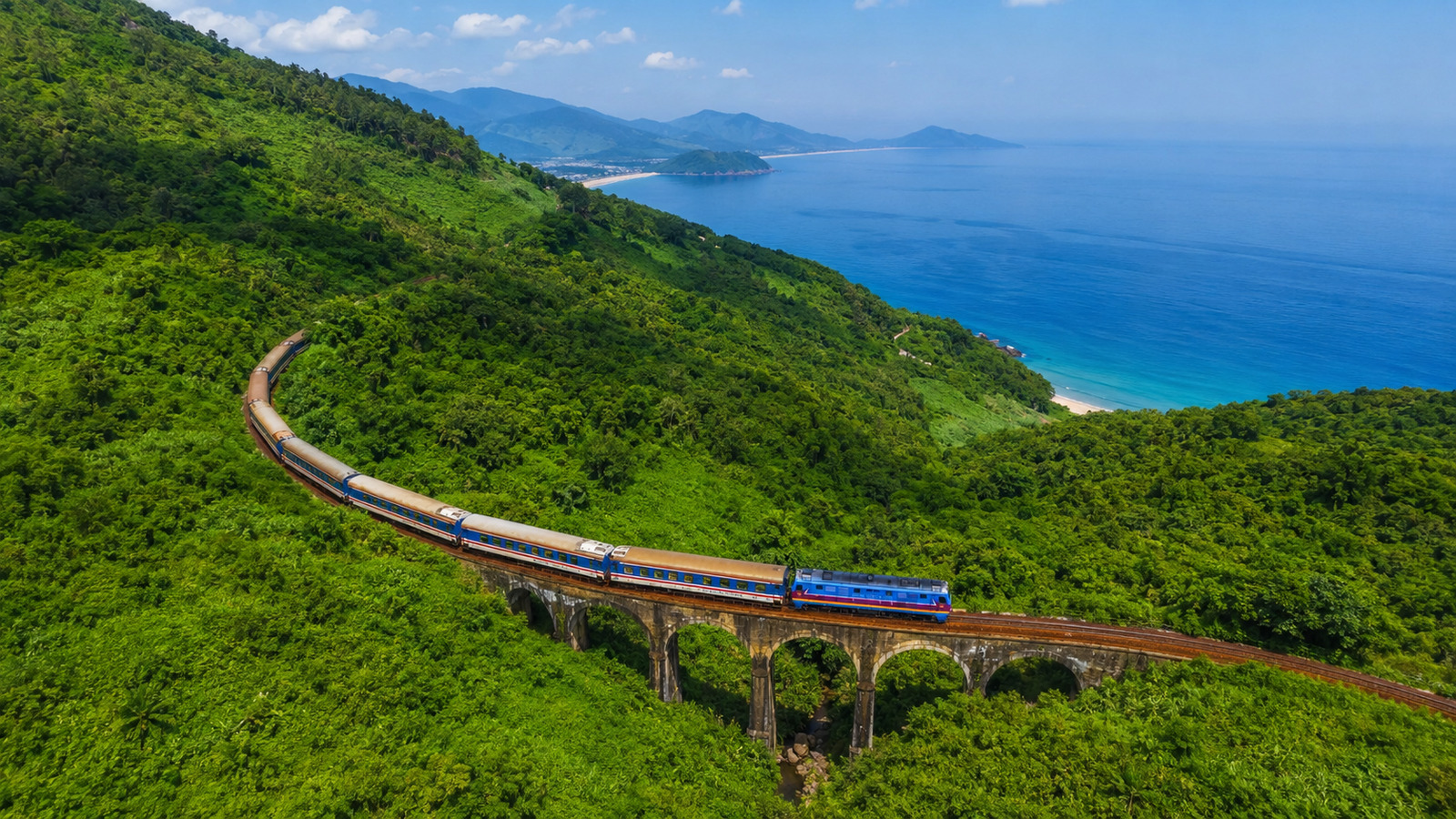

20-kilometer railway section between Hue and Da Nang integrates the North-South line, skirts slopes, passes through tunnels, and reveals beaches, lagoons, and the East Sea on one of Vietnam’s most beautiful routes
The Hai Van Pass Railway runs about 20 kilometers between Hue and Da Nang, Vietnam, crossing six tunnels and 36 bridges. Integrated into the North-South line, the section combines nearly century-old infrastructure with tropical forests, steep slopes, beaches, and wide views of the East Sea.


Hai Van Pass Railway skirts slopes in front of the sea
During the crossing, the train follows the natural curves of the mountain range, disappears into the vegetation, and re-emerges facing the coast.
At some points, passengers can observe beaches, lagoons, coastal villages, and the sea simultaneously.
-
During the demolition of a chimney in England, workers removed from the bricks a 19th-century bottle containing human teeth, hooks, and a liquid that remains unidentified to this day.

-
Restorers remove a large painting behind the altar of the church of San Giorgio Maggiore during construction and find another work hidden for centuries, with Saint George facing a dragon preserved behind the visible composition in one of the oldest churches in the city.

-
Without a diploma and without his own workshop, a young man transforms scrapped cars into all-terrain solar scooters, imports batteries and electric kits from China, and claims to have created a vehicle with a 200 km range for US$ 3,500.

-
Alexandre Frota crosses five continents alone in a small RV-10, faces storms, malfunctions, and regions without GPS, and arrives in Oshkosh as the first Brazilian to complete a round-the-world trip in an experimental single-engine aircraft.


The tracks also pass through tunnels carved into the rock and bridges installed over valleys and waterways. Lang Co Bay appears north of the pass, enhancing the contrast between the green mountains and the bluish waters.
Hai Van forms a natural barrier between Hue and Da Nang. Due to the terrain, the trains travel the section slowly, skirting the mountain in a series of curves that makes the journey one of the most remarkable railway passages in the country.
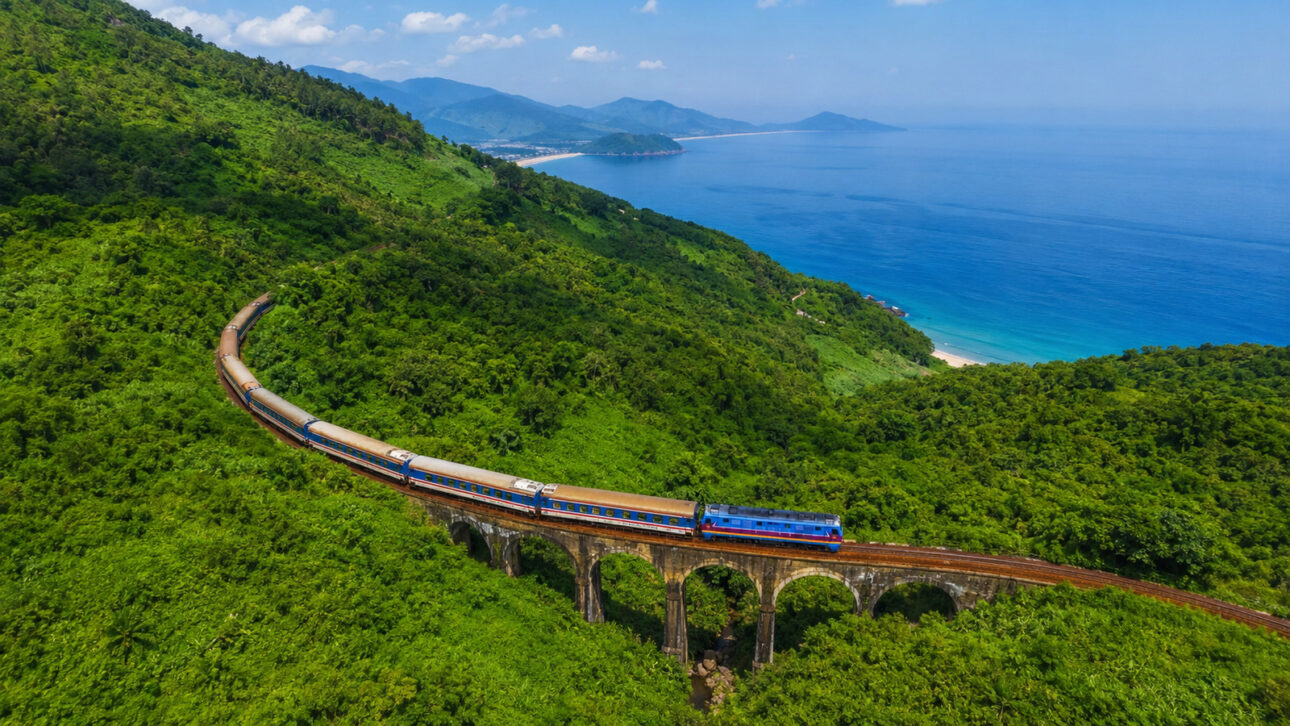
Section has six tunnels and 36 bridges
According to information based on data from the Vietnam Railway Corporation, the Hai Van railway segment is approximately 20 kilometers long, with six tunnels and 36 bridges, totaling about 688 meters in length.
Of this set, eight are steel bridges totaling 129 meters. Another 28 structures accumulate 559 meters.
Part of the works has been in operation for decades, despite the severe environmental conditions found in the coastal region.
The humidity, sea air, and heavy rains increase the need for maintenance. The aging of materials also requires constant monitoring to preserve a strategic infrastructure for Vietnamese railway transport.

North-South Line connects Hanoi to Ho Chi Minh City
The Hai Van Pass Railway is part of the North-South line, internationally known as the Reunification Railway. The main route is approximately 1,726 kilometers between Hanoi and Ho Chi Minh City.
The complete journey usually takes between 32 and 36 hours. The name Reunification Express does not represent just a specific train, but the services that travel this historic link between the north and south of Vietnam.
In addition to transporting passengers between important cities, the railway functions as a physical and symbolic connection between different regions of the country.
Railway was inaugurated in 1936 and rebuilt after the war
Construction began during the French colonial period and progressed in stages for more than three decades. The complete link between Hanoi and Saigon, now Ho Chi Minh City, was inaugurated in 1936.
At the time, the service called Transindochinois covered approximately 1,730 kilometers in about 40 hours. The trains had different classes, sleeping cars, and a dining car.
Later, bridges, tracks, stations, and tunnels were damaged during the conflicts in Vietnam. After the war, Vietnamese teams rebuilt the route, which resumed full operation on December 31, 1976.
The Hai Van crossing combines this historical past with a landscape formed by mountains, forest, and sea. The section remains part of a national infrastructure used daily to connect Vietnamese territory.
This article was prepared based on information from the Vietnam Railway Corporation and the base material provided, with data, numbers, and historical information preserved as per the consulted content.


