





 Portuguese
  English
  Spanish
  4 min of reading
  0 comments



Japan Is Leading a Revolution in Solar Energy with a Sphere That Generates Electricity in All Directions, Leaving Conventional Panels Behind.
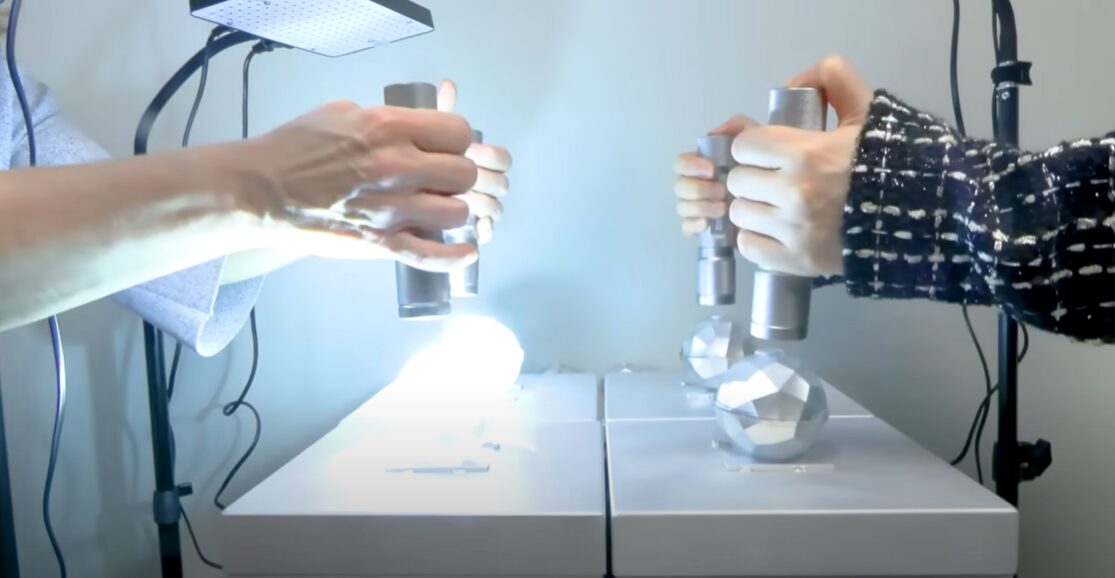
The world is searching for sustainable energy solutions, and solar energy has proven to be one of the leading candidates to drive this transition in the coming decades. The Japanese solar panel company Kyosemi is at the center of this revolution, developing the Sphelar, a spherical microcell solar cell that utilizes sunlight from all directions, significantly increasing energy efficiency and overcoming the limitations of conventional solar technology.
Solar Panels: How Does Sphelar Technology Work?
Kyosemi’s great innovation lies in the design of the spherical solar microcells, which, unlike traditional flat photovoltaic cells, capture solar light from all angles.
In common solar panels, the cells need to be positioned strategically to maximize sunlight capture. This generally requires mechanical adjustments and complex installations.
-
Argentina debuts its first 100% solar-powered highway and transforms an entire road into a showcase of clean energy.

-
Minas Gerais reaches a historic record and surpasses the power of Itaipu, but network costs generate debate: Understand why solar energy in MG impacts the electricity bill of those without panels.

-
Mexico surprises the world by building the future largest solar plant in Latin America, advancing with planned expansion to over 1 GW, and boosting solar energy in the country.

-
Solar cells have just achieved the “impossible” with this 130% breakthrough.


However, with Sphelar’s spherical microcells, this limitation is eliminated. Direct, reflected, and scattered light is efficiently absorbed without the need for precise positioning.
This translates to an energy efficiency of around 20%, surpassing many of the current solar technologies. In addition to improving energy capture, the spherical structure reduces installation and maintenance costs.
Waste Reduction and Sustainable Production
In addition to technological innovation, Sphelar also stands out for its sustainable approach in the production process. Kyosemi has managed to reduce material waste, particularly kerf – a substance wasted when cutting silicon ingots into wafers.
The use of molten silicon directly in the manufacturing of the microcells helps minimize this waste and makes the production process more efficient and environmentally friendly.
This strategy not only reduces environmental impact but also aligns with the growing global demand for more sustainable and economically viable production methods, especially with rising silicon costs.


Versatile Applications of Spherical Solar Cells
One of the major advantages of Sphelar’s spherical microcells is their versatility. In addition to traditional solar panels, they can be incorporated into a variety of products, thanks to their compact size (1 to 2 mm in diameter) and their ability to operate in flexible and translucent modules.
This opens doors for their use in portable electronic devices, sensors, and even in windows and building facades.
For example, in mobile devices and sensors, Sphelar can provide continuous power by harnessing available light, reducing reliance on conventional batteries.
In buildings, the microcells can be integrated into architectural elements, allowing entire structures to capture sunlight while maintaining natural light entry in indoor environments.
Additionally, these spherical cells have great potential in areas like environmental monitoring and industrial automation. Small sensors powered by Sphelar can measure data such as temperature, humidity, and air quality, aiding in monitoring networks that improve efficiency and safety in real-time.
Challenges and Future Perspectives
Despite the innovations and great potential of Sphelar microcells, there are still challenges to overcome before this technology reaches its full potential.
Currently, large-scale production is still limited, and Kyosemi is investing in research to automate and optimize this process. The goal is to make the production of spherical microcells more economical and accessible on a large scale.
With the implementation of a mass production system, Sphelar cells have the potential to become a significant source of renewable energy, helping to meet the growing demand for sustainable solutions worldwide.
Additionally, new innovations, such as the use of lens technologies to increase light capture, could further enhance the efficiency of this technology in the future.
The Future of Solar Energy with Sphelar
In conclusion, Sphelar technology represents a true revolution in the field of solar energy. Its innovative design and versatility allow for a range of applications that range from mobile devices to smart buildings and environmental monitoring systems.
As Kyosemi advances in its research and development, the impact of spherical cells on the global energy landscape could be substantial.
Solar energy is constantly evolving, and innovations like Sphelar bring us closer to a more sustainable future. Stay tuned for upcoming technological updates and explore the possibilities that this new form of energy capture can offer.
The advancement of solar energy, with innovative solutions like Sphelar spherical microcells, is a clear indication that we are moving toward a more sustainable and technological future.
Be sure to keep up with new developments and seek ways to apply this technology in your daily life, whether at home, in mobile devices, or in large architectural projects.










-

3 pessoas reagiram a isso.