





 English
  Francês
  Alemão
  Italiano
  Japonês
  Norueguês
  Portuguese
  Spanish
  3 min of reading


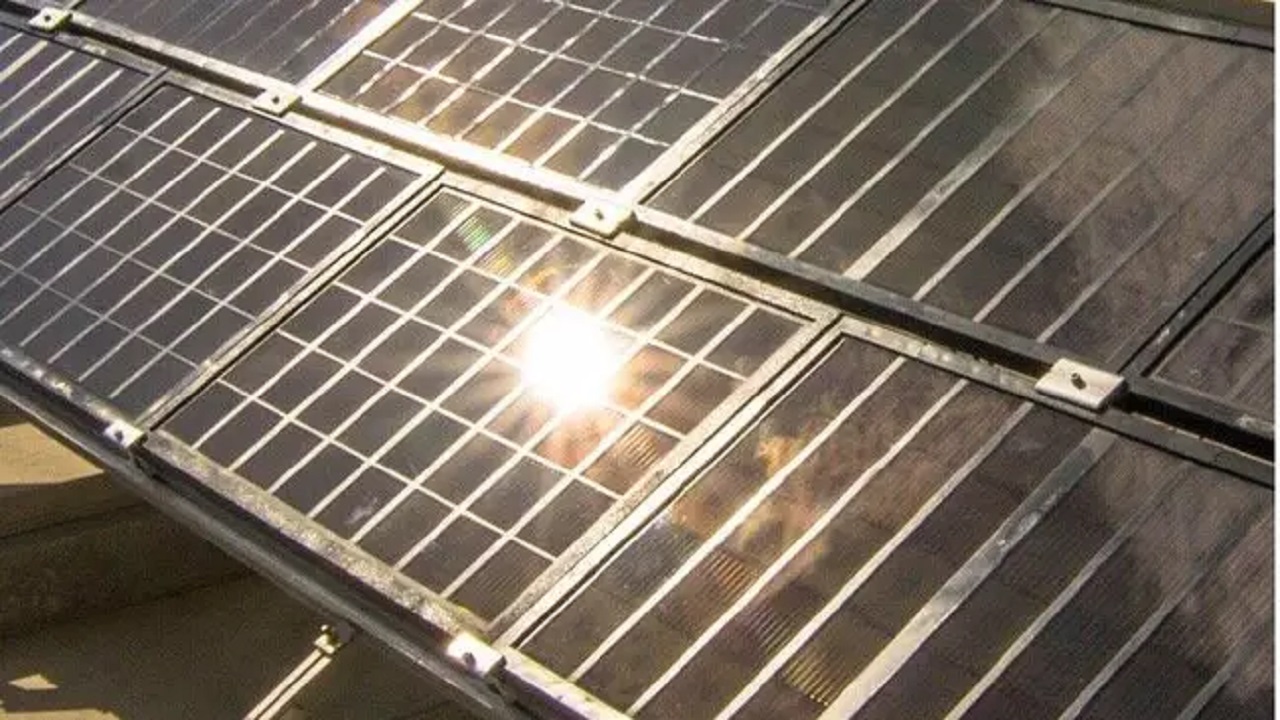
Scientists in Greece Developed the First Solar Plant That Uses Graphene – Perovskite Solar Panels. The Solar Power Plant Is More Efficient Compared to Silicon Panels.
Scientists from Tor Vergata University of Rome in Italy, in partnership with researchers from the Hellenic Mediterranean University in Greece, created graphene-perovskite solar panels that can be more efficient, made from 2D materials. According to their developers, these solar energy panels, installed on the island of Crete, can be integrated with each other, thus generating the first solar plant of graphene – perovskite solar panels.
Perovskite Emerged for the First Time in 2016


The solar plant with graphene solar panels can generate energy on a large scale, something that until now seemed possible only in controlled laboratory environments. According to the lead author of the study, engineering professor Francesco Bonaccorso, the work of the scientists is the result of approximately 5 years of research aimed at scaling the use of graphene – perovskite solar panels, starting with lab-generated cells, slightly larger panels, and finally a structure that is feasible to be installed in a solar farm.
The first work of the scientists regarding the project was published in 2016. At that time, they already predicted that by designing the interfaces with suitable two-dimensional materials, it would be possible to develop graphene – perovskite solar panels, expanding the stability of the cells without impacting their performance in solar energy development.
-
Renewable energy advances over protected areas in Brazil, and a survey by the Energy Transition Observatory reveals silent impacts that challenge environmental conservation and pressure sensitive traditional territories.

-
Rio Grande do Sul accelerates energy transition: State invests in renewable technologies and consolidates decarbonization strategies and pathways to attract billions in new industrial investments.

-
With 160,000 m² of collectors, an area larger than 20 football fields, Silkeborg, in Denmark, hosts a solar thermal plant that heats 19,500 homes and could become the largest solar heating plant in the world.

-
A study reveals the expansion of renewable energy procurement in Brazil and shows how companies are taking advantage of opportunities to reduce expenses, ensure energy efficiency, and strengthen strategic environmental commitments.


Before creating an autonomous solar plant, the researchers developed nine graphene – perovskite solar panels. Each of these components has an area of 0.5 m² with 40 individual modules connected together, forming a large panel that could capture solar energy.
According to materials engineering professor Aldo Di Carlo, after his first publication on small area cells, the feasibility of this technology was developed in devices with a larger area. The intent has always been to demonstrate the viability of integration among solar energy panels, significantly expanding the sector responsible for energy capture.
Solar Plant with Perovskite Panels Has an Efficiency of 12.5%
According to the researchers, the world’s first solar plant developed with graphene-perovskite solar panels has a total area of 4.5 square meters. Its efficiency in solar energy is 12.5%.
The team also compares their technology with silicon solar modules available on the market and claims that the graphene devices exhibit a lower voltage drop in open circuit, despite being at a higher temperature.
Bonaccorso states that although the temperature coefficient of voltage for graphene – perovskite solar panels is half of that of silicon modules, their results show that more efforts are needed to enhance the encapsulating materials and the lamination protocol to further prolong the lifespan of the components.
Perovskite Can Also Be Used in Green Hydrogen Production
Researchers at the National Renewable Energy Laboratory (NREL) in the U.S. have developed a way to generate hydrogen cleanly using perovskite-based compounds to make the extraction process more sustainable and viable.
The technology used by the scientists is known as solar thermochemical hydrogen (STCH). This technique is much more efficient than the clean hydrogen production process based on the electrolysis method, widely used by the ammonia production industry.
According to the lead author of the study, Zhi Wen Ma, this is a challenging field with several research questions still unanswered, particularly regarding the use of promising materials like this.









Seja o primeiro a reagir!