Portuguese
  Spanish



Researchers from Unicamp Developed a Small Reactor That Can Transform Ethanol Into Hydrogen for Electric Cars, Potentially Boosting the National Electric Market.
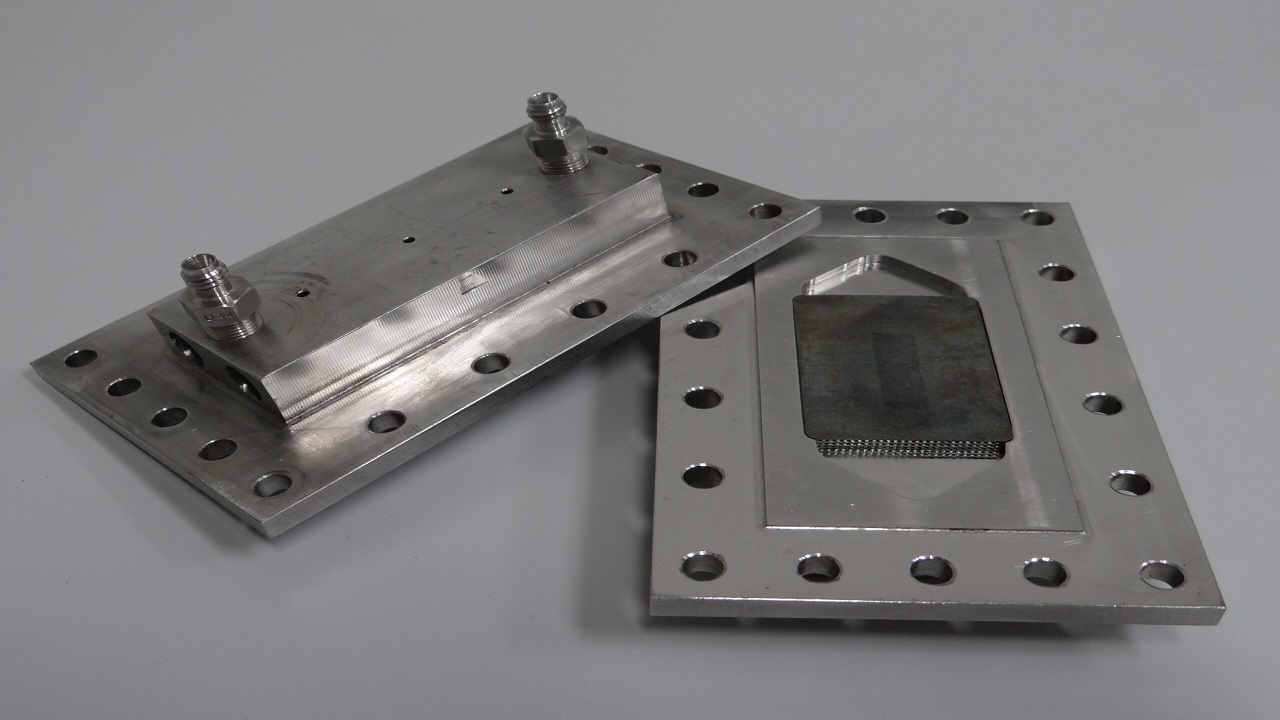
Focusing on sustainability and advancements in the implementation of electric cars, at the end of last month, researchers from the University of Campinas (Unicamp) patented a compact chemical reactor, microreactor, or even micro-reformer, produced by 3D printing that can transform ethanol into hydrogen. One of the goals of developing a small-sized reformer is that it can be embedded within the fuel cell itself.
Project to Transform Ethanol into Hydrogen Can Be Scaled
Thus, it would be possible to develop modular cells, produced on a large scale always with the same standard, instead of using different models of cells and reformers for each model. For example, while compact electric cars use only one cell, a medium SUV would use two, and a commercial vehicle, such as a minibus, or a midsize pickup, three.
According to the professors from the School of Chemical Engineering at Unicamp who are leading the project to transform ethanol into hydrogen, the intention is to make the project viable on an industrial scale, as an alternative to using fuel cells with pressurized hydrogen, whose adaptation and storage costs can be prohibitive in a country like Brazil.
-
End of an era in Brazil: beloved sedan by Brazilians is discontinued despite having a 2.0 engine with 151 hp, CVT transmission, 466-liter trunk, and up to 650 km of range.

-
New Law Proposal in Brazil Could Heavily Penalize Drivers: Dangerous Overtaking May Become a Serious Offense with Fines Increased Tenfold and a 12-Month License Suspension; Update on 2026 Progress

-
Electric Revolution: Watts W125 Motorcycle Offers 160 km Range, 90 km/h Speed, and Affordable Price Starting at $3,000
-
General Motors Replaces Over a Thousand Workers with 50 Cobots at Electric Vehicle Plant, UAW Union Criticizes Move Amid Industry’s Automation Push


According to the Unicamp FEQ researcher, Rubens Maciel Filho, it involves the production of hydrogen embedded in electric cars from ethanol. This hydrogen can power fuel cells, enabling the insertion of electric cars and mitigating CO₂ emissions to the atmosphere in a cheaper and easier way, using the technology developed in Brazil.
The professors at Unicamp admit that the conversion of ethanol into hydrogen, in itself, generates a carbon residue, but point out that such emissions can be zeroed when considering the entire agro-industrial chain.
Volkswagen Attempts to Make the Technology Viable
One of the most discussed options for the process of introducing electric cars into the national market is the use of ethanol as a conversion source for hydrogen and, subsequently, electric energy.
Even Volkswagen has been trying to make the technology feasible, which has the advantage of pre-existing infrastructure for fueling with the sugarcane-derived fuel. Additionally, the ethanol technology also waives the need for large battery banks, given that the electric motor is powered directly by the cell.
As Brazil does not produce batteries on a large scale, and the production of these components still poses significant environmental harm, the solution using ethanol may be one of the most efficient available for the reality.
According to Maciel Filho, the carbon generated by the technology does not come from a fossil source, as is the case with hydrogen generated from natural gas. It is a reversible process, considering that it is captured back by sugarcane when it grows.
Unicamp Technology Has the Dimensions of a Smartphone
In the case of the project patented by the researchers at Unicamp, the prototype has a size similar to that of a smartphone and its core measures only 5 cm in length.
According to the project’s lead researcher, these characteristics improve the efficiency and control of reactions in electric cars compared to conventional reactors.
The plates are manufactured by 3D printers dedicated to metal use following the guidelines of Industry 4.0. In this way, it generates greater topological and design optimization, according to the project, as well as faster production of new prototypes.