





 Portuguese
  English
  Spanish
  7 min of reading
  0 comments


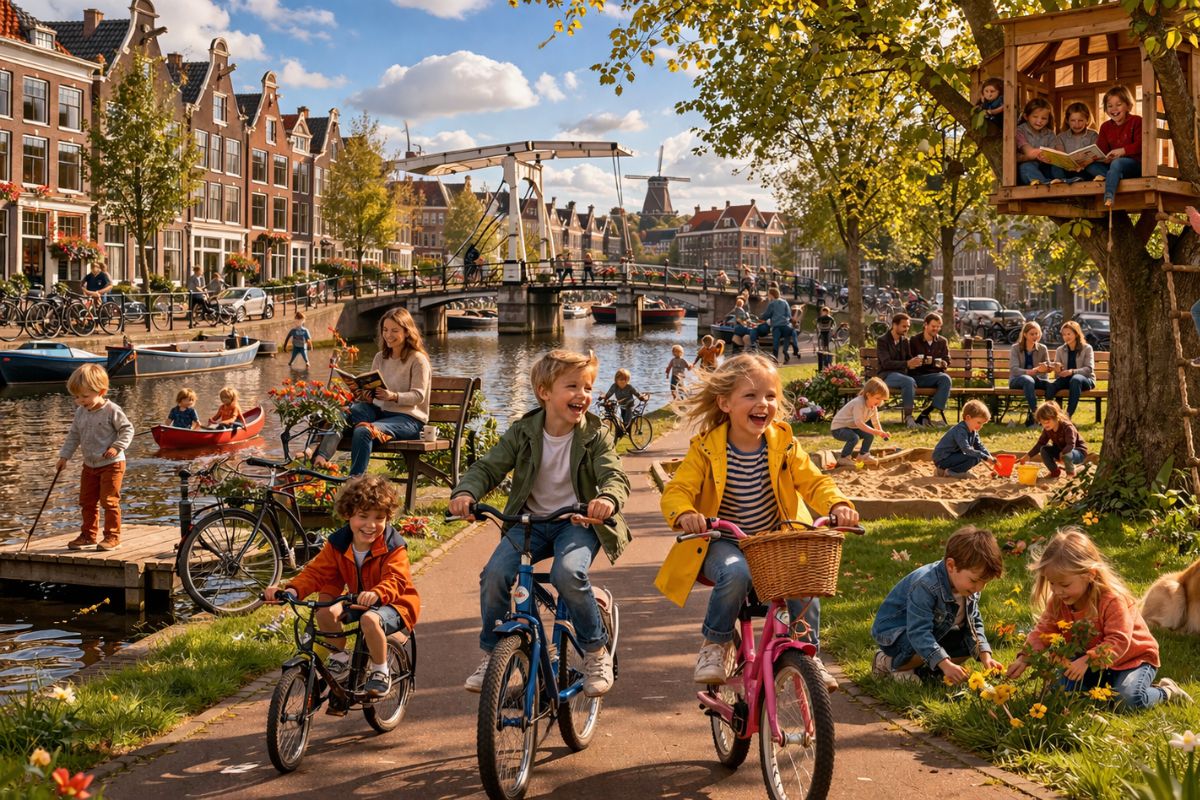
A UNICEF study from 2025 confirmed that the happiest children on the planet live in the Netherlands, where parents prioritize independence, outdoor play, and family time instead of demanding academic performance, challenging parenting models practiced in most of the world.
The happiest children on the planet do not live in mansions, do not attend the most expensive schools, and do not follow packed schedules of extracurricular activities. They live in the Netherlands, ride bicycles from the age of three, play in the rain, and are encouraged to dress themselves even before they can speak properly. According to a UNICEF study published in 2025, Dutch children rank first in the global child happiness index, a result that is consistent with previous surveys and raises an uncomfortable question for parents worldwide: what are the Dutch doing differently?
According to the DW Brasil channel, the answer does not lie in any revolutionary pedagogy method or in billion-dollar investments in education. It lies in everyday choices that seem simple but contradict the common sense of many cultures. Dutch parents do not pressure their children for performance, do not plan careers from the cradle, and do not fill their children’s schedules with tutoring classes. Instead, they prioritize what they call “letting children be children,” a principle that involves independence, outdoor time, strong family bonds, and the conviction that the well-being of parents is just as important as that of their children.
What makes Dutch children the happiest children on the planet
The UNICEF ranking evaluates multiple factors to determine which children are the happiest on the planet: mental health, life satisfaction, quality of social relationships, and material conditions. The Netherlands consistently leads this ranking because it scores high on all these criteria simultaneously, not just one or two. Dutch children report high satisfaction with their lives, have low rates of anxiety and childhood depression, and maintain strong social relationships with friends and family.
-
A view from space in a NASA image shows a gigantic volcanic crater 1 km wide in the middle of the Sahara, revealing a frightening formation that resembles a giant skull looking out into the universe and turning the desert into an otherworldly landscape.

-
The Chinese translator said that the time has come for China to understand Brazil beyond trade, and now The Brazilian People by Darcy Ribeiro is receiving its first edition in Mandarin with a ceremony in Beijing and the delivery of the volume to six of the largest academic institutions in the country.
-
Backpack theft in pub ends with Fabergé egg, watch, cigars, rare jewelry, and other luxury accessories worth R$ 15 million missing.

-
With tons of daily production, a potato famous for its curved shape surprises with a standardized industrial process, a dough that includes dehydrated potato flakes and a crunch that impresses the entire world.
The difference is not genetic or climatic. It is cultural. In the Netherlands, parenting is based on three pillars that work together: independence from an early age, plenty of time outdoors, and the absence of pressure for performance. Each of these pillars reinforces the others, creating a cycle in which the child develops self-confidence, physical health, and emotional balance organically. To understand how this works in practice, just follow the routine of a typical Dutch family in the Amsterdam area.
Breakfast together and the ritual of starting the day as a family

On a typical Friday, Marlot and Felix start the day at 7:30 AM with their two children, Louna, three years old, and Flynn, one year old.
Family breakfast is not a luxury reserved for weekends, but a daily ritual that many Dutch parents consider essential. For Felix, who only sees his children during this hour-and-a-half window in the morning on some days, sharing this moment is non-negotiable. “For me, it’s important that we spend this time together,” he says.
This commitment to family time is possible because the Netherlands offers labor structures that facilitate the balance between professional and personal life. There are rights to maternity and paternity leave, and parental leave can be used until the child turns eight.
Felix chose not to take all his leave at once, spreading it out over the years, which gives him one day off a week dedicated to the children. This flexible model allows Dutch parents to be present in their children’s routines without abandoning their careers, a balance that directly contributes to their children being among the happiest on the planet.
Independence begins with the jacket: why Dutch parents don’t do things for their children
One of the most visible characteristics of Dutch parenting is the encouragement of autonomy from an early age. Even in simple tasks like putting on a jacket, dressing, or eating, Dutch parents encourage children to do everything by themselves. This is not neglect or disinterest, but a deliberate philosophy that sees autonomy as a building block of self-confidence.
This independence extends to public spaces. In Dutch playgrounds, it is common to see parents sitting on a café terrace while their children play on their own. Marlot explains that Louna usually meets other children from daycare at the playground and has fun by herself, without constant supervision.
The bicycle is another symbol of this philosophy: in the Netherlands, it is almost automatic for a child to receive their first bicycle upon turning three. “It’s a sign of independence and trust that we give her,” says Felix. For 36% of the Dutch population, the bicycle is the main mode of transportation, and children learn to ride at a very young age.
Outdoors, rain or shine, and the role of play in happiness

If there is one habit that defines the happiest children on the planet, it is the time they spend outdoors. Dutch parents like Marlot and Felix let their children play outside whenever possible, regardless of weather conditions. The philosophy that there is no bad weather, only inappropriate clothing, is not a cliché in the Dutch context, but a real practice that starts in early childhood and continues throughout education.
Science supports this approach. Studies in pediatrics and child psychology consistently show that outdoor play is associated with lower rates of anxiety, better motor development, and more robust social skills. In the Netherlands, playtime is not seen as a break between “serious” activities, but as the most serious activity of childhood. Children are not pressured to turn every moment into structured learning. Playing is, in itself, learning.
Private daycares, high costs, and what the Dutch system has not yet solved
The Dutch model is not perfect, and the parents themselves acknowledge this. In the Netherlands, nearly 80% of children under three attend daycare, double the EU average. But almost all daycares are private, many run by private equity firms focused on profit, which significantly raises costs for families. Families receive financial support from the state, but even so, the expenses weigh heavily on their budgets.
Marlot and Felix send Louna and Flynn to daycare three days a week and are well aware of the frustration with the system. “Many people are not satisfied with this model,” admits Felix, referring to the predominance of the private sector in Dutch early childhood education. The issue of daycares is one of the points of tension in the Dutch public debate, and dissatisfaction with costs contrasts with the positive results that the system produces. Despite the criticisms, broad access to early socialization is pointed out as one of the factors contributing to Dutch children being among the happiest on the planet.
The well-being of parents as an ingredient for the happiness of children
An often-overlooked aspect in discussions about parenting is the emotional state of the parents themselves. In the Netherlands, there is an explicit awareness that the well-being of adults directly influences the happiness of children. Felix expresses this idea straightforwardly: “If I feel good, if I feel healthy, that reflects on my children, at least indirectly. When you stay indoors all day and are in a bad mood, that doesn’t help the children’s mood.”
This perspective translates into concrete attitudes. Felix uses part of his weekly day off to take care of himself, exercise, and maintain a good mood, not just to dedicate himself exclusively to the children. Louna and Flynn’s grandparents make weekly visits, creating a support network that alleviates the burden on parents and strengthens family ties. “It’s very important to have our parents close, participating in raising our children,” says Marlot. For the happiest children on the planet, happiness is not an individual project, but a system that includes rested parents, present grandparents, and a community that shares responsibility.
What the rest of the world can learn from the happiest children on the planet
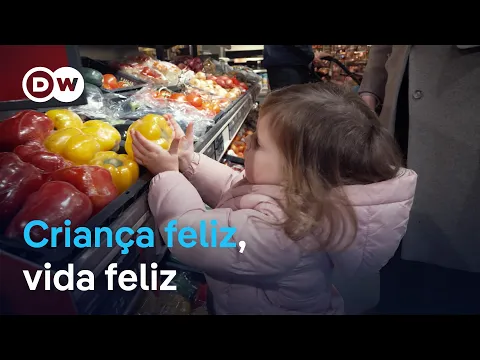

Felix summarizes the cultural difference directly: “In many other places, children are raised in a much stricter manner, with a very clear path, almost like a career, defined from an early age.” In the Netherlands, the approach is the opposite: parents are active, enjoy going out and showing the world to their children, including traveling, but not because children need to perform better. “Especially when they are small, they just need to be children,” he concludes.
This phrase condenses what researchers and child psychologists have been pointing out for years: childhood is not a preparatory phase for adulthood, but a stage with its own value that, when lived with freedom and security, produces more balanced adults. The happiest children on the planet are not the product of extraordinary investments or sophisticated methods, but of parents who resist the temptation to control every aspect of their children’s lives. The Dutch lesson is both the simplest and the most difficult to apply: let children be children.
The happiest children on the planet live in the Netherlands, where independence, play, and family time replace pressure for performance. Do you agree with this approach or think it only works in the Dutch context? Would the model be applicable in Brazil? Leave your opinion in the comments.








Seja o primeiro a reagir!