





 Portuguese
  English
  Spanish
  4 min of reading
  0 comments


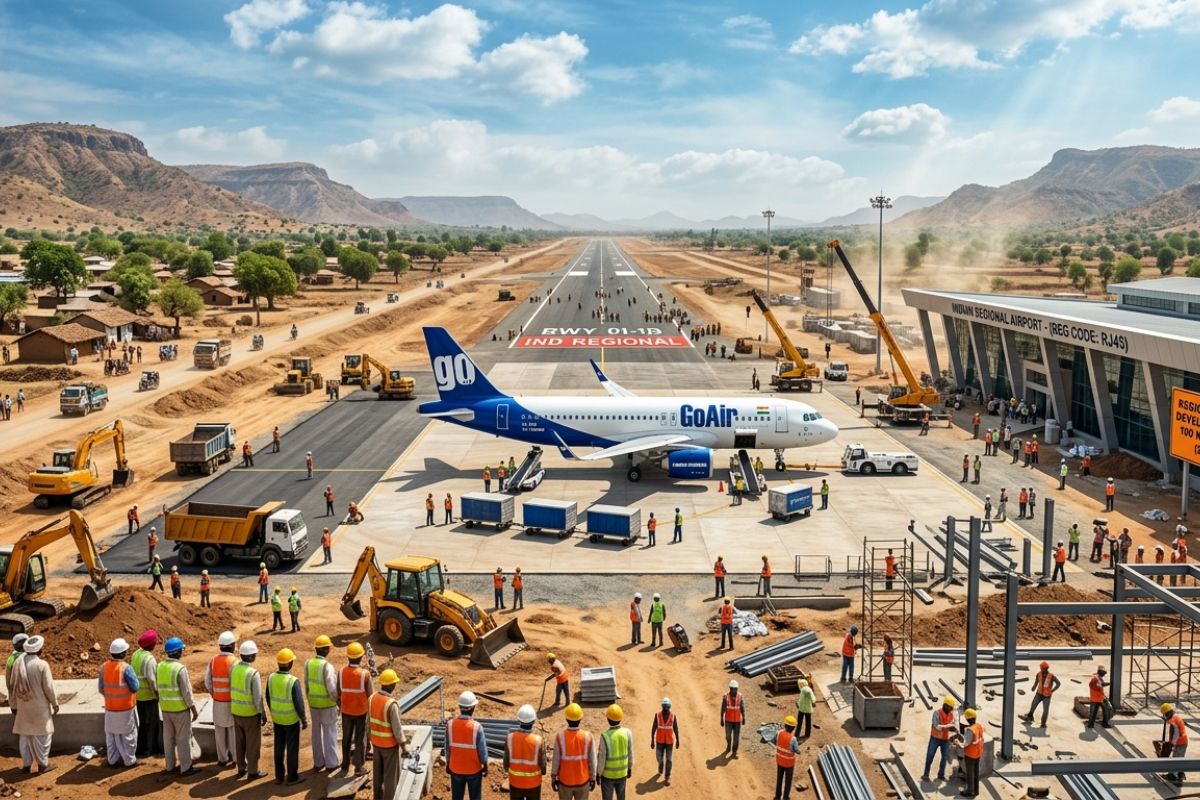
Aviation gains momentum with works and subsidies to expand regional routes, reduce inequalities outside major centers, and ensure operation for 10 years, from 2026 to 2036
Aviation in India has entered a new phase with the announcement of an investment of US$ 3.06 billion to expand air transport in underserved and less serviced regions by the current network. The decision was announced by the government and targets areas outside the main centers, where regular flights are still rare or nonexistent.
The plan reinforces a long-term strategy: to use the expansion of aviation as a tool for territorial integration, economic stimulus, and job creation. The bet combines physical infrastructure with direct financial support, so that regional routes can be realized even when they would not be viable solely through the market.
A billion-dollar plan to bring aviation where it does not reach
The announcement foresees a combination of measures with a clear focus on reach. The package includes 100 new airports and the expansion of regional connections, with the intention of bringing distant cities closer to traditional development axes.
-
Brazil blocked a proposal from the United States at the WTO that would make the exemption from tariffs on digital products like streaming and ebooks permanent, favoring American tech giants at the expense of developing countries.

-
IPTU exemption for seniors in 2026: see how to secure the benefit.

-
The institute that trained the greatest aerospace engineers in Brazil has just opened its first campus outside São Paulo after 75 years: ITA Ceará will have R$ 445 million, new courses in energy and systems, and classes are expected to start in 2027.
-
Luciano Hang, owner of Havan, goes to Juiz de Fora after the tragedy in February, brings R$ 1 million, hands out R$ 2,000 cards, and donates up to R$ 15,000 to victims in the region.

The movement is based on a simple diagnosis: the growth of the sector exists, but it is not distributed evenly. Therefore, the government chose to tackle the problem at its root, expanding infrastructure and creating mechanisms to sustain the operation of the routes.
In practice, the plan aims to transform regional aviation into a more accessible and consistent service, rather than a privilege concentrated in large metropolises.
The role of the UDAN program in regional expansion
The initiative fits into a new phase of the Ude Desh ka Aam Nagrik program, created in 2016 to facilitate public access to air transport. The logic of UDAN is to expand the reach of aviation to areas that have historically been outside the regular network, reducing the isolation of less connected regions.
With the new investment, the program gains scale with works, expansion of connections, and a strategy to sustain the routes. It is a model that combines “building” with “ensuring operation”, to avoid underutilized airports and routes interrupted by lack of initial demand.
Subsidies to maintain routes that would not be self-sustaining
One of the most important points of the announcement is the reinforcement of financial support to airlines. The government has allocated US$ 1.07 billion in subsidies to ensure the operation of routes that would not be economically viable without state intervention.
This is central to understanding the design of the plan. In distant regions with lower passenger density, aviation tends to have high costs and uncertain returns in the short term.
The subsidy acts as a bridge, allowing routes to exist long enough to mature demand, create usage habits, and consolidate regional connections.
10-year guarantee for regional routes
The program will last for ten years, from 2026 to 2036, focusing on increasing the presence of aviation in areas currently beyond the reach of regular flights. This longer horizon aims to provide predictability for operators and regional planning.
Instead of a one-off action, the model is structured as a continuous policy. The idea is to sustain the service long enough for the regional network to gain traction, with impacts that extend beyond the airport, affecting commerce, tourism, services, and mobility.
Strong growth of aviation and the goal of stimulating the economy and jobs
The initiative occurs in a context of sector expansion. India is described as the fastest-growing aviation market in the world, and the government intends to use this advancement to stimulate the economy and generate jobs.
The reasoning is straightforward: when aviation expands beyond the centers, it can unlock new flows of people, goods, and services.
A regional airport is not just a terminal, but a connection point that alters travel times, reduces economic distances, and creates new routes of opportunity.
Barriers that still limit the expansion of the sector
Despite the growth and investment, the sector faces limitations. The foundation points to infrastructure problems and tax issues as barriers to the expansion of aviation.
This means that the plan does not depend solely on building airports. It requires stable operation, logistical capacity, maintenance, services, and a regulatory environment that does not make routes unfeasible.
Physical expansion needs to be accompanied by conditions for the sector to function, especially in the more distant regions, where operational costs tend to be higher.
Long-term goal: 350 to 400 airports by 2047
The government led by Narendra Modi has set a goal to increase the number of airports in the country to between 350 and 400 by 2047, up from 163 existing in 2025. This figure shows the scale of ambition and positions the current announcement as part of a broader plan.
If this goal is achieved, the national network would change significantly. Aviation would cease to be just an axis of large cities and would become a more distributed network, with a direct impact on regional inequalities.
What could change in practice with this plan
With 100 new airports, US$ 1.07 billion in subsidies, and a horizon from 2026 to 2036, the plan attempts to tackle three points simultaneously:
Increase infrastructure, so that underserved regions have connection points
Ensure routes, so that regional aviation does not die due to lack of initial viability
Reduce inequalities, connecting areas outside major centers to economic opportunities
Success will depend on execution, continuity, and the ability to overcome already known barriers. Still, the design combines ambition with concrete support mechanisms, which is often the differentiator between promise and real operation.
In your opinion, is this aviation plan with subsidies for 10 years the best way to bring flights to forgotten regions, or could the risk of high costs and low demand compromise the outcome?








Seja o primeiro a reagir!